

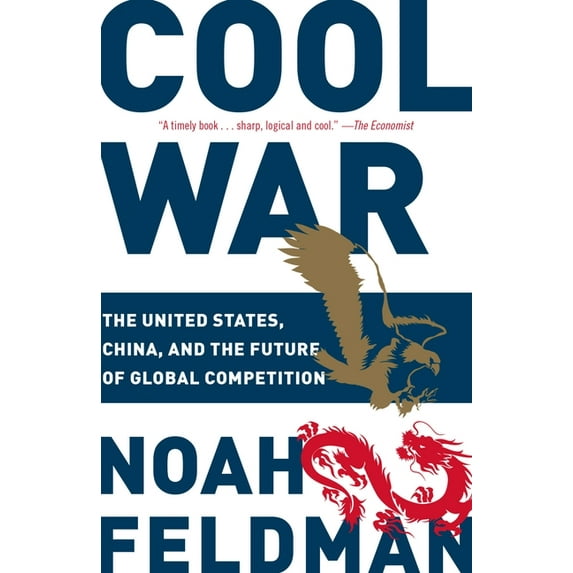
Cool War : The United States, China, and the Future of Global Competition (Paperback)
(No ratings yet)
Key item features
A bold and thought-provoking look at the future of U.S.-China relations, and how their coming power struggle will reshape the competitive playing field for nations around the world
The Cold War seemingly ended in a decisive victory for the West. But now, Noah Feldman argues, we are entering an era of renewed global struggle: the era of Cool War. Just as the Cold War matched the planet’s reigning superpowers in a contest for geopolitical supremacy, so this new age will pit the United States against a rising China in a contest for dominance, alliances, and resources. Already visible in Asia, the conflict will extend to the Middle East (U.S.-backed Israel versus Chinese-backed Iran), Africa, and beyond.
Yet this Cool War differs fundamentally from the zero-sum showdowns of the past: The world’s major power and its leading challenger are economically interdependent to an unprecedented degree. Exports to the U.S. account for nearly a quarter of Chinese trade, while the Chinese government holds 8 percent of America’s outstanding debt. This positive-sum interdependence has profound implications for nations, corporations, and international institutions. It makes what looked to be a classic contest between two great powers into something much more complex, contradictory, and badly in need of the shrewd and carefully reasoned analysis that Feldman provides.
To understand the looming competition with China, we must understand the incentives that drive Chinese policy. Feldman offers an arresting take on that country’s secretive hierarchy, proposing that the hereditary “princelings” who reap the benefits of the complicated Chinese political system are actually in partnership with the meritocrats who keep the system full of fresh talent and the reformers who are trying to root out corruption and foster government accountability. He provides a clear-eyed analysis of the years ahead, showing how China’s rise presents opportunities as well as risks. Robust competition could make the U.S. leaner, smarter, and more pragmatic, and could drive China to greater respect for human rights. Alternatively, disputes over trade, territory, or human rights could jeopardize the global economic equilibrium—or provoke a catastrophic “hot war” that neither country wants.
The U.S. and China may be divided by political culture and belief, but they are also bound together by mutual self-interest. Cool War makes the case for competitive cooperation as the only way forward that can preserve the peace and make winners out of both sides.
Praise for Cool War
“A timely book . . . sharp, logical and cool.”—The Economist
“Noah Feldman’s dissection of the United States–China relationship is smart, balanced, and wise.”—Robert D. Kaplan, New York Times bestselling author of The Revenge of Geography
“Compelling . . . Feldman’s book carries enough insight to warrant serious attention from anyone interested in what may well be the defining relationship in global affairs for decades to come.”—Kirkus Reviews
“A worthwhile and intriguing read.”—The Washington Post
“Masterfully elucidates China’s non-democratic/non-communist new form of government.”—Publishers Weekly
The Cold War seemingly ended in a decisive victory for the West. But now, Noah Feldman argues, we are entering an era of renewed global struggle: the era of Cool War. Just as the Cold War matched the planet’s reigning superpowers in a contest for geopolitical supremacy, so this new age will pit the United States against a rising China in a contest for dominance, alliances, and resources. Already visible in Asia, the conflict will extend to the Middle East (U.S.-backed Israel versus Chinese-backed Iran), Africa, and beyond.
Yet this Cool War differs fundamentally from the zero-sum showdowns of the past: The world’s major power and its leading challenger are economically interdependent to an unprecedented degree. Exports to the U.S. account for nearly a quarter of Chinese trade, while the Chinese government holds 8 percent of America’s outstanding debt. This positive-sum interdependence has profound implications for nations, corporations, and international institutions. It makes what looked to be a classic contest between two great powers into something much more complex, contradictory, and badly in need of the shrewd and carefully reasoned analysis that Feldman provides.
To understand the looming competition with China, we must understand the incentives that drive Chinese policy. Feldman offers an arresting take on that country’s secretive hierarchy, proposing that the hereditary “princelings” who reap the benefits of the complicated Chinese political system are actually in partnership with the meritocrats who keep the system full of fresh talent and the reformers who are trying to root out corruption and foster government accountability. He provides a clear-eyed analysis of the years ahead, showing how China’s rise presents opportunities as well as risks. Robust competition could make the U.S. leaner, smarter, and more pragmatic, and could drive China to greater respect for human rights. Alternatively, disputes over trade, territory, or human rights could jeopardize the global economic equilibrium—or provoke a catastrophic “hot war” that neither country wants.
The U.S. and China may be divided by political culture and belief, but they are also bound together by mutual self-interest. Cool War makes the case for competitive cooperation as the only way forward that can preserve the peace and make winners out of both sides.
Praise for Cool War
“A timely book . . . sharp, logical and cool.”—The Economist
“Noah Feldman’s dissection of the United States–China relationship is smart, balanced, and wise.”—Robert D. Kaplan, New York Times bestselling author of The Revenge of Geography
“Compelling . . . Feldman’s book carries enough insight to warrant serious attention from anyone interested in what may well be the defining relationship in global affairs for decades to come.”—Kirkus Reviews
“A worthwhile and intriguing read.”—The Washington Post
“Masterfully elucidates China’s non-democratic/non-communist new form of government.”—Publishers Weekly
Specs
- Book formatPaperback
- Fiction/nonfictionNon-Fiction
- Publication dateSeptember, 2015
- Pages224
- EditionReprint
- Original languagesEnglish
Current price is USD$14.99
Price when purchased online
Out of stock
How do you want your item?
Out of stock
About this item
Product details
A bold and thought-provoking look at the future of U.S.-China relations, and how their coming power struggle will reshape the competitive playing field for nations around the world The Cold War seemingly ended in a decisive victory for the West. But now, Noah Feldman argues, we are entering an era of renewed global struggle: the era of Cool War. Just as the Cold War matched the planet's reigning superpowers in a contest for geopolitical supremacy, so this new age will pit the United States against a rising China in a contest for dominance, alliances, and resources. Already visible in Asia, the conflict will extend to the Middle East (U.S.-backed Israel versus Chinese-backed Iran), Africa, and beyond. Yet this Cool War differs fundamentally from the zero-sum showdowns of the past: The world's major power and its leading challenger are economically interdependent to an unprecedented degree. Exports to the U.S. account for nearly a quarter of Chinese trade, while the Chinese government holds 8 percent of America's outstanding debt. This positive-sum interdependence has profound implications for nations, corporations, and international institutions. It makes what looked to be a classic contest between two great powers into something much more complex, contradictory, and badly in need of the shrewd and carefully reasoned analysis that Feldman provides. To understand the looming competition with China, we must understand the incentives that drive Chinese policy. Feldman offers an arresting take on that country's secretive hierarchy, proposing that the hereditary "princelings" who reap the benefits of the complicated Chinese political system are actually in partnership with the meritocrats who keep the system full of fresh talent and the reformers who are trying to root out corruption and foster government accountability. He provides a clear-eyed analysis of the years ahead, showing how China's rise presents opportunities as well as risks. Robust competition could make the U.S. leaner, smarter, and more pragmatic, and could drive China to greater respect for human rights. Alternatively, disputes over trade, territory, or human rights could jeopardize the global economic equilibrium--or provoke a catastrophic "hot war" that neither country wants. The U.S. and China may be divided by political culture and belief, but they are also bound together by mutual self-interest. Cool War makes the case for competitive cooperation as the only way forward that can preserve the peace and make winners out of both sides. Praise for Cool War "A timely book . . . sharp, logical and cool."--The Economist
"Noah Feldman's dissection of the United States-China relationship is smart, balanced, and wise."--Robert D. Kaplan, New York Times bestselling author of The Revenge of Geography "Compelling . . . Feldman's book carries enough insight to warrant serious attention from anyone interested in what may well be the defining relationship in global affairs for decades to come."--Kirkus Reviews
"A worthwhile and intriguing read."--The Washington Post
"Masterfully elucidates China's non-democratic/non-communist new form of government."--Publishers Weekly
"Noah Feldman's dissection of the United States-China relationship is smart, balanced, and wise."--Robert D. Kaplan, New York Times bestselling author of The Revenge of Geography "Compelling . . . Feldman's book carries enough insight to warrant serious attention from anyone interested in what may well be the defining relationship in global affairs for decades to come."--Kirkus Reviews
"A worthwhile and intriguing read."--The Washington Post
"Masterfully elucidates China's non-democratic/non-communist new form of government."--Publishers Weekly
A bold and thought-provoking look at the future of U.S.-China relations, and how their coming power struggle will reshape the competitive playing field for nations around the world
The Cold War seemingly ended in a decisive victory for the West. But now, Noah Feldman argues, we are entering an era of renewed global struggle: the era of Cool War. Just as the Cold War matched the planet’s reigning superpowers in a contest for geopolitical supremacy, so this new age will pit the United States against a rising China in a contest for dominance, alliances, and resources. Already visible in Asia, the conflict will extend to the Middle East (U.S.-backed Israel versus Chinese-backed Iran), Africa, and beyond.
Yet this Cool War differs fundamentally from the zero-sum showdowns of the past: The world’s major power and its leading challenger are economically interdependent to an unprecedented degree. Exports to the U.S. account for nearly a quarter of Chinese trade, while the Chinese government holds 8 percent of America’s outstanding debt. This positive-sum interdependence has profound implications for nations, corporations, and international institutions. It makes what looked to be a classic contest between two great powers into something much more complex, contradictory, and badly in need of the shrewd and carefully reasoned analysis that Feldman provides.
To understand the looming competition with China, we must understand the incentives that drive Chinese policy. Feldman offers an arresting take on that country’s secretive hierarchy, proposing that the hereditary “princelings” who reap the benefits of the complicated Chinese political system are actually in partnership with the meritocrats who keep the system full of fresh talent and the reformers who are trying to root out corruption and foster government accountability. He provides a clear-eyed analysis of the years ahead, showing how China’s rise presents opportunities as well as risks. Robust competition could make the U.S. leaner, smarter, and more pragmatic, and could drive China to greater respect for human rights. Alternatively, disputes over trade, territory, or human rights could jeopardize the global economic equilibrium—or provoke a catastrophic “hot war” that neither country wants.
The U.S. and China may be divided by political culture and belief, but they are also bound together by mutual self-interest. Cool War makes the case for competitive cooperation as the only way forward that can preserve the peace and make winners out of both sides.
Praise for Cool War
“A timely book . . . sharp, logical and cool.”—The Economist
“Noah Feldman’s dissection of the United States–China relationship is smart, balanced, and wise.”—Robert D. Kaplan, New York Times bestselling author of The Revenge of Geography
“Compelling . . . Feldman’s book carries enough insight to warrant serious attention from anyone interested in what may well be the defining relationship in global affairs for decades to come.”—Kirkus Reviews
“A worthwhile and intriguing read.”—The Washington Post
“Masterfully elucidates China’s non-democratic/non-communist new form of government.”—Publishers Weekly
The Cold War seemingly ended in a decisive victory for the West. But now, Noah Feldman argues, we are entering an era of renewed global struggle: the era of Cool War. Just as the Cold War matched the planet’s reigning superpowers in a contest for geopolitical supremacy, so this new age will pit the United States against a rising China in a contest for dominance, alliances, and resources. Already visible in Asia, the conflict will extend to the Middle East (U.S.-backed Israel versus Chinese-backed Iran), Africa, and beyond.
Yet this Cool War differs fundamentally from the zero-sum showdowns of the past: The world’s major power and its leading challenger are economically interdependent to an unprecedented degree. Exports to the U.S. account for nearly a quarter of Chinese trade, while the Chinese government holds 8 percent of America’s outstanding debt. This positive-sum interdependence has profound implications for nations, corporations, and international institutions. It makes what looked to be a classic contest between two great powers into something much more complex, contradictory, and badly in need of the shrewd and carefully reasoned analysis that Feldman provides.
To understand the looming competition with China, we must understand the incentives that drive Chinese policy. Feldman offers an arresting take on that country’s secretive hierarchy, proposing that the hereditary “princelings” who reap the benefits of the complicated Chinese political system are actually in partnership with the meritocrats who keep the system full of fresh talent and the reformers who are trying to root out corruption and foster government accountability. He provides a clear-eyed analysis of the years ahead, showing how China’s rise presents opportunities as well as risks. Robust competition could make the U.S. leaner, smarter, and more pragmatic, and could drive China to greater respect for human rights. Alternatively, disputes over trade, territory, or human rights could jeopardize the global economic equilibrium—or provoke a catastrophic “hot war” that neither country wants.
The U.S. and China may be divided by political culture and belief, but they are also bound together by mutual self-interest. Cool War makes the case for competitive cooperation as the only way forward that can preserve the peace and make winners out of both sides.
Praise for Cool War
“A timely book . . . sharp, logical and cool.”—The Economist
“Noah Feldman’s dissection of the United States–China relationship is smart, balanced, and wise.”—Robert D. Kaplan, New York Times bestselling author of The Revenge of Geography
“Compelling . . . Feldman’s book carries enough insight to warrant serious attention from anyone interested in what may well be the defining relationship in global affairs for decades to come.”—Kirkus Reviews
“A worthwhile and intriguing read.”—The Washington Post
“Masterfully elucidates China’s non-democratic/non-communist new form of government.”—Publishers Weekly
info:
We aim to show you accurate product information. Manufacturers, suppliers and others provide what you see here, and we have not verified it.
Specifications
Book format
Paperback
Fiction/nonfiction
Non-Fiction
Genre
Political & Social Sciences
Publication date
September, 2015
Warranty
Warranty information
Please be aware that the warranty terms on items offered for sale by third party Marketplace sellers may differ from those displayed in this section (if any). To confirm warranty terms on an item offered for sale by a third party Marketplace seller, please use the 'Contact seller' feature on the third party Marketplace seller's information page and request the item's warranty terms prior to purchase.
Similar items you might like
Based on what customers bought
War and the Breed: The Relation of War to the Downfall of Nations, (Paperback) $14.33
 $1433current price $14.33
War and the Breed: The Relation of War to the Downfall of Nations, (Paperback)
Erik Larson The Demon of Unrest (Paperback) $19.98
 $1998current price $19.98
Erik Larson The Demon of Unrest (Paperback)
Korea at War: Conflicts That Shaped the World, (Paperback) $8.99
 $899current price $8.99
Korea at War: Conflicts That Shaped the World, (Paperback)
The New Cold War: How the US and China Are Splitting the World in Two, (Paperback) $13.62
 $1362current price $13.62
The New Cold War: How the US and China Are Splitting the World in Two, (Paperback)
Bolingbroke and His Circle: America Versus Japan in Global Competition, (Paperback) $39.87
 $3987current price $39.87
Bolingbroke and His Circle: America Versus Japan in Global Competition, (Paperback)
Global Futures: Can War Be Eliminated? (Paperback) $24.57
 $2457current price $24.57
Global Futures: Can War Be Eliminated? (Paperback)
Orchestrating Connection: How to Build Purposeful Community in a Tribal World, (Paperback) $14.42
 $1442current price $14.42
Orchestrating Connection: How to Build Purposeful Community in a Tribal World, (Paperback)
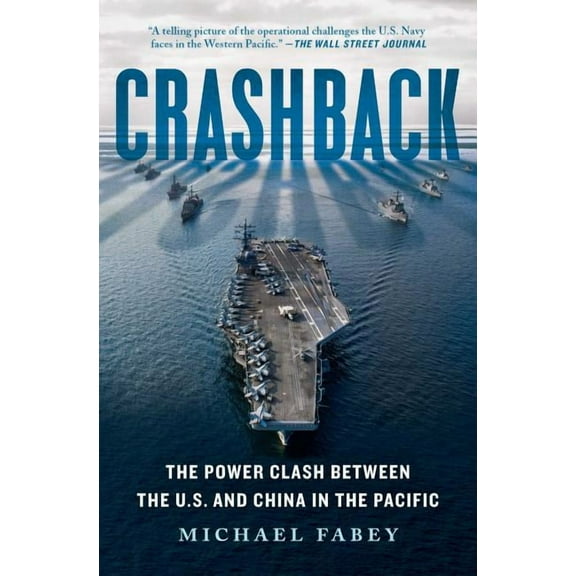
Crashback: The Power Clash Between the U.S. and China in the Pacific, (Paperback) $15.40
 $1540current price $15.40
Crashback: The Power Clash Between the U.S. and China in the Pacific, (Paperback)
Governing China : 150-1850 (Paperback) $22.27
 $2227current price $22.27
Governing China : 150-1850 (Paperback)
Best seller Wednesday: Official Coloring Book (Paperback) $9.95
Best seller $995current price $9.95
Wednesday: Official Coloring Book (Paperback)
314.8 out of 5 Stars. 31 reviewsTaking Mines Seriously: Mine Warfare in China's Near Seas - War College Series, (Paperback) $18.02
 $1802current price $18.02
Taking Mines Seriously: Mine Warfare in China's Near Seas - War College Series, (Paperback)
The Korean War - The Chinese Intervention - War College Series, (Paperback) $16.67
 $1667current price $16.67
The Korean War - The Chinese Intervention - War College Series, (Paperback)
Best seller Enemies to Lovers: a Romantasy Coloring Book, 120 pages (Paperback) $11.48
Best seller $1148current price $11.48
Enemies to Lovers: a Romantasy Coloring Book, 120 pages (Paperback)
314.2 out of 5 Stars. 31 reviewsThe Fighting in North China, (Paperback) $18.75
 $1875current price $18.75
The Fighting in North China, (Paperback)
Three Years in Western China (Paperback) $22.00
 $2200current price $22.00
Three Years in Western China (Paperback)
Will China Save the Planet? (Paperback) $17.91
 $1791current price $17.91
Will China Save the Planet? (Paperback)
Best seller Black AF History: The un-Whitewashed Story of America (Hardcover) $20.99 Was $32.50
Best seller $2099current price $20.99, Was $32.50$32.50
Black AF History: The un-Whitewashed Story of America (Hardcover)
1444.7 out of 5 Stars. 144 reviewsGenerational Theory Book: World View: War Between China and Japan: Why America Must Be Prepared (Paperback) $15.75
 $1575current price $15.75
Generational Theory Book: World View: War Between China and Japan: Why America Must Be Prepared (Paperback)

Customer ratings & reviews
0 ratings|0 reviews
This item does not have any reviews yet

Related pages
- Citizen Diplomacy
- Comrade Communism
- Patton Logistics
- 9/11 Conpiracy 21st Century United States History Books
- Napoleons Marshals
- Russian & Former Soviet Union Political Books
- Saddam Hussein Bills
- Persian Gulf War Military History Books
- Imperialism Political Books
- Arms Control in International Relations Books
- Treaties in International Relations Books
- Korean War Military History Books