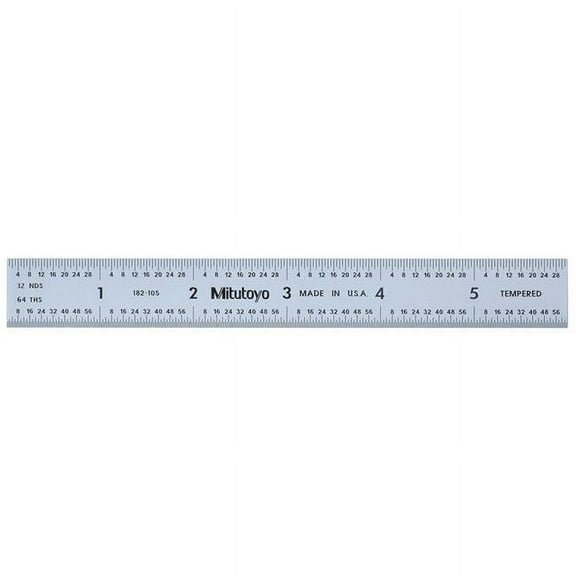
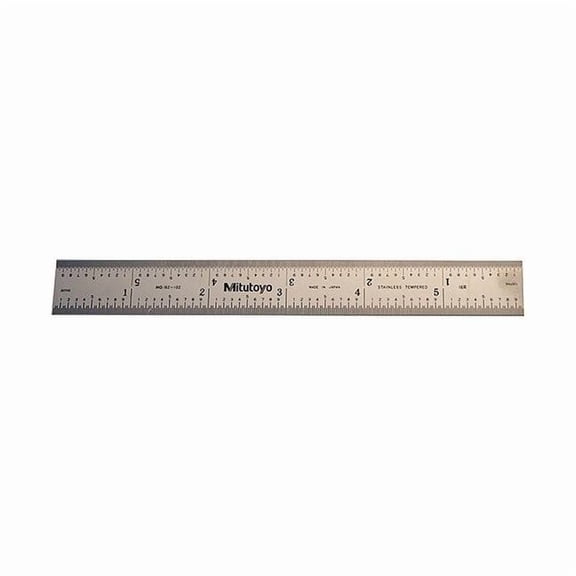
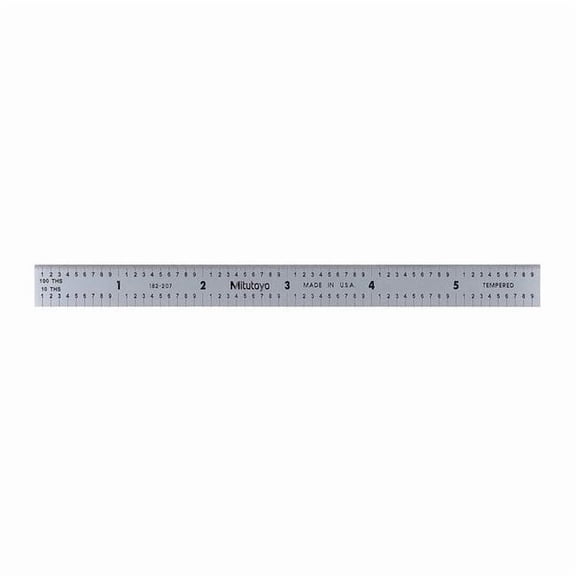
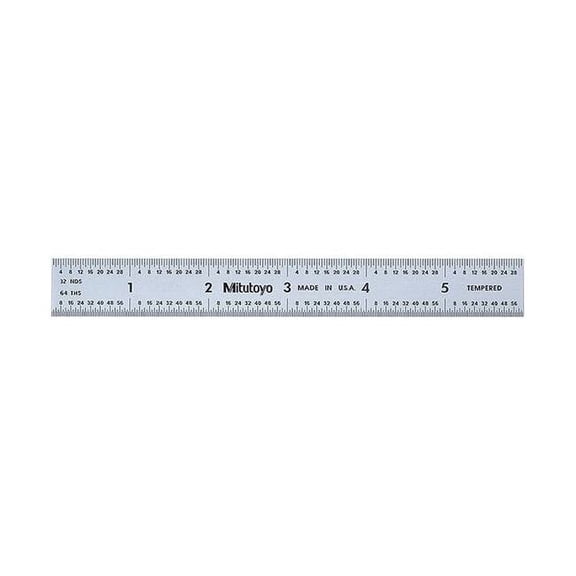
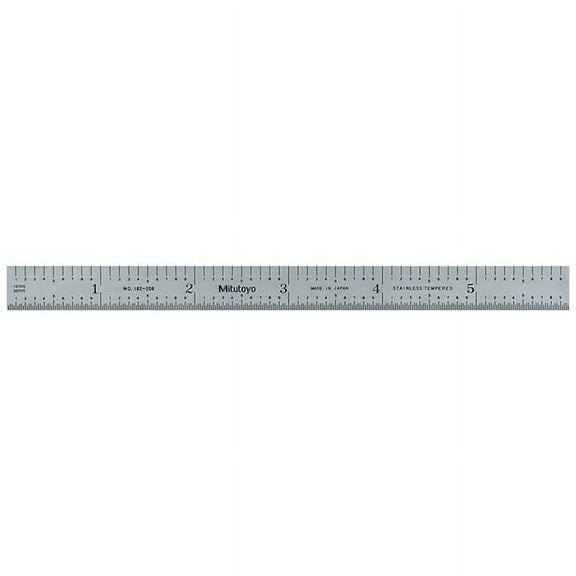
I keep this rule in my woodworking apron so I have it with me all the time. One of its good features is its thickness, it is thick enough to be stiff and in no danger of bending if it occasionally gets snagged in my apron (although I made a thin wooden sheath for it so it never snags anyway). Another good feature is that the measuring increments are cut or etched and then filled with paint so they are easy to see and permanent. The zero position begins exactly at each end of the rule so it is useful for measuring from any kind of corner or stop. Maybe the best feature of all is a very thoughtful arrangement of the zero points... the rule is made so that it doesn't matter if you are measuring from the right or left, if you lay it on a piece and find that the 150 mm end is where you'd like the zero mm end to be, you just flip it over and the scale runs in the opposite direction so now you have the zero where it is easiest to use. The rule has 1 mm and 1/2 mm increments just about where you'd want them, I doubt if I could make use of smaller increments as they would become more difficult to see and at some point it becomes easier to interpolate for say 1/10th mm increments rather than try to line up what would have to be a hair thin line on a ruler anyway. This is a fine little rule for anyone who opts for the metric system which I find easier and quicker to use than imperial measure and not difficult to convert to even though I have used imperial measure most of my life. I am becoming a fan of Mitutoyo, they seem to be part of a great tradition of Japanese craftmanship and this rule leaves nothing to be desired.