

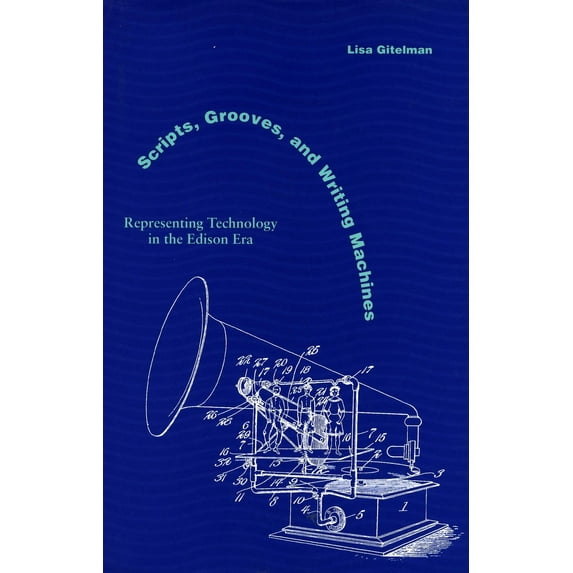
Hero image 0 of SCRIPTS GROOVES & WRITING MACHINES, 0 of 1
SCRIPTS GROOVES & WRITING MACHINES
(No ratings yet)
Key item features
This is a richly imaginative study of machines for writing and reading at the end of the nineteenth century in America. Its aim is to explore writing and reading as culturally contingent experiences, and at the same time to broaden our view of the relationship between technology and textuality.
At the book’s heart is the proposition that technologies of inscription are materialized theories of language. Whether they failed (like Thomas Edison’s “electric pen”) or succeeded (like typewriters), inscriptive technologies of the late nineteenth century were local, often competitive embodiments of the way people experienced writing and reading. Such a perspective cuts through the determinism of recent accounts while arguing for an interdisciplinary method for considering texts and textual production.
Starting with the cacophonous promotion of shorthand alphabets in postbellum America, the author investigates the assumptions—social, psychic, semiotic—that lie behind varying inscriptive practices. The “grooves” in the book’s title are the delicate lines recorded and played by phonographs, and readers will find in these pages a surprising and complex genealogy of the phonograph, along with new readings of the history of the typewriter and of the earliest silent films. Modern categories of authorship, representation, and readerly consumption emerge here amid the un- or sub-literary interests of patent attorneys, would-be inventors, and record producers. Modern subjectivities emerge both in ongoing social constructions of literacy and in the unruly and seemingly unrelated practices of American spiritualism, “Coon” songs, and Rube Goldberg-type romanticism.
Just as digital networks and hypertext have today made us more aware of printed books as knowledge structures, the development and dissemination of the phonograph and typewriter coincided with a transformed awareness of oral and inscribed communication. It was an awareness at once influential in the development of consumer culture, literary and artistic experiences of modernity, and the disciplinary definition of the “human” sciences, such as linguistics, anthropology, and psychology. Recorded sound, typescripts, silent films, and other inscriptive media are memory devices, and in today’s terms the author offers a critical theory of ROM and RAM for the century before computers.
At the book’s heart is the proposition that technologies of inscription are materialized theories of language. Whether they failed (like Thomas Edison’s “electric pen”) or succeeded (like typewriters), inscriptive technologies of the late nineteenth century were local, often competitive embodiments of the way people experienced writing and reading. Such a perspective cuts through the determinism of recent accounts while arguing for an interdisciplinary method for considering texts and textual production.
Starting with the cacophonous promotion of shorthand alphabets in postbellum America, the author investigates the assumptions—social, psychic, semiotic—that lie behind varying inscriptive practices. The “grooves” in the book’s title are the delicate lines recorded and played by phonographs, and readers will find in these pages a surprising and complex genealogy of the phonograph, along with new readings of the history of the typewriter and of the earliest silent films. Modern categories of authorship, representation, and readerly consumption emerge here amid the un- or sub-literary interests of patent attorneys, would-be inventors, and record producers. Modern subjectivities emerge both in ongoing social constructions of literacy and in the unruly and seemingly unrelated practices of American spiritualism, “Coon” songs, and Rube Goldberg-type romanticism.
Just as digital networks and hypertext have today made us more aware of printed books as knowledge structures, the development and dissemination of the phonograph and typewriter coincided with a transformed awareness of oral and inscribed communication. It was an awareness at once influential in the development of consumer culture, literary and artistic experiences of modernity, and the disciplinary definition of the “human” sciences, such as linguistics, anthropology, and psychology. Recorded sound, typescripts, silent films, and other inscriptive media are memory devices, and in today’s terms the author offers a critical theory of ROM and RAM for the century before computers.
Specs
- Book formatPaperback
- Fiction/nonfictionNon-Fiction
- GenreHistory
- Pages304
- Edition1st Edition
- PublisherStanford University Press
Current price is USD$36.70
Price when purchased online
- Free shipping
 Free 30-day returns
How do you want your item?
Columbus, 43215
Arrives between Apr 20 - Apr 23
|
Sold and shipped by Alibris Books
4.565084084363096 stars out of 5, based on 10763 seller reviews(4.6)10763 seller reviews

Free 30-day returns
Other sellers
$37.72
+ $7.98 shippingShipping, arrives by Wed, Apr 22 to Columbus, 43215
Sold and shipped by Best Prices & Service
Free 30-day returns
About this item
Product details
This is a study of machines for writing and reading at the end of the 19th century in America. Its aim is to explore writing and reading as culturally contingent experiences, and at the same time to broaden our view of the relationship between technology and textuality. At the book's heart is the proposition that technologies of inscription are materialized theories of language.
This is a richly imaginative study of machines for writing and reading at the end of the nineteenth century in America. Its aim is to explore writing and reading as culturally contingent experiences, and at the same time to broaden our view of the relationship between technology and textuality.
At the book’s heart is the proposition that technologies of inscription are materialized theories of language. Whether they failed (like Thomas Edison’s “electric pen”) or succeeded (like typewriters), inscriptive technologies of the late nineteenth century were local, often competitive embodiments of the way people experienced writing and reading. Such a perspective cuts through the determinism of recent accounts while arguing for an interdisciplinary method for considering texts and textual production.
Starting with the cacophonous promotion of shorthand alphabets in postbellum America, the author investigates the assumptions—social, psychic, semiotic—that lie behind varying inscriptive practices. The “grooves” in the book’s title are the delicate lines recorded and played by phonographs, and readers will find in these pages a surprising and complex genealogy of the phonograph, along with new readings of the history of the typewriter and of the earliest silent films. Modern categories of authorship, representation, and readerly consumption emerge here amid the un- or sub-literary interests of patent attorneys, would-be inventors, and record producers. Modern subjectivities emerge both in ongoing social constructions of literacy and in the unruly and seemingly unrelated practices of American spiritualism, “Coon” songs, and Rube Goldberg-type romanticism.
Just as digital networks and hypertext have today made us more aware of printed books as knowledge structures, the development and dissemination of the phonograph and typewriter coincided with a transformed awareness of oral and inscribed communication. It was an awareness at once influential in the development of consumer culture, literary and artistic experiences of modernity, and the disciplinary definition of the “human” sciences, such as linguistics, anthropology, and psychology. Recorded sound, typescripts, silent films, and other inscriptive media are memory devices, and in today’s terms the author offers a critical theory of ROM and RAM for the century before computers.
At the book’s heart is the proposition that technologies of inscription are materialized theories of language. Whether they failed (like Thomas Edison’s “electric pen”) or succeeded (like typewriters), inscriptive technologies of the late nineteenth century were local, often competitive embodiments of the way people experienced writing and reading. Such a perspective cuts through the determinism of recent accounts while arguing for an interdisciplinary method for considering texts and textual production.
Starting with the cacophonous promotion of shorthand alphabets in postbellum America, the author investigates the assumptions—social, psychic, semiotic—that lie behind varying inscriptive practices. The “grooves” in the book’s title are the delicate lines recorded and played by phonographs, and readers will find in these pages a surprising and complex genealogy of the phonograph, along with new readings of the history of the typewriter and of the earliest silent films. Modern categories of authorship, representation, and readerly consumption emerge here amid the un- or sub-literary interests of patent attorneys, would-be inventors, and record producers. Modern subjectivities emerge both in ongoing social constructions of literacy and in the unruly and seemingly unrelated practices of American spiritualism, “Coon” songs, and Rube Goldberg-type romanticism.
Just as digital networks and hypertext have today made us more aware of printed books as knowledge structures, the development and dissemination of the phonograph and typewriter coincided with a transformed awareness of oral and inscribed communication. It was an awareness at once influential in the development of consumer culture, literary and artistic experiences of modernity, and the disciplinary definition of the “human” sciences, such as linguistics, anthropology, and psychology. Recorded sound, typescripts, silent films, and other inscriptive media are memory devices, and in today’s terms the author offers a critical theory of ROM and RAM for the century before computers.
info:
We aim to show you accurate product information. Manufacturers, suppliers and others provide what you see here, and we have not verified it.
Specifications
Book format
Paperback
Fiction/nonfiction
Non-Fiction
Genre
History
Pages
304
Warranty
Warranty information
Please be aware that the warranty terms on items offered for sale by third party Marketplace sellers may differ from those displayed in this section (if any). To confirm warranty terms on an item offered for sale by a third party Marketplace seller, please use the 'Contact seller' feature on the third party Marketplace seller's information page and request the item's warranty terms prior to purchase.
Similar items you might like
Based on what customers bought
A Busy Mom's Guide to Entertaining, (Paperback) $37.99
 $3799current price $37.99
A Busy Mom's Guide to Entertaining, (Paperback)
The Authorpreneur Handbook: How Writing a Book Can Create an Abundant Life for Marginalized Writers, (Paperback) $20.30
 $2030current price $20.30
The Authorpreneur Handbook: How Writing a Book Can Create an Abundant Life for Marginalized Writers, (Paperback)
Best seller Hey, Mama! Tell Me Something I Don't Know, (Paperback) $19.99
Best seller $1999current price $19.99
Hey, Mama! Tell Me Something I Don't Know, (Paperback)
11 out of 5 Stars. 1 reviewsBest seller The Teacher (Paperback) $5.98 Was $7.17
Best seller $598current price $5.98, Was $7.17$7.17
The Teacher (Paperback)
2024.7 out of 5 Stars. 202 reviewsICD Programming: A Handbook, (Paperback) $32.50
 $3250current price $32.50
ICD Programming: A Handbook, (Paperback)
Best seller The Shadow Work Journal: A Guide to Integrate and Transcend Your Shadows (Paperback) $8.63
Best seller $863current price $8.63
The Shadow Work Journal: A Guide to Integrate and Transcend Your Shadows (Paperback)
994.8 out of 5 Stars. 99 reviewsde Magnetismo Telluris Commentationis Math. Physicae Sectio I.... $14.37 Was $31.90
 $1437current price $14.37, Was $31.90$31.90
de Magnetismo Telluris Commentationis Math. Physicae Sectio I....
Infelicidad, la moda que no acomoda $30.95
 $3095current price $30.95
Infelicidad, la moda que no acomoda
EKGs / Ecgs: A Quickstudy Laminated Reference Guide, (Paperback) $9.27
 $927current price $9.27
EKGs / Ecgs: A Quickstudy Laminated Reference Guide, (Paperback)
The New Mom Code $29.99
 $2999current price $29.99
The New Mom Code
Welcome to Home Life Your Homes Warning Signs, Book 2, (Paperback) $15.99
 $1599current price $15.99
Welcome to Home Life Your Homes Warning Signs, Book 2, (Paperback)
La Clef de la Théosophie, (Paperback) $17.29
 $1729current price $17.29
La Clef de la Théosophie, (Paperback)
Real Writing Interactive $27.03
 $2703current price $27.03
Real Writing Interactive
Monto, (Paperback) $13.99
 $1399current price $13.99
Monto, (Paperback)
Write With Confidence, (Paperback) $9.99
 $999current price $9.99
Write With Confidence, (Paperback)
Eloquently Speaking (Paperback) $23.05
 $2305current price $23.05
Eloquently Speaking (Paperback)
Suppose, (Paperback) $17.32
 $1732current price $17.32
Suppose, (Paperback)
Ingenium : Five Machines That Changed the World $35.88
 $3588current price $35.88
Ingenium : Five Machines That Changed the World
Best seller Enemies to Lovers: a Romantasy Coloring Book, 120 pages (Paperback) $11.48
Best seller $1148current price $11.48
Enemies to Lovers: a Romantasy Coloring Book, 120 pages (Paperback)
314.2 out of 5 Stars. 31 reviewsPacemaker Programming: A Handbook, (Paperback) $29.85
 $2985current price $29.85
Pacemaker Programming: A Handbook, (Paperback)
Customer ratings & reviews
0 ratings|0 reviews
This item does not have any reviews yet

Related pages
- Logic Circuits Technology & Engineering Books
- Electrical Engineering Drawing
- Imaging Systems Technology & Engineering Books
- Machine Theory Books
- Digital Electronics Technology & Engineering Books
- Advanced Machine Technology
- Expression Technology
- Image Processing Books
- Technical Illustrator
- Semiconductors Electronics Technology & Engineering Books
- Machine Vector
- Machine Design Engineering