

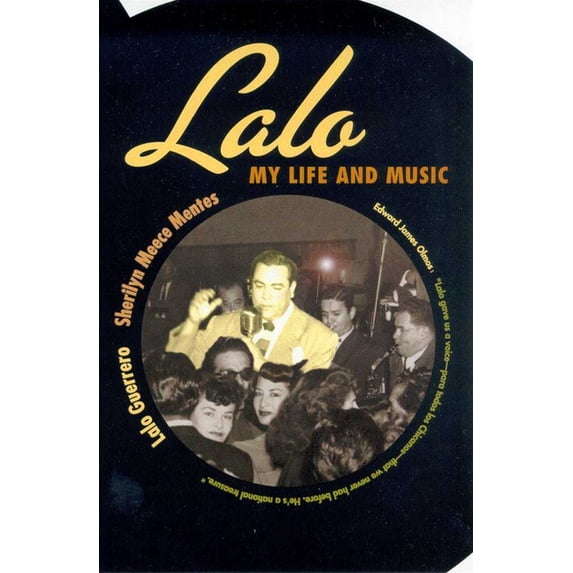
Lalo : My Life and Music (Paperback)
(No ratings yet)
Key item features
He has been called "the father of Chicano music" and "the original Chicano hepcat." A modest man in awe of his own celebrity, he has sung of the joys and sorrows, dreams and frustrations of the Mexican American community over a sixty-year career. Lalo Guerrero is an American original, and his music jubilantly reflects the history of Chicano popular culture and music.
Lalo's autobiography takes readers on a musical rollercoaster, from his earliest enjoyment of Latino and black sounds in Tucson to his burgeoning career in Los Angeles singing with Los Carlistas, the quartet with which he began his recording career in 1938. During the fifties and sixties his music dominated the Latin American charts in both North and South America, and his song "Canción Mexicana" has become the unofficial anthem of Mexico. Through the years, Lalo mastered boleros, rancheras, salsas, mambos, cha-chas, and swing; he performed protest songs, children's music, and corridos that told of his people's struggles. Riding the crest of changing styles, he wrote pachuco boogies in one period and penned clever Spanish parodies of American hit songs in another. For all of these contributions to American music, Lalo was awarded a National Medal of the Arts from President Clinton.
Lalo's story is also the story of his times. We meet his family and earliest musical associates—including his long relationship with Manuel Acuña, who first got Lalo into the recording studio—and the many performers he counted as friends, from Frank Sinatra to Los Lobos. We relive the spirit of the nightclubs where he was a headliner and the one-night stands he performed all over the Southwest. We also discover what life was like in old Tucson and in mid-century L.A. as seen through the eyes of this uniquely creative artist. "In 1958," Guerrero recalls, "I wrote a song about a Martian who came to Earth to clear up certain misunderstandings about Mars. Now I have decided that it is time to set some things straight about Lalo Guerrero." Lalo does just that, in an often funny, sometimes sentimental story that traces the musical genius of a man whose talent has taken him all over the world, but who still believes in giving back to the community. His story is a gift to that community.
The book also features a detailed discography, compiled by Lalo's son Mark, tracing his recorded output from the days of 78s to his most recent CDs.
Lalo's autobiography takes readers on a musical rollercoaster, from his earliest enjoyment of Latino and black sounds in Tucson to his burgeoning career in Los Angeles singing with Los Carlistas, the quartet with which he began his recording career in 1938. During the fifties and sixties his music dominated the Latin American charts in both North and South America, and his song "Canción Mexicana" has become the unofficial anthem of Mexico. Through the years, Lalo mastered boleros, rancheras, salsas, mambos, cha-chas, and swing; he performed protest songs, children's music, and corridos that told of his people's struggles. Riding the crest of changing styles, he wrote pachuco boogies in one period and penned clever Spanish parodies of American hit songs in another. For all of these contributions to American music, Lalo was awarded a National Medal of the Arts from President Clinton.
Lalo's story is also the story of his times. We meet his family and earliest musical associates—including his long relationship with Manuel Acuña, who first got Lalo into the recording studio—and the many performers he counted as friends, from Frank Sinatra to Los Lobos. We relive the spirit of the nightclubs where he was a headliner and the one-night stands he performed all over the Southwest. We also discover what life was like in old Tucson and in mid-century L.A. as seen through the eyes of this uniquely creative artist. "In 1958," Guerrero recalls, "I wrote a song about a Martian who came to Earth to clear up certain misunderstandings about Mars. Now I have decided that it is time to set some things straight about Lalo Guerrero." Lalo does just that, in an often funny, sometimes sentimental story that traces the musical genius of a man whose talent has taken him all over the world, but who still believes in giving back to the community. His story is a gift to that community.
The book also features a detailed discography, compiled by Lalo's son Mark, tracing his recorded output from the days of 78s to his most recent CDs.
Specs
- Book formatPaperback
- Fiction/nonfictionNon-Fiction
- GenreBiography & Memoirs
- Publication dateFebruary, 2002
- Pages216
- SubgenreMusic
Current price is USD$21.89
Price when purchased online
- Free shipping
 Free 30-day returns
How do you want your item?
Ships to
Arrives between Jun 5 - Jun 12
|
Sold and shipped by newbookdeals
4.561491935483871 stars out of 5, based on 1984 seller reviews(4.6)1984 seller reviews

Free 30-day returns
About this item
Product details
He has been called "the father of Chicano music" and "the original Chicano hepcat." Now, Lalo's autobiography takes readers on a musical rollercoaster, from his earliest enjoyment of Latino and black sounds in Tucson to his burgeoning career in Los Angeles singing with Los Carlistas, the quartet with which he began his recording career in 1938. He has been called "the father of Chicano music" and "the original Chicano hepcat." A modest man in awe of his own celebrity, he has sung of the joys and sorrows, dreams and frustrations of the Mexican American community over a sixty-year career. Lalo Guerrero is an American original, and his music jubilantly reflects the history of Chicano popular culture and music. Lalo's autobiography takes readers on a musical rollercoaster, from his earliest enjoyment of Latino and black sounds in Tucson to his burgeoning career in Los Angeles singing with Los Carlistas, the quartet with which he began his recording career in 1938. During the fifties and sixties his music dominated the Latin American charts in both North and South America, and his song "Canción Mexicana" has become the unofficial anthem of Mexico. Through the years, Lalo mastered boleros, rancheras, salsas, mambos, cha-chas, and swing; he performed protest songs, children's music, and corridos that told of his people's struggles. Riding the crest of changing styles, he wrote pachuco boogies in one period and penned clever Spanish parodies of American hit songs in another. For all of these contributions to American music, Lalo was awarded a National Medal of the Arts from President Clinton. Lalo's story is also the story of his times. We meet his family and earliest musical associates--including his long relationship with Manuel Acuña, who first got Lalo into the recording studio--and the many performers he counted as friends, from Frank Sinatra to Los Lobos. We relive the spirit of the nightclubs where he was a headliner and the one-night stands he performed all over the Southwest. We also discover what life was like in old Tucson and in mid-century L.A. as seen through the eyes of this uniquely creative artist. "In 1958," Guerrero recalls, "I wrote a song about a Martian who came to Earth to clear up certain misunderstandings about Mars. Now I have decided that it is time to set some things straight about Lalo Guerrero." Lalo does just that, in an often funny, sometimes sentimental story that traces the musical genius of a man whose talent has taken him all over the world, but who still believes in giving back to the community. His story is a gift to that community. The book also features a detailed discography, compiled by Lalo's son Mark, tracing his recorded output from the days of 78s to his most recent CDs.
He has been called "the father of Chicano music" and "the original Chicano hepcat." A modest man in awe of his own celebrity, he has sung of the joys and sorrows, dreams and frustrations of the Mexican American community over a sixty-year career. Lalo Guerrero is an American original, and his music jubilantly reflects the history of Chicano popular culture and music.
Lalo's autobiography takes readers on a musical rollercoaster, from his earliest enjoyment of Latino and black sounds in Tucson to his burgeoning career in Los Angeles singing with Los Carlistas, the quartet with which he began his recording career in 1938. During the fifties and sixties his music dominated the Latin American charts in both North and South America, and his song "Canción Mexicana" has become the unofficial anthem of Mexico. Through the years, Lalo mastered boleros, rancheras, salsas, mambos, cha-chas, and swing; he performed protest songs, children's music, and corridos that told of his people's struggles. Riding the crest of changing styles, he wrote pachuco boogies in one period and penned clever Spanish parodies of American hit songs in another. For all of these contributions to American music, Lalo was awarded a National Medal of the Arts from President Clinton.
Lalo's story is also the story of his times. We meet his family and earliest musical associates—including his long relationship with Manuel Acuña, who first got Lalo into the recording studio—and the many performers he counted as friends, from Frank Sinatra to Los Lobos. We relive the spirit of the nightclubs where he was a headliner and the one-night stands he performed all over the Southwest. We also discover what life was like in old Tucson and in mid-century L.A. as seen through the eyes of this uniquely creative artist. "In 1958," Guerrero recalls, "I wrote a song about a Martian who came to Earth to clear up certain misunderstandings about Mars. Now I have decided that it is time to set some things straight about Lalo Guerrero." Lalo does just that, in an often funny, sometimes sentimental story that traces the musical genius of a man whose talent has taken him all over the world, but who still believes in giving back to the community. His story is a gift to that community.
The book also features a detailed discography, compiled by Lalo's son Mark, tracing his recorded output from the days of 78s to his most recent CDs.
Lalo's autobiography takes readers on a musical rollercoaster, from his earliest enjoyment of Latino and black sounds in Tucson to his burgeoning career in Los Angeles singing with Los Carlistas, the quartet with which he began his recording career in 1938. During the fifties and sixties his music dominated the Latin American charts in both North and South America, and his song "Canción Mexicana" has become the unofficial anthem of Mexico. Through the years, Lalo mastered boleros, rancheras, salsas, mambos, cha-chas, and swing; he performed protest songs, children's music, and corridos that told of his people's struggles. Riding the crest of changing styles, he wrote pachuco boogies in one period and penned clever Spanish parodies of American hit songs in another. For all of these contributions to American music, Lalo was awarded a National Medal of the Arts from President Clinton.
Lalo's story is also the story of his times. We meet his family and earliest musical associates—including his long relationship with Manuel Acuña, who first got Lalo into the recording studio—and the many performers he counted as friends, from Frank Sinatra to Los Lobos. We relive the spirit of the nightclubs where he was a headliner and the one-night stands he performed all over the Southwest. We also discover what life was like in old Tucson and in mid-century L.A. as seen through the eyes of this uniquely creative artist. "In 1958," Guerrero recalls, "I wrote a song about a Martian who came to Earth to clear up certain misunderstandings about Mars. Now I have decided that it is time to set some things straight about Lalo Guerrero." Lalo does just that, in an often funny, sometimes sentimental story that traces the musical genius of a man whose talent has taken him all over the world, but who still believes in giving back to the community. His story is a gift to that community.
The book also features a detailed discography, compiled by Lalo's son Mark, tracing his recorded output from the days of 78s to his most recent CDs.
info:
We aim to show you accurate product information. Manufacturers, suppliers and others provide what you see here, and we have not verified it.
Specifications
Book format
Paperback
Fiction/nonfiction
Non-Fiction
Genre
Biography & Memoirs
Publication date
February, 2002
Warranty
Warranty information
Please be aware that the warranty terms on items offered for sale by third party Marketplace sellers may differ from those displayed in this section (if any). To confirm warranty terms on an item offered for sale by a third party Marketplace seller, please use the 'Contact seller' feature on the third party Marketplace seller's information page and request the item's warranty terms prior to purchase.
Customer ratings & reviews
0 ratings|0 reviews
This item does not have any reviews yet
