


The Ocean Is a Wilderness : Atlantic Piracy and the Limits of State Authority, 1688-1856 (Paperback)
(No ratings yet)
Key item features
Historians have long maintained that the rise of the British empire brought an end to the great age of piracy, turning the once violent Atlantic frontier into a locus of orderly commerce by 1730. In this book, Guy Chet reassesses that view by documenting the persistence of piracy, smuggling, and other forms of illegal trade throughout the eighteenth century despite ongoing governmental campaigns to stamp it out. The failure of the Royal Navy to police oceanic trade reflected the state's limited authority and legitimacy at port, in the courts, and in the hearts and minds of Anglo-American constituents.
Chet shows how the traditional focus on the growth of the modern state overlooked the extent to which old attitudes and cultural practices continued to hold sway. Even as the British government extended its naval, legal, and bureaucratic reach, in many parts of the Atlantic world illegal trade was not only tolerated but encouraged. In part this was because Britain's constabulary command of the region remained more tenuous than some have suggested, and in part because maritime insurance and wartime tax policies ensured that piracy and smuggling remained profitable. When Atlantic piracy eventually waned in the early nineteenth century, it had more to do with a reduction in its profitability at port than with forceful confrontation at sea.
Challenging traditional accounts that chronicle forces of civilization taming a wild Atlantic frontier, this book is a valuable addition to a body of borderlands scholarship reevaluating the relationship between the emerging modern state and its imperial frontiers.
Chet shows how the traditional focus on the growth of the modern state overlooked the extent to which old attitudes and cultural practices continued to hold sway. Even as the British government extended its naval, legal, and bureaucratic reach, in many parts of the Atlantic world illegal trade was not only tolerated but encouraged. In part this was because Britain's constabulary command of the region remained more tenuous than some have suggested, and in part because maritime insurance and wartime tax policies ensured that piracy and smuggling remained profitable. When Atlantic piracy eventually waned in the early nineteenth century, it had more to do with a reduction in its profitability at port than with forceful confrontation at sea.
Challenging traditional accounts that chronicle forces of civilization taming a wild Atlantic frontier, this book is a valuable addition to a body of borderlands scholarship reevaluating the relationship between the emerging modern state and its imperial frontiers.
Specs
- Book formatPaperback
- Fiction/nonfictionNon-Fiction
- GenreHistory
- Publication dateMay, 2014
- Pages178
- EditionFirst Edition
Current price is USD$30.92
Price when purchased online
Out of stock
How do you want your item?
Out of stock
About this item
Product details
9781625340856. New condition. Trade paperback. Language: English. Pages: 178. Trade paperback (US). Glued binding. 178 p. Historians have long maintained that the rise of the British empire brought an end to the great age of piracy, turning the once violent Atlantic frontier into a locus of orderly commerce by 1730. In this book, Guy Chet reassesses that view by documenting the persistence of piracy, smuggling, and other forms of illegal trade throughout the eighteenth century despite ongoing governmental campaigns to stamp it out. the failure of the Royal Navy to police oceanic trade reflected the state's limited authority and legitimacy at port, in the courts, and in the hearts and minds of Anglo-American constituents. Chet shows how the traditional focus on the growth of the modern state overlooked the extent to which old attitudes and cultural practises continued to hold sway. Even as the British government extended its naval, legal, and bureaucratic reach, in many parts of the Atlantic world illegal trade was not only tolerated but encouraged. In part this was because Britain's constabulary command of the region remained more tenuous than some have suggested, and in part because maritime insurance and wartime tax policies ensured that piracy and smuggling remained profitable. When Atlantic piracy eventually waned in the early nineteenth century, it had more to do with a reduction in its profitability at port than with forceful confrontation at sea. Challenging traditional accounts that chronicle forces of civilization taming a wild Atlantic frontier, this book is a valuable addition to a body of borderlands scholarship reevaluating the relationship between the emerging modern state and its imperial frontiers.
Historians have long maintained that the rise of the British empire brought an end to the great age of piracy, turning the once violent Atlantic frontier into a locus of orderly commerce by 1730. In this book, Guy Chet reassesses that view by documenting the persistence of piracy, smuggling, and other forms of illegal trade throughout the eighteenth century despite ongoing governmental campaigns to stamp it out. The failure of the Royal Navy to police oceanic trade reflected the state's limited authority and legitimacy at port, in the courts, and in the hearts and minds of Anglo-American constituents.
Chet shows how the traditional focus on the growth of the modern state overlooked the extent to which old attitudes and cultural practices continued to hold sway. Even as the British government extended its naval, legal, and bureaucratic reach, in many parts of the Atlantic world illegal trade was not only tolerated but encouraged. In part this was because Britain's constabulary command of the region remained more tenuous than some have suggested, and in part because maritime insurance and wartime tax policies ensured that piracy and smuggling remained profitable. When Atlantic piracy eventually waned in the early nineteenth century, it had more to do with a reduction in its profitability at port than with forceful confrontation at sea.
Challenging traditional accounts that chronicle forces of civilization taming a wild Atlantic frontier, this book is a valuable addition to a body of borderlands scholarship reevaluating the relationship between the emerging modern state and its imperial frontiers.
Chet shows how the traditional focus on the growth of the modern state overlooked the extent to which old attitudes and cultural practices continued to hold sway. Even as the British government extended its naval, legal, and bureaucratic reach, in many parts of the Atlantic world illegal trade was not only tolerated but encouraged. In part this was because Britain's constabulary command of the region remained more tenuous than some have suggested, and in part because maritime insurance and wartime tax policies ensured that piracy and smuggling remained profitable. When Atlantic piracy eventually waned in the early nineteenth century, it had more to do with a reduction in its profitability at port than with forceful confrontation at sea.
Challenging traditional accounts that chronicle forces of civilization taming a wild Atlantic frontier, this book is a valuable addition to a body of borderlands scholarship reevaluating the relationship between the emerging modern state and its imperial frontiers.
info:
We aim to show you accurate product information. Manufacturers, suppliers and others provide what you see here, and we have not verified it.
Specifications
Book format
Paperback
Fiction/nonfiction
Non-Fiction
Genre
History
Publication date
May, 2014
Warranty
Warranty information
Please be aware that the warranty terms on items offered for sale by third party Marketplace sellers may differ from those displayed in this section (if any). To confirm warranty terms on an item offered for sale by a third party Marketplace seller, please use the 'Contact seller' feature on the third party Marketplace seller's information page and request the item's warranty terms prior to purchase.
Similar items you might like
Based on what customers bought
Russia in Africa: Resurgent Great Power or Bellicose Pretender?, (Paperback) $14.48
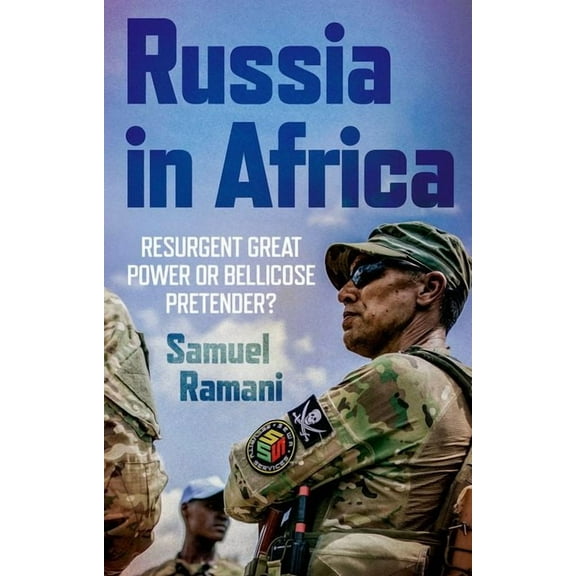 $1448current price $14.48
Russia in Africa: Resurgent Great Power or Bellicose Pretender?, (Paperback)
A Training School for Elephants, (Paperback) $20.00
 $2000current price $20.00
A Training School for Elephants, (Paperback)
The Instruction of Ptah-hotep (Hardcover) $32.14 Was $36.36
 $3214current price $32.14, Was $36.36$36.36
The Instruction of Ptah-hotep (Hardcover)
An African People's Quest for Freedom and Justice: A Political History of Eritrea, 1941-1962, (Paperback) $28.50
 $2850current price $28.50
An African People's Quest for Freedom and Justice: A Political History of Eritrea, 1941-1962, (Paperback)
Into the Light: Reclaiming Africa's Stolen History Is a Start, (Paperback) $19.00
 $1900current price $19.00
Into the Light: Reclaiming Africa's Stolen History Is a Start, (Paperback)
History of East Africa, (Paperback) $24.95
 $2495current price $24.95
History of East Africa, (Paperback)
The Wolof of Senegambia, (Hardcover) $30.94
 $3094current price $30.94
The Wolof of Senegambia, (Hardcover)
Pre-Owned Patrice Lumumba (Ohio Short Histories of Africa) Paperback $18.27
 $1827current price $18.27
Pre-Owned Patrice Lumumba (Ohio Short Histories of Africa) Paperback
Zanzibar: The Island Metropolis Of Eastern Africa, (Paperback) $45.04
 $4504current price $45.04
Zanzibar: The Island Metropolis Of Eastern Africa, (Paperback)
World Today (Stryker) Africa 2024-2025, (Paperback) $32.54
 $3254current price $32.54
World Today (Stryker) Africa 2024-2025, (Paperback)
Africa and the American Flag (Paperback) $25.95
 $2595current price $25.95
Africa and the American Flag (Paperback)
Chronicles of Ancient Africa, (Paperback) $18.99
 $1899current price $18.99
Chronicles of Ancient Africa, (Paperback)
A Stolen Life: Searching for Richard Pierpoint, (Paperback) $20.75
 $2075current price $20.75
A Stolen Life: Searching for Richard Pierpoint, (Paperback)
The Heart of Africa, (Paperback) $27.61
 $2761current price $27.61
The Heart of Africa, (Paperback)
World Today (Stryker) Africa 2019-2020, (Paperback) $32.95
 $3295current price $32.95
World Today (Stryker) Africa 2019-2020, (Paperback)
Record's of Captain Clapperton's Last Expedition to Africa, (Paperback) $23.69
 $2369current price $23.69
Record's of Captain Clapperton's Last Expedition to Africa, (Paperback)
Sirdar and Khalifa (Paperback) $23.95
 $2395current price $23.95
Sirdar and Khalifa (Paperback)
The Anatomy of South African Misery, (Paperback) $17.95
 $1795current price $17.95
The Anatomy of South African Misery, (Paperback)
The Heart Of Africa, (Paperback) $28.55
 $2855current price $28.55
The Heart Of Africa, (Paperback)
How Europe Underdeveloped Africa, (Paperback) $19.95
 $1995current price $19.95
How Europe Underdeveloped Africa, (Paperback)
Customer ratings & reviews
0 ratings|0 reviews
This item does not have any reviews yet

Related pages
- Jekyll Island Camping
- Gibbs Rule
- Island Outpost
- Island Archer
- Oceans Deadliest
- Middle River Press
- Australia & Oceania Historical Teen & Young Adult Books
- Sea Story Books
- Europe Historical Teen & Young Adult Books
- Action & Adventure Teen & Young Adult Books
- General Historical Teen & Young Adult Books
- Australia & Oceania People & Places Teen & Young Adult Books