The Idea of Wilderness : From Prehistory to the Age of Ecology (Paperback)
Key item features
How has the concept of wild nature changed over the millennia? And what have been the environmental consequences? In this broad-ranging book Max Oelschlaeger argues that the idea of wilderness has reflected the evolving character of human existence from Paleolithic times to the present day. An intellectual history, it draws together evidence from philosophy, anthropology, theology, literature, ecology, cultural geography, and archaeology to provide a new scientifically and philosophically informed understanding of humankind’s relationship to nature.
Oelschlaeger begins by examining the culture of prehistoric hunter-gatherers, whose totems symbolized the idea of organic unity between humankind and wild nature, and idea that the author believes is essential to any attempt to define human potential. He next traces how the transformation of these hunter-gatherers into farmers led to a new awareness of distinctions between humankind and nature, and how Hellenism and Judeo-Christianity later introduced the unprecedented concept that nature was valueless until humanized. Oelschlaeger discusses the concept of wilderness in relation to the rise of classical science and modernism, and shows that opposition to “modernism” arose almost immediately from scientific, literary, and philosophical communities. He provides new and, in some cases, revisionist studies of the seminal American figures Thoreau, Muir, and Leopold, and he gives fresh readings of America’s two prodigious wilderness poets Robinson Jeffers and Gary Snyder. He concludes with a searching look at the relationship of evolutionary thought to our postmodern effort to reconceptualize ourselves as civilized beings who remain, in some ways, natural animals.
Specs
- Book formatPaperback
- Fiction/nonfictionNon-Fiction
- GenreTravel & Nature
- Publication dateJanuary, 1993
- Pages489
- EditionRevised Edition
How do you want your item?
About this item
Product details
How has the concept of wild nature changed over the millennia? And what have been the environmental consequences? In this broad-ranging book Max Oelschlaeger argues that the idea of wilderness has reflected the evolving character of human existence from Paleolithic times to the present day. An intellectual history, it draws together evidence from philosophy, anthropology, theology, literature, ecology, cultural geography, and archaeology to provide a new scientifically and philosophically informed understanding of humankind's relationship to nature.
Oelschlaeger begins by examining the culture of prehistoric hunter-gatherers, whose totems symbolized the idea of organic unity between humankind and wild nature, and idea that the author believes is essential to any attempt to define human potential. He next traces how the transformation of these hunter-gatherers into farmers led to a new awareness of distinctions between humankind and nature, and how Hellenism and Judeo-Christianity later introduced the unprecedented concept that nature was valueless until humanized. Oelschlaeger discusses the concept of wilderness in relation to the rise of classical science and modernism, and shows that opposition to "modernism" arose almost immediately from scientific, literary, and philosophical communities. He provides new and, in some cases, revisionist studies of the seminal American figures Thoreau, Muir, and Leopold, and he gives fresh readings of America's two prodigious wilderness poets Robinson Jeffers and Gary Snyder. He concludes with a searching look at the relationship of evolutionary thought to our postmodern effort to reconceptualize ourselves as civilized beings who remain, in some ways, natural animals.
How has the concept of wild nature changed over the millennia? And what have been the environmental consequences? In this broad-ranging book Max Oelschlaeger argues that the idea of wilderness has reflected the evolving character of human existence from Paleolithic times to the present day. An intellectual history, it draws together evidence from philosophy, anthropology, theology, literature, ecology, cultural geography, and archaeology to provide a new scientifically and philosophically informed understanding of humankind’s relationship to nature.
Oelschlaeger begins by examining the culture of prehistoric hunter-gatherers, whose totems symbolized the idea of organic unity between humankind and wild nature, and idea that the author believes is essential to any attempt to define human potential. He next traces how the transformation of these hunter-gatherers into farmers led to a new awareness of distinctions between humankind and nature, and how Hellenism and Judeo-Christianity later introduced the unprecedented concept that nature was valueless until humanized. Oelschlaeger discusses the concept of wilderness in relation to the rise of classical science and modernism, and shows that opposition to “modernism” arose almost immediately from scientific, literary, and philosophical communities. He provides new and, in some cases, revisionist studies of the seminal American figures Thoreau, Muir, and Leopold, and he gives fresh readings of America’s two prodigious wilderness poets Robinson Jeffers and Gary Snyder. He concludes with a searching look at the relationship of evolutionary thought to our postmodern effort to reconceptualize ourselves as civilized beings who remain, in some ways, natural animals.
Specifications
Book format
Fiction/nonfiction
Genre
Publication date
Warranty
Warranty information
Warnings
State Chemical Disclosure
Similar items you might like
Based on what customers bought
The Little Book of Anthropology, (Paperback) $13.72
 $1372current price $13.72
The Little Book of Anthropology, (Paperback)
The Skeptical Environmentalist, (Paperback) $50.72
 $5072current price $50.72
The Skeptical Environmentalist, (Paperback)
Caius College (Paperback) $33.95
 $3395current price $33.95
Caius College (Paperback)
50+ bought since yesterday The Housemaid (Paperback) $14.24
50+ bought since yesterday 2 optionsAvailable in additional 2 options$1424current price $14.24
The Housemaid (Paperback)
5534.7 out of 5 Stars. 553 reviewsGenerative AI for Academics, (Paperback) $34.61
 $3461current price $34.61
Generative AI for Academics, (Paperback)
On the Generation of Animals, (Paperback) $20.00
 $2000current price $20.00
On the Generation of Animals, (Paperback)
Best seller The Coworker (Paperback) $9.46
Best seller $946current price $9.46
The Coworker (Paperback)
3354.8 out of 5 Stars. 335 reviewsWild Counselor: 1977--The Summer of the Hunt (Paperback) $15.07
 $1507current price $15.07
Wild Counselor: 1977--The Summer of the Hunt (Paperback)
Narva, 1953; 33, (Paperback) $17.95
 $1795current price $17.95
Narva, 1953; 33, (Paperback)
Cold as Hell: A Teacher's Chronicles, (Paperback) $18.99
 $1899current price $18.99
Cold as Hell: A Teacher's Chronicles, (Paperback)
Narva, 1939; 22, (Paperback) $18.95
 $1895current price $18.95
Narva, 1939; 22, (Paperback)
The Hunting Grounds of the Old World (Paperback) $29.95
 $2995current price $29.95
The Hunting Grounds of the Old World (Paperback)
Crucians (Carassius carassius): Biology, Ecology, Angling and Culture, (Paperback) $15.48
 $1548current price $15.48
Crucians (Carassius carassius): Biology, Ecology, Angling and Culture, (Paperback)
Best seller Outlive: The Science and Art of Longevity (Hardcover) $14.67 Was $17.74
Best seller 2 optionsAvailable in additional 2 options$1467current price $14.67, Was $17.74$17.74
Outlive: The Science and Art of Longevity (Hardcover)
554.6 out of 5 Stars. 55 reviewsRunning with the Pack (Paperback) $15.86 Was $17.70
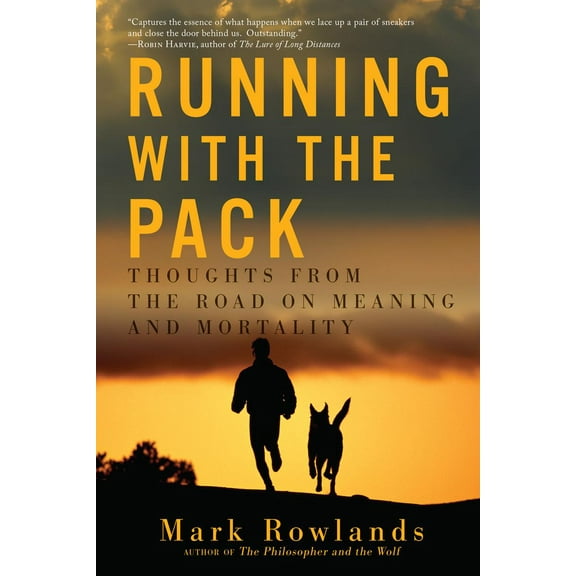 $1586current price $15.86, Was $17.70$17.70
Running with the Pack (Paperback)
Narva, 1959; 39, (Paperback) $18.95
 $1895current price $18.95
Narva, 1959; 39, (Paperback)
Harvest/HBJ Book Life of the Mind: One/Thinking, Two/Willing, (Paperback) $16.22
 $1622current price $16.22
Harvest/HBJ Book Life of the Mind: One/Thinking, Two/Willing, (Paperback)
Sciences: Culture Mécanique (Paperback) $27.92
 $2792current price $27.92
Sciences: Culture Mécanique (Paperback)