

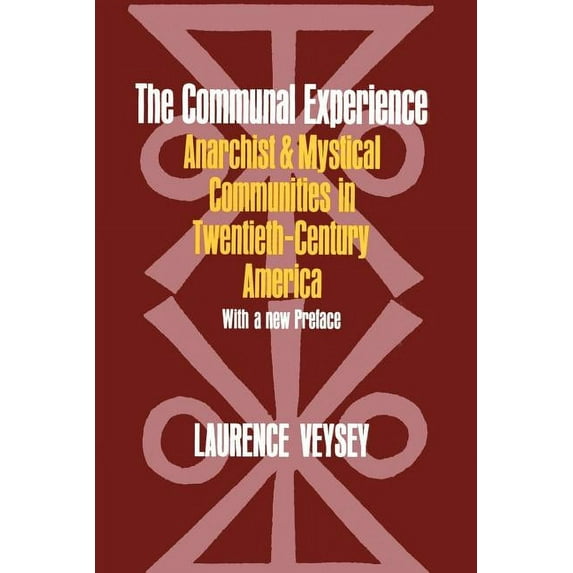
Hero image 0 of The Communal Experience : Anarchist and Mystical Communities in Twentieth Century America (Paperback), 0 of 1
The Communal Experience : Anarchist and Mystical Communities in Twentieth Century America (Paperback)
(No ratings yet)
Key item features
The original impulse for groups to separate from society and establish communities of their own was religious. Though the religious side of this drive toward separation remains strong, the last two centuries have seen the appearance of secular communities with a socialist or anarchist orientation. In The Communal Experience, nominated for a National Book Award in 1973, Laurence Veysey explores the close resemblances between the secular and religious forms of cultural radicalism through intensive observation of four little-known communities.
Veysey compares the history of secular communities such as the early Ferrer Colony and Modern School, of Shelton, New Jersey, with contemporary anarchist communities in New York, Vermont, and New Mexico. Religious communes—"Communities of Discipline"—such as the Vedanta monasteries of the early twentieth century are compared with contemporary mystical communities in New Mexico. Distinctions between the anarchist and the mystical groups are most obvious from their approach to communal life. As Veysey shows, anarchist communities are loose, unstructured, voluntaristic; the mystics establish more rigid life-styles, focus on spiritual leaders, and hold community a secondary goal to self-realization. In a new preface written for this Phoenix Edition, he describes his return to a New Mexican mystical community and the changes that have occurred in the six years since his last visit.
Veysey compares the history of secular communities such as the early Ferrer Colony and Modern School, of Shelton, New Jersey, with contemporary anarchist communities in New York, Vermont, and New Mexico. Religious communes—"Communities of Discipline"—such as the Vedanta monasteries of the early twentieth century are compared with contemporary mystical communities in New Mexico. Distinctions between the anarchist and the mystical groups are most obvious from their approach to communal life. As Veysey shows, anarchist communities are loose, unstructured, voluntaristic; the mystics establish more rigid life-styles, focus on spiritual leaders, and hold community a secondary goal to self-realization. In a new preface written for this Phoenix Edition, he describes his return to a New Mexican mystical community and the changes that have occurred in the six years since his last visit.
Specs
- Book formatPaperback
- Fiction/nonfictionNon-Fiction
- Publication dateNovember, 1978
- Pages512
- Reading levelUndergraduate
- Series titlePhoenix Book
Current price is USD$56.00
Price when purchased online
- Free shipping
 Free 90-day returns
How do you want your item?
Try 30 days of Free Shipping with Walmart+! Choose plan at checkout.
Columbus, 43215
Arrives by Wed, Apr 29
.Order within 14 hr 13 min
Sold and shipped by Walmart.com

Free 90-day returns

This item is gift eligible
More seller options (2)
Starting from $68.37

Get free delivery, shipping and more*
*Restrictions apply Try Walmart+ now
About this item
Product details
The original impulse for groups to separate from society and establish communities of their own was religious. Though the religious side of this drive toward separation remains strong, the last two centuries have seen the appearance of secular communities with a socialist or anarchist orientation. In The Communal Experience, nominated for a National Book Award in 1973, Laurence Veysey explores the close resemblances between the secular and religious forms of cultural radicalism through intensive observation of four little-known communities. Veysey compares the history of secular communities such as the early Ferrer Colony and Modern School, of Shelton, New Jersey, with contemporary anarchist communities in New York, Vermont, and New Mexico. Religious communes--"Communities of Discipline"--such as the Vedanta monasteries of the early twentieth century are compared with contemporary mystical communities in New Mexico. Distinctions between the anarchist and the mystical groups are most obvious from their approach to communal life. As Veysey shows, anarchist communities are loose, unstructured, voluntaristic; the mystics establish more rigid life-styles, focus on spiritual leaders, and hold community a secondary goal to self-realization. In a new preface written for this Phoenix Edition, he describes his return to a New Mexican mystical community and the changes that have occurred in the six years since his last visit.
The original impulse for groups to separate from society and establish communities of their own was religious. Though the religious side of this drive toward separation remains strong, the last two centuries have seen the appearance of secular communities with a socialist or anarchist orientation. In The Communal Experience, nominated for a National Book Award in 1973, Laurence Veysey explores the close resemblances between the secular and religious forms of cultural radicalism through intensive observation of four little-known communities.
Veysey compares the history of secular communities such as the early Ferrer Colony and Modern School, of Shelton, New Jersey, with contemporary anarchist communities in New York, Vermont, and New Mexico. Religious communes—"Communities of Discipline"—such as the Vedanta monasteries of the early twentieth century are compared with contemporary mystical communities in New Mexico. Distinctions between the anarchist and the mystical groups are most obvious from their approach to communal life. As Veysey shows, anarchist communities are loose, unstructured, voluntaristic; the mystics establish more rigid life-styles, focus on spiritual leaders, and hold community a secondary goal to self-realization. In a new preface written for this Phoenix Edition, he describes his return to a New Mexican mystical community and the changes that have occurred in the six years since his last visit.
Veysey compares the history of secular communities such as the early Ferrer Colony and Modern School, of Shelton, New Jersey, with contemporary anarchist communities in New York, Vermont, and New Mexico. Religious communes—"Communities of Discipline"—such as the Vedanta monasteries of the early twentieth century are compared with contemporary mystical communities in New Mexico. Distinctions between the anarchist and the mystical groups are most obvious from their approach to communal life. As Veysey shows, anarchist communities are loose, unstructured, voluntaristic; the mystics establish more rigid life-styles, focus on spiritual leaders, and hold community a secondary goal to self-realization. In a new preface written for this Phoenix Edition, he describes his return to a New Mexican mystical community and the changes that have occurred in the six years since his last visit.
info:
We aim to show you accurate product information. Manufacturers, suppliers and others provide what you see here, and we have not verified it.
Specifications
Book format
Paperback
Fiction/nonfiction
Non-Fiction
Genre
Political & Social Sciences
Publication date
November, 1978
Warranty
Warranty information
Please be aware that the warranty terms on items offered for sale by third party Marketplace sellers may differ from those displayed in this section (if any). To confirm warranty terms on an item offered for sale by a third party Marketplace seller, please use the 'Contact seller' feature on the third party Marketplace seller's information page and request the item's warranty terms prior to purchase.
Warnings
State Chemical Disclosure
None
Similar items you might like
Based on what customers bought
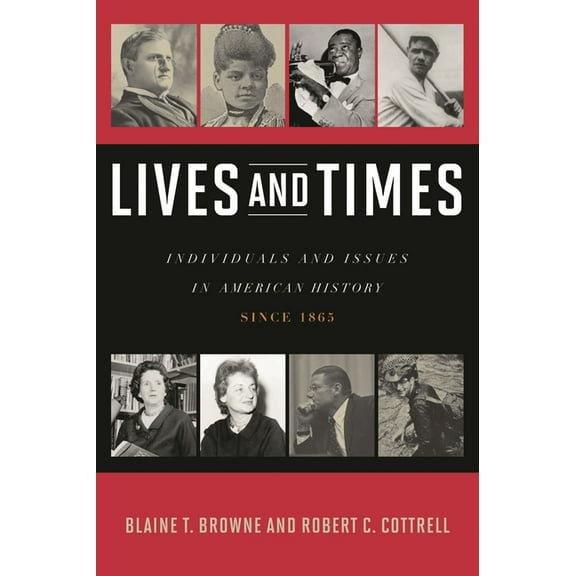
Lives and Times: Individuals and Issues in American History: Since 1865, (Paperback) $57.95
 $5795current price $57.95
Lives and Times: Individuals and Issues in American History: Since 1865, (Paperback)
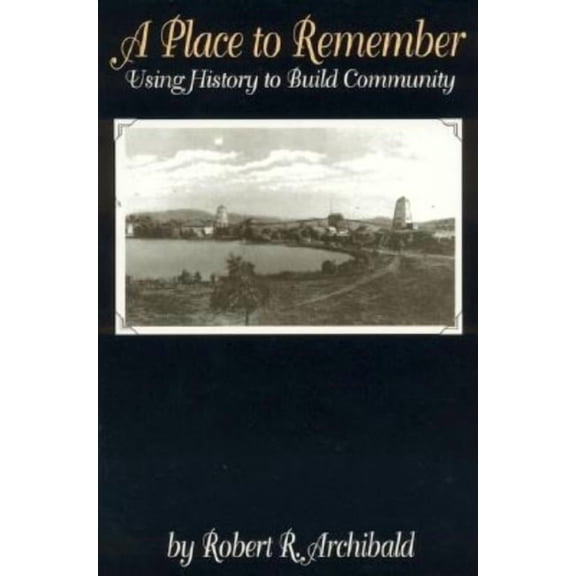
American Association for State and Local A Place to Remember: Using History to Build Community, (Paperback) $39.77
 $3977current price $39.77
American Association for State and Local A Place to Remember: Using History to Build Community, (Paperback)
Community and the Economy: The Theory of Public Co-operation, (Paperback) $59.99
 $5999current price $59.99
Community and the Economy: The Theory of Public Co-operation, (Paperback)
The Disorderly Society : Rethinking Global Governance in an Age of Anarchy (Paperback) $29.95 Was $35.00
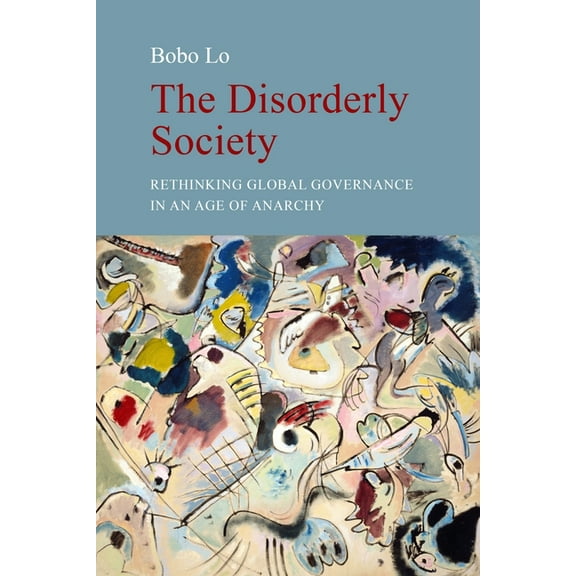 $2995current price $29.95, Was $35.00$35.00
The Disorderly Society : Rethinking Global Governance in an Age of Anarchy (Paperback)
Lives and Times: Individuals and Issues in American History: To 1877, (Paperback) $57.95
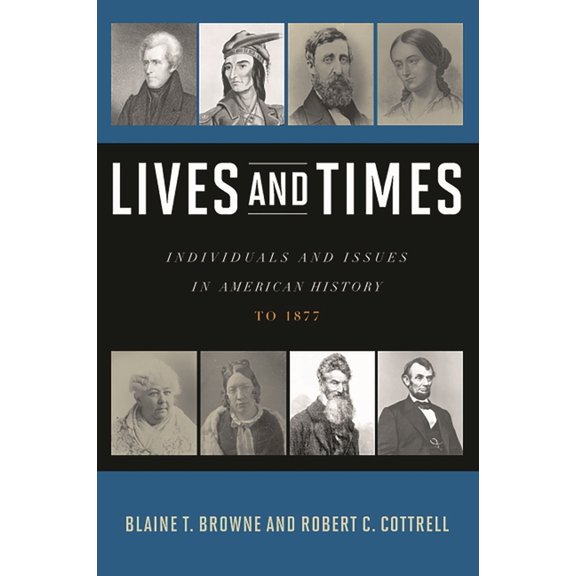 $5795current price $57.95
Lives and Times: Individuals and Issues in American History: To 1877, (Paperback)
Making Sense of Anarchism: Errico Malatesta's Experiments with Revolution, 1889-1900, (Hardcover) $56.14
 $5614current price $56.14
Making Sense of Anarchism: Errico Malatesta's Experiments with Revolution, 1889-1900, (Hardcover)
Social Trust, Anarchy, and International Conflict, (Hardcover) $66.24
 $6624current price $66.24
Social Trust, Anarchy, and International Conflict, (Hardcover)
Democracy and Social Peace in Divided Societies: Exploring Consociational Parties, (Paperback) $54.99
 $5499current price $54.99
Democracy and Social Peace in Divided Societies: Exploring Consociational Parties, (Paperback)
Princeton Legacy Library Italian Anarchism, 1864-1892, Book 271, (Paperback) $57.00
 $5700current price $57.00
Princeton Legacy Library Italian Anarchism, 1864-1892, Book 271, (Paperback)
Nanofibres de chitine biosourcées comme systèmes d'administration de médicaments anticancéreux, (Paperback) $51.00
 $5100current price $51.00
Nanofibres de chitine biosourcées comme systèmes d'administration de médicaments anticancéreux, (Paperback)
Apache Wars: A Constabulary Perspective, (Paperback) $57.95
 $5795current price $57.95
Apache Wars: A Constabulary Perspective, (Paperback)
Eisenhower and the Anti-Communist Crusade, (Paperback) $51.46
 $5146current price $51.46
Eisenhower and the Anti-Communist Crusade, (Paperback)
A to Z Guides The A to Z of U.S. Diplomacy from the Civil War to World War I, Book 133, (Paperback) $58.00
 $5800current price $58.00
A to Z Guides The A to Z of U.S. Diplomacy from the Civil War to World War I, Book 133, (Paperback)
Ideas in Context Hegel: Religion, Economics, and the Politics of Spirit, 1770 1807, Book 6, (Paperback) $48.99
 $4899current price $48.99
Ideas in Context Hegel: Religion, Economics, and the Politics of Spirit, 1770 1807, Book 6, (Paperback)
Forming a Culture of Peace: Reframing Narratives of Intergroup Relations, Equity, and Justice, (Paperback) $56.14
 $5614current price $56.14
Forming a Culture of Peace: Reframing Narratives of Intergroup Relations, Equity, and Justice, (Paperback)
Rethinking Peace and Conflict Studies Peace as Governance, (Paperback) $50.02
 $5002current price $50.02
Rethinking Peace and Conflict Studies Peace as Governance, (Paperback)
Political Theory for Today Character in the American Experience: An Unruly People, (Paperback) $47.89
 $4789current price $47.89
Political Theory for Today Character in the American Experience: An Unruly People, (Paperback)
Political Philosophy and Public Purpose Against Orthodoxy: Social Theory and Its Discontents, (Paperback) $49.87
 $4987current price $49.87
Political Philosophy and Public Purpose Against Orthodoxy: Social Theory and Its Discontents, (Paperback)
Springerbriefs in Well-Being and Quality Social Factors and Community Well-Being, Book 0, (Paperback) $54.99
 $5499current price $54.99
Springerbriefs in Well-Being and Quality Social Factors and Community Well-Being, Book 0, (Paperback)
Customer ratings & reviews
0 ratings|0 reviews
This item does not have any reviews yet
