


Posthumanities: Nietzsche's Posthumanism (Hardcover)
Key item features
A timely and trenchant commentary on the centrality of Nietzsche’s thought for our time
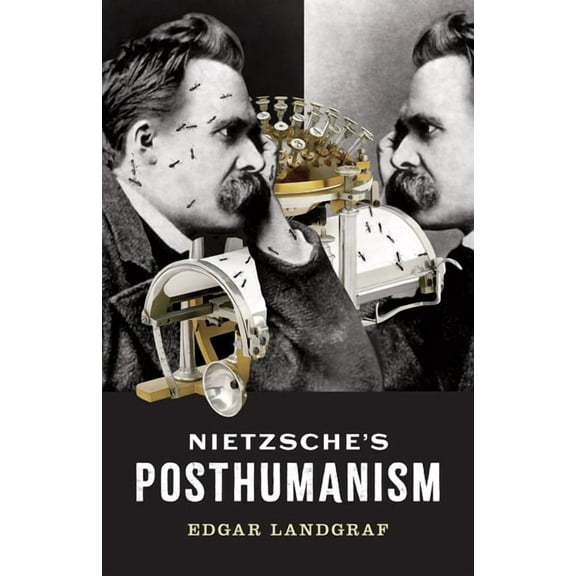
While many posthumanists claim Nietzsche as one of their own, rarely do they engage his philosophy in any real depth. Nietzsche’s Posthumanism addresses this need by exploring the continuities and disagreements between Nietzsche’s philosophy and contemporary posthumanism. Focusing specifically on Nietzsche’s reception of the life sciences of his day and his reflections on technology—research areas as central to Nietzsche’s work as they are to posthumanism—Edgar Landgraf provides fresh readings of Nietzsche and a critique of post- and transhumanist philosophies.
Through Landgraf’s inquiry, lesser-known aspects of Nietzsche’s writings emerge, including the neurophysiological basis of his epistemology (which anticipates contemporary debates on embodiment), his concerns with insects and the emergent social properties they exhibit, and his reflections on the hominization and cultivation effects of technology. In the process, Landgraf challenges major commonplaces about Nietzsche’s philosophy, including the idea that his social theory asserts the rights of “the strong” over “the weak.” The ethos of critical posthumanism also offers a new perspective on key ethical and political contentions of Nietzsche’s writings.
Nietzsche’s Posthumanism presents a uniquely framed introduction to tenets of Nietzsche’s thought and major trends in posthumanism, making it an essential exploration for anyone invested in Nietzsche and his contemporary relevance, and in posthumanism and its genealogy.
Retail e-book files for this title are screen-reader friendly.
Specs
- Book formatHardcover
- Fiction/nonfictionNon-Fiction
- GenreNonfiction
- Publication dateAugust, 2023
- Pages280
- Series titlePostHumanities
How do you want your item?
About this item
Product details
A timely and trenchant commentary on the centrality of Nietzsche's thought for our time
While many posthumanists claim Nietzsche as one of their own, rarely do they engage his philosophy in any real depth. Nietzsche's Posthumanism addresses this need by exploring the continuities and disagreements between Nietzsche's philosophy and contemporary posthumanism. Focusing specifically on Nietzsche's reception of the life sciences of his day and his reflections on technology--research areas as central to Nietzsche's work as they are to posthumanism--Edgar Landgraf provides fresh readings of Nietzsche and a critique of post- and transhumanist philosophies.
Through Landgraf's inquiry, lesser-known aspects of Nietzsche's writings emerge, including the neurophysiological basis of his epistemology (which anticipates contemporary debates on embodiment), his concerns with insects and the emergent social properties they exhibit, and his reflections on the hominization and cultivation effects of technology. In the process, Landgraf challenges major commonplaces about Nietzsche's philosophy, including the idea that his social theory asserts the rights of "the strong" over "the weak." The ethos of critical posthumanism also offers a new perspective on key ethical and political contentions of Nietzsche's writings.
Nietzsche's Posthumanism presents a uniquely framed introduction to tenets of Nietzsche's thought and major trends in posthumanism, making it an essential exploration for anyone invested in Nietzsche and his contemporary relevance, and in posthumanism and its genealogy.
Retail e-book files for this title are screen-reader friendly.
A timely and trenchant commentary on the centrality of Nietzsche’s thought for our time
While many posthumanists claim Nietzsche as one of their own, rarely do they engage his philosophy in any real depth. Nietzsche’s Posthumanism addresses this need by exploring the continuities and disagreements between Nietzsche’s philosophy and contemporary posthumanism. Focusing specifically on Nietzsche’s reception of the life sciences of his day and his reflections on technology—research areas as central to Nietzsche’s work as they are to posthumanism—Edgar Landgraf provides fresh readings of Nietzsche and a critique of post- and transhumanist philosophies.
Through Landgraf’s inquiry, lesser-known aspects of Nietzsche’s writings emerge, including the neurophysiological basis of his epistemology (which anticipates contemporary debates on embodiment), his concerns with insects and the emergent social properties they exhibit, and his reflections on the hominization and cultivation effects of technology. In the process, Landgraf challenges major commonplaces about Nietzsche’s philosophy, including the idea that his social theory asserts the rights of “the strong” over “the weak.” The ethos of critical posthumanism also offers a new perspective on key ethical and political contentions of Nietzsche’s writings.
Nietzsche’s Posthumanism presents a uniquely framed introduction to tenets of Nietzsche’s thought and major trends in posthumanism, making it an essential exploration for anyone invested in Nietzsche and his contemporary relevance, and in posthumanism and its genealogy.
Retail e-book files for this title are screen-reader friendly.
Specifications
Book format
Fiction/nonfiction
Genre
Publication date
Warranty
Warranty information
Similar items you might like
Based on what customers bought
Ãber Iritis: 6 Bücher, (Hardcover) $183.73
 $18373current price $183.73
Ãber Iritis: 6 Bücher, (Hardcover)
PostHumanities Nietzsche's Posthumanism, (Paperback) $27.97
 $2797current price $27.97
PostHumanities Nietzsche's Posthumanism, (Paperback)
Die Erdzeitalter, (Hardcover) $130.37
 $13037current price $130.37
Die Erdzeitalter, (Hardcover)
Nietzsche Heute Die Funken des freien Geistes, Book 1, (Hardcover) $132.62
 $13262current price $132.62
Nietzsche Heute Die Funken des freien Geistes, Book 1, (Hardcover)
Repetitorium Mikroökonomik, (Hardcover) $87.19
 $8719current price $87.19
Repetitorium Mikroökonomik, (Hardcover)
Die chemische Affinität, (Hardcover) $183.73
 $18373current price $183.73
Die chemische Affinität, (Hardcover)
Einführung in die Exportfinanzierung, (Hardcover) $101.34
 $10134current price $101.34
Einführung in die Exportfinanzierung, (Hardcover)
Between Foucault and Derrida, (Hardcover) $133.38
 $13338current price $133.38
Between Foucault and Derrida, (Hardcover)
Die Werdezeit 1607-1848, (Hardcover) $132.69
 $13269current price $132.69
Die Werdezeit 1607-1848, (Hardcover)
Sammlung Göschen Soziologie, Book 5002, (Hardcover) $153.99
 $15399current price $153.99
Sammlung Göschen Soziologie, Book 5002, (Hardcover)
Bloomsbury Handbooks The Bloomsbury Handbook to Slavoj Zizek, (Hardcover) $175.00
 $17500current price $175.00
Bloomsbury Handbooks The Bloomsbury Handbook to Slavoj Zizek, (Hardcover)
Zur Wachstumstheorie Des Nationaleinkommens, (Hardcover) $148.77
 $14877current price $148.77
Zur Wachstumstheorie Des Nationaleinkommens, (Hardcover)
Nietzsche as Phenomenologist, (Hardcover) $80.64
 $8064current price $80.64
Nietzsche as Phenomenologist, (Hardcover)
Die Harfe. Bändchen 4, (Hardcover) $200.58
 $20058current price $200.58
Die Harfe. Bändchen 4, (Hardcover)
Nietzsche and Eternal Recurrence, (Hardcover) $97.39
 $9739current price $97.39
Nietzsche and Eternal Recurrence, (Hardcover)
Why I am so clever, (Paperback) $7.17
 $717current price $7.17
Why I am so clever, (Paperback)
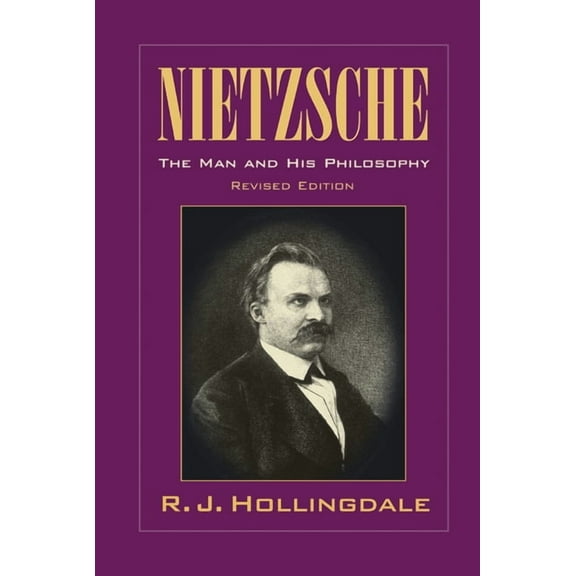
Nietzsche: The Man and His Philosophy, (Hardcover) $62.21 Was $82.53
 $6221current price $62.21, Was $82.53$82.53
Nietzsche: The Man and His Philosophy, (Hardcover)
Sozialwissenschaftliche Forschungen Hermann Conrings (1606-1681) Staatenkunde, Book 1, (Hardcover) $183.73
 $18373current price $183.73
Sozialwissenschaftliche Forschungen Hermann Conrings (1606-1681) Staatenkunde, Book 1, (Hardcover)

Customer ratings & reviews

Related pages
- Existence Meaning
- Culture Critique
- Crisis Phase
- Unesco Chair Amitav Acharya
- Dominate World
- Comment Evolution
- Free Will & Determinism Philosophy Books
- Rationalism Philosophy Movement Books
- Idealism Philosophy Movement Books
- Pragmatism Philosophy Movement Books
- Existentialism Philosophy Movement Books
- Deconstruction Philosophy Movement Books