

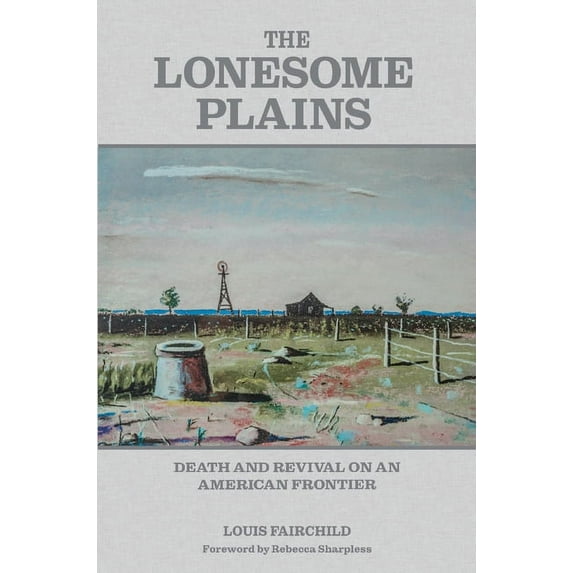
Hero image 0 of The Lonesome Plains : Death and Revival on an American Frontier (Paperback), 0 of 1
The Lonesome Plains : Death and Revival on an American Frontier (Paperback)
(No ratings yet)
Key item features
Loneliness pervaded the lives of pioneers on the American plains, including the empty expanses of West Texas. Most settlers lived in isolation broken only by occasional community gatherings such as funerals and religious revivals. In The Lonesome Plains, Louis Fairchild mines the letters and journals of West Texas settlers, as well as contemporary fiction and poetry, to record the emotions attending solitude and the ways people sought relief.
Hungering for neighborliness, people came together in times of misfortune—sickness, accident, and death—and at annual religious services. In fascinating detail, Fairchild describes the practices that grew up around these two focal points of social life. He recounts the building of coffins and preparation of a body for burial, the conflicting emotions of the pain of death and the hope of heaven, the funeral rite itself, the lost and lonely graves. And he tells the story of yearly outdoor revivals: the choice of the meeting site and construction of the arbor or other shelter, the provision of food, the music and emotionally-charged services, and tangential courting and mischief.
Loneliness is most recognized as a feature of life in the time of the early West Texas cattle industry, a period of sprawling cattle ranches and legendary cattle drives, roughly from 1867 to 1885. But Fairchild shows that it also characterized the lives of settlers who lived in West Texas from the beginning of permanent settlement of the Texas Panhandle (around 1876) through the population shift that occurred around the turn of the century, as farmers and their families supplanted ranchers and their cattle.
Fairchild draws on primary materials of the early residents to give voice to the settlers themselves and skillfully weaves a moving picture of life in the open spaces of West Texas during the frontier-rural period of the late nineteenth and early twentieth centuries.
Hungering for neighborliness, people came together in times of misfortune—sickness, accident, and death—and at annual religious services. In fascinating detail, Fairchild describes the practices that grew up around these two focal points of social life. He recounts the building of coffins and preparation of a body for burial, the conflicting emotions of the pain of death and the hope of heaven, the funeral rite itself, the lost and lonely graves. And he tells the story of yearly outdoor revivals: the choice of the meeting site and construction of the arbor or other shelter, the provision of food, the music and emotionally-charged services, and tangential courting and mischief.
Loneliness is most recognized as a feature of life in the time of the early West Texas cattle industry, a period of sprawling cattle ranches and legendary cattle drives, roughly from 1867 to 1885. But Fairchild shows that it also characterized the lives of settlers who lived in West Texas from the beginning of permanent settlement of the Texas Panhandle (around 1876) through the population shift that occurred around the turn of the century, as farmers and their families supplanted ranchers and their cattle.
Fairchild draws on primary materials of the early residents to give voice to the settlers themselves and skillfully weaves a moving picture of life in the open spaces of West Texas during the frontier-rural period of the late nineteenth and early twentieth centuries.
Specs
- Book formatPaperback
- Fiction/nonfictionNon-Fiction
- GenreHistory
- Publication dateDecember, 2023
- Pages352
- EditionReprint
Current price is USD$36.37
Price when purchased online
- Free shipping
 Free 30-day returns
How do you want your item?
Columbus, 43215
Arrives between May 20 - May 27
|
Sold and shipped by Rarewaves.com
4.250592617676939 stars out of 5, based on 2953 seller reviews(4.3)2953 seller reviews

Free 30-day returns - in store or online
About this item
Product details
Loneliness pervaded the lives of pioneers on the American plains, including the empty expanses of West Texas. Most settlers lived in isolation broken only by occasional community gatherings such as funerals and religious revivals. In The Lonesome Plains, Louis Fairchild mines the letters and journals of West Texas settlers, as well as contemporary fiction and poetry, to record the emotions attending solitude and the ways people sought relief. Hungering for neighborliness, people came together in times of misfortune--sickness, accident, and death--and at annual religious services. In fascinating detail, Fairchild describes the practices that grew up around these two focal points of social life. He recounts the building of coffins and preparation of a body for burial, the conflicting emotions of the pain of death and the hope of heaven, the funeral rite itself, the lost and lonely graves. And he tells the story of yearly outdoor revivals: the choice of the meeting site and construction of the arbor or other shelter, the provision of food, the music and emotionally-charged services, and tangential courting and mischief. Loneliness is most recognized as a feature of life in the time of the early West Texas cattle industry, a period of sprawling cattle ranches and legendary cattle drives, roughly from 1867 to 1885. But Fairchild shows that it also characterized the lives of settlers who lived in West Texas from the beginning of permanent settlement of the Texas Panhandle (around 1876) through the population shift that occurred around the turn of the century, as farmers and their families supplanted ranchers and their cattle. Fairchild draws on primary materials of the early residents to give voice to the settlers themselves and skillfully weaves a moving picture of life in the open spaces of West Texas during the frontier-rural period of the late nineteenth and early twentieth centuries.
Loneliness pervaded the lives of pioneers on the American plains, including the empty expanses of West Texas. Most settlers lived in isolation broken only by occasional community gatherings such as funerals and religious revivals. In The Lonesome Plains, Louis Fairchild mines the letters and journals of West Texas settlers, as well as contemporary fiction and poetry, to record the emotions attending solitude and the ways people sought relief.
Hungering for neighborliness, people came together in times of misfortune—sickness, accident, and death—and at annual religious services. In fascinating detail, Fairchild describes the practices that grew up around these two focal points of social life. He recounts the building of coffins and preparation of a body for burial, the conflicting emotions of the pain of death and the hope of heaven, the funeral rite itself, the lost and lonely graves. And he tells the story of yearly outdoor revivals: the choice of the meeting site and construction of the arbor or other shelter, the provision of food, the music and emotionally-charged services, and tangential courting and mischief.
Loneliness is most recognized as a feature of life in the time of the early West Texas cattle industry, a period of sprawling cattle ranches and legendary cattle drives, roughly from 1867 to 1885. But Fairchild shows that it also characterized the lives of settlers who lived in West Texas from the beginning of permanent settlement of the Texas Panhandle (around 1876) through the population shift that occurred around the turn of the century, as farmers and their families supplanted ranchers and their cattle.
Fairchild draws on primary materials of the early residents to give voice to the settlers themselves and skillfully weaves a moving picture of life in the open spaces of West Texas during the frontier-rural period of the late nineteenth and early twentieth centuries.
Hungering for neighborliness, people came together in times of misfortune—sickness, accident, and death—and at annual religious services. In fascinating detail, Fairchild describes the practices that grew up around these two focal points of social life. He recounts the building of coffins and preparation of a body for burial, the conflicting emotions of the pain of death and the hope of heaven, the funeral rite itself, the lost and lonely graves. And he tells the story of yearly outdoor revivals: the choice of the meeting site and construction of the arbor or other shelter, the provision of food, the music and emotionally-charged services, and tangential courting and mischief.
Loneliness is most recognized as a feature of life in the time of the early West Texas cattle industry, a period of sprawling cattle ranches and legendary cattle drives, roughly from 1867 to 1885. But Fairchild shows that it also characterized the lives of settlers who lived in West Texas from the beginning of permanent settlement of the Texas Panhandle (around 1876) through the population shift that occurred around the turn of the century, as farmers and their families supplanted ranchers and their cattle.
Fairchild draws on primary materials of the early residents to give voice to the settlers themselves and skillfully weaves a moving picture of life in the open spaces of West Texas during the frontier-rural period of the late nineteenth and early twentieth centuries.
info:
We aim to show you accurate product information. Manufacturers, suppliers and others provide what you see here, and we have not verified it.
Specifications
Book format
Paperback
Fiction/nonfiction
Non-Fiction
Genre
History
Publication date
December, 2023
Warranty
Warranty information
Please be aware that the warranty terms on items offered for sale by third party Marketplace sellers may differ from those displayed in this section (if any). To confirm warranty terms on an item offered for sale by a third party Marketplace seller, please use the 'Contact seller' feature on the third party Marketplace seller's information page and request the item's warranty terms prior to purchase.
Similar items you might like
Based on what customers bought
Grief Grit Glory, (Paperback) $24.95
 $2495current price $24.95
Grief Grit Glory, (Paperback)
Paradise: One Town's Struggle to Survive an American Wildfire, (Paperback) $16.06
 $1606current price $16.06
Paradise: One Town's Struggle to Survive an American Wildfire, (Paperback)
American Frontier Chronicles Women on the Prairie: Stories of Grit, Survival, and Unbroken Spirit on the American Frontier, Book 2, (Hardcover) $30.99
 $3099current price $30.99
American Frontier Chronicles Women on the Prairie: Stories of Grit, Survival, and Unbroken Spirit on the American Frontier, Book 2, (Hardcover)
Strange Lands and Friendly People (Paperback) $37.98
 $3798current price $37.98
Strange Lands and Friendly People (Paperback)
The Lovelace-Loveless and Allied Families, (Hardcover) $32.79
 $3279current price $32.79
The Lovelace-Loveless and Allied Families, (Hardcover)
Forty Years a Gambler on the Mississippi, (Hardcover) $41.41
 $4141current price $41.41
Forty Years a Gambler on the Mississippi, (Hardcover)
American Cattle Doctor (Hardcover) $36.95
 $3695current price $36.95
American Cattle Doctor (Hardcover)
The Voyage of Life: A journey from the cradle to the grave, (Paperback) $33.90
 $3390current price $33.90
The Voyage of Life: A journey from the cradle to the grave, (Paperback)
Death Feigning Beetles of the United States and Mexico, (Paperback) $26.78
 $2678current price $26.78
Death Feigning Beetles of the United States and Mexico, (Paperback)
Trail of Tears: The Untold Story of America's Forced Relocation and Survival, (Paperback) $19.99
 $1999current price $19.99
Trail of Tears: The Untold Story of America's Forced Relocation and Survival, (Paperback)
My First Life: Becoming a Man on the Colorado Frontier 1880-1905, (Paperback) $19.01
 $1901current price $19.01
My First Life: Becoming a Man on the Colorado Frontier 1880-1905, (Paperback)
Lonesome Traveler: The Life of Lee Hays, (Paperback) $15.64
 $1564current price $15.64
Lonesome Traveler: The Life of Lee Hays, (Paperback)
The Women of Rendezvous: A Transatlantic Story of Family and Slavery, (Paperback) $28.15
 $2815current price $28.15
The Women of Rendezvous: A Transatlantic Story of Family and Slavery, (Paperback)
Montezuma's Daughter, (Paperback) $22.99
 $2299current price $22.99
Montezuma's Daughter, (Paperback)
Life and Adventures of A--No. 1, America's Most Celebrated Tramp, (Hardcover) $30.95
 $3095current price $30.95
Life and Adventures of A--No. 1, America's Most Celebrated Tramp, (Hardcover)
The Pilgrim's Progress. Unabridged. [2 Issues] (Hardcover) $36.62
![The Pilgrim's Progress. Unabridged. [2 Issues] (Hardcover)](https://i5.walmartimages.com/asr/a8662d5d-74d3-4daf-87c7-c27894f3e54c.5da9abf6728d62b810c8fa9f36fbcefb.jpeg?odnHeight=576&odnWidth=576&odnBg=FFFFFF) $3662current price $36.62
$3662current price $36.62The Pilgrim's Progress. Unabridged. [2 Issues] (Hardcover)
Voyages Aux Ruines De Golconde Et À La Cité Des Morts (Indoustan) (Hardcover) $36.73
 $3673current price $36.73
Voyages Aux Ruines De Golconde Et À La Cité Des Morts (Indoustan) (Hardcover)
A Mile of Gold : Strange Adventures on the Yukon (Hardcover) $33.95
 $3395current price $33.95
A Mile of Gold : Strange Adventures on the Yukon (Hardcover)
The Richest Man in Babylon, (Paperback) $12.84
 $1284current price $12.84
The Richest Man in Babylon, (Paperback)
The Wilds of Cancer: A Life-Affirming Journey, (Paperback) $15.36 Was $17.95
 $1536current price $15.36, Was $17.95$17.95
The Wilds of Cancer: A Life-Affirming Journey, (Paperback)
Customer ratings & reviews
0 ratings|0 reviews
This item does not have any reviews yet
