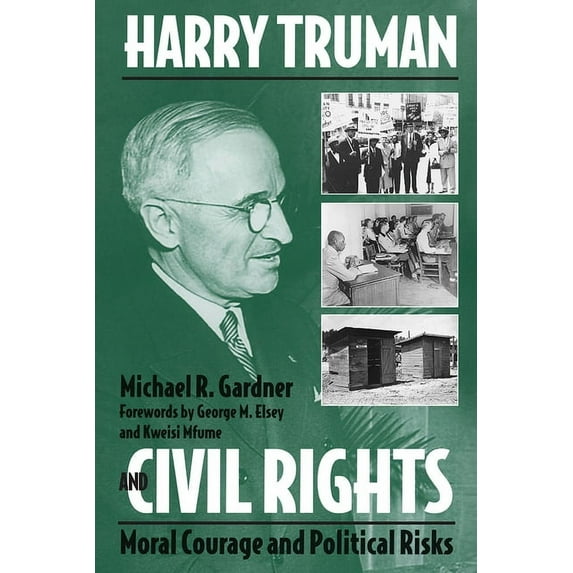
Harry Truman and Civil Rights : Moral Courage and Political Risks (Paperback)
Key item features
Given his background, President Truman was an unlikely champion of civil rights. Where he grew up—the border state of Missouri—segregation was accepted and largely unquestioned. Both his maternal and paternal grandparents had owned slaves, and his mother, victimized by Yankee forces, railed against Abraham Lincoln for the remainder of her ninety-four years. When Truman assumed the presidency on April 12, 1945, Michael R. Gardner points out, Washington, DC, in many ways resembled Cape Town, South Africa, under apartheid rule circa 1985.
Truman’s background notwithstanding, Gardner shows that it was Harry Truman—not Franklin D. Roosevelt, Dwight D. Eisenhower, or John F. Kennedy—who energized the modern civil rights movement, a movement that basically had stalled since Abraham Lincoln had freed the slaves. Gardner recounts Truman’s public and private actions regarding black Americans. He analyzes speeches, private conversations with colleagues, the executive orders that shattered federal segregation policies, and the appointments of like-minded civil rights activists to important positions. Among those appointments was the first black federal judge in the continental United States.
One of Gardner’s essential and provocative points is that the Frederick Moore Vinson Supreme Court—a court significantly shaped by Truman—provided the legal basis for the nationwide integration that Truman could not get through the Congress. Challenging the myth that the civil rights movement began with Brown v. Board of Education under Chief Justice Earl Warren, Gardner contends that the life-altering civil rights rulings by the Vinson Court provided the necessary legal framework for the landmark Brown v. Board of Education decision.
Gardner characterizes Truman’s evolution from a man who grew up in a racist household into a president willing to put his political career at mortal risk by actively supporting the interests of black Americans.
Specs
- Book formatPaperback
- Fiction/nonfictionNon-Fiction
- Publication dateOctober, 2003
- Pages320
- Edition3 : 3rd ed.
- Original languagesEnglish
- Free shipping
 Free 30-day returns
How do you want your item?


More seller options (1)
About this item
Product details
Given his background, President Truman was an unlikely champion of civil rights. Where he grew up—the border state of Missouri—segregation was accepted and largely unquestioned. Both his maternal and paternal grandparents had owned slaves, and his mother, victimized by Yankee forces, railed against Abraham Lincoln for the remainder of her ninety-four years. When Truman assumed the presidency on April 12, 1945, Michael R. Gardner points out, Washington, DC, in many ways resembled Cape Town, South Africa, under apartheid rule circa 1985.
Truman’s background notwithstanding, Gardner shows that it was Harry Truman—not Franklin D. Roosevelt, Dwight D. Eisenhower, or John F. Kennedy—who energized the modern civil rights movement, a movement that basically had stalled since Abraham Lincoln had freed the slaves. Gardner recounts Truman’s public and private actions regarding black Americans. He analyzes speeches, private conversations with colleagues, the executive orders that shattered federal segregation policies, and the appointments of like-minded civil rights activists to important positions. Among those appointments was the first black federal judge in the continental United States.
One of Gardner’s essential and provocative points is that the Frederick Moore Vinson Supreme Court—a court significantly shaped by Truman—provided the legal basis for the nationwide integration that Truman could not get through the Congress. Challenging the myth that the civil rights movement began with Brown v. Board of Education under Chief Justice Earl Warren, Gardner contends that the life-altering civil rights rulings by the Vinson Court provided the necessary legal framework for the landmark Brown v. Board of Education decision.
Gardner characterizes Truman’s evolution from a man who grew up in a racist household into a president willing to put his political career at mortal risk by actively supporting the interests of black Americans.
Specifications
Book format
Fiction/nonfiction
Genre
Publication date
Warranty
Warranty information
Similar items you might like
Based on what customers bought
The Aims of Higher Education : Problems of Morality and Justice (Paperback) $29.97
 $2997current price $29.97
The Aims of Higher Education : Problems of Morality and Justice (Paperback)
New Perspectives on the History of the S Luther P. Jackson and a Life for Civil Rights, (Paperback) $27.93
 $2793current price $27.93
New Perspectives on the History of the S Luther P. Jackson and a Life for Civil Rights, (Paperback)
Redeeming American Political Thought, (Paperback) $34.13
 $3413current price $34.13
Redeeming American Political Thought, (Paperback)
How Terrorism Is Wrong: Morality and Political Violence, (Paperback) $36.99
 $3699current price $36.99
How Terrorism Is Wrong: Morality and Political Violence, (Paperback)
Equal Recognition: The Moral Foundations of Minority Rights, (Paperback) $44.45
 $4445current price $44.45
Equal Recognition: The Moral Foundations of Minority Rights, (Paperback)
Showdown at the 1964 Democratic Convention: Lyndon Johnson, Mississippi and Civil Rights (Paperback) $28.45
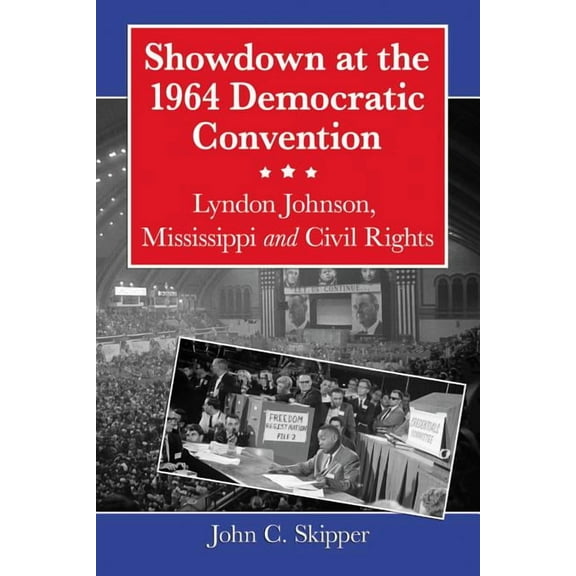 $2845current price $28.45
Showdown at the 1964 Democratic Convention: Lyndon Johnson, Mississippi and Civil Rights (Paperback)
Just Ideas: Fugitive Rousseau: Slavery, Primitivism, and Political Freedom (Paperback) $27.00
 $2700current price $27.00
Just Ideas: Fugitive Rousseau: Slavery, Primitivism, and Political Freedom (Paperback)
The Voting Rights War: The NAACP and the Ongoing Struggle for Justice, (Paperback) $26.69
 $2669current price $26.69
The Voting Rights War: The NAACP and the Ongoing Struggle for Justice, (Paperback)
Protest at Selma: Martin Luther King, Jr., and the Voting Rights Act of 1965, (Paperback) $27.00
 $2700current price $27.00
Protest at Selma: Martin Luther King, Jr., and the Voting Rights Act of 1965, (Paperback)
Gifford Lectures The Lesser Evil: Political Ethics in an Age of Terror, (Paperback) $38.27
 $3827current price $38.27
Gifford Lectures The Lesser Evil: Political Ethics in an Age of Terror, (Paperback)
Southern Honor: Ethics and Behavior in the Old South, (Paperback) $26.99
 $2699current price $26.99
Southern Honor: Ethics and Behavior in the Old South, (Paperback)
Southern Political Party Activists: Patterns of Conflict and Change, 1991-2001 (Paperback) $26.14
 $2614current price $26.14
Southern Political Party Activists: Patterns of Conflict and Change, 1991-2001 (Paperback)
Stain Removal: Ethics and Race, (Paperback) $32.79
 $3279current price $32.79
Stain Removal: Ethics and Race, (Paperback)
Politics and Crowd-morality; a Study in the Philosophy of Politics (Paperback) $22.95
 $2295current price $22.95
Politics and Crowd-morality; a Study in the Philosophy of Politics (Paperback)
Classic Thinkers: John Stuart Mill: Moral, Social, and Political Thought (Paperback) $23.32
 $2332current price $23.32
Classic Thinkers: John Stuart Mill: Moral, Social, and Political Thought (Paperback)
Dignity or Death: Ethics and Politics of Race (Paperback) $26.37
 $2637current price $26.37
Dignity or Death: Ethics and Politics of Race (Paperback)
American Political Thought Dark Side of the Left: Illiberal Egalitarianism in America, (Paperback) $28.73
 $2873current price $28.73
American Political Thought Dark Side of the Left: Illiberal Egalitarianism in America, (Paperback)
Black Visions : The Roots of Contemporary African-American Political Ideologies (Paperback) $33.08
 $3308current price $33.08
Black Visions : The Roots of Contemporary African-American Political Ideologies (Paperback)
Have You Got Good Religion?: Black Women's Faith, Courage, and Moral Leadership in the Civil Rights Movement, (Paperback) $24.83
 $2483current price $24.83
Have You Got Good Religion?: Black Women's Faith, Courage, and Moral Leadership in the Civil Rights Movement, (Paperback)