


Parlor Politics : In Which the Ladies of Washington Help Build a City and a Government (Paperback)
Key item features
When Thomas Jefferson moved his victorious Republican administration into the new capital city in 1801, one of his first acts was to abolish any formal receptions, except on New Year's Day and the Fourth of July. His successful campaign for the presidency had been partially founded on the idea that his Federalist enemies had assumed dangerously aristocratic trappings—a sword for George Washington and a raised dais for Martha when she received people at social occasions—in the first capital cities of New York and Philadelphia. When the ladies of Washington City, determined to have their own salon, arrived en masse at the president's house, Jefferson met them in riding clothes, expressing surprise at their presence. His deep suspicion of any occasion that resembled a European court caused a major problem, however: without the face-to-face relationships and networks of interest created in society, the American experiment in government could not function.
Into this conundrum, writes Catherine Allgor, stepped women like Dolley Madison and Louisa Catherine Adams, women of political families who used the unofficial, social sphere to cement the relationships that politics needed to work. Not only did they create a space in which politics was effectively conducted; their efforts legitimated the new republic and the new capital in the eyes of European nations, whose representatives scoffed at the city's few amenities and desolate setting. Covered by the prescriptions of their gender, Washington women engaged in the dirty business of politics, which allowed their husbands to retain their republican purity.
Constrained by the cultural taboos on "petticoat politicking," women rarely wrote forthrightly about their ambitions and plans, preferring to cast their political work as an extension of virtuous family roles. But by analyzing their correspondence, gossip events, "etiquette wars," and the material culture that surrounded them, Allgor finds that these women acted with conscious political intent. In the days before organized political parties, the social machine built by these early federal women helped to ease the transition from a failed republican experiment to a burgeoning democracy.
Specs
- Book formatPaperback
- Fiction/nonfictionNon-Fiction
- GenreHistory
- Publication dateMarch, 2002
- Pages312
- Reading levelUndergraduate
- Free shipping
 Free 30-day returns
How do you want your item?


About this item
Product details
When Thomas Jefferson moved his victorious Republican administration into the new capital city in 1801, one of his first acts was to abolish any formal receptions, except on New Year's Day and the Fourth of July. His successful campaign for the presidency had been partially founded on the idea that his Federalist enemies had assumed dangerously aristocratic trappings--a sword for George Washington and a raised dais for Martha when she received people at social occasions--in the first capital cities of New York and Philadelphia. When the ladies of Washington City, determined to have their own salon, arrived en masse at the president's house, Jefferson met them in riding clothes, expressing surprise at their presence. His deep suspicion of any occasion that resembled a European court caused a major problem, however: without the face-to-face relationships and networks of interest created in society, the American experiment in government could not function.
Into this conundrum, writes Catherine Allgor, stepped women like Dolley Madison and Louisa Catherine Adams, women of political families who used the unofficial, social sphere to cement the relationships that politics needed to work. Not only did they create a space in which politics was effectively conducted; their efforts legitimated the new republic and the new capital in the eyes of European nations, whose representatives scoffed at the city's few amenities and desolate setting. Covered by the prescriptions of their gender, Washington women engaged in the dirty business of politics, which allowed their husbands to retain their republican purity.
Constrained by the cultural taboos on "petticoat politicking," women rarely wrote forthrightly about their ambitions and plans, preferring to cast their political work as an extension of virtuous family roles. But by analyzing their correspondence, gossip events, "etiquette wars," and the material culture that surrounded them, Allgor finds that these women acted with conscious political intent. In the days before organized political parties, the social machine built by these early federal women helped to ease the transition from a failed republican experiment to a burgeoning democracy.
When Thomas Jefferson moved his victorious Republican administration into the new capital city in 1801, one of his first acts was to abolish any formal receptions, except on New Year's Day and the Fourth of July. His successful campaign for the presidency had been partially founded on the idea that his Federalist enemies had assumed dangerously aristocratic trappings—a sword for George Washington and a raised dais for Martha when she received people at social occasions—in the first capital cities of New York and Philadelphia. When the ladies of Washington City, determined to have their own salon, arrived en masse at the president's house, Jefferson met them in riding clothes, expressing surprise at their presence. His deep suspicion of any occasion that resembled a European court caused a major problem, however: without the face-to-face relationships and networks of interest created in society, the American experiment in government could not function.
Into this conundrum, writes Catherine Allgor, stepped women like Dolley Madison and Louisa Catherine Adams, women of political families who used the unofficial, social sphere to cement the relationships that politics needed to work. Not only did they create a space in which politics was effectively conducted; their efforts legitimated the new republic and the new capital in the eyes of European nations, whose representatives scoffed at the city's few amenities and desolate setting. Covered by the prescriptions of their gender, Washington women engaged in the dirty business of politics, which allowed their husbands to retain their republican purity.
Constrained by the cultural taboos on "petticoat politicking," women rarely wrote forthrightly about their ambitions and plans, preferring to cast their political work as an extension of virtuous family roles. But by analyzing their correspondence, gossip events, "etiquette wars," and the material culture that surrounded them, Allgor finds that these women acted with conscious political intent. In the days before organized political parties, the social machine built by these early federal women helped to ease the transition from a failed republican experiment to a burgeoning democracy.
Specifications
Book format
Fiction/nonfiction
Genre
Publication date
Warranty
Warranty information
Warnings
State Chemical Disclosure
Similar items you might like
Based on what customers bought
District of Corruption: In Washington DC (Paperback) $13.99
 $1399current price $13.99
District of Corruption: In Washington DC (Paperback)
The Georgetown Ladies' Social Club: Power, Passion, and Politics in the Nation's Capital, (Paperback) $16.91
 $1691current price $16.91
The Georgetown Ladies' Social Club: Power, Passion, and Politics in the Nation's Capital, (Paperback)
Handy Answer Books The Handy American Government Answer Book: How Washington, Politics and Elections Work, (Paperback) $17.13 $11.50/lb
 $1713current price $17.13$11.50/lb
Handy Answer Books The Handy American Government Answer Book: How Washington, Politics and Elections Work, (Paperback)
Maneuvers: The International Politics of Militarizing Women's Lives, (Paperback) $37.72
 $3772current price $37.72
Maneuvers: The International Politics of Militarizing Women's Lives, (Paperback)
Claiming the Pen: Women and Intellectual Life in the Early American South, (Paperback) $13.99
 $1399current price $13.99
Claiming the Pen: Women and Intellectual Life in the Early American South, (Paperback)
Topics in Kentucky History Madam Belle: Sex, Money, and Influence in a Southern Brothel, (Paperback) $25.91
 $2591current price $25.91
Topics in Kentucky History Madam Belle: Sex, Money, and Influence in a Southern Brothel, (Paperback)
The Providential Road to Purpose, (Paperback) $16.99
 $1699current price $16.99
The Providential Road to Purpose, (Paperback)
We Can Do This!: Sacramento's Trailblazing Political Women and the Community They Shaped, (Paperback) $17.42 Was $20.00
 $1742current price $17.42, Was $20.00$20.00
We Can Do This!: Sacramento's Trailblazing Political Women and the Community They Shaped, (Paperback)
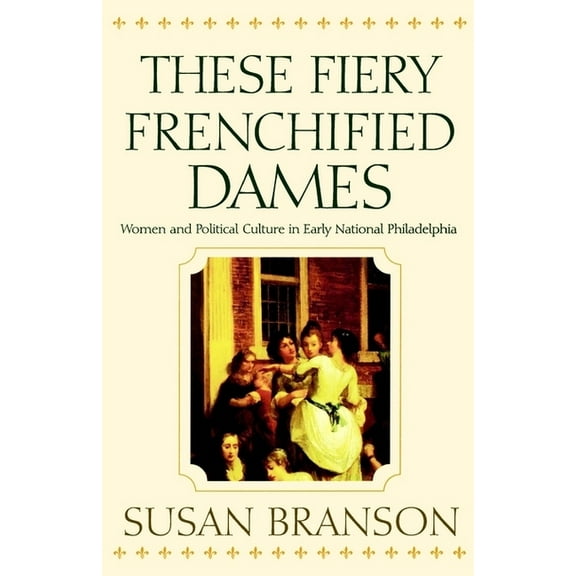
Early American Studies These Fiery Frenchified Dames: Women and Political Culture in Early National Philadelphia, (Paperback) $24.95
 $2495current price $24.95
Early American Studies These Fiery Frenchified Dames: Women and Political Culture in Early National Philadelphia, (Paperback)
The Houses That Raise Our Girls (Paperback) $5.99
 $599current price $5.99
The Houses That Raise Our Girls (Paperback)
The Leading Business Men of Middeltown, Portland, Durham and Middlefield, (Paperback) $17.65
 $1765current price $17.65
The Leading Business Men of Middeltown, Portland, Durham and Middlefield, (Paperback)
The Heart and Stomach of a King: Elizabeth I and the Politics of Sex and Power, (Paperback) $19.51
 $1951current price $19.51
The Heart and Stomach of a King: Elizabeth I and the Politics of Sex and Power, (Paperback)
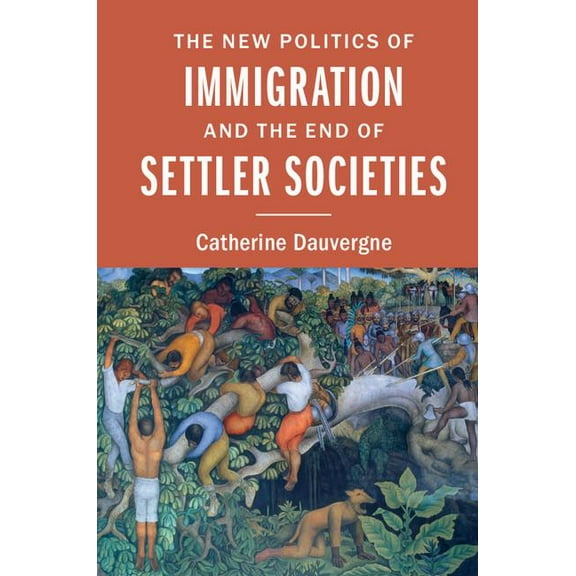
The New Politics of Immigration and the End of Settler Societies, (Paperback) $34.15
 $3415current price $34.15
The New Politics of Immigration and the End of Settler Societies, (Paperback)
Pre-Owned If These Walls Could Talk: Community Muralism and the Beauty of Justice Paperback - USED $22.60
 2 optionsAvailable in additional 2 options$2260current price $22.60
Pre-Owned If These Walls Could Talk: Community Muralism and the Beauty of Justice Paperback - USED
Pre-Owned The Writing on the Wall (Hearts of the Children, 1) (Hardcover) 1570087253 9781570087257 $4.40 Was $5.38
 $440current price $4.40, Was $5.38$5.38
Pre-Owned The Writing on the Wall (Hearts of the Children, 1) (Hardcover) 1570087253 9781570087257




Customer ratings & reviews

Related pages
- Norman Schultz
- Hillary Russian
- Tahia Abdel Nasser
- Mohamed Medhat Gaber
- People S Champ
- Philanthropy America
- Literary Collections - Speeches
- Asian Political Books
- Cultural Heritage Biographies & Memoirs
- Environmentalists & Naturalists Biographies & Memoirs
- Political Biographies & Memoirs
- Lawyers & Judges Biographies & Memoirs