


Judas of Nazareth : How the Greatest Teacher of First-Century Israel Was Replaced by a Literary Creation (Paperback)
Key item features
• Reveals the biblical Jesus as a composite figure, a blend of the political revolutionary Judas the Galilean and Paul’s divine-human Christ figure
• Matches the events depicted in the New Testament with historically verifiable events in Josephus’ history, pushing Jesus’ life back more than a decade
• Demonstrates how each New Testament Gospel is dependent upon Paul’s mythologized Christ theology, designed to promote Paul’s Christianity and serve the interests of the fledgling Gentile Christian communities
Scholars have spent years questioning aspects of the historical Jesus. How can we know what Jesus said and did when Jesus himself wrote nothing? Can we trust the Gospels, written by unknown authors 40 to 70 years after Jesus’ death? And why do other sources from the time not speak of this messianic figure known as Christ?
Drawing on the histories of Josephus, Tacitus, Suetonius, and Pliny as well as the Dead Sea Scrolls, Daniel Unterbrink contends that the “Jesus” of the Bible was actually a composite figure, a clever blend of the Jewish freedom-fighter Judas the Galilean and Paul’s divine-human Christ figure created in the middle of the first century CE. Revealing why Paul was known as a liar, enemy, and traitor in other Jewish literature, he shows that the New Testament Gospels are not transcripts of actual history but creative works of historical fiction designed to promote Paul’s Christianity and serve the interests of the fledgling Gentile Christian communities. He demonstrates how each Gospel is written in light of the success of Paul’s religion and dependent upon his later perspective.
Matching the events depicted in the New Testament with the historically verifiable events in Josephus’ history, Unterbrink pushes the dating of Jesus’ life back nearly a generation to a revolutionary time in ancient Judea. He shows that the real historical Jesus--the physical man behind the fictional stories in Paul’s Gospels--was Judas the Galilean: a messianic pretender and Torah-observant revolutionary bent on overthrowing the Roman government and galvanizing the Jewish people behind his vision of the coming Kingdom of God. In the greatest cover-up of history, this teacher of first-century Israel was replaced by the literary creation known as Jesus of Nazareth.
Specs
- Book formatPaperback
- Fiction/nonfictionNon-Fiction
- GenreHealth, Mind & Body
- Publication dateMarch, 2014
- Pages384
- Number in series1
- Free shipping
 Free 30-day returns
How do you want your item?


About this item
Product details
• Reveals the biblical Jesus as a composite figure, a blend of the political revolutionary Judas the Galilean and Paul’s divine-human Christ figure
• Matches the events depicted in the New Testament with historically verifiable events in Josephus’ history, pushing Jesus’ life back more than a decade
• Demonstrates how each New Testament Gospel is dependent upon Paul’s mythologized Christ theology, designed to promote Paul’s Christianity and serve the interests of the fledgling Gentile Christian communities
Scholars have spent years questioning aspects of the historical Jesus. How can we know what Jesus said and did when Jesus himself wrote nothing? Can we trust the Gospels, written by unknown authors 40 to 70 years after Jesus’ death? And why do other sources from the time not speak of this messianic figure known as Christ?
Drawing on the histories of Josephus, Tacitus, Suetonius, and Pliny as well as the Dead Sea Scrolls, Daniel Unterbrink contends that the “Jesus” of the Bible was actually a composite figure, a clever blend of the Jewish freedom-fighter Judas the Galilean and Paul’s divine-human Christ figure created in the middle of the first century CE. Revealing why Paul was known as a liar, enemy, and traitor in other Jewish literature, he shows that the New Testament Gospels are not transcripts of actual history but creative works of historical fiction designed to promote Paul’s Christianity and serve the interests of the fledgling Gentile Christian communities. He demonstrates how each Gospel is written in light of the success of Paul’s religion and dependent upon his later perspective.
Matching the events depicted in the New Testament with the historically verifiable events in Josephus’ history, Unterbrink pushes the dating of Jesus’ life back nearly a generation to a revolutionary time in ancient Judea. He shows that the real historical Jesus--the physical man behind the fictional stories in Paul’s Gospels--was Judas the Galilean: a messianic pretender and Torah-observant revolutionary bent on overthrowing the Roman government and galvanizing the Jewish people behind his vision of the coming Kingdom of God. In the greatest cover-up of history, this teacher of first-century Israel was replaced by the literary creation known as Jesus of Nazareth.
Specifications
Book format
Fiction/nonfiction
Genre
Publication date
Warranty
Warranty information
Warnings
State Chemical Disclosure
Similar items you might like
Based on what customers bought
How Should Christians Think about Israel?: A Quick Guide to God's Covenants, Biblical Prophecy, and the Jewish People, (Paperback) $9.99
 $999current price $9.99
How Should Christians Think about Israel?: A Quick Guide to God's Covenants, Biblical Prophecy, and the Jewish People, (Paperback)
Judas the Galilean: The flesh and blood Jesus (Paperback) $18.38
 $1838current price $18.38
Judas the Galilean: The flesh and blood Jesus (Paperback)
An Aroma of Life: Generations of Yemenis following Jesus, (Paperback) $18.21
 $1821current price $18.21
An Aroma of Life: Generations of Yemenis following Jesus, (Paperback)
The Greatest Story Ever Told: An Eyewitness Account (Hardcover) $15.32
 $1532current price $15.32
The Greatest Story Ever Told: An Eyewitness Account (Hardcover)
134.7 out of 5 Stars. 13 reviewsRome and Jerusalem: The End of an Age, (Paperback) $17.06
 $1706current price $17.06
Rome and Jerusalem: The End of an Age, (Paperback)
Messiah: Discover the One the Prophets Foretold, (Paperback) $16.95
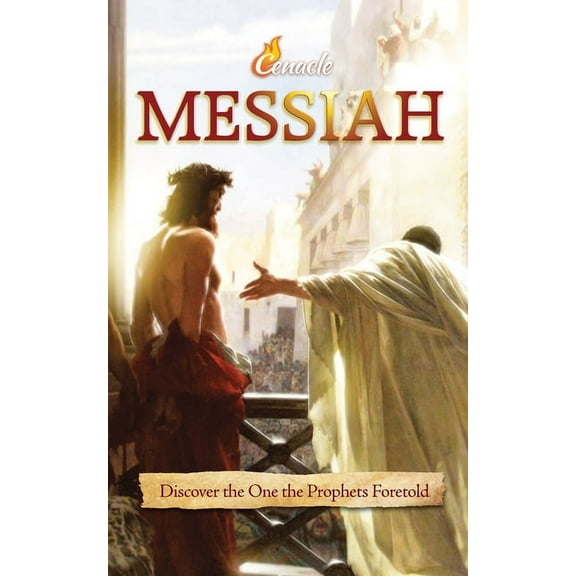 $1695current price $16.95
Messiah: Discover the One the Prophets Foretold, (Paperback)
God-Fearers: Gentiles & The God of Israel, (Paperback) $21.76
 $2176current price $21.76
God-Fearers: Gentiles & The God of Israel, (Paperback)
What if Jesus Remained in the Tomb? (Paperback) $17.74 Was $19.95
 $1774current price $17.74, Was $19.95$19.95
What if Jesus Remained in the Tomb? (Paperback)
Memorable Christians Modern Christian Martyrs, Book 6, (Paperback) $5.99
 $599current price $5.99
Memorable Christians Modern Christian Martyrs, Book 6, (Paperback)
The Final Days of Jesus: The Archaeological Evidence, (Paperback) $11.01
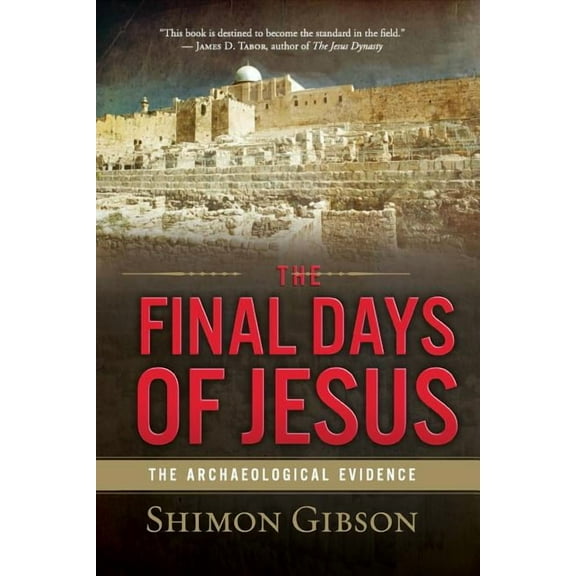 $1101current price $11.01
The Final Days of Jesus: The Archaeological Evidence, (Paperback)
Lost Books of the Bible The Gnostic Gospels: The Complete & Definitive Modern English Translation: Including: Thomas, Mary, Philip, Judas, and t, (Paperback) $14.95
 $1495current price $14.95
Lost Books of the Bible The Gnostic Gospels: The Complete & Definitive Modern English Translation: Including: Thomas, Mary, Philip, Judas, and t, (Paperback)
15 out of 5 Stars. 1 reviewsIsrael Matters: Putting the Jewish People Back at the Center of God's Plan, (Paperback) $19.78
 $1978current price $19.78
Israel Matters: Putting the Jewish People Back at the Center of God's Plan, (Paperback)
A Ride Across Palestine, (Paperback) $18.59
 $1859current price $18.59
A Ride Across Palestine, (Paperback)
What Everybody Should Know About the Jew! (Paperback) $8.86
 $886current price $8.86
What Everybody Should Know About the Jew! (Paperback)
The Last Days Are Here Again: A History of the End Times (Paperback) by Richard Kyle $18.98
 $1898current price $18.98
The Last Days Are Here Again: A History of the End Times (Paperback) by Richard Kyle
The Eight Points Of The Oxford Group, (Paperback) $20.76
 $2076current price $20.76
The Eight Points Of The Oxford Group, (Paperback)
The Abomination of Desolation: According to the Prophet Daniel and Jesus Christ, (Paperback) $9.99
 $999current price $9.99
The Abomination of Desolation: According to the Prophet Daniel and Jesus Christ, (Paperback)
Praise for St. John the Iberian, (Paperback) $12.04
 $1204current price $12.04
Praise for St. John the Iberian, (Paperback)
Customer ratings & reviews
Filtered and sorted results would be available on the new 'Customer ratings & reviews' page.
Showing 1-2 of 2 reviews
This book gives a dufferent view of Jesus Christ.
Daniel Unterbrink has written another masterpiece. This book “Judas of Nazareth” deals with a lot of the same material to be found in one of his earlier works, “Judas the Galilean.” This book contains three parts, a conclusion, and four appendices. Part I is about the life and times of Judas the Galilean and Jesus of Nazareth; and, the history of the “Fourth Philosophy,” a religion of the first-century that can be identified with early Christianity. Following is a chapter on primary text references to Jesus as found in Tacitus, Suetonius, Pliny and Josephus. Some of these sources suggest that, what might be considered as, an early Jewish Jesus movement existed, but this movement was fully Jewish and unlike present day Christianity. Part II discusses Paul and designates him as an Apostle to the gentiles. This part also compares the Teachings of James and Paul in various things such as, for example, Faith and Deeds. In this part, there are also chapters on Paul's family ties, like his relationship to King Agrippa. Finally, there is a discussion of what motivated Paul. Part III deals with what might be referred to as the creation of Jesus of Nazareth; and, also, the hand of Paul, indirectly at least, in the writing of the Gospels. This part also discusses the dependence of Acts on Josephus and can be looked at as a proof that Acts had to be written after the publication of the “Antiquities” in 93 CE. The Appendices have the following interesting titles. A: The Messianic Time Lines; B: John the Baptist; C: Pontius Pilate; D: The Slavonic Josephus. All in all, the book is very well written, well worth reading, and might be considered Daniel Unterbrink's best.
The "Good News" is...Judas of Nazareth!
"Dan Unterbrink's Judas of Nazareth is a relentless and unapologetic interrogation into who Jesus was and, as a consequence, who he was not. Brilliantly vetting a veritable ocean of ancient historical documents/sources, Unterbrink comes to two revolutionary conclusions: 1) that the Gospels, our hitherto chief source of information of the historical Jesus, were in fact theological-political manifestos largely influenced - if not actually penned - by Paul of Tarsus and 2) that our hitherto image of Jesus as a reactionary "Prince of Peace" with an otherworldly agenda is but a pale gloss on someone far more real and exciting, an actual human being fighting for his vision of the Kingdom of God in the midst of a brutal Roman occupation. Ultimately, Unterbrink's work sets the stage for a much needed shift in the study of early Christianity, away from the uncritical use of Gospel materials towards an investigation into the underlying ideological framework that shapes the documents the Church chose to canonize. For me, what Unterbrink has done is truly ‘good news'."

Related pages
- Joseph Ketley; Church Of England Liturgy & Ritual; Church Of England Liturgy And Ritual
- St Emmanuel
- Orthodox Chant
- Crucifixion
- Cross Worship
- Of Loyola Saint Ignatius
- Church of Jesus Christ of Latter-Day Saints Books
- General Biblical Biographies
- Saints & Sainthood Books
- Church History Books
- Baptism Books
- Biblical Biography Books for Kids