

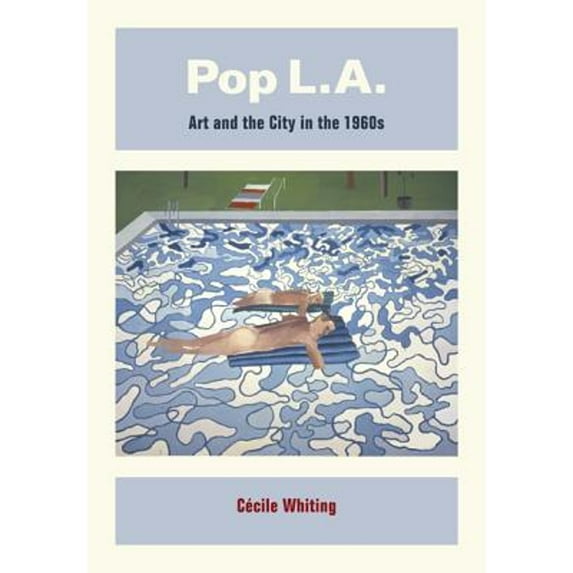
Hero image 0 of Pop L.A. : Art and the City in the 1960s (Edition 1) (Hardcover), 0 of 1
Pop L.A. : Art and the City in the 1960s (Edition 1) (Hardcover)
(No ratings yet)
Key item features
Andy Warhol said about his road trip to Los Angeles in 1963: “The farther West we drove, the more Pop everything looked on the highways.” In this original and engaging book, Cécile Whiting examines what Pop looked like when it left the highbrow cloisters of Manhattan’s art galleries and ventured westward to the sprawling suburbs of Los Angeles. She finds that the artists who made California their home in the 1960s did not abandon their paint brushes for tennis rackets and surfboards, but rather created in their works a new and different sense of space, the urban experience, and popular culture.
Whiting shows how artists such as Vija Celmins, Llyn Foulkes, David Hockney, Dennis Hopper, Allan Kaprow, Claes Oldenburg, Ed Ruscha, and Judy Chicago helped to shape the identity of Los Angeles as an emerging art center, while avoiding in their representation of the city the clichés of both its boosters and its detractors. Delving deep into the southern California aesthetic sensibility, Pop L.A. recounts how the artists transformed the image of the city in works that focused on the ocean and landscape, suburban life, dilapidated houses in aging neighborhoods, streets and parking lots, and public buildings such as the Los Angeles County Museum of Art. The common bond of place, for Whiting, gives coherence to the varied experiments in the visual and performance arts that altered the cultural terrain during this pivotal time. The Los Angeles art scene in the 1960s inspired a new generation of architectural writing about the metropolis and its debased sister city, Las Vegas. Over the course of the decade, the conception of the city pioneered by artists in Los Angeles spread beyond the city of angels to characterize cultural life in the United States.
Whiting shows how artists such as Vija Celmins, Llyn Foulkes, David Hockney, Dennis Hopper, Allan Kaprow, Claes Oldenburg, Ed Ruscha, and Judy Chicago helped to shape the identity of Los Angeles as an emerging art center, while avoiding in their representation of the city the clichés of both its boosters and its detractors. Delving deep into the southern California aesthetic sensibility, Pop L.A. recounts how the artists transformed the image of the city in works that focused on the ocean and landscape, suburban life, dilapidated houses in aging neighborhoods, streets and parking lots, and public buildings such as the Los Angeles County Museum of Art. The common bond of place, for Whiting, gives coherence to the varied experiments in the visual and performance arts that altered the cultural terrain during this pivotal time. The Los Angeles art scene in the 1960s inspired a new generation of architectural writing about the metropolis and its debased sister city, Las Vegas. Over the course of the decade, the conception of the city pioneered by artists in Los Angeles spread beyond the city of angels to characterize cultural life in the United States.
Specs
- Book formatHardcover
- Fiction/nonfictionNon-Fiction
- Publication dateMarch, 2006
- Pages268
- Number in series1
- Edition1
Current price is USD$164.28
Price when purchased online
Out of stock
How do you want your item?
Out of stock
About this item
Product details
""Pop L.A." maps the relation between a new urban and cultural space and the artists who confronted it and gave it form. Los Angeles in the 1960s in Cecile Whiting's smart and incisive study was home not only to a zany, outre popular culture but also to a Pop Art as expansive, crisscrossed, and de-centered as the city's entangled freeways and urban sprawl. Ruscha's photographs of gas stations and parking lots, Hockney's paintings of swimming pools and tract homes, Rodia's Watts Towers, and more--after this book, none will look the same."--Anthony W. Lee, Mount Holyoke College, author of "Picturing Chinatown"
"Sun, surf, sand, sex, strip malls, subdivisions: all are present in Cecile Whiting's trenchant anatomy of "Pop Los Angeles." And all were central to the vision artists constructed of this protean city as a site of both pleasure and emptiness, speed and stasis. Some artists, however, went further, not merely representing the city, but intervening in it, and for Whiting, the results--whether a performance by Kaprow or a tower by Rodia--further demonstrate the wild diversity of a multicentric city that somehow seems both more and less than a circumscribable place."--Anne Wagner, author of "Mother Stone: The Vitality of Modern British Sculpture"
"In "Pop L.A.: Art and the City in the 1960s," Cecile Whiting proves herself an expert guide to the cultural and artistic landscape of Los Angeles. From hot rods to parking lot Happenings, from the Watts Towers to Womanhouse, the book thrillingly remaps the multiple intersections of Pop art and Southern California in the 1960s and early 70s. Beautifully researched and written, Pop L.A. is a major work of modern art-historical scholarship. It is also one hell of a ride."--Richard Meyer, author of "Outlaw Representation: Censorship and Homosexuality in Twentieth-Century American Art"
"From the Ferus Gallery to the Woman's Building, Cecile Whiting has fashioned an indispensable book. Thanks to her brilliant remapping, the landscape of art in Los Angeles will never look the same."--Kenneth E. Silver, author of "Making Paradise: Art, Modernity, and the Myth of the French Riviera" Andy Warhol said about his road trip to Los Angeles in 1963: "The farther West we drove, the more Pop everything looked on the highways." In this original and engaging book, Cecile Whiting examines what Pop looked like when it left the highbrow cloisters of Manhattan's art galleries and ventured westward to the sprawling suburbs of Los Angeles. She finds that the artists who made California their home in the 1960s did not abandon their paint brushes for tennis rackets and surfboards, but rather created in their works a new and different sense of space, the urban experience, and popular culture. Whiting shows how artists such as Vija Celmins, Llyn Foulkes, David Hockney, Dennis Hopper, Allan Kaprow, Claes Oldenburg, Ed Ruscha, and Judy Chicago helped to shape the identity of Los Angeles as an emerging art center, while avoiding in their representation of the city the cliches of both its boosters and its detractors. Delving deep into the southern California aesthetic sensibility, Pop L.A. recounts how the artists transformed the image of the city in works that focused on the ocean and landscape, suburban life, dilapidated houses in aging neighborhoods, streets and parking lots, and public buildings such as the Los Angeles County Museum of Art. The common bond of place, for Whiting, gives coherence to the varied experiments in the visual and performance arts that altered the cultural terrain during this pivotal time. The Los Angeles art scene in the 1960s inspired a new generation of architectural writing about the metropolis and its debased sister city, Las Vegas. Over the course of the decade, the conception of the city pioneered by artists in Los Angeles spread beyond the city of angels to characterize cultural life in the United States.
"Sun, surf, sand, sex, strip malls, subdivisions: all are present in Cecile Whiting's trenchant anatomy of "Pop Los Angeles." And all were central to the vision artists constructed of this protean city as a site of both pleasure and emptiness, speed and stasis. Some artists, however, went further, not merely representing the city, but intervening in it, and for Whiting, the results--whether a performance by Kaprow or a tower by Rodia--further demonstrate the wild diversity of a multicentric city that somehow seems both more and less than a circumscribable place."--Anne Wagner, author of "Mother Stone: The Vitality of Modern British Sculpture"
"In "Pop L.A.: Art and the City in the 1960s," Cecile Whiting proves herself an expert guide to the cultural and artistic landscape of Los Angeles. From hot rods to parking lot Happenings, from the Watts Towers to Womanhouse, the book thrillingly remaps the multiple intersections of Pop art and Southern California in the 1960s and early 70s. Beautifully researched and written, Pop L.A. is a major work of modern art-historical scholarship. It is also one hell of a ride."--Richard Meyer, author of "Outlaw Representation: Censorship and Homosexuality in Twentieth-Century American Art"
"From the Ferus Gallery to the Woman's Building, Cecile Whiting has fashioned an indispensable book. Thanks to her brilliant remapping, the landscape of art in Los Angeles will never look the same."--Kenneth E. Silver, author of "Making Paradise: Art, Modernity, and the Myth of the French Riviera" Andy Warhol said about his road trip to Los Angeles in 1963: "The farther West we drove, the more Pop everything looked on the highways." In this original and engaging book, Cecile Whiting examines what Pop looked like when it left the highbrow cloisters of Manhattan's art galleries and ventured westward to the sprawling suburbs of Los Angeles. She finds that the artists who made California their home in the 1960s did not abandon their paint brushes for tennis rackets and surfboards, but rather created in their works a new and different sense of space, the urban experience, and popular culture. Whiting shows how artists such as Vija Celmins, Llyn Foulkes, David Hockney, Dennis Hopper, Allan Kaprow, Claes Oldenburg, Ed Ruscha, and Judy Chicago helped to shape the identity of Los Angeles as an emerging art center, while avoiding in their representation of the city the cliches of both its boosters and its detractors. Delving deep into the southern California aesthetic sensibility, Pop L.A. recounts how the artists transformed the image of the city in works that focused on the ocean and landscape, suburban life, dilapidated houses in aging neighborhoods, streets and parking lots, and public buildings such as the Los Angeles County Museum of Art. The common bond of place, for Whiting, gives coherence to the varied experiments in the visual and performance arts that altered the cultural terrain during this pivotal time. The Los Angeles art scene in the 1960s inspired a new generation of architectural writing about the metropolis and its debased sister city, Las Vegas. Over the course of the decade, the conception of the city pioneered by artists in Los Angeles spread beyond the city of angels to characterize cultural life in the United States.
Andy Warhol said about his road trip to Los Angeles in 1963: “The farther West we drove, the more Pop everything looked on the highways.” In this original and engaging book, Cécile Whiting examines what Pop looked like when it left the highbrow cloisters of Manhattan’s art galleries and ventured westward to the sprawling suburbs of Los Angeles. She finds that the artists who made California their home in the 1960s did not abandon their paint brushes for tennis rackets and surfboards, but rather created in their works a new and different sense of space, the urban experience, and popular culture.
Whiting shows how artists such as Vija Celmins, Llyn Foulkes, David Hockney, Dennis Hopper, Allan Kaprow, Claes Oldenburg, Ed Ruscha, and Judy Chicago helped to shape the identity of Los Angeles as an emerging art center, while avoiding in their representation of the city the clichés of both its boosters and its detractors. Delving deep into the southern California aesthetic sensibility, Pop L.A. recounts how the artists transformed the image of the city in works that focused on the ocean and landscape, suburban life, dilapidated houses in aging neighborhoods, streets and parking lots, and public buildings such as the Los Angeles County Museum of Art. The common bond of place, for Whiting, gives coherence to the varied experiments in the visual and performance arts that altered the cultural terrain during this pivotal time. The Los Angeles art scene in the 1960s inspired a new generation of architectural writing about the metropolis and its debased sister city, Las Vegas. Over the course of the decade, the conception of the city pioneered by artists in Los Angeles spread beyond the city of angels to characterize cultural life in the United States.
Whiting shows how artists such as Vija Celmins, Llyn Foulkes, David Hockney, Dennis Hopper, Allan Kaprow, Claes Oldenburg, Ed Ruscha, and Judy Chicago helped to shape the identity of Los Angeles as an emerging art center, while avoiding in their representation of the city the clichés of both its boosters and its detractors. Delving deep into the southern California aesthetic sensibility, Pop L.A. recounts how the artists transformed the image of the city in works that focused on the ocean and landscape, suburban life, dilapidated houses in aging neighborhoods, streets and parking lots, and public buildings such as the Los Angeles County Museum of Art. The common bond of place, for Whiting, gives coherence to the varied experiments in the visual and performance arts that altered the cultural terrain during this pivotal time. The Los Angeles art scene in the 1960s inspired a new generation of architectural writing about the metropolis and its debased sister city, Las Vegas. Over the course of the decade, the conception of the city pioneered by artists in Los Angeles spread beyond the city of angels to characterize cultural life in the United States.
info:
We aim to show you accurate product information. Manufacturers, suppliers and others provide what you see here, and we have not verified it.
Specifications
Book format
Hardcover
Fiction/nonfiction
Non-Fiction
Genre
Art/American - General, Art/History - Contemporary (1945- ), Social Science/Sociology - Urban
Publication date
March, 2006
Warranty
Warranty information
Please be aware that the warranty terms on items offered for sale by third party Marketplace sellers may differ from those displayed in this section (if any). To confirm warranty terms on an item offered for sale by a third party Marketplace seller, please use the 'Contact seller' feature on the third party Marketplace seller's information page and request the item's warranty terms prior to purchase.
Customer ratings & reviews
0 ratings|0 reviews
This item does not have any reviews yet
