


California Studies in the History of Art: The Forum of Trajan in Rome : A Study of the Monuments (Series #31) (Edition 1) (Hardcover)
(No ratings yet)
Key item features
Last, largest, and most splendid of the early imperial forums, the Forum of Trajan (A.D. 112) was the acknowledged showplace of ancient Rome. Ammianus Marcellinus called the Forum "a construction unique under the heavens, as we believe, and admirable even in the unanimous opinion of the gods." Yet, despite its formidable ancient reputation, the Forum of Trajan has only once in the present century been the subject of a close study. This three-volume publication, the result of twenty-five years of labor, is the first comprehensive study ever undertaken. It includes a history of the site, an examination of all previous scholarship, a modern reconstruction of it in beautiful architectural renderings, and more.
The Forum suffered a harsh fate. Its buildings probably collapsed during the earthquake of A.D. 801; from the sixteenth through the eighteenth centuries, the site was quarried for its marble. In recent times, none of the modern archaeological excavations, from the first French investigations of 1811-14 through the great campaign mounted by the Fascist Government of Italy in 1928-34, has ever been properly published. Today some of the monuments—among them the three triumphal arches through which visitors entered the Forum and the West Colonnade and Hemicycle—are still buried more than sixteen feet below the level of modern streets. Others are now completely cleared.
After describing the Forum as a whole—its construction, history, use in antiquity, destruction, and excavations—Packer focuses on the buildings, the essential architectural texts for all further study. He discusses the largest building in the Forum, the law court known in antiquity as the Basilica Ulpia. Illustrations document the most important architectural elements and the present state of the site. Restored plans, sections, and elevations in both color and black and white depict Packer's reconstructions as well as those of previous scholars. Four exterior and interior views of the principal buildings, restored in color, provide lively visual impressions of the spatial effects and detailing. For scholarly consultation, a catalogue raisonné of the major surviving fragments, twelve appendices that discuss technical problems involved in the reconstructions, and microfiche with 416 illustrations are included.
Volume I features 157 illustrations, including significant general photographs of the site, historical photographs of the excavations of 1928-34, new photographs of architectural fragments, and eleven full-color reconstructions of the excavated buildings. Volume II contains most of the remainder of the 859 illustrations, among them new photographs of the site and reproductions of drawings made by scholars and architects of the nineteenth and twentieth centuries. A folder attached to the back cover houses the microfiche. The Portfolio volume holds thirty-five drawings, twenty-four in black and white that include a plan made after the excavations of 1928-34 and a new site map prepared in 1986-87, and eleven three-color technical reconstructions of the excavated buildings.
PRODUCTION: Meticulous care has been taken with the design and production of these volumes, only 1,000 sets of which will be made. The text of this book is printed on 90-pound sheets of Mohawk Superfine specially milled for this project. This paper is not only acid-free, but also alum- and rosin-free, with a pH level above 7.5 and an alkaline buffer that will neutralize any acidity that might develop in handling or storage. Accelerated aging tests indicate permanence in excess of 300 years. The Portfolio illustrations are printed on 60-pound St. Lawrence Matte, also an acid-free sheet. The binding features Iris, a 100 percent solvent-free rayon cloth made from natural fibers, with a neutral pH. It is applied over binder's board of .098 thickness with a neutral pH. The title page display type is taken from the letterpress proofs of Jan van Krimpen's Romulus, designed for the Monotype Company in 1936. The main text of Volumes I and II is set in Granjon. Chapter initials are from an alphabet designed by Gianfrancesco Cresci in 1569 for Il perfetto scrittore and based on the lettering from the Column of Trajan. The interior of the Portfolio box is constructed of binder's board of .080 thickness with a neutral pH, covered with French Paper Company "Parchtone" material, the same paper as that used for the endpapers of Volumes I and II.
The Forum suffered a harsh fate. Its buildings probably collapsed during the earthquake of A.D. 801; from the sixteenth through the eighteenth centuries, the site was quarried for its marble. In recent times, none of the modern archaeological excavations, from the first French investigations of 1811-14 through the great campaign mounted by the Fascist Government of Italy in 1928-34, has ever been properly published. Today some of the monuments—among them the three triumphal arches through which visitors entered the Forum and the West Colonnade and Hemicycle—are still buried more than sixteen feet below the level of modern streets. Others are now completely cleared.
After describing the Forum as a whole—its construction, history, use in antiquity, destruction, and excavations—Packer focuses on the buildings, the essential architectural texts for all further study. He discusses the largest building in the Forum, the law court known in antiquity as the Basilica Ulpia. Illustrations document the most important architectural elements and the present state of the site. Restored plans, sections, and elevations in both color and black and white depict Packer's reconstructions as well as those of previous scholars. Four exterior and interior views of the principal buildings, restored in color, provide lively visual impressions of the spatial effects and detailing. For scholarly consultation, a catalogue raisonné of the major surviving fragments, twelve appendices that discuss technical problems involved in the reconstructions, and microfiche with 416 illustrations are included.
Volume I features 157 illustrations, including significant general photographs of the site, historical photographs of the excavations of 1928-34, new photographs of architectural fragments, and eleven full-color reconstructions of the excavated buildings. Volume II contains most of the remainder of the 859 illustrations, among them new photographs of the site and reproductions of drawings made by scholars and architects of the nineteenth and twentieth centuries. A folder attached to the back cover houses the microfiche. The Portfolio volume holds thirty-five drawings, twenty-four in black and white that include a plan made after the excavations of 1928-34 and a new site map prepared in 1986-87, and eleven three-color technical reconstructions of the excavated buildings.
PRODUCTION: Meticulous care has been taken with the design and production of these volumes, only 1,000 sets of which will be made. The text of this book is printed on 90-pound sheets of Mohawk Superfine specially milled for this project. This paper is not only acid-free, but also alum- and rosin-free, with a pH level above 7.5 and an alkaline buffer that will neutralize any acidity that might develop in handling or storage. Accelerated aging tests indicate permanence in excess of 300 years. The Portfolio illustrations are printed on 60-pound St. Lawrence Matte, also an acid-free sheet. The binding features Iris, a 100 percent solvent-free rayon cloth made from natural fibers, with a neutral pH. It is applied over binder's board of .098 thickness with a neutral pH. The title page display type is taken from the letterpress proofs of Jan van Krimpen's Romulus, designed for the Monotype Company in 1936. The main text of Volumes I and II is set in Granjon. Chapter initials are from an alphabet designed by Gianfrancesco Cresci in 1569 for Il perfetto scrittore and based on the lettering from the Column of Trajan. The interior of the Portfolio box is constructed of binder's board of .080 thickness with a neutral pH, covered with French Paper Company "Parchtone" material, the same paper as that used for the endpapers of Volumes I and II.
Specs
- Book formatHardcover
- Fiction/nonfictionNon-Fiction
- Publication dateApril, 1997
- Pages3
- Number in series31
- Edition1
Current price is USD$714.50
Price when purchased online
- Free shipping
 Free 90-day returns
How do you want your item?
Try 30 days of Free Shipping with Walmart+! Choose plan at checkout.
Columbus, 43215
Arrives by Wed, Apr 29
Sold and shipped by Walmart.com

Free 90-day returns - in store or online

This item is gift eligible

Get free delivery, shipping and more*
*Restrictions apply Try Walmart+ now
About this item
Product details
Last, largest, and most splendid of the early imperial forums, the Forum of Trajan (A.D. 112) was the acknowledged showplace of ancient Rome. Ammianus Marcellinus called the Forum "a construction unique under the heavens, as we believe, and admirable even in the unanimous opinion of the gods." Yet, despite its formidable ancient reputation, the Forum of Trajan has only once in the present century been the subject of a close study. This three-volume publication, the result of twenty-five years of labor, is the first comprehensive study ever undertaken. It includes a history of the site, an examination of all previous scholarship, a modern reconstruction of it in beautiful architectural renderings, and more.
The Forum suffered a harsh fate. Its buildings probably collapsed during the earthquake of A.D. 801; from the sixteenth through the eighteenth centuries, the site was quarried for its marble. In recent times, none of the modern archaeological excavations, from the first French investigations of 1811-14 through the great campaign mounted by the Fascist Government of Italy in 1928-34, has ever been properly published. Today some of the monuments--among them the three triumphal arches through which visitors entered the Forum and the West Colonnade and Hemicycle--are still buried more than sixteen feet below the level of modern streets. Others are now completely cleared.
After describing the Forum as a whole--its construction, history, use in antiquity, destruction, and excavations--Packer focuses on the buildings, the essential architectural texts for all further study. He discusses the largest building in the Forum, the law court known in antiquity as the Basilica Ulpia. Illustrations document the most important architectural elements and the present state of the site. Restored plans, sections, and elevations in both color and black and white depict Packer's reconstructions as well as those of previous scholars. Four exterior and interior views of the principal buildings, restored in color, provide lively visual impressions of the spatial effects and detailing. For scholarly consultation, a catalogue raisonné of the major surviving fragments, twelve appendices that discuss technical problems involved in the reconstructions, and microfiche with 416 illustrations are included.
Volume I features 157 illustrations, including significant general photographs of the site, historical photographs of the excavations of 1928-34, new photographs of architectural fragments, and eleven full-color reconstructions of the excavated buildings. Volume II contains most of the remainder of the 859 illustrations, among them new photographs of the site and reproductions of drawings made by scholars and architects of the nineteenth and twentieth centuries. A folder attached to the back cover houses the microfiche. The Portfolio volume holds thirty-five drawings, twenty-four in black and white that include a plan made after the excavations of 1928-34 and a new site map prepared in 1986-87, and eleven three-color technical reconstructions of the excavated buildings.
PRODUCTION: Meticulous care has been taken with the design and production of these volumes, only 1,000 sets of which will be made. The text of this book is printed on 90-pound sheets of Mohawk Superfine specially milled for this project. This paper is not only acid-free, but also alum- and rosin-free, with a pH level above 7.5 and an alkaline buffer that will neutralize any acidity that might develop in handling or storage. Accelerated aging tests indicate permanence in excess of 300 years. The Portfolio illustrations are printed on 60-pound St. Lawrence Matte, also an acid-free sheet. The binding features Iris, a 100 percent solvent-free rayon cloth made from natural fibers, with a neutral pH. It is applied over binder's board of .098 thickness with a neutral pH. The title page display type is taken from the letterpress proofs of Jan van K
The Forum suffered a harsh fate. Its buildings probably collapsed during the earthquake of A.D. 801; from the sixteenth through the eighteenth centuries, the site was quarried for its marble. In recent times, none of the modern archaeological excavations, from the first French investigations of 1811-14 through the great campaign mounted by the Fascist Government of Italy in 1928-34, has ever been properly published. Today some of the monuments--among them the three triumphal arches through which visitors entered the Forum and the West Colonnade and Hemicycle--are still buried more than sixteen feet below the level of modern streets. Others are now completely cleared.
After describing the Forum as a whole--its construction, history, use in antiquity, destruction, and excavations--Packer focuses on the buildings, the essential architectural texts for all further study. He discusses the largest building in the Forum, the law court known in antiquity as the Basilica Ulpia. Illustrations document the most important architectural elements and the present state of the site. Restored plans, sections, and elevations in both color and black and white depict Packer's reconstructions as well as those of previous scholars. Four exterior and interior views of the principal buildings, restored in color, provide lively visual impressions of the spatial effects and detailing. For scholarly consultation, a catalogue raisonné of the major surviving fragments, twelve appendices that discuss technical problems involved in the reconstructions, and microfiche with 416 illustrations are included.
Volume I features 157 illustrations, including significant general photographs of the site, historical photographs of the excavations of 1928-34, new photographs of architectural fragments, and eleven full-color reconstructions of the excavated buildings. Volume II contains most of the remainder of the 859 illustrations, among them new photographs of the site and reproductions of drawings made by scholars and architects of the nineteenth and twentieth centuries. A folder attached to the back cover houses the microfiche. The Portfolio volume holds thirty-five drawings, twenty-four in black and white that include a plan made after the excavations of 1928-34 and a new site map prepared in 1986-87, and eleven three-color technical reconstructions of the excavated buildings.
PRODUCTION: Meticulous care has been taken with the design and production of these volumes, only 1,000 sets of which will be made. The text of this book is printed on 90-pound sheets of Mohawk Superfine specially milled for this project. This paper is not only acid-free, but also alum- and rosin-free, with a pH level above 7.5 and an alkaline buffer that will neutralize any acidity that might develop in handling or storage. Accelerated aging tests indicate permanence in excess of 300 years. The Portfolio illustrations are printed on 60-pound St. Lawrence Matte, also an acid-free sheet. The binding features Iris, a 100 percent solvent-free rayon cloth made from natural fibers, with a neutral pH. It is applied over binder's board of .098 thickness with a neutral pH. The title page display type is taken from the letterpress proofs of Jan van K
Last, largest, and most splendid of the early imperial forums, the Forum of Trajan (A.D. 112) was the acknowledged showplace of ancient Rome. Ammianus Marcellinus called the Forum "a construction unique under the heavens, as we believe, and admirable even in the unanimous opinion of the gods." Yet, despite its formidable ancient reputation, the Forum of Trajan has only once in the present century been the subject of a close study. This three-volume publication, the result of twenty-five years of labor, is the first comprehensive study ever undertaken. It includes a history of the site, an examination of all previous scholarship, a modern reconstruction of it in beautiful architectural renderings, and more.
The Forum suffered a harsh fate. Its buildings probably collapsed during the earthquake of A.D. 801; from the sixteenth through the eighteenth centuries, the site was quarried for its marble. In recent times, none of the modern archaeological excavations, from the first French investigations of 1811-14 through the great campaign mounted by the Fascist Government of Italy in 1928-34, has ever been properly published. Today some of the monuments—among them the three triumphal arches through which visitors entered the Forum and the West Colonnade and Hemicycle—are still buried more than sixteen feet below the level of modern streets. Others are now completely cleared.
After describing the Forum as a whole—its construction, history, use in antiquity, destruction, and excavations—Packer focuses on the buildings, the essential architectural texts for all further study. He discusses the largest building in the Forum, the law court known in antiquity as the Basilica Ulpia. Illustrations document the most important architectural elements and the present state of the site. Restored plans, sections, and elevations in both color and black and white depict Packer's reconstructions as well as those of previous scholars. Four exterior and interior views of the principal buildings, restored in color, provide lively visual impressions of the spatial effects and detailing. For scholarly consultation, a catalogue raisonné of the major surviving fragments, twelve appendices that discuss technical problems involved in the reconstructions, and microfiche with 416 illustrations are included.
Volume I features 157 illustrations, including significant general photographs of the site, historical photographs of the excavations of 1928-34, new photographs of architectural fragments, and eleven full-color reconstructions of the excavated buildings. Volume II contains most of the remainder of the 859 illustrations, among them new photographs of the site and reproductions of drawings made by scholars and architects of the nineteenth and twentieth centuries. A folder attached to the back cover houses the microfiche. The Portfolio volume holds thirty-five drawings, twenty-four in black and white that include a plan made after the excavations of 1928-34 and a new site map prepared in 1986-87, and eleven three-color technical reconstructions of the excavated buildings.
PRODUCTION: Meticulous care has been taken with the design and production of these volumes, only 1,000 sets of which will be made. The text of this book is printed on 90-pound sheets of Mohawk Superfine specially milled for this project. This paper is not only acid-free, but also alum- and rosin-free, with a pH level above 7.5 and an alkaline buffer that will neutralize any acidity that might develop in handling or storage. Accelerated aging tests indicate permanence in excess of 300 years. The Portfolio illustrations are printed on 60-pound St. Lawrence Matte, also an acid-free sheet. The binding features Iris, a 100 percent solvent-free rayon cloth made from natural fibers, with a neutral pH. It is applied over binder's board of .098 thickness with a neutral pH. The title page display type is taken from the letterpress proofs of Jan van Krimpen's Romulus, designed for the Monotype Company in 1936. The main text of Volumes I and II is set in Granjon. Chapter initials are from an alphabet designed by Gianfrancesco Cresci in 1569 for Il perfetto scrittore and based on the lettering from the Column of Trajan. The interior of the Portfolio box is constructed of binder's board of .080 thickness with a neutral pH, covered with French Paper Company "Parchtone" material, the same paper as that used for the endpapers of Volumes I and II.
The Forum suffered a harsh fate. Its buildings probably collapsed during the earthquake of A.D. 801; from the sixteenth through the eighteenth centuries, the site was quarried for its marble. In recent times, none of the modern archaeological excavations, from the first French investigations of 1811-14 through the great campaign mounted by the Fascist Government of Italy in 1928-34, has ever been properly published. Today some of the monuments—among them the three triumphal arches through which visitors entered the Forum and the West Colonnade and Hemicycle—are still buried more than sixteen feet below the level of modern streets. Others are now completely cleared.
After describing the Forum as a whole—its construction, history, use in antiquity, destruction, and excavations—Packer focuses on the buildings, the essential architectural texts for all further study. He discusses the largest building in the Forum, the law court known in antiquity as the Basilica Ulpia. Illustrations document the most important architectural elements and the present state of the site. Restored plans, sections, and elevations in both color and black and white depict Packer's reconstructions as well as those of previous scholars. Four exterior and interior views of the principal buildings, restored in color, provide lively visual impressions of the spatial effects and detailing. For scholarly consultation, a catalogue raisonné of the major surviving fragments, twelve appendices that discuss technical problems involved in the reconstructions, and microfiche with 416 illustrations are included.
Volume I features 157 illustrations, including significant general photographs of the site, historical photographs of the excavations of 1928-34, new photographs of architectural fragments, and eleven full-color reconstructions of the excavated buildings. Volume II contains most of the remainder of the 859 illustrations, among them new photographs of the site and reproductions of drawings made by scholars and architects of the nineteenth and twentieth centuries. A folder attached to the back cover houses the microfiche. The Portfolio volume holds thirty-five drawings, twenty-four in black and white that include a plan made after the excavations of 1928-34 and a new site map prepared in 1986-87, and eleven three-color technical reconstructions of the excavated buildings.
PRODUCTION: Meticulous care has been taken with the design and production of these volumes, only 1,000 sets of which will be made. The text of this book is printed on 90-pound sheets of Mohawk Superfine specially milled for this project. This paper is not only acid-free, but also alum- and rosin-free, with a pH level above 7.5 and an alkaline buffer that will neutralize any acidity that might develop in handling or storage. Accelerated aging tests indicate permanence in excess of 300 years. The Portfolio illustrations are printed on 60-pound St. Lawrence Matte, also an acid-free sheet. The binding features Iris, a 100 percent solvent-free rayon cloth made from natural fibers, with a neutral pH. It is applied over binder's board of .098 thickness with a neutral pH. The title page display type is taken from the letterpress proofs of Jan van Krimpen's Romulus, designed for the Monotype Company in 1936. The main text of Volumes I and II is set in Granjon. Chapter initials are from an alphabet designed by Gianfrancesco Cresci in 1569 for Il perfetto scrittore and based on the lettering from the Column of Trajan. The interior of the Portfolio box is constructed of binder's board of .080 thickness with a neutral pH, covered with French Paper Company "Parchtone" material, the same paper as that used for the endpapers of Volumes I and II.
info:
We aim to show you accurate product information. Manufacturers, suppliers and others provide what you see here, and we have not verified it.
Specifications
Book format
Hardcover
Fiction/nonfiction
Non-Fiction
Genre
Art, Music, and Photography
Publication date
April, 1997
Warnings
State Chemical Disclosure
None
Similar items you might like
Based on what customers bought
Lessons from a Lost Republic: What Ancient Rome Can Teach Us about This American Moment, (Hardcover) $26.00 Was $30.00
 $2600current price $26.00, Was $30.00$30.00
Lessons from a Lost Republic: What Ancient Rome Can Teach Us about This American Moment, (Hardcover)
Landscapes of War in Greek and Roman Literature, (Hardcover) $132.59
 $13259current price $132.59
Landscapes of War in Greek and Roman Literature, (Hardcover)
Trends in Classics - Pathways of Recepti Tools, Techniques, and Technologies: Essays on Ancient Science and Its Reception in Honour of Liba Taub, Book 10, (Hardcover) $112.45
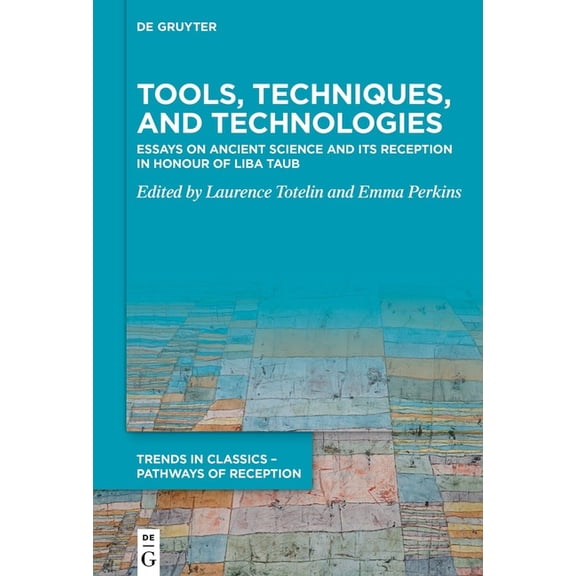 $11245current price $112.45
Trends in Classics - Pathways of Recepti Tools, Techniques, and Technologies: Essays on Ancient Science and Its Reception in Honour of Liba Taub, Book 10, (Hardcover)
Sather Classical Lectures: Everyday Writing in the Graeco-Roman East (Series #69) (Edition 1) (Paperback) $32.85
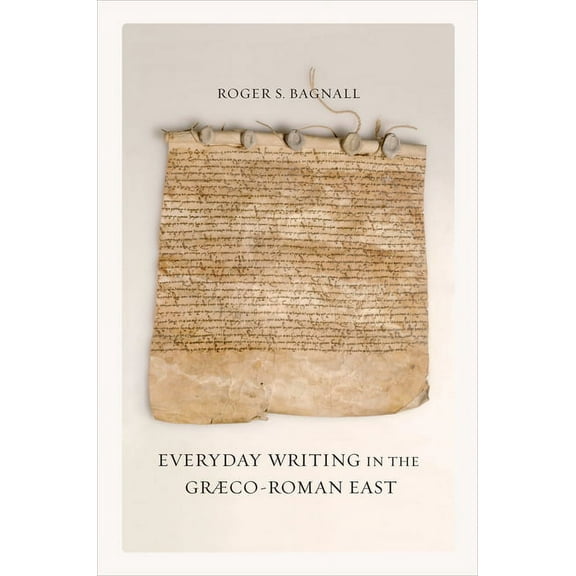 $3285current price $32.85
Sather Classical Lectures: Everyday Writing in the Graeco-Roman East (Series #69) (Edition 1) (Paperback)
The School of Rome: Latin Studies and the Origins of Liberal Education, (Paperback) $22.30
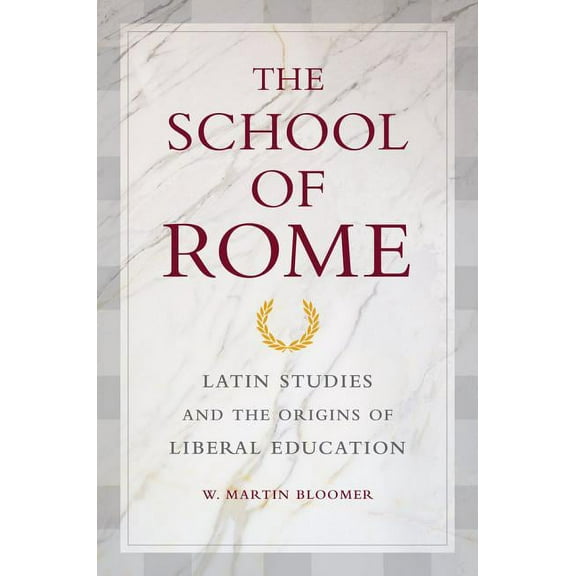 $2230current price $22.30
The School of Rome: Latin Studies and the Origins of Liberal Education, (Paperback)
Historiography of Rome and Its Empire Space, Narrative, and Historical Imagination in Livy's AB Urbe Condita, Book 21, (Hardcover) $126.66
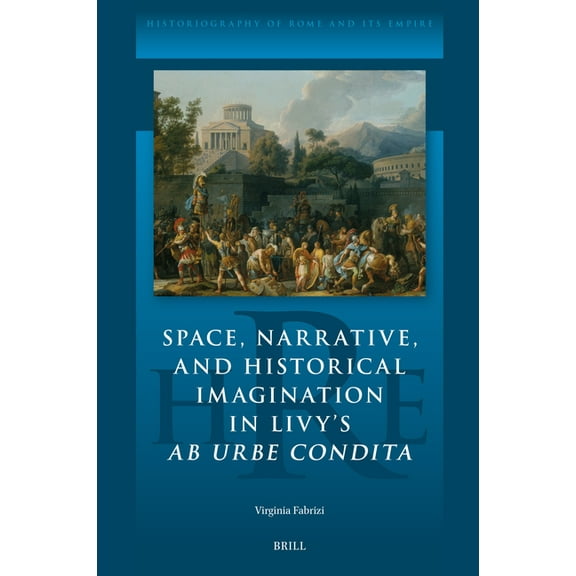 $12666current price $126.66
Historiography of Rome and Its Empire Space, Narrative, and Historical Imagination in Livy's AB Urbe Condita, Book 21, (Hardcover)
Sather Classical Lectures: Everyday Writing in the Graeco-Roman East (Series #69) (Edition 1) (Hardcover) $85.00
 $8500current price $85.00
Sather Classical Lectures: Everyday Writing in the Graeco-Roman East (Series #69) (Edition 1) (Hardcover)
Bibliotheca Scriptorum Graecorum Et Roma Anthologii Libri Duo Priores, (Hardcover) $99.40
 $9940current price $99.40
Bibliotheca Scriptorum Graecorum Et Roma Anthologii Libri Duo Priores, (Hardcover)
Cultural History of Apocalyptic Thought ROMs Apokalypse: Endzeitvorstellungen Und Krisendeutungen in Der Spätantike, Book 6, (Hardcover) $87.99
 $8799current price $87.99
Cultural History of Apocalyptic Thought ROMs Apokalypse: Endzeitvorstellungen Und Krisendeutungen in Der Spätantike, Book 6, (Hardcover)
Reduced price Pre-Owned Two Lyres from Ur (Hardcover) 092417188X 9780924171888 $13.93
Reduced price $1393current price $13.93
Pre-Owned Two Lyres from Ur (Hardcover) 092417188X 9780924171888
Design and Archaeology: The Social Imaginary in Iron Age and Early Roman Europe, (Hardcover) $115.00
 $11500current price $115.00
Design and Archaeology: The Social Imaginary in Iron Age and Early Roman Europe, (Hardcover)
Social Science History The Ancient Economy: Evidence and Models, (Paperback) $28.11
 $2811current price $28.11
Social Science History The Ancient Economy: Evidence and Models, (Paperback)
Beiträge Zur Altertumskunde Studies in Aeschylus, Book 1, (Hardcover) $264.30 Was $315.97
 $26430current price $264.30, Was $315.97$315.97
Beiträge Zur Altertumskunde Studies in Aeschylus, Book 1, (Hardcover)
Untersuchungen Zur Antiken Literatur Und Studies in Greek Elegy and Iambus, Book 14, (Hardcover) $199.99
 $19999current price $199.99
Untersuchungen Zur Antiken Literatur Und Studies in Greek Elegy and Iambus, Book 14, (Hardcover)
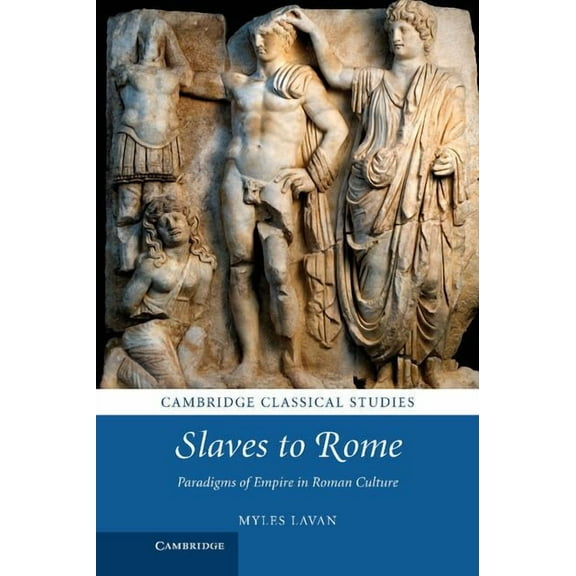
Cambridge Classical Studies Slaves to Rome: Paradigms of Empire in Roman Culture, (Hardcover) $114.00
 $11400current price $114.00
Cambridge Classical Studies Slaves to Rome: Paradigms of Empire in Roman Culture, (Hardcover)
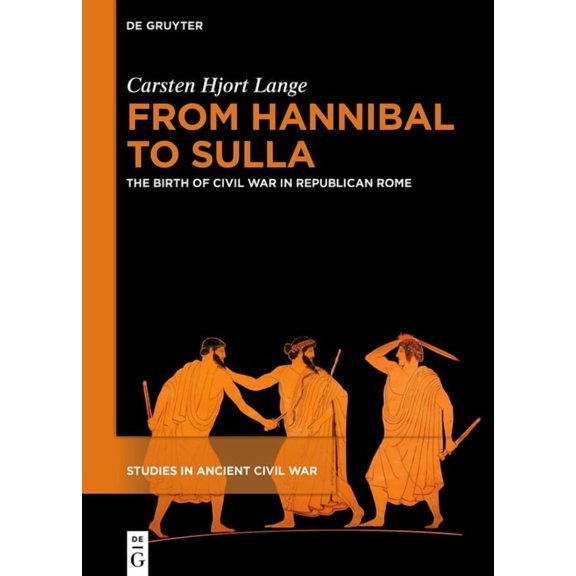
Studies in Ancient Civil War From Hannibal to Sulla: The Birth of Civil War in Republican Rome, Book 1, (Hardcover) $87.99
 $8799current price $87.99
Studies in Ancient Civil War From Hannibal to Sulla: The Birth of Civil War in Republican Rome, Book 1, (Hardcover)
Writing Biography in Greece and Rome, (Hardcover) $82.84
 $8284current price $82.84
Writing Biography in Greece and Rome, (Hardcover)
The School of Rome : Latin Studies and the Origins of Liberal Education (Edition 1) (Hardcover) $85.00
$8500current price $85.00The School of Rome : Latin Studies and the Origins of Liberal Education (Edition 1) (Hardcover)
Customer ratings & reviews
0 ratings|0 reviews
This item does not have any reviews yet
