

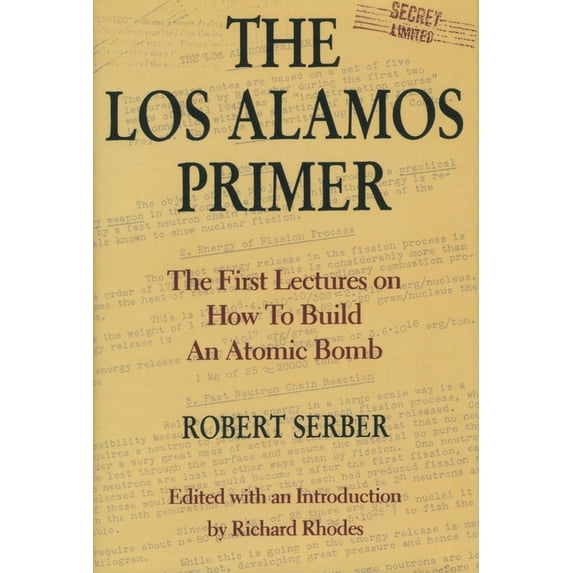
The Los Alamos Primer : The First Lectures on How To Build an Atomic Bomb (Edition 1) (Hardcover)
(No ratings yet)
Key item features
The classified lectures that galvanized the Manhattan Project scientists—with annotations for the nonspecialist reader and an introduction by a Pulitzer Prize-winning historian.
In March 1943 a group of young scientists, sequestered on a mesa near Santa Fe, attended a crash course in the new atomic physics. The lecturer was Robert Serber, J. Robert Oppenheimer's protégé, and they learned that their job was to invent the world's first atomic bomb.
Serber's lecture notes, nicknamed the "Los Alamos Primer," were mimeographed and passed from hand to hand, remaining classified for many years. They are published here for the first time, and now contemporary readers can see just how much was known and how terrifyingly much was unknown when the Manhattan Project began. Could this "gadget," based on the newly discovered principles of nuclear fission, really be designed and built? Could it be small enough and light enough for an airplane to carry? If it could be built, could it be controlled?
Working with Richard Rhodes, Pulitzer Prize-winning historian of the development of the atomic bomb, Professor Serber has annotated original lecture notes with explanations of the physics terms for the nonspecialist. His preface, an informal memoir, vividly conveys the mingled excitement, uncertainty, and intensity felt by the Manhattan Project scientists. Rhodes's introduction provides a brief history of the development of atomic physics up to the day that Serber stood before his blackboard at Los Alamos. In this edition, The Los Alamos Primer finally emerges from the archives to give a new understanding of the very beginning of nuclear weapons. No seminar anywhere has had greater historical consequences.
In March 1943 a group of young scientists, sequestered on a mesa near Santa Fe, attended a crash course in the new atomic physics. The lecturer was Robert Serber, J. Robert Oppenheimer's protégé, and they learned that their job was to invent the world's first atomic bomb.
Serber's lecture notes, nicknamed the "Los Alamos Primer," were mimeographed and passed from hand to hand, remaining classified for many years. They are published here for the first time, and now contemporary readers can see just how much was known and how terrifyingly much was unknown when the Manhattan Project began. Could this "gadget," based on the newly discovered principles of nuclear fission, really be designed and built? Could it be small enough and light enough for an airplane to carry? If it could be built, could it be controlled?
Working with Richard Rhodes, Pulitzer Prize-winning historian of the development of the atomic bomb, Professor Serber has annotated original lecture notes with explanations of the physics terms for the nonspecialist. His preface, an informal memoir, vividly conveys the mingled excitement, uncertainty, and intensity felt by the Manhattan Project scientists. Rhodes's introduction provides a brief history of the development of atomic physics up to the day that Serber stood before his blackboard at Los Alamos. In this edition, The Los Alamos Primer finally emerges from the archives to give a new understanding of the very beginning of nuclear weapons. No seminar anywhere has had greater historical consequences.
Specs
- Book formatHardcover
- Fiction/nonfictionNon-Fiction
- GenreNonfiction
- Publication dateMarch, 1992
- Pages138
- Number in series1
Current price is USD$45.77
Price when purchased online
Out of stock
How do you want your item?
Out of stock
About this item
Product details
The classified lectures that galvanized the Manhattan Project scientists--with annotations for the nonspecialist reader and an introduction by a Pulitzer Prize-winning historian.
In March 1943 a group of young scientists, sequestered on a mesa near Santa Fe, attended a crash course in the new atomic physics. The lecturer was Robert Serber, J. Robert Oppenheimer's protégé, and they learned that their job was to invent the world's first atomic bomb.
Serber's lecture notes, nicknamed the "Los Alamos Primer," were mimeographed and passed from hand to hand, remaining classified for many years. They are published here for the first time, and now contemporary readers can see just how much was known and how terrifyingly much was unknown when the Manhattan Project began. Could this "gadget," based on the newly discovered principles of nuclear fission, really be designed and built? Could it be small enough and light enough for an airplane to carry? If it could be built, could it be controlled?
Working with Richard Rhodes, Pulitzer Prize-winning historian of the development of the atomic bomb, Professor Serber has annotated original lecture notes with explanations of the physics terms for the nonspecialist. His preface, an informal memoir, vividly conveys the mingled excitement, uncertainty, and intensity felt by the Manhattan Project scientists. Rhodes's introduction provides a brief history of the development of atomic physics up to the day that Serber stood before his blackboard at Los Alamos. In this edition, The Los Alamos Primer finally emerges from the archives to give a new understanding of the very beginning of nuclear weapons. No seminar anywhere has had greater historical consequences.
In March 1943 a group of young scientists, sequestered on a mesa near Santa Fe, attended a crash course in the new atomic physics. The lecturer was Robert Serber, J. Robert Oppenheimer's protégé, and they learned that their job was to invent the world's first atomic bomb.
Serber's lecture notes, nicknamed the "Los Alamos Primer," were mimeographed and passed from hand to hand, remaining classified for many years. They are published here for the first time, and now contemporary readers can see just how much was known and how terrifyingly much was unknown when the Manhattan Project began. Could this "gadget," based on the newly discovered principles of nuclear fission, really be designed and built? Could it be small enough and light enough for an airplane to carry? If it could be built, could it be controlled?
Working with Richard Rhodes, Pulitzer Prize-winning historian of the development of the atomic bomb, Professor Serber has annotated original lecture notes with explanations of the physics terms for the nonspecialist. His preface, an informal memoir, vividly conveys the mingled excitement, uncertainty, and intensity felt by the Manhattan Project scientists. Rhodes's introduction provides a brief history of the development of atomic physics up to the day that Serber stood before his blackboard at Los Alamos. In this edition, The Los Alamos Primer finally emerges from the archives to give a new understanding of the very beginning of nuclear weapons. No seminar anywhere has had greater historical consequences.
The classified lectures that galvanized the Manhattan Project scientists—with annotations for the nonspecialist reader and an introduction by a Pulitzer Prize-winning historian.
In March 1943 a group of young scientists, sequestered on a mesa near Santa Fe, attended a crash course in the new atomic physics. The lecturer was Robert Serber, J. Robert Oppenheimer's protégé, and they learned that their job was to invent the world's first atomic bomb.
Serber's lecture notes, nicknamed the "Los Alamos Primer," were mimeographed and passed from hand to hand, remaining classified for many years. They are published here for the first time, and now contemporary readers can see just how much was known and how terrifyingly much was unknown when the Manhattan Project began. Could this "gadget," based on the newly discovered principles of nuclear fission, really be designed and built? Could it be small enough and light enough for an airplane to carry? If it could be built, could it be controlled?
Working with Richard Rhodes, Pulitzer Prize-winning historian of the development of the atomic bomb, Professor Serber has annotated original lecture notes with explanations of the physics terms for the nonspecialist. His preface, an informal memoir, vividly conveys the mingled excitement, uncertainty, and intensity felt by the Manhattan Project scientists. Rhodes's introduction provides a brief history of the development of atomic physics up to the day that Serber stood before his blackboard at Los Alamos. In this edition, The Los Alamos Primer finally emerges from the archives to give a new understanding of the very beginning of nuclear weapons. No seminar anywhere has had greater historical consequences.
In March 1943 a group of young scientists, sequestered on a mesa near Santa Fe, attended a crash course in the new atomic physics. The lecturer was Robert Serber, J. Robert Oppenheimer's protégé, and they learned that their job was to invent the world's first atomic bomb.
Serber's lecture notes, nicknamed the "Los Alamos Primer," were mimeographed and passed from hand to hand, remaining classified for many years. They are published here for the first time, and now contemporary readers can see just how much was known and how terrifyingly much was unknown when the Manhattan Project began. Could this "gadget," based on the newly discovered principles of nuclear fission, really be designed and built? Could it be small enough and light enough for an airplane to carry? If it could be built, could it be controlled?
Working with Richard Rhodes, Pulitzer Prize-winning historian of the development of the atomic bomb, Professor Serber has annotated original lecture notes with explanations of the physics terms for the nonspecialist. His preface, an informal memoir, vividly conveys the mingled excitement, uncertainty, and intensity felt by the Manhattan Project scientists. Rhodes's introduction provides a brief history of the development of atomic physics up to the day that Serber stood before his blackboard at Los Alamos. In this edition, The Los Alamos Primer finally emerges from the archives to give a new understanding of the very beginning of nuclear weapons. No seminar anywhere has had greater historical consequences.
info:
We aim to show you accurate product information. Manufacturers, suppliers and others provide what you see here, and we have not verified it.
Specifications
Book format
Hardcover
Fiction/nonfiction
Non-Fiction
Genre
Nonfiction
Publication date
March, 1992
Warranty
Warranty information
Please be aware that the warranty terms on items offered for sale by third party Marketplace sellers may differ from those displayed in this section (if any). To confirm warranty terms on an item offered for sale by a third party Marketplace seller, please use the 'Contact seller' feature on the third party Marketplace seller's information page and request the item's warranty terms prior to purchase.
Similar items you might like
Based on what customers bought
John Foster Dulles and the Diplomacy of the Cold War, (Paperback) $71.49
 $7149current price $71.49
John Foster Dulles and the Diplomacy of the Cold War, (Paperback)
Memoirs of Dr. Robert Blakey, Professor of Logic and Metaphysics, Queen's College, Belfast Hardcover $33.67
 $3367current price $33.67
Memoirs of Dr. Robert Blakey, Professor of Logic and Metaphysics, Queen's College, Belfast Hardcover
The Public Administration Theory Primer, (Paperback) $28.98
 $2898current price $28.98
The Public Administration Theory Primer, (Paperback)
15 out of 5 Stars. 1 reviewsThe Supreme Court: An Essential History, Second Edition, (Paperback) $28.48
 $2848current price $28.48
The Supreme Court: An Essential History, Second Edition, (Paperback)
The Sociologist and the Historian (Hardcover) $46.03
 $4603current price $46.03
The Sociologist and the Historian (Hardcover)
Blind Oracles: Intellectuals and War from Kennan to Kissinger, (Paperback) $41.74
 $4174current price $41.74
Blind Oracles: Intellectuals and War from Kennan to Kissinger, (Paperback)
Gandhi and the Stoics: Modern Experiments on Ancient Values. by Richard Sorabji, (Hardcover) $54.45
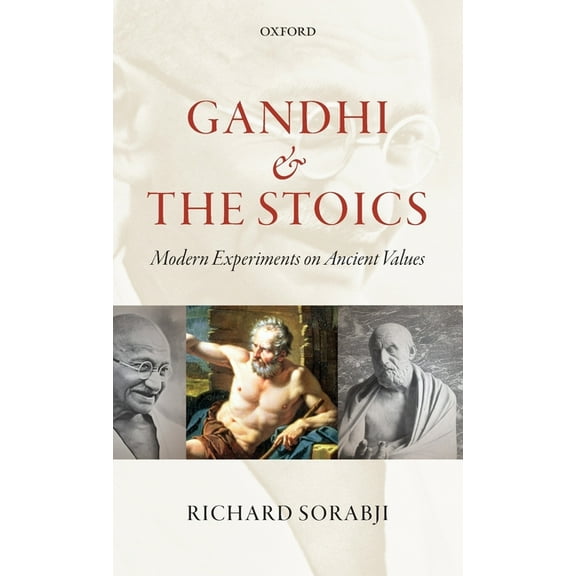 $5445current price $54.45
Gandhi and the Stoics: Modern Experiments on Ancient Values. by Richard Sorabji, (Hardcover)
The Higher Powers of Man (Hardcover) $35.47
 $3547current price $35.47
The Higher Powers of Man (Hardcover)
Winston Churchill: Biografía de un Primer Ministro británico, (Hardcover) $21.78
 $2178current price $21.78
Winston Churchill: Biografía de un Primer Ministro británico, (Hardcover)
Socrates and the State, (Paperback) $62.87
 $6287current price $62.87
Socrates and the State, (Paperback)
Woodrow Wilson : Princeton to the Presidency $28.02
 $2802current price $28.02
Woodrow Wilson : Princeton to the Presidency
Formal Logic : Its Scope and Limits (Edition 4) (Hardcover) $57.34
 $5734current price $57.34
Formal Logic : Its Scope and Limits (Edition 4) (Hardcover)
Pre-Owned Alienation (Hardcover) by Rahel Jaeggi, Frederick Neuhouser, Alan Smith $38.70
 $3870current price $38.70
Pre-Owned Alienation (Hardcover) by Rahel Jaeggi, Frederick Neuhouser, Alan Smith
Coming Out of the Dark Into the Light, (Hardcover) $32.11 Was $40.00
 $3211current price $32.11, Was $40.00$40.00
Coming Out of the Dark Into the Light, (Hardcover)
How to Build a Life in the Humanities: Meditations on the Academic Work-Life Balance, (Hardcover) $51.11
 $5111current price $51.11
How to Build a Life in the Humanities: Meditations on the Academic Work-Life Balance, (Hardcover)
Epistemology with a Broad and Long View, (Hardcover) $23.05 Was $28.61
 $2305current price $23.05, Was $28.61$28.61
Epistemology with a Broad and Long View, (Hardcover)
Klassiker Auslegen Platon: Symposion, Book 39, (Hardcover) $41.30
 $4130current price $41.30
Klassiker Auslegen Platon: Symposion, Book 39, (Hardcover)
Kriegie, (Hardcover) $33.65
 $3365current price $33.65
Kriegie, (Hardcover)
Digging Up the Dead: A History of Notable American Reburials, (Hardcover) $35.18
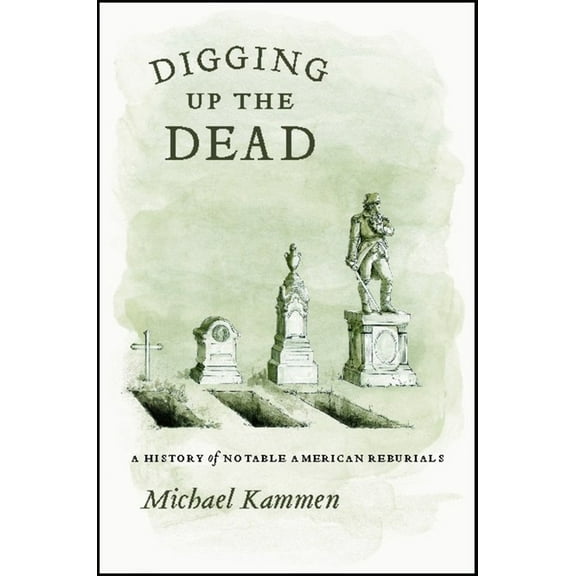 $3518current price $35.18
Digging Up the Dead: A History of Notable American Reburials, (Hardcover)
Contributions to Phenomenology Phenomenology in a New Key: Between Analysis and History: Essays in Honor of Richard Cobb-Stevens, Book 72, (Paperback) $60.29
 $6029current price $60.29
Contributions to Phenomenology Phenomenology in a New Key: Between Analysis and History: Essays in Honor of Richard Cobb-Stevens, Book 72, (Paperback)
Customer ratings & reviews
0 ratings|0 reviews
This item does not have any reviews yet
