


Hero image 0 of The Politics of Faith and the Politics of Scepticism (Paperback), 0 of 1
The Politics of Faith and the Politics of Scepticism (Paperback)
(No ratings yet)
Key item features
Michael Oakeshott, the foremost British political philosopher of the twentieth century, died in 1990, leaving a substantial collection of unpublished material. Yale University Press is continuing to make available the best of these illuminating works.
In this polished and hitherto unknown work, Oakeshott argues that modern politics was constituted out of a debate, persistent through centuries of European political experience down to our own day, over the question "What should governments do?" According to Oakeshott, two different answers have dominated our thought since the fifteenth century. One, exemplified by such thinkers as Rousseau and Marx, expresses a belief in the capacity of human beings to control, design, and monitor all aspects of social and political life, a belief fostered by the intoxicating increase in power available to governments in modern times. On the other hand, sceptics such as Montaigne, Pascal, and Hobbes argued that governments cannot, in principle, produce perfection and that we should prevent concentrations of power that may result in tyrannies that oppress the dignity of the human spirit. Oakeshott exposes the pitfalls of both positions and shows the value of a middle ground that incorporates scepticism with enough faith to avoid total quietism. Readers of Oakeshott will find here the thinking that lies behind his famous definition of politics as "the pursuit of intimations.".
In this polished and hitherto unknown work, Oakeshott argues that modern politics was constituted out of a debate, persistent through centuries of European political experience down to our own day, over the question "What should governments do?" According to Oakeshott, two different answers have dominated our thought since the fifteenth century. One, exemplified by such thinkers as Rousseau and Marx, expresses a belief in the capacity of human beings to control, design, and monitor all aspects of social and political life, a belief fostered by the intoxicating increase in power available to governments in modern times. On the other hand, sceptics such as Montaigne, Pascal, and Hobbes argued that governments cannot, in principle, produce perfection and that we should prevent concentrations of power that may result in tyrannies that oppress the dignity of the human spirit. Oakeshott exposes the pitfalls of both positions and shows the value of a middle ground that incorporates scepticism with enough faith to avoid total quietism. Readers of Oakeshott will find here the thinking that lies behind his famous definition of politics as "the pursuit of intimations.".
Specs
- Book formatPaperback
- Fiction/nonfictionNon-Fiction
- Publication dateJune, 1996
- Pages160
- Edition1
- PublisherYale University Press
More seller options (4)
Starting from $37.58
About this item
Product details
In this carefully reasoned work, discovered after Michael Oakeshott's death in 1990 and here published for the first time, the preeminent political philosopher describes the fundamental dichotomy that has divided discussion of the role of government in Europe since the Renaissance. Oakeshott exposes the weaknesses of each opposing position and proposes a middle ground, incorporating some scepticism and some faith. "By general consensus, Oakeshott is the most striking and original British political thinker of the century. . . . Anyone interested in the nature of politics and government will find this book of interest, and many will want to direct their senior students to it as an accessible introduction to Oakeshott's thought."-William Christian, University of Guelph, Perspectives on Political Science "The Politics of Faith and the Politics of Scepticism is concerned to trace the deepest and most permanent features of the modern European political landscape over the last five hundred years, and this it does in an original, insightful, and frequently eloquent manner. We are fortunate that the book has finally seen the light of day."-Paul Franco, Bowdoin College, Political Theory "We are grateful to the editor Tim Fuller for making available this little gem that combines philosophical insight and historical investigation in the exposure of the two 'styles' of modern European politics, without the elaborate prose to which Oakeshott has accustomed his readers: the absence of the typical flamboyant style that characterizes Oakeshott's published works, enables us to grasp his line of thought in the making and renders his arguments crystal clear. . . . A sublime mememto."-Giovanni Giorgini, Political Studies
Michael Oakeshott, the foremost British political philosopher of the twentieth century, died in 1990, leaving a substantial collection of unpublished material. Yale University Press is continuing to make available the best of these illuminating works.
In this polished and hitherto unknown work, Oakeshott argues that modern politics was constituted out of a debate, persistent through centuries of European political experience down to our own day, over the question "What should governments do?" According to Oakeshott, two different answers have dominated our thought since the fifteenth century. One, exemplified by such thinkers as Rousseau and Marx, expresses a belief in the capacity of human beings to control, design, and monitor all aspects of social and political life, a belief fostered by the intoxicating increase in power available to governments in modern times. On the other hand, sceptics such as Montaigne, Pascal, and Hobbes argued that governments cannot, in principle, produce perfection and that we should prevent concentrations of power that may result in tyrannies that oppress the dignity of the human spirit. Oakeshott exposes the pitfalls of both positions and shows the value of a middle ground that incorporates scepticism with enough faith to avoid total quietism. Readers of Oakeshott will find here the thinking that lies behind his famous definition of politics as "the pursuit of intimations.".
In this polished and hitherto unknown work, Oakeshott argues that modern politics was constituted out of a debate, persistent through centuries of European political experience down to our own day, over the question "What should governments do?" According to Oakeshott, two different answers have dominated our thought since the fifteenth century. One, exemplified by such thinkers as Rousseau and Marx, expresses a belief in the capacity of human beings to control, design, and monitor all aspects of social and political life, a belief fostered by the intoxicating increase in power available to governments in modern times. On the other hand, sceptics such as Montaigne, Pascal, and Hobbes argued that governments cannot, in principle, produce perfection and that we should prevent concentrations of power that may result in tyrannies that oppress the dignity of the human spirit. Oakeshott exposes the pitfalls of both positions and shows the value of a middle ground that incorporates scepticism with enough faith to avoid total quietism. Readers of Oakeshott will find here the thinking that lies behind his famous definition of politics as "the pursuit of intimations.".
info:
We aim to show you accurate product information. Manufacturers, suppliers and others provide what you see here, and we have not verified it.
Specifications
Book format
Paperback
Fiction/nonfiction
Non-Fiction
Genre
Political & Social Sciences
Publication date
June, 1996
Warranty
Warranty information
Please be aware that the warranty terms on items offered for sale by third party Marketplace sellers may differ from those displayed in this section (if any). To confirm warranty terms on an item offered for sale by a third party Marketplace seller, please use the 'Contact seller' feature on the third party Marketplace seller's information page and request the item's warranty terms prior to purchase.
Warnings
State Chemical Disclosure
None
Similar items you might like
Based on what customers bought
How to Live the Good Life: A User's Guide for Modern Humans, (Paperback) $25.00 Was $28.99
 $2500current price $25.00, Was $28.99$28.99
How to Live the Good Life: A User's Guide for Modern Humans, (Paperback)
Crosscurrents Philosophy, Animality and the Life Sciences, (Paperback) $24.95
 $2495current price $24.95
Crosscurrents Philosophy, Animality and the Life Sciences, (Paperback)
Deformations of Democracy: David Beetham in Contemporary Politics, (Paperback) $29.95
 $2995current price $29.95
Deformations of Democracy: David Beetham in Contemporary Politics, (Paperback)
Constitutions and Political Theory: Second Edition, (Paperback) $34.64
 $3464current price $34.64
Constitutions and Political Theory: Second Edition, (Paperback)
Rousseau's Politics of Taste, (Paperback) $24.95
 $2495current price $24.95
Rousseau's Politics of Taste, (Paperback)
Political Thought and Political Thinkers, (Paperback) $46.70
 $4670current price $46.70
Political Thought and Political Thinkers, (Paperback)
Aristotle and Modern Politics: The Persistence of Political Philosophy, (Paperback) $35.44
 $3544current price $35.44
Aristotle and Modern Politics: The Persistence of Political Philosophy, (Paperback)
Political Criticism, (Paperback) $37.72
 $3772current price $37.72
Political Criticism, (Paperback)
Cosmology and Politics in Plato's Later Works, (Paperback) $45.56
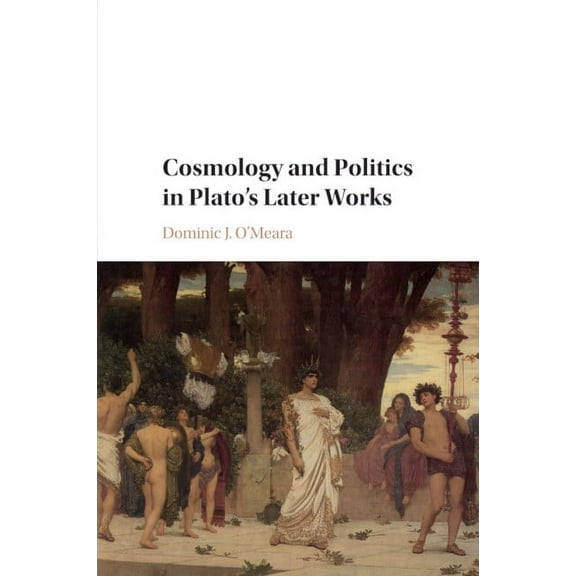 $4556current price $45.56
Cosmology and Politics in Plato's Later Works, (Paperback)
The Politics of Linguistics, (Paperback) $30.00
 $3000current price $30.00
The Politics of Linguistics, (Paperback)
Critical Encounters: Between Philosophy and Politics, (Paperback) $36.70
 $3670current price $36.70
Critical Encounters: Between Philosophy and Politics, (Paperback)
Knowledge and Power: Toward a Political Philosophy of Science, (Paperback) $26.10
 $2610current price $26.10
Knowledge and Power: Toward a Political Philosophy of Science, (Paperback)
Human Society in Ethics and Politics, (Paperback) $44.87
 $4487current price $44.87
Human Society in Ethics and Politics, (Paperback)
The Politics of Corruption in Dictatorships, (Paperback) $21.15 Was $27.76
 $2115current price $21.15, Was $27.76$27.76
The Politics of Corruption in Dictatorships, (Paperback)
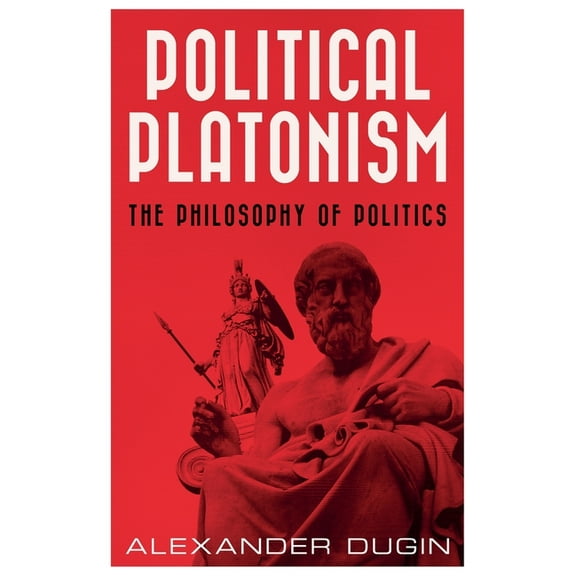
Political Platonism: The Philosophy of Politics, (Paperback) $16.50
 $1650current price $16.50
Political Platonism: The Philosophy of Politics, (Paperback)
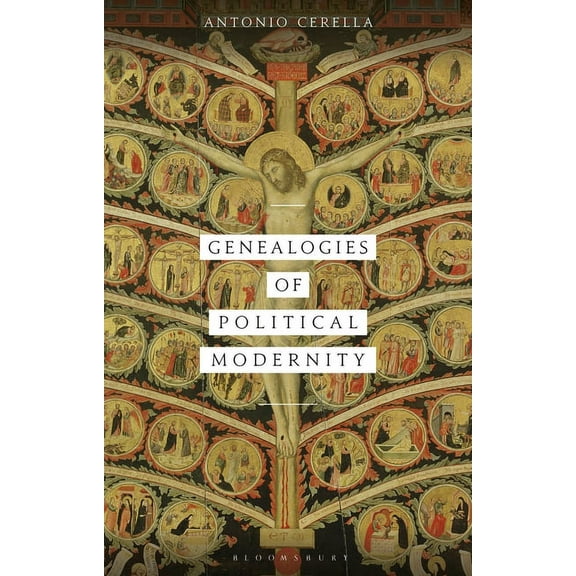
Political Theologies Genealogies of Political Modernity, (Paperback) $44.95
 $4495current price $44.95
Political Theologies Genealogies of Political Modernity, (Paperback)
How States Die, (Paperback) $24.07 Was $29.22
 $2407current price $24.07, Was $29.22$29.22
How States Die, (Paperback)


Customer ratings & reviews
0 ratings|0 reviews
This item does not have any reviews yet

Related pages
- John Stuart Mill Liberalism
- American Entitlement
- Courageous People History
- The Baltimore Review
- William David Lewis
- Michael J Schweitzer
- Peace Political Books
- General Political Process Books
- Commentary & Opinion Political Books
- Conservatism & Liberalism Political Ideologies Books
- Energy Policy Books
- Political Parties Process Books