

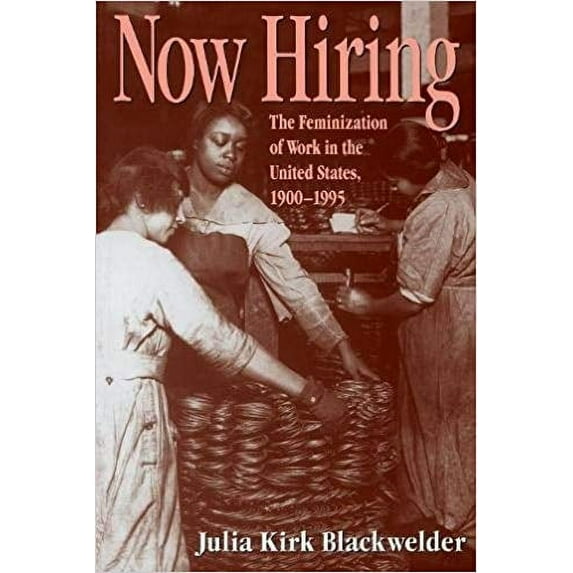
Now Hiring : The Feminization of Work in the United States, 1900-1995 (Paperback)
(No ratings yet)
Key item features
As the twentieth century draws to an end, the changing role of women appears as one of the dominant features of the era. In Now Hiring, historian Julia Blackwelder traces the century-long evolution of the American occupational structure and the ensuing rise in demand for female workers through the closing episodes of the Industrial Revolution and the advent of postindustrialism. Decade by decade, she adroitly traces the main lines of the development of the female work force and its interactions with education, family life, and social convention while developing a nuanced analysis of the differential patterns for various ethnic, racial, age, and socioeconomic groups.
Through vignettes of individual women, given context by statistical data that place them within larger patterns of work and family life, Blackwelder presents her arguments “with flesh on them.” She offers a pioneering consideration of non-paid employment as part of the picture of women and work and incorporates an intriguing case study of the evolution of the Girl Scout organization. Her consideration of the interaction of race, class, gender, and economic forces in the evolving roles of working women--particularly since she weaves these issues into every discussion, rather than isolating them as afterthoughts--also makes an intellectual contribution to the field of women’s studies. In her conclusion, Blackwelder summarizes the effects of a century of change in women’s employment and delineates the social and economic challenges that will confront women and families of the twenty-first century.
Blackwelder portrays the larger economy as the premier driving force for patterns of female work. She demonstrates that the reconfiguration of the women’s labor market followed the shift of the leading sector, from agriculture in the nineteenth century to manufacturing and eventually to service industries. In addition, she shows how changes in the labor market redirected female education and transformed family structures in the United States and how these changes in turn contributed to the further restructuring of job opportunities and salary structures.
Blackwelder analyzes how gender conventions have affected the employment of women: what industries would hire them, what positions they were considered for, what pay was considered appropriate. Considering how the shift in the national economy and the growing female permeation of the labor force changed the dynamics and economics of family life, she shows that although wage-earning wives gained more authority within marriage, they also assumed heavier responsibilities for the financial support of their families. As rising rates of separation and divorce further burdened mothers (who generally had child custody), women’s economic advances paradoxically worsened their overall financial well-being.
This survey of U.S. women and work introduces students and general readers alike to these important topics, and the distinctiveness of Blackwelder’s approach, blending quantitative data and oral history materials, as well as the cogency of her underlying arguments, give the book importance to scholars of labor and economic history and women’s studies.
Through vignettes of individual women, given context by statistical data that place them within larger patterns of work and family life, Blackwelder presents her arguments “with flesh on them.” She offers a pioneering consideration of non-paid employment as part of the picture of women and work and incorporates an intriguing case study of the evolution of the Girl Scout organization. Her consideration of the interaction of race, class, gender, and economic forces in the evolving roles of working women--particularly since she weaves these issues into every discussion, rather than isolating them as afterthoughts--also makes an intellectual contribution to the field of women’s studies. In her conclusion, Blackwelder summarizes the effects of a century of change in women’s employment and delineates the social and economic challenges that will confront women and families of the twenty-first century.
Blackwelder portrays the larger economy as the premier driving force for patterns of female work. She demonstrates that the reconfiguration of the women’s labor market followed the shift of the leading sector, from agriculture in the nineteenth century to manufacturing and eventually to service industries. In addition, she shows how changes in the labor market redirected female education and transformed family structures in the United States and how these changes in turn contributed to the further restructuring of job opportunities and salary structures.
Blackwelder analyzes how gender conventions have affected the employment of women: what industries would hire them, what positions they were considered for, what pay was considered appropriate. Considering how the shift in the national economy and the growing female permeation of the labor force changed the dynamics and economics of family life, she shows that although wage-earning wives gained more authority within marriage, they also assumed heavier responsibilities for the financial support of their families. As rising rates of separation and divorce further burdened mothers (who generally had child custody), women’s economic advances paradoxically worsened their overall financial well-being.
This survey of U.S. women and work introduces students and general readers alike to these important topics, and the distinctiveness of Blackwelder’s approach, blending quantitative data and oral history materials, as well as the cogency of her underlying arguments, give the book importance to scholars of labor and economic history and women’s studies.
Specs
- Manual & guide typeInstruction Manual
- Book formatPaperback
- Edition1
- Pages320
- LanguageEnglish
- BrandDr Julia Kirk Blackwelder
More seller options (1)
Starting from $24.84
About this item
Product details
As the twentieth century draws to an end, the changing role of women appears as one of the dominant features of the era. In Now Hiring, historian Julia Blackwelder traces the century-long evolution of the American occupational structure and the ensuing rise in demand for female workers through the closing episodes of the Industrial Revolution and the advent of postindustrialism. Decade by decade, she adroitly traces the main lines of the development of the female work force and its interactions with education, family life, and social convention while developing a nuanced analysis of the differential patterns for various ethnic, racial, age, and socioeconomic groups. Through vignettes of individual women, given context by statistical data that place them within larger patterns of work and family life, Blackwelder presents her arguments "with flesh on them." She offers a pioneering consideration of non-paid employment as part of the picture of women and work and incorporates an intriguing case study of the evolution of the Girl Scout organization. Her consideration of the interaction of race, class, gender, and economic forces in the evolving roles of working women--particularly since she weaves these issues into every discussion, rather than isolating them as afterthoughts--also makes an intellectual contribution to the field of women's studies. In her conclusion, Blackwelder summarizes the effects of a century of change in women's employment and delineates the social and economic challenges that will confront women and families of the twenty-first century. Blackwelder portrays the larger economy as the premier driving force for patterns of female work. She demonstrates that the reconfiguration of the women's labor market followed the shift of the leading sector, from agriculture in the nineteenth century to manufacturing and eventually to service industries. In addition, she shows how changes in the labor market redirected female education and transformed family structures in the United States and how these changes in turn contributed to the further restructuring of job opportunities and salary structures. Blackwelder analyzes how gender conventions have affected the employment of women: what industries would hire them, what positions they were considered for, what pay was considered appropriate. Considering how the shift in the national economy and the growing female permeation of the labor force changed the dynamics and economics of family life, she shows that although wage-earning wives gained more authority within marriage, they also assumed heavier responsibilities for the financial support of their families. As rising rates of separation and divorce further burdened mothers (who generally had child custody), women's economic advances paradoxically worsened their overall financial well-being. This survey of U.S. women and work introduces students and general readers alike to these important topics, and the distinctiveness of Blackwelder's approach, blending quantitative data and oral history materials, as well as the cogency of her underlying arguments, give the book importance to scholars of labor and economic history and women's studies.
As the twentieth century draws to an end, the changing role of women appears as one of the dominant features of the era. In Now Hiring, historian Julia Blackwelder traces the century-long evolution of the American occupational structure and the ensuing rise in demand for female workers through the closing episodes of the Industrial Revolution and the advent of postindustrialism. Decade by decade, she adroitly traces the main lines of the development of the female work force and its interactions with education, family life, and social convention while developing a nuanced analysis of the differential patterns for various ethnic, racial, age, and socioeconomic groups.
Through vignettes of individual women, given context by statistical data that place them within larger patterns of work and family life, Blackwelder presents her arguments “with flesh on them.” She offers a pioneering consideration of non-paid employment as part of the picture of women and work and incorporates an intriguing case study of the evolution of the Girl Scout organization. Her consideration of the interaction of race, class, gender, and economic forces in the evolving roles of working women--particularly since she weaves these issues into every discussion, rather than isolating them as afterthoughts--also makes an intellectual contribution to the field of women’s studies. In her conclusion, Blackwelder summarizes the effects of a century of change in women’s employment and delineates the social and economic challenges that will confront women and families of the twenty-first century.
Blackwelder portrays the larger economy as the premier driving force for patterns of female work. She demonstrates that the reconfiguration of the women’s labor market followed the shift of the leading sector, from agriculture in the nineteenth century to manufacturing and eventually to service industries. In addition, she shows how changes in the labor market redirected female education and transformed family structures in the United States and how these changes in turn contributed to the further restructuring of job opportunities and salary structures.
Blackwelder analyzes how gender conventions have affected the employment of women: what industries would hire them, what positions they were considered for, what pay was considered appropriate. Considering how the shift in the national economy and the growing female permeation of the labor force changed the dynamics and economics of family life, she shows that although wage-earning wives gained more authority within marriage, they also assumed heavier responsibilities for the financial support of their families. As rising rates of separation and divorce further burdened mothers (who generally had child custody), women’s economic advances paradoxically worsened their overall financial well-being.
This survey of U.S. women and work introduces students and general readers alike to these important topics, and the distinctiveness of Blackwelder’s approach, blending quantitative data and oral history materials, as well as the cogency of her underlying arguments, give the book importance to scholars of labor and economic history and women’s studies.
Through vignettes of individual women, given context by statistical data that place them within larger patterns of work and family life, Blackwelder presents her arguments “with flesh on them.” She offers a pioneering consideration of non-paid employment as part of the picture of women and work and incorporates an intriguing case study of the evolution of the Girl Scout organization. Her consideration of the interaction of race, class, gender, and economic forces in the evolving roles of working women--particularly since she weaves these issues into every discussion, rather than isolating them as afterthoughts--also makes an intellectual contribution to the field of women’s studies. In her conclusion, Blackwelder summarizes the effects of a century of change in women’s employment and delineates the social and economic challenges that will confront women and families of the twenty-first century.
Blackwelder portrays the larger economy as the premier driving force for patterns of female work. She demonstrates that the reconfiguration of the women’s labor market followed the shift of the leading sector, from agriculture in the nineteenth century to manufacturing and eventually to service industries. In addition, she shows how changes in the labor market redirected female education and transformed family structures in the United States and how these changes in turn contributed to the further restructuring of job opportunities and salary structures.
Blackwelder analyzes how gender conventions have affected the employment of women: what industries would hire them, what positions they were considered for, what pay was considered appropriate. Considering how the shift in the national economy and the growing female permeation of the labor force changed the dynamics and economics of family life, she shows that although wage-earning wives gained more authority within marriage, they also assumed heavier responsibilities for the financial support of their families. As rising rates of separation and divorce further burdened mothers (who generally had child custody), women’s economic advances paradoxically worsened their overall financial well-being.
This survey of U.S. women and work introduces students and general readers alike to these important topics, and the distinctiveness of Blackwelder’s approach, blending quantitative data and oral history materials, as well as the cogency of her underlying arguments, give the book importance to scholars of labor and economic history and women’s studies.
info:
We aim to show you accurate product information. Manufacturers, suppliers and others provide what you see here, and we have not verified it.
Specifications
Manual & guide type
Instruction Manual
Book format
Paperback
Edition
1
Pages
320
Warranty
Warranty information
Please be aware that the warranty terms on items offered for sale by third party Marketplace sellers may differ from those displayed in this section (if any). To confirm warranty terms on an item offered for sale by a third party Marketplace seller, please use the 'Contact seller' feature on the third party Marketplace seller's information page and request the item's warranty terms prior to purchase.
Similar items you might like
Based on what customers bought
Subterranean Fire: A History of Working-Class Radicalism in the United States (Paperback) $15.18 Was $17.55
 $1518current price $15.18, Was $17.55$17.55
Subterranean Fire: A History of Working-Class Radicalism in the United States (Paperback)
Inventing Los Alamos : The Growth of an Atomic Community (Paperback) $16.99 $21.24/lb
 $1699current price $16.99$21.24/lb
Inventing Los Alamos : The Growth of an Atomic Community (Paperback)
Our Man : Richard Holbrooke and the End of the American Century (Paperback) $16.65
 $1665current price $16.65
Our Man : Richard Holbrooke and the End of the American Century (Paperback)
Los Alamos Rolodex: Doing Business with the National Lab 1967-1978 (Hardcover) $15.29
 $1529current price $15.29
Los Alamos Rolodex: Doing Business with the National Lab 1967-1978 (Hardcover)
Stench : The Making of the Thomas Court and the Unmaking of America (Hardcover) $4.58 Was $6.56
 $458current price $4.58, Was $6.56$6.56
Stench : The Making of the Thomas Court and the Unmaking of America (Hardcover)
In Memoriam : Abraham Lincoln, President of the United States (Paperback) $25.54
 $2554current price $25.54
In Memoriam : Abraham Lincoln, President of the United States (Paperback)
What's My Name, Fool?: Sports and Resistance in the United States, (Paperback) $9.85
 $985current price $9.85
What's My Name, Fool?: Sports and Resistance in the United States, (Paperback)
Shoestrings to the Stars: The Life Story of E.M. "Matty" Laird (Paperback) $18.03
 $1803current price $18.03
Shoestrings to the Stars: The Life Story of E.M. "Matty" Laird (Paperback)
No.9 : The 1968 Farmington Mine Disaster (Paperback) $22.99
 $2299current price $22.99
No.9 : The 1968 Farmington Mine Disaster (Paperback)
Pre-Owned Lengthened Shadows : America and Its Institutions in the Twenty-First Century (Paperback) 9781594030543 $17.52
 $1752current price $17.52
Pre-Owned Lengthened Shadows : America and Its Institutions in the Twenty-First Century (Paperback) 9781594030543
Karok Ethnobotany, (Paperback) $13.95
 $1395current price $13.95
Karok Ethnobotany, (Paperback)
The Inner Life of the V. M. I. Cadet (Paperback) $17.75
 $1775current price $17.75
The Inner Life of the V. M. I. Cadet (Paperback)
The Great Revolt : Inside the Populist Coalition Reshaping American Politics (Paperback) $16.93
 $1693current price $16.93
The Great Revolt : Inside the Populist Coalition Reshaping American Politics (Paperback)
Columns; 1961, (Paperback) $19.70
 $1970current price $19.70
Columns; 1961, (Paperback)
Pogrom: Kishinev and the Tilt of History, (Paperback) $16.41
 $1641current price $16.41
Pogrom: Kishinev and the Tilt of History, (Paperback)
Joan of Arc : A Life Transfigured (Paperback) $16.45
 $1645current price $16.45
Joan of Arc : A Life Transfigured (Paperback)
11 out of 5 Stars. 1 reviewsCuster's Road to Disaster : The Path To Little Bighorn (Edition 1) (Paperback) $15.71
 $1571current price $15.71
Custer's Road to Disaster : The Path To Little Bighorn (Edition 1) (Paperback)
King Legacy: Stride Toward Freedom : The Montgomery Story (Series #1) (Paperback) $16.00 Was $23.98
 $1600current price $16.00, Was $23.98$23.98
King Legacy: Stride Toward Freedom : The Montgomery Story (Series #1) (Paperback)
15 out of 5 Stars. 1 reviews


Customer ratings & reviews
0 ratings|0 reviews
This item does not have any reviews yet

Related pages
- Public Speeches
- Regional Planning Policy Books
- City Planning & Urban Development Public Policy Books
- American Exit
- President Scott Tannenbaum; Allyn R & Gladys M Cline Chair In Psychology Eduardo Salas
- Immigration Policy Books
- Political Campus
- Movement Labor
- Democratic Socialist Party
- Social Policy Books
- Public Affairs & Administration Political Books
- Libertarianism Political Ideology Books