

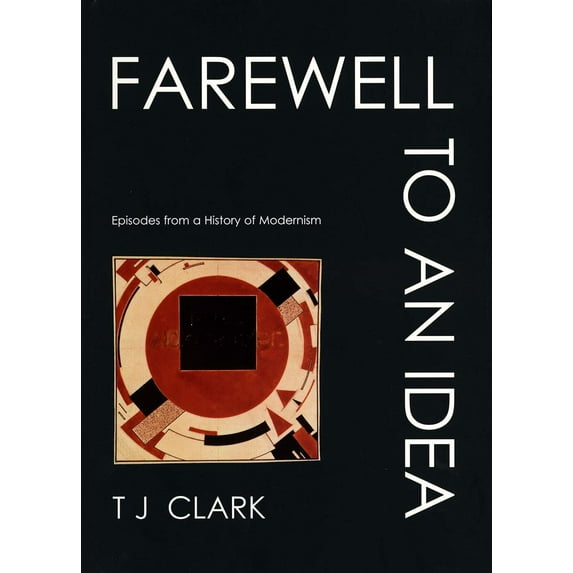
Hero image 0 of Farewell to an Idea : Episodes from a History of Modernism (Paperback), 0 of 1
Farewell to an Idea : Episodes from a History of Modernism (Paperback)
(No ratings yet)
Key item features
In this intense, far-reaching, and poignant book—a book that sums up the work of a lifetime—the acclaimed art historian T. J. Clark rewrites the history of modern art. With the fall of the Berlin Wall, he explains, the project called socialism may have come to an end at roughly the same moment as modernism. Did modernism and socialism depend on each other for their vitality—for their sense of the future and their wish to live in a fully material world? Have they died? Aware of modernism’s foibles and blind spots, but passionately attached to the movement’s wildness, Clark poses these fundamental questions in Farewell to an Idea.
Modernism, Clark argues, was an extreme answer to an extreme condition—the one Max Weber summed up as “the disenchantment of the world.” Clark focuses on instances of maximum stress, when the movement revealed its true nature. The book begins with Jacques-Louis David, painting at the height of the Terror in 1793, then leaps forward to Pissarro a hundred years later, struggling to picture Two Young Peasant Women ina way that agreed with his anarchist politics. Next the author turns in succession to Cézanne’s paintings of the Grandes Baigneuses and their coincidence in time (and maybe intention) with Freud’s launching of psychoanalysis; to Picasso’s Cubism; and to avant-garde art after the Russian Revolution. Clark concludes with a reading of Jackson Pollock’s tragic version of abstraction and suggests a new set of terms to describe avant-garde art—perhaps in its final flowering—in America after 1945. Shifting between broad, speculative history and intense analysis of specific works, Clark not only transfigures our usual understanding of modern art, he also launches a new set of proposals about modernity itself.
Modernism, Clark argues, was an extreme answer to an extreme condition—the one Max Weber summed up as “the disenchantment of the world.” Clark focuses on instances of maximum stress, when the movement revealed its true nature. The book begins with Jacques-Louis David, painting at the height of the Terror in 1793, then leaps forward to Pissarro a hundred years later, struggling to picture Two Young Peasant Women ina way that agreed with his anarchist politics. Next the author turns in succession to Cézanne’s paintings of the Grandes Baigneuses and their coincidence in time (and maybe intention) with Freud’s launching of psychoanalysis; to Picasso’s Cubism; and to avant-garde art after the Russian Revolution. Clark concludes with a reading of Jackson Pollock’s tragic version of abstraction and suggests a new set of terms to describe avant-garde art—perhaps in its final flowering—in America after 1945. Shifting between broad, speculative history and intense analysis of specific works, Clark not only transfigures our usual understanding of modern art, he also launches a new set of proposals about modernity itself.
Specs
- Book formatPaperback
- Fiction/nonfictionNon-Fiction
- Publication dateFebruary, 2001
- Pages460
- PublisherYale University Press
- Original languagesEnglish
Current price is USD$54.22
Price when purchased online
Out of stock
How do you want your item?
Out of stock
About this item
Product details
9780300089103. New condition. Trade paperback. Language: English. Pages: 460. Trade paperback (US). Glued binding. 460 p. Contains: Illustrations. In this intense, far-reaching, and poignant book-a book that sums up the work of a lifetime-the acclaimed art historian T. J. Clark rewrites the history of modern art. With the fall of the Berlin Wall, he explains, the project called socialism may have come to an end at roughly the same moment as modernism. Did modernism and socialism depend on each other for their vitality-for their sense of the future and their wish to live in a fully material world? Have they died? Aware of modernism's foibles and blind spots, but passionately attached to the movement's wildness, Clark poses these fundamental questions in Farewell to an Idea. Modernism, Clark argues, was an extreme answer to an extreme condition-the one Max Weber summed up as "the disenchantment of the world." Clark focuses on instances of maximum stress, when the movement revealed its true nature. The book begins with Jacques-Louis David, painting at the height of the Terror in 1793, then leaps forward to Pissarro a hundred years later, struggling to picture Two Young Peasant Women ina way that agreed with his anarchist politics. Next the author turns in succession to C�zanne's paintings of the Grandes Baigneuses and their coincidence in time (and maybe intention) with Freud's launching of psychoanalysis; to Picasso's Cubism; and to avant-garde art after the Russian Revolution. Clark concludes with a reading of Jackson Pollock's tragic version of abstraction and suggests a new set of terms to describe avant-garde art-perhaps in its final flowering-in America after 1945. Shifting between broad, speculative history and intense analysis of specific works, Clark not only transfigures our usual understanding of modern art, he also launches a new set of proposals about modernity itself.
In this intense, far-reaching, and poignant book—a book that sums up the work of a lifetime—the acclaimed art historian T. J. Clark rewrites the history of modern art. With the fall of the Berlin Wall, he explains, the project called socialism may have come to an end at roughly the same moment as modernism. Did modernism and socialism depend on each other for their vitality—for their sense of the future and their wish to live in a fully material world? Have they died? Aware of modernism’s foibles and blind spots, but passionately attached to the movement’s wildness, Clark poses these fundamental questions in Farewell to an Idea.
Modernism, Clark argues, was an extreme answer to an extreme condition—the one Max Weber summed up as “the disenchantment of the world.” Clark focuses on instances of maximum stress, when the movement revealed its true nature. The book begins with Jacques-Louis David, painting at the height of the Terror in 1793, then leaps forward to Pissarro a hundred years later, struggling to picture Two Young Peasant Women ina way that agreed with his anarchist politics. Next the author turns in succession to Cézanne’s paintings of the Grandes Baigneuses and their coincidence in time (and maybe intention) with Freud’s launching of psychoanalysis; to Picasso’s Cubism; and to avant-garde art after the Russian Revolution. Clark concludes with a reading of Jackson Pollock’s tragic version of abstraction and suggests a new set of terms to describe avant-garde art—perhaps in its final flowering—in America after 1945. Shifting between broad, speculative history and intense analysis of specific works, Clark not only transfigures our usual understanding of modern art, he also launches a new set of proposals about modernity itself.
Modernism, Clark argues, was an extreme answer to an extreme condition—the one Max Weber summed up as “the disenchantment of the world.” Clark focuses on instances of maximum stress, when the movement revealed its true nature. The book begins with Jacques-Louis David, painting at the height of the Terror in 1793, then leaps forward to Pissarro a hundred years later, struggling to picture Two Young Peasant Women ina way that agreed with his anarchist politics. Next the author turns in succession to Cézanne’s paintings of the Grandes Baigneuses and their coincidence in time (and maybe intention) with Freud’s launching of psychoanalysis; to Picasso’s Cubism; and to avant-garde art after the Russian Revolution. Clark concludes with a reading of Jackson Pollock’s tragic version of abstraction and suggests a new set of terms to describe avant-garde art—perhaps in its final flowering—in America after 1945. Shifting between broad, speculative history and intense analysis of specific works, Clark not only transfigures our usual understanding of modern art, he also launches a new set of proposals about modernity itself.
info:
We aim to show you accurate product information. Manufacturers, suppliers and others provide what you see here, and we have not verified it.
Specifications
Book format
Paperback
Fiction/nonfiction
Non-Fiction
Genre
Art, Music, and Photography
Publication date
February, 2001
Warranty
Warranty information
Please be aware that the warranty terms on items offered for sale by third party Marketplace sellers may differ from those displayed in this section (if any). To confirm warranty terms on an item offered for sale by a third party Marketplace seller, please use the 'Contact seller' feature on the third party Marketplace seller's information page and request the item's warranty terms prior to purchase.
Similar items you might like
Based on what customers bought
Clark Library Professorship, UCLA English Literature in the Age of Disguise, (Paperback) $61.05
 $6105current price $61.05
Clark Library Professorship, UCLA English Literature in the Age of Disguise, (Paperback)
Contemporary Economists John Maurice Clark: A Social Economics for the Twenty-First Century, (Paperback) $54.99
 $5499current price $54.99
Contemporary Economists John Maurice Clark: A Social Economics for the Twenty-First Century, (Paperback)
Writing Back to Modern Art: After Greenberg, Fried, and Clark, (Paperback) $54.85
 $5485current price $54.85
Writing Back to Modern Art: After Greenberg, Fried, and Clark, (Paperback)
George Oppen and the Fate of Modernism, (Paperback) $55.44
 $5544current price $55.44
George Oppen and the Fate of Modernism, (Paperback)
The Sight of Death: An Experiment in Art Writing, (Paperback) $53.79
 $5379current price $53.79
The Sight of Death: An Experiment in Art Writing, (Paperback)
Dirt (Hardcover) $66.81
 $6681current price $66.81
Dirt (Hardcover)
Derrida, Heidegger, Blanchot: Sources of Derrida's Notion and Practice of Literature, (Paperback) $55.00
 $5500current price $55.00
Derrida, Heidegger, Blanchot: Sources of Derrida's Notion and Practice of Literature, (Paperback)
All for Oil, (Paperback) $36.57
 $3657current price $36.57
All for Oil, (Paperback)
Critical, Historical, and Philosophical Contributions to the Study of the Divina Commedia (Hardcover) $43.35
 $4335current price $43.35
Critical, Historical, and Philosophical Contributions to the Study of the Divina Commedia (Hardcover)
T&t Clark Introduction to Spirit Christology, (Paperback) $39.35
 $3935current price $39.35
T&t Clark Introduction to Spirit Christology, (Paperback)
UCLA Clark Memorial Library Braudel Revisited: The Mediterranean World 1600-1800, (Paperback) $59.24
 $5924current price $59.24
UCLA Clark Memorial Library Braudel Revisited: The Mediterranean World 1600-1800, (Paperback)
The Value of Ecocriticism, (Hardcover) $59.13
 $5913current price $59.13
The Value of Ecocriticism, (Hardcover)
Very Much a Lady : The Untold Story of Jean Harris and Dr. Herman Tarnower (Paperback) $15.83
 $1583current price $15.83
Very Much a Lady : The Untold Story of Jean Harris and Dr. Herman Tarnower (Paperback)
Halves of Me, (Paperback) $30.00
 $3000current price $30.00
Halves of Me, (Paperback)
Herder: His Life and Thought, (Paperback) $55.00
 $5500current price $55.00
Herder: His Life and Thought, (Paperback)
Orphan Trains and Their Precious Cargo: The Lifes Work of Rev. H. D. Clarke Paperback Clark Kidder $26.95
 $2695current price $26.95
Orphan Trains and Their Precious Cargo: The Lifes Work of Rev. H. D. Clarke Paperback Clark Kidder
Old Men and Infidels Malila Of The Scorch: Book 3 of Old Men and Infidels, Book 3, (Paperback) $18.60
 $1860current price $18.60
Old Men and Infidels Malila Of The Scorch: Book 3 of Old Men and Infidels, Book 3, (Paperback)
Clark Lectures, Trinity College, Cambrid English Literature in Our Time and the University: The Clark Lectures 1967, (Paperback) $45.00
 $4500current price $45.00
Clark Lectures, Trinity College, Cambrid English Literature in Our Time and the University: The Clark Lectures 1967, (Paperback)
Customer ratings & reviews
0 ratings|0 reviews
This item does not have any reviews yet
