


Hero image 0 of The Japanese Experience : A Short History of Japan (Edition 1) (Paperback), 0 of 1
The Japanese Experience : A Short History of Japan (Edition 1) (Paperback)
(No ratings yet)
Key item features
The Japanese Experience is an authoritative history of Japan from the sixth century to the present day. Only a writer of W.G. Beasley's stature could render Japan's complicated past so concisely and elegantly. This is the history of a society and a culture with a distinct sense of itself, one of the few nations never conquered by a foreign power in historic times (until the twentieth century) and the home of the longest-reigning imperial dynasty that still survives. The Japanese have always occupied part or all of the same territory, its borders defined by the sea. They have spoken and written a common language, (once it had taken firm shape in about the tenth century) and their population has been largely homogeneous, little touched by immigration except in very early periods. Yet Japanese society and culture have changed more through time than these statements seem to imply. Developments within Japan have been greatly influenced by ideas and institutions, art and literature, imported from elsewhere. In this work Beasley, a leading authority on Japan and the author of a number of acclaimed works on Japanese history, examines the changing society and culture of Japan and considers what, apart from the land and the people, is specifically Japanese about the history of Japan.
The arrival of Buddhism in the sixth century brought a substantially Chinese-style society to Japan, not only in religion but in political institutions, writing system, and the lifestyle of the ruling class. By the eleventh century the Chinese element was waning and the country was entering a long and essentially "Japanese" feudal period—with two rulers, an emperor and a Shogun—which was to last until the nineteenth century. Under the Togukawa shogunate (1600-1868), Chinese culture enjoyed something of a renaissance, though popular culture owed more to Japanese urban taste and urban wealth.
In 1868 the Meiji Restoration brought to power rulers dedicated to the pursuit of national wealth and strength, and Japan became a world power. Although a bid for empire ended in disaster, the years after 1945 saw an economic miracle that brought spectacular wealth to Japan and the Japanese people, as well as the westernization of much of Japanese life.
The arrival of Buddhism in the sixth century brought a substantially Chinese-style society to Japan, not only in religion but in political institutions, writing system, and the lifestyle of the ruling class. By the eleventh century the Chinese element was waning and the country was entering a long and essentially "Japanese" feudal period—with two rulers, an emperor and a Shogun—which was to last until the nineteenth century. Under the Togukawa shogunate (1600-1868), Chinese culture enjoyed something of a renaissance, though popular culture owed more to Japanese urban taste and urban wealth.
In 1868 the Meiji Restoration brought to power rulers dedicated to the pursuit of national wealth and strength, and Japan became a world power. Although a bid for empire ended in disaster, the years after 1945 saw an economic miracle that brought spectacular wealth to Japan and the Japanese people, as well as the westernization of much of Japanese life.
Specs
- Book formatPaperback
- Fiction/nonfictionNon-Fiction
- GenreHistory
- Publication dateAugust, 2000
- Pages317
- Series titleHistory of Civilisation
Current price is USDNow $19.30
You save $3.41
was $22.71$22.71
You save$3.41
Price when purchased online
Out of stock
How do you want your item?
Out of stock
About this item
Product details
The Japanese Experience is an authoritative history of Japan from the sixth century to the present day. Only a writer of W.G. Beasley's stature could render Japan's complicated past so concisely and elegantly. This is the history of a society and a culture with a distinct sense of itself, one of the few nations never conquered by a foreign power in historic times (until the twentieth century) and the home of the longest-reigning imperial dynasty that still survives. The Japanese have always occupied part or all of the same territory, its borders defined by the sea. They have spoken and written a common language, (once it had taken firm shape in about the tenth century) and their population has been largely homogeneous, little touched by immigration except in very early periods. Yet Japanese society and culture have changed more through time than these statements seem to imply. Developments within Japan have been greatly influenced by ideas and institutions, art and literature, imported from elsewhere. In this work Beasley, a leading authority on Japan and the author of a number of acclaimed works on Japanese history, examines the changing society and culture of Japan and considers what, apart from the land and the people, is specifically Japanese about the history of Japan.
The arrival of Buddhism in the sixth century brought a substantially Chinese-style society to Japan, not only in religion but in political institutions, writing system, and the lifestyle of the ruling class. By the eleventh century the Chinese element was waning and the country was entering a long and essentially "Japanese" feudal period--with two rulers, an emperor and a Shogun--which was to last until the nineteenth century. Under the Togukawa shogunate (1600-1868), Chinese culture enjoyed something of a renaissance, though popular culture owed more to Japanese urban taste and urban wealth.
In 1868 the Meiji Restoration brought to power rulers dedicated to the pursuit of national wealth and strength, and Japan became a world power. Although a bid for empire ended in disaster, the years after 1945 saw an economic miracle that brought spectacular wealth to Japan and the Japanese people, as well as the westernization of much of Japanese life.
The arrival of Buddhism in the sixth century brought a substantially Chinese-style society to Japan, not only in religion but in political institutions, writing system, and the lifestyle of the ruling class. By the eleventh century the Chinese element was waning and the country was entering a long and essentially "Japanese" feudal period--with two rulers, an emperor and a Shogun--which was to last until the nineteenth century. Under the Togukawa shogunate (1600-1868), Chinese culture enjoyed something of a renaissance, though popular culture owed more to Japanese urban taste and urban wealth.
In 1868 the Meiji Restoration brought to power rulers dedicated to the pursuit of national wealth and strength, and Japan became a world power. Although a bid for empire ended in disaster, the years after 1945 saw an economic miracle that brought spectacular wealth to Japan and the Japanese people, as well as the westernization of much of Japanese life.
The Japanese Experience is an authoritative history of Japan from the sixth century to the present day. Only a writer of W.G. Beasley's stature could render Japan's complicated past so concisely and elegantly. This is the history of a society and a culture with a distinct sense of itself, one of the few nations never conquered by a foreign power in historic times (until the twentieth century) and the home of the longest-reigning imperial dynasty that still survives. The Japanese have always occupied part or all of the same territory, its borders defined by the sea. They have spoken and written a common language, (once it had taken firm shape in about the tenth century) and their population has been largely homogeneous, little touched by immigration except in very early periods. Yet Japanese society and culture have changed more through time than these statements seem to imply. Developments within Japan have been greatly influenced by ideas and institutions, art and literature, imported from elsewhere. In this work Beasley, a leading authority on Japan and the author of a number of acclaimed works on Japanese history, examines the changing society and culture of Japan and considers what, apart from the land and the people, is specifically Japanese about the history of Japan.
The arrival of Buddhism in the sixth century brought a substantially Chinese-style society to Japan, not only in religion but in political institutions, writing system, and the lifestyle of the ruling class. By the eleventh century the Chinese element was waning and the country was entering a long and essentially "Japanese" feudal period—with two rulers, an emperor and a Shogun—which was to last until the nineteenth century. Under the Togukawa shogunate (1600-1868), Chinese culture enjoyed something of a renaissance, though popular culture owed more to Japanese urban taste and urban wealth.
In 1868 the Meiji Restoration brought to power rulers dedicated to the pursuit of national wealth and strength, and Japan became a world power. Although a bid for empire ended in disaster, the years after 1945 saw an economic miracle that brought spectacular wealth to Japan and the Japanese people, as well as the westernization of much of Japanese life.
The arrival of Buddhism in the sixth century brought a substantially Chinese-style society to Japan, not only in religion but in political institutions, writing system, and the lifestyle of the ruling class. By the eleventh century the Chinese element was waning and the country was entering a long and essentially "Japanese" feudal period—with two rulers, an emperor and a Shogun—which was to last until the nineteenth century. Under the Togukawa shogunate (1600-1868), Chinese culture enjoyed something of a renaissance, though popular culture owed more to Japanese urban taste and urban wealth.
In 1868 the Meiji Restoration brought to power rulers dedicated to the pursuit of national wealth and strength, and Japan became a world power. Although a bid for empire ended in disaster, the years after 1945 saw an economic miracle that brought spectacular wealth to Japan and the Japanese people, as well as the westernization of much of Japanese life.
info:
We aim to show you accurate product information. Manufacturers, suppliers and others provide what you see here, and we have not verified it.
Specifications
Book format
Paperback
Fiction/nonfiction
Non-Fiction
Genre
History
Publication date
August, 2000
Warnings
State Chemical Disclosure
None
Similar items you might like
Based on what customers bought
United States & Japan/Postwar-Pa, (Paperback) $24.62
 $2462current price $24.62
United States & Japan/Postwar-Pa, (Paperback)
The Japanese Discovery of Europe, 1720-1830, (Paperback) $22.49
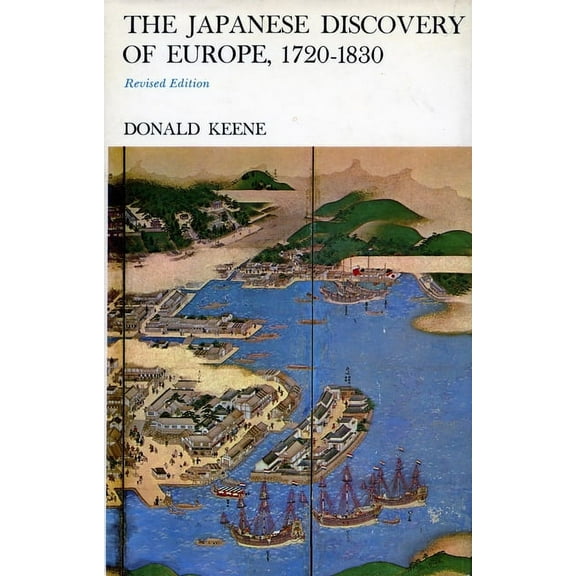 $2249current price $22.49
The Japanese Discovery of Europe, 1720-1830, (Paperback)
Best seller Genki: An Integrated Course in Elementary Japanese Vol. 1 [3rd Edition], (Paperback) $28.00
Best seller![Genki: An Integrated Course in Elementary Japanese Vol. 1 [3rd Edition], (Paperback)](https://i5.walmartimages.com/asr/951bf015-1248-404a-857a-3e005d4ad21b.54e51b1042513af3af8eae0ba5fe0a58.jpeg?odnHeight=576&odnWidth=576&odnBg=FFFFFF) $2800current price $28.00
$2800current price $28.00Genki: An Integrated Course in Elementary Japanese Vol. 1 [3rd Edition], (Paperback)
674.9 out of 5 Stars. 67 reviewsLanguage Policy: A Slim Guide, (Paperback) $20.00
 $2000current price $20.00
Language Policy: A Slim Guide, (Paperback)
Japan Decides 2021: The Japanese General Election, (Paperback) $30.37
 $3037current price $30.37
Japan Decides 2021: The Japanese General Election, (Paperback)
Michigan Monograph Japanese Studies Transformations of Sensibility: The Phenomenology of Meiji Literature, (Paperback) $27.30
 $2730current price $27.30
Michigan Monograph Japanese Studies Transformations of Sensibility: The Phenomenology of Meiji Literature, (Paperback)
Glimpses of Unfamiliar Japan: Second Series, (Paperback) $24.34
 $2434current price $24.34
Glimpses of Unfamiliar Japan: Second Series, (Paperback)
The Making of Modern Japan (Paperback) $38.90
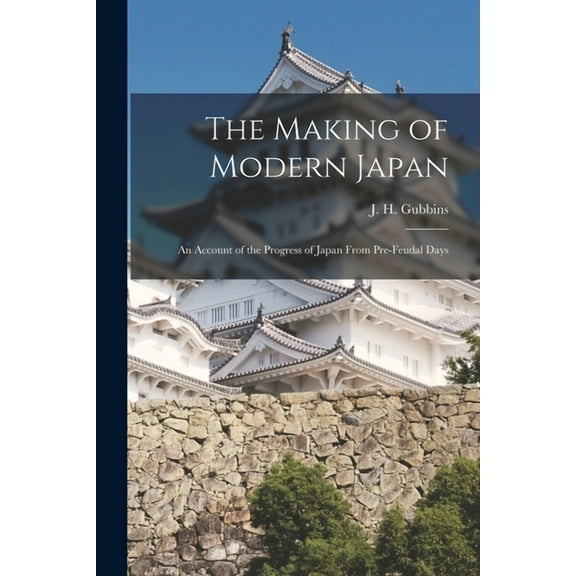 $3890current price $38.90
The Making of Modern Japan (Paperback)
Young Japan : The Story of the Japanese People & Especially of Their Educational Development (Paperback) $25.37
 $2537current price $25.37
Young Japan : The Story of the Japanese People & Especially of Their Educational Development (Paperback)
The Modern History Of Japan, (Paperback) $24.95
 $2495current price $24.95
The Modern History Of Japan, (Paperback)
Histoire: Excursion Au Fusiyama (Japon) Avec Reproductions Photographiques (Éd.1880) (Paperback) $13.95
 $1395current price $13.95
Histoire: Excursion Au Fusiyama (Japon) Avec Reproductions Photographiques (Éd.1880) (Paperback)
The Menace of Japan (Paperback) $24.95
 $2495current price $24.95
The Menace of Japan (Paperback)
History Of The Coinage In Japan (Paperback) $18.75
 $1875current price $18.75
History Of The Coinage In Japan (Paperback)
Studies on the Ectoparasitic Trematodes of Japan (Paperback) $24.95
 $2495current price $24.95
Studies on the Ectoparasitic Trematodes of Japan (Paperback)
Histoire: Notes Et Mémoires Variés Sur Le Japon (Paperback) $17.95
 $1795current price $17.95
Histoire: Notes Et Mémoires Variés Sur Le Japon (Paperback)
Authentic Japanese: Progressing from Intermediate to Advanced [New Edition] Workbook (Paperback) $21.99
![Authentic Japanese: Progressing from Intermediate to Advanced [New Edition] Workbook (Paperback)](https://i5.walmartimages.com/asr/02f36aa1-ae8f-4161-bc5c-244c74152570.51461e3ca56925466a73aaf09475d3f6.jpeg?odnHeight=576&odnWidth=576&odnBg=FFFFFF) $2199current price $21.99
$2199current price $21.99Authentic Japanese: Progressing from Intermediate to Advanced [New Edition] Workbook (Paperback)
Japan's Orient: Rendering Pasts Into History, (Paperback) $19.63
 $1963current price $19.63
Japan's Orient: Rendering Pasts Into History, (Paperback)
Thought and Behaviour in Modern Japanese Politics, (Paperback) $24.95
 $2495current price $24.95
Thought and Behaviour in Modern Japanese Politics, (Paperback)


Customer ratings & reviews
0 ratings|0 reviews
This item does not have any reviews yet
