

Hero image 0 of Archaeology as a Process : Processualism and Its Progeny (Paperback), 0 of 1
Archaeology as a Process : Processualism and Its Progeny (Paperback)
(No ratings yet)
Key item features
The publication in 1962 of Lew Binford’s paper "Archaeology as Anthropology" is generally considered to mark the birth of processualism—a critical turning point in American archaeology. In the hands of Binford and other young University of Chicago graduates of the 1960s, this "new" archaeology became the mainstream approach in the U.S. The realignment that the processualists proposed was so thorough that its effects are still being felt today. Predictably, processualism also spun off a number of other "isms," several of which grew up to challenge its supremacy.
Archaeology as a Process traces the intellectual history of Americanist archaeology in terms of the research groups that were at the forefront of these various approaches, concentrating as much on the archaeologists as it does on method and theory, thus setting it apart from other treatments published in the last fifteen years.
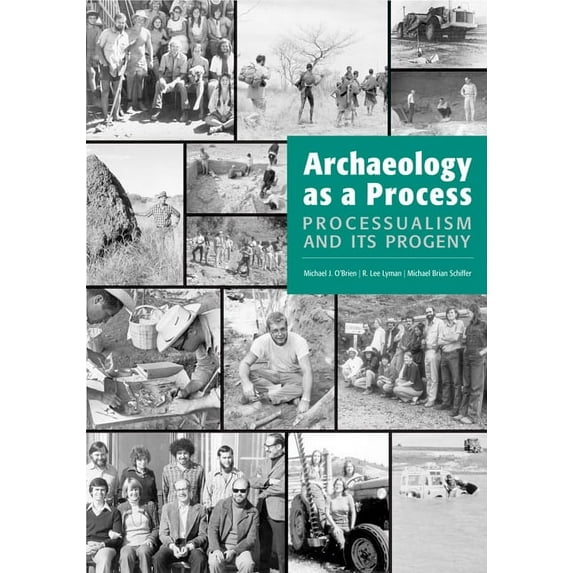
Peppered with rare photographs of well-known archaeologists in some interesting settings, the book documents the swirl and excitement of archaeological controversy for the past forty years with over 1,600 references and an in-depth treatment of all the major intellectual approaches. The contributors examine how archaeology is conducted—the ins and outs of how various groups work to promote themselves—and how personal ambition and animosities can function to further rather than retard the development of the discipline.
Archaeology as a Process traces the intellectual history of Americanist archaeology in terms of the research groups that were at the forefront of these various approaches, concentrating as much on the archaeologists as it does on method and theory, thus setting it apart from other treatments published in the last fifteen years.
Peppered with rare photographs of well-known archaeologists in some interesting settings, the book documents the swirl and excitement of archaeological controversy for the past forty years with over 1,600 references and an in-depth treatment of all the major intellectual approaches. The contributors examine how archaeology is conducted—the ins and outs of how various groups work to promote themselves—and how personal ambition and animosities can function to further rather than retard the development of the discipline.
Specs
- Book formatPaperback
- Fiction/nonfictionNon-Fiction
- GenreHistory
- Publication dateApril, 2007
- Pages360
- Age range22 - 80 Years
Current price is USD$35.20
Price when purchased online
Out of stock
How do you want your item?
Out of stock
About this item
Product details
The publication in 1962 of Lew Binford's paper "Archaeology as Anthropology" is generally considered to mark the birth of processualism--a critical turning point in American archaeology. In the hands of Binford and other young University of Chicago graduates of the 1960s, this "new" archaeology became the mainstream approach in the U.S. The realignment that the processualists proposed was so thorough that its effects are still being felt today. Predictably, processualism also spun off a number of other "isms," several of which grew up to challenge its supremacy. Archaeology as a Process traces the intellectual history of Americanist archaeology in terms of the research groups that were at the forefront of these various approaches, concentrating as much on the archaeologists as it does on method and theory, thus setting it apart from other treatments published in the last fifteen years. Peppered with rare photographs of well-known archaeologists in some interesting settings, the book documents the swirl and excitement of archaeological controversy for the past forty years with over 1,600 references and an in-depth treatment of all the major intellectual approaches. The contributors examine how archaeology is conducted--the ins and outs of how various groups work to promote themselves--and how personal ambition and animosities can function to further rather than retard the development of the discipline.
The publication in 1962 of Lew Binford’s paper "Archaeology as Anthropology" is generally considered to mark the birth of processualism—a critical turning point in American archaeology. In the hands of Binford and other young University of Chicago graduates of the 1960s, this "new" archaeology became the mainstream approach in the U.S. The realignment that the processualists proposed was so thorough that its effects are still being felt today. Predictably, processualism also spun off a number of other "isms," several of which grew up to challenge its supremacy.
Archaeology as a Process traces the intellectual history of Americanist archaeology in terms of the research groups that were at the forefront of these various approaches, concentrating as much on the archaeologists as it does on method and theory, thus setting it apart from other treatments published in the last fifteen years.
Peppered with rare photographs of well-known archaeologists in some interesting settings, the book documents the swirl and excitement of archaeological controversy for the past forty years with over 1,600 references and an in-depth treatment of all the major intellectual approaches. The contributors examine how archaeology is conducted—the ins and outs of how various groups work to promote themselves—and how personal ambition and animosities can function to further rather than retard the development of the discipline.
Archaeology as a Process traces the intellectual history of Americanist archaeology in terms of the research groups that were at the forefront of these various approaches, concentrating as much on the archaeologists as it does on method and theory, thus setting it apart from other treatments published in the last fifteen years.
Peppered with rare photographs of well-known archaeologists in some interesting settings, the book documents the swirl and excitement of archaeological controversy for the past forty years with over 1,600 references and an in-depth treatment of all the major intellectual approaches. The contributors examine how archaeology is conducted—the ins and outs of how various groups work to promote themselves—and how personal ambition and animosities can function to further rather than retard the development of the discipline.
info:
We aim to show you accurate product information. Manufacturers, suppliers and others provide what you see here, and we have not verified it.
Specifications
Book format
Paperback
Fiction/nonfiction
Non-Fiction
Genre
History
Publication date
April, 2007
Warranty
Warranty information
Please be aware that the warranty terms on items offered for sale by third party Marketplace sellers may differ from those displayed in this section (if any). To confirm warranty terms on an item offered for sale by a third party Marketplace seller, please use the 'Contact seller' feature on the third party Marketplace seller's information page and request the item's warranty terms prior to purchase.
Similar items you might like
Based on what customers bought
The Life of Professor Robert Hugh Pritchard, (Paperback) $41.40
 $4140current price $41.40
The Life of Professor Robert Hugh Pritchard, (Paperback)
Christopher Hill: The Life of a Radical Historian, (Paperback) $29.95
 $2995current price $29.95
Christopher Hill: The Life of a Radical Historian, (Paperback)
Presidential Power: Theories and Dilemmas, (Paperback) $11.60
 $1160current price $11.60
Presidential Power: Theories and Dilemmas, (Paperback)
A Behavioral Theory of the Firm, (Paperback) $24.95
 $2495current price $24.95
A Behavioral Theory of the Firm, (Paperback)
Wiley CIO: Cloud Electronic Discovery W (Hardcover) $35.31
 $3531current price $35.31
Wiley CIO: Cloud Electronic Discovery W (Hardcover)
Entrepreneurship: Back to Basics (Paperback) $34.95
 $3495current price $34.95
Entrepreneurship: Back to Basics (Paperback)
An Evolving Doctrine: Force Application From Space, (Paperback) $15.95
 $1595current price $15.95
An Evolving Doctrine: Force Application From Space, (Paperback)
The Sovereign Individual: Mastering the Transition to the Information Age, (Paperback) $15.00
 $1500current price $15.00
The Sovereign Individual: Mastering the Transition to the Information Age, (Paperback)
35 out of 5 Stars. 3 reviewsA Theory of the Firm (Paperback) $35.40
 $3540current price $35.40
A Theory of the Firm (Paperback)
What Place for the a Priori? (Paperback) $34.97
 $3497current price $34.97
What Place for the a Priori? (Paperback)
Routledge Historical Biographies Mao, (Paperback) $58.96
 $5896current price $58.96
Routledge Historical Biographies Mao, (Paperback)
Sciences: Leons Du Mardi La Salptrire Professeur Charcot. Policlinique 1888-1889 (Paperback) $38.91
 $3891current price $38.91
Sciences: Leons Du Mardi La Salptrire Professeur Charcot. Policlinique 1888-1889 (Paperback)
Extinction: Evolution and the End of Man, (Paperback) $43.14
 $4314current price $43.14
Extinction: Evolution and the End of Man, (Paperback)
Brothers and Lovers (Paperback) $20.49
 $2049current price $20.49
Brothers and Lovers (Paperback)
State Rebellion (Paperback) $18.00
 $1800current price $18.00
State Rebellion (Paperback)
The Supreme Court: An Essential History, Second Edition, (Paperback) $28.48
 $2848current price $28.48
The Supreme Court: An Essential History, Second Edition, (Paperback)


Customer ratings & reviews
0 ratings|0 reviews
This item does not have any reviews yet
