


Rhetoric, Culture, and Social Critique: Writing as Punishment in Schools, Courts, and Everyday Life (Edition 1) (Paperback)
(No ratings yet)
Key item features
A probing and prescient consideration of writing as an instrument of punishment
Writing tends to be characterized as a positive aspect of literacy that helps us to express our thoughts, to foster interpersonal communication, and to archive ideas. However, there is a vast array of evidence that emphasizes the counterbelief that writing has the power to punish, shame, humiliate, control, dehumanize, fetishize, and transform those who are subjected to it. In Writing as Punishment in Schools, Courts, and Everyday Life, Spencer Schaffner looks at many instances of writing as punishment, including forced tattooing, drunk shaming, court-ordered letters of apology, and social media shaming, with the aim of bringing understanding and recognition to the coupling of literacy and subjection.
Writing as Punishment in Schools, Courts, and Everyday Life is a fascinating inquiry into how sinister writing can truly be and directly questions the educational ideal that powerful writing is invariably a public good. While Schaffner does look at the darker side of writing, he neither vilifies nor supports the practice of writing as punishment. Rather, he investigates the question with humanistic inquiry and focuses on what can be learned from understanding the many strange ways that writing as punishment is used to accomplish fundamental objectives in everyday life.
Through five succinct case studies, we meet teachers, judges, parents, sex traffickers, and drunken partiers who have turned to writing because of its presumed power over writers and readers. Schaffner provides careful analysis of familiar punishments, such as schoolchildren copying lines, and more bizarre public rituals that result in ink-covered bodies and individuals forced to hold signs in public.
Schaffner argues that writing-based punishment should not be dismissed as benign or condemned as a misguided perversion of writing, but instead should be understood as an instrument capable of furthering both the aims of justice and degradation.
Writing tends to be characterized as a positive aspect of literacy that helps us to express our thoughts, to foster interpersonal communication, and to archive ideas. However, there is a vast array of evidence that emphasizes the counterbelief that writing has the power to punish, shame, humiliate, control, dehumanize, fetishize, and transform those who are subjected to it. In Writing as Punishment in Schools, Courts, and Everyday Life, Spencer Schaffner looks at many instances of writing as punishment, including forced tattooing, drunk shaming, court-ordered letters of apology, and social media shaming, with the aim of bringing understanding and recognition to the coupling of literacy and subjection.
Writing as Punishment in Schools, Courts, and Everyday Life is a fascinating inquiry into how sinister writing can truly be and directly questions the educational ideal that powerful writing is invariably a public good. While Schaffner does look at the darker side of writing, he neither vilifies nor supports the practice of writing as punishment. Rather, he investigates the question with humanistic inquiry and focuses on what can be learned from understanding the many strange ways that writing as punishment is used to accomplish fundamental objectives in everyday life.
Through five succinct case studies, we meet teachers, judges, parents, sex traffickers, and drunken partiers who have turned to writing because of its presumed power over writers and readers. Schaffner provides careful analysis of familiar punishments, such as schoolchildren copying lines, and more bizarre public rituals that result in ink-covered bodies and individuals forced to hold signs in public.
Schaffner argues that writing-based punishment should not be dismissed as benign or condemned as a misguided perversion of writing, but instead should be understood as an instrument capable of furthering both the aims of justice and degradation.
Specs
- Book formatPaperback
- Fiction/nonfictionNon-Fiction
- GenreTextbooks
- Pub date2019-06-11
- Pages136
- Number in series1
More seller options (1)
Starting from $40.49
About this item
Product details
A probing and prescient consideration of writing as an instrument of punishment
A probing and prescient consideration of writing as an instrument of punishment
Writing tends to be characterized as a positive aspect of literacy that helps us to express our thoughts, to foster interpersonal communication, and to archive ideas. However, there is a vast array of evidence that emphasizes the counterbelief that writing has the power to punish, shame, humiliate, control, dehumanize, fetishize, and transform those who are subjected to it. In Writing as Punishment in Schools, Courts, and Everyday Life, Spencer Schaffner looks at many instances of writing as punishment, including forced tattooing, drunk shaming, court-ordered letters of apology, and social media shaming, with the aim of bringing understanding and recognition to the coupling of literacy and subjection.
Writing as Punishment in Schools, Courts, and Everyday Life is a fascinating inquiry into how sinister writing can truly be and directly questions the educational ideal that powerful writing is invariably a public good. While Schaffner does look at the darker side of writing, he neither vilifies nor supports the practice of writing as punishment. Rather, he investigates the question with humanistic inquiry and focuses on what can be learned from understanding the many strange ways that writing as punishment is used to accomplish fundamental objectives in everyday life.
Through five succinct case studies, we meet teachers, judges, parents, sex traffickers, and drunken partiers who have turned to writing because of its presumed power over writers and readers. Schaffner provides careful analysis of familiar punishments, such as schoolchildren copying lines, and more bizarre public rituals that result in ink-covered bodies and individuals forced to hold signs in public.
Schaffner argues that writing-based punishment should not be dismissed as benign or condemned as a misguided perversion of writing, but instead should be understood as an instrument capable of furthering both the aims of justice and degradation.
Writing tends to be characterized as a positive aspect of literacy that helps us to express our thoughts, to foster interpersonal communication, and to archive ideas. However, there is a vast array of evidence that emphasizes the counterbelief that writing has the power to punish, shame, humiliate, control, dehumanize, fetishize, and transform those who are subjected to it. In Writing as Punishment in Schools, Courts, and Everyday Life, Spencer Schaffner looks at many instances of writing as punishment, including forced tattooing, drunk shaming, court-ordered letters of apology, and social media shaming, with the aim of bringing understanding and recognition to the coupling of literacy and subjection.
Writing as Punishment in Schools, Courts, and Everyday Life is a fascinating inquiry into how sinister writing can truly be and directly questions the educational ideal that powerful writing is invariably a public good. While Schaffner does look at the darker side of writing, he neither vilifies nor supports the practice of writing as punishment. Rather, he investigates the question with humanistic inquiry and focuses on what can be learned from understanding the many strange ways that writing as punishment is used to accomplish fundamental objectives in everyday life.
Through five succinct case studies, we meet teachers, judges, parents, sex traffickers, and drunken partiers who have turned to writing because of its presumed power over writers and readers. Schaffner provides careful analysis of familiar punishments, such as schoolchildren copying lines, and more bizarre public rituals that result in ink-covered bodies and individuals forced to hold signs in public.
Schaffner argues that writing-based punishment should not be dismissed as benign or condemned as a misguided perversion of writing, but instead should be understood as an instrument capable of furthering both the aims of justice and degradation.
info:
We aim to show you accurate product information. Manufacturers, suppliers and others provide what you see here, and we have not verified it.
Specifications
Book format
Paperback
Fiction/nonfiction
Non-Fiction
Genre
Textbooks
Pub date
2019-06-11
Warranty
Warranty information
Please be aware that the warranty terms on items offered for sale by third party Marketplace sellers may differ from those displayed in this section (if any). To confirm warranty terms on an item offered for sale by a third party Marketplace seller, please use the 'Contact seller' feature on the third party Marketplace seller's information page and request the item's warranty terms prior to purchase.
Similar items you might like
Based on what customers bought
Improving Behaviour and Wellbeing in Primary Schools: Harnessing Social and Emotional Learning in the Classroom and Beyond (Paperback) $63.73
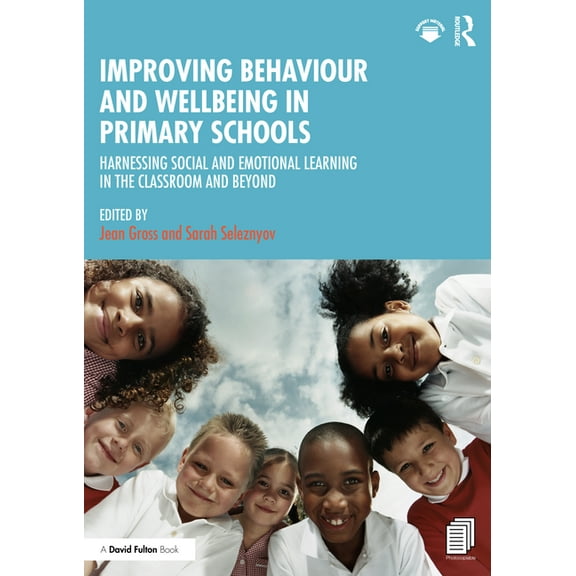 $6373current price $63.73
Improving Behaviour and Wellbeing in Primary Schools: Harnessing Social and Emotional Learning in the Classroom and Beyond (Paperback)
Suny Series, Theory, Research, and Pract The Social Studies Curriculum: Purposes, Problems, and Possibilities, (Paperback) $41.68
 $4168current price $41.68
Suny Series, Theory, Research, and Pract The Social Studies Curriculum: Purposes, Problems, and Possibilities, (Paperback)
Studies in the Social and Cultural Found Responsibility and Evidence in Oral Discourse, Book 15, (Paperback) $28.78 Was $36.12
 $2878current price $28.78, Was $36.12$36.12
Studies in the Social and Cultural Found Responsibility and Evidence in Oral Discourse, Book 15, (Paperback)
Building Literacy Through Pop Culture in the Ela Classroom: Strategies for English in High School and College, (Paperback) $57.08
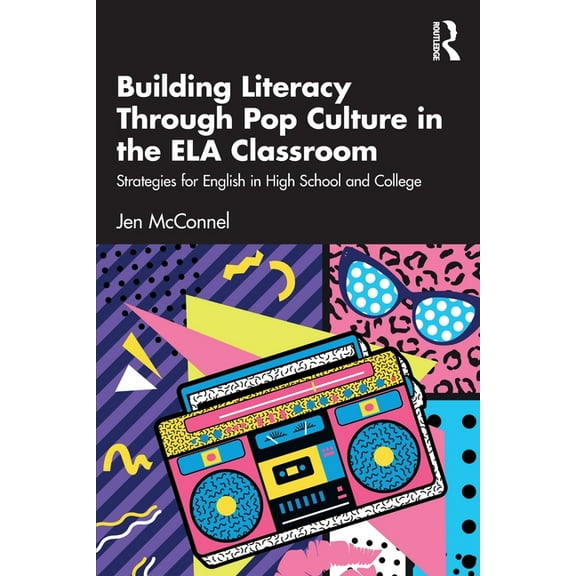 $5708current price $57.08
Building Literacy Through Pop Culture in the Ela Classroom: Strategies for English in High School and College, (Paperback)
Bloomsbury Guidebooks for Language Teachers: Critical Pedagogies for Modern Languages Education: Criticality, Decolonization, and Social Justice (Paperback) $43.11
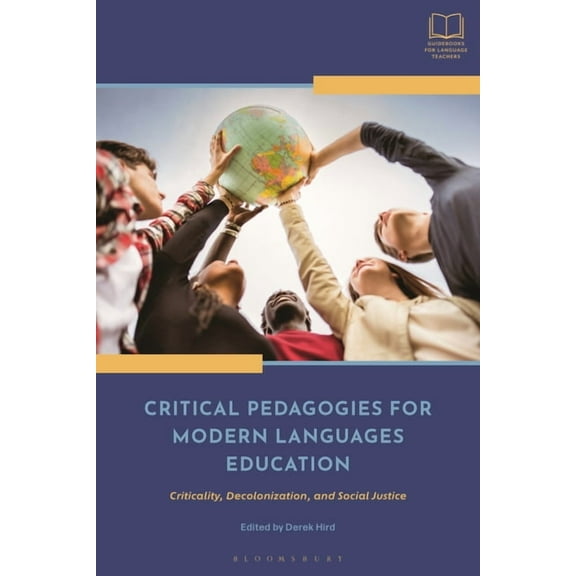 $4311current price $43.11
Bloomsbury Guidebooks for Language Teachers: Critical Pedagogies for Modern Languages Education: Criticality, Decolonization, and Social Justice (Paperback)
Contemporary Theories in the Sociology of Education, (Paperback) $31.28
 $3128current price $31.28
Contemporary Theories in the Sociology of Education, (Paperback)
Composition, Literacy, and Culture Eating On The Street: Teaching Literacy in a Multicultural Society, Book 163, (Paperback) $44.87
 $4487current price $44.87
Composition, Literacy, and Culture Eating On The Street: Teaching Literacy in a Multicultural Society, Book 163, (Paperback)
Navigating Ethical Dilemmas in Social Work Practice, (Paperback) $36.95
 $3695current price $36.95
Navigating Ethical Dilemmas in Social Work Practice, (Paperback)
Struggles for Justice: Social Responsibility and the Liberal State (Paperback) $37.38
 $3738current price $37.38
Struggles for Justice: Social Responsibility and the Liberal State (Paperback)
Appropriating the Discourse of Social Justice in Teacher Education, (Paperback) $43.85
 $4385current price $43.85
Appropriating the Discourse of Social Justice in Teacher Education, (Paperback)
Learning in Doing: Social, Cognitive and Changing Classes: School Reform and the New Economy, (Paperback) $44.88
 $4488current price $44.88
Learning in Doing: Social, Cognitive and Changing Classes: School Reform and the New Economy, (Paperback)
Practical Philosophy Criminal Law Without Punishment: How Our Society Might Benefit from Abolishing Punitive Sanctions, Book 25, (Paperback) $20.19
 $2019current price $20.19
Practical Philosophy Criminal Law Without Punishment: How Our Society Might Benefit from Abolishing Punitive Sanctions, Book 25, (Paperback)
Capital Punishment: An Encyclopedia of History, Politics, Culture, and the Law, (Paperback) $39.95
 $3995current price $39.95
Capital Punishment: An Encyclopedia of History, Politics, Culture, and the Law, (Paperback)
What's the Buzz with Teenagers?: A universal social and emotional literacy resource, (Paperback) $47.99
 $4799current price $47.99
What's the Buzz with Teenagers?: A universal social and emotional literacy resource, (Paperback)
Language, Culture, and Teaching Community Writing: Researching Social Issues Through Composition, (Paperback) $46.39
 $4639current price $46.39
Language, Culture, and Teaching Community Writing: Researching Social Issues Through Composition, (Paperback)
Language, Culture, and Teaching Social Justice Pedagogy Across the Curriculum: The Practice of Freedom, (Paperback) $46.39
 $4639current price $46.39
Language, Culture, and Teaching Social Justice Pedagogy Across the Curriculum: The Practice of Freedom, (Paperback)
Critical Social Thought The Struggle for the Soul of Teacher Education, (Paperback) $37.35
 $3735current price $37.35
Critical Social Thought The Struggle for the Soul of Teacher Education, (Paperback)
Teacher Education in America: Reform Agendas for the Twenty-First Century, (Paperback) $35.33
 $3533current price $35.33
Teacher Education in America: Reform Agendas for the Twenty-First Century, (Paperback)
Critical Social Thought Tough Fronts: The Impact of Street Culture on Schooling, (Paperback) $54.99
 $5499current price $54.99
Critical Social Thought Tough Fronts: The Impact of Street Culture on Schooling, (Paperback)
Composition, Literacy, and Culture Who Says?: Working-Class Rhetoric, Class Consciousness, and Community, Book 163, (Paperback) $60.85
 $6085current price $60.85
Composition, Literacy, and Culture Who Says?: Working-Class Rhetoric, Class Consciousness, and Community, Book 163, (Paperback)
Customer ratings & reviews
0 ratings|0 reviews
This item does not have any reviews yet
