


Hero image 0 of The Moment of Complexity : Emerging Network Culture (Paperback), 0 of 1
The Moment of Complexity : Emerging Network Culture (Paperback)
(No ratings yet)
Key item features
"The Moment of Complexity is a profoundly original work. In remarkable and insightful ways, Mark Taylor traces an entirely new way to view the evolution of our culture, detailing how information theory and the scientific concept of complexity can be used to understand recent developments in the arts and humanities. This book will ultimately be seen as a classic."-John L. Casti, Santa Fe Institute, author of Gödel: A Life of Logic, the Mind, and Mathematics
The science of complexity accounts for that inscrutable mix of chaos and order that governs our natural world. Complexity explains how networks emerge and function, how species organize into ecosystems, how stars form into galaxies, and how just a few sequences of DNA can account for so many different life forms. Recently, the idea of complexity has taken the worlds of business and politics by storm. The concept is used to account for phenomena as varied as the behavior of the stock market, the response of voting populations, and the effects of risk management. Even Disney has used complexity theory to manage crowd control at its theme parks.
Given the startling development of new information technologies, we now live in a moment of unprecedented complexity, an era in which change occurs faster than our ability to comprehend it. With The Moment of Complexity, Mark C. Taylor offers a timely map for this unfamiliar terrain opening in our midst, unfolding an original philosophy through a remarkable synthesis of science and culture. According to Taylor, complexity is not just a breakthrough scientific concept, but the defining quality of the post-Cold War era. The flux of digital currents swirling around us, he argues, has created a new network culture with its own distinctive logic and dynamic.
Drawing on resources from information theory and evolutionary biology, Taylor explains the operation of complex adaptive systems in social and cultural processes and captures a whole new zeitgeist in the making. To appreciate the significance of our emerging network culture, he claims, we need not only to understand contemporary scientific and technological transformations, but also to explore the subtle influences of art, architecture, philosophy, religion, and higher education. The Moment of Complexity, then, is a remarkable work of cultural analysis on a scale rarely seen today. To follow its trajectory is to learn how we arrived at this critical moment in our culture, and to know where we might head in the twenty-first century.
The science of complexity accounts for that inscrutable mix of chaos and order that governs our natural world. Complexity explains how networks emerge and function, how species organize into ecosystems, how stars form into galaxies, and how just a few sequences of DNA can account for so many different life forms. Recently, the idea of complexity has taken the worlds of business and politics by storm. The concept is used to account for phenomena as varied as the behavior of the stock market, the response of voting populations, and the effects of risk management. Even Disney has used complexity theory to manage crowd control at its theme parks.
Given the startling development of new information technologies, we now live in a moment of unprecedented complexity, an era in which change occurs faster than our ability to comprehend it. With The Moment of Complexity, Mark C. Taylor offers a timely map for this unfamiliar terrain opening in our midst, unfolding an original philosophy through a remarkable synthesis of science and culture. According to Taylor, complexity is not just a breakthrough scientific concept, but the defining quality of the post-Cold War era. The flux of digital currents swirling around us, he argues, has created a new network culture with its own distinctive logic and dynamic.
Drawing on resources from information theory and evolutionary biology, Taylor explains the operation of complex adaptive systems in social and cultural processes and captures a whole new zeitgeist in the making. To appreciate the significance of our emerging network culture, he claims, we need not only to understand contemporary scientific and technological transformations, but also to explore the subtle influences of art, architecture, philosophy, religion, and higher education. The Moment of Complexity, then, is a remarkable work of cultural analysis on a scale rarely seen today. To follow its trajectory is to learn how we arrived at this critical moment in our culture, and to know where we might head in the twenty-first century.
Specs
- Book formatPaperback
- Fiction/nonfictionNon-Fiction
- Publication dateSeptember, 2003
- Pages352
- Edition1
- Original languagesEnglish
Current price is USD$38.71
Price when purchased online
- Free shipping
 Free 30-day returns
How do you want your item?
Columbus, 43215
Arrives between May 1 - May 4
|
Sold and shipped by Alibris Books
4.566297076880784 stars out of 5, based on 10913 seller reviews(4.6)10913 seller reviews

Free 30-day returns - in store or online
More seller options (2)
Starting from $41.20
About this item
Product details
"The Moment of Complexity is a profoundly original work. In remarkable and insightful ways, Mark Taylor traces an entirely new way to view the evolution of our culture, detailing how information theory and the scientific concept of complexity can be used to understand recent developments in the arts and humanities. This book will ultimately be seen as a classic."-John L. Casti, Santa Fe Institute, author of Gödel: A Life of Logic, the Mind, and Mathematics The science of complexity accounts for that inscrutable mix of chaos and order that governs our natural world. Complexity explains how networks emerge and function, how species organize into ecosystems, how stars form into galaxies, and how just a few sequences of DNA can account for so many different life forms. Recently, the idea of complexity has taken the worlds of business and politics by storm. The concept is used to account for phenomena as varied as the behavior of the stock market, the response of voting populations, and the effects of risk management. Even Disney has used complexity theory to manage crowd control at its theme parks. Given the startling development of new information technologies, we now live in a moment of unprecedented complexity, an era in which change occurs faster than our ability to comprehend it. With The Moment of Complexity, Mark C. Taylor offers a timely map for this unfamiliar terrain opening in our midst, unfolding an original philosophy through a remarkable synthesis of science and culture. According to Taylor, complexity is not just a breakthrough scientific concept, but the defining quality of the post-Cold War era. The flux of digital currents swirling around us, he argues, has created a new network culture with its own distinctive logic and dynamic. Drawing on resources from information theory and evolutionary biology, Taylor explains the operation of complex adaptive systems in social and cultural processes and captures a whole new zeitgeist in the making. To appreciate the significance of our emerging network culture, he claims, we need not only to understand contemporary scientific and technological transformations, but also to explore the subtle influences of art, architecture, philosophy, religion, and higher education. The Moment of Complexity, then, is a remarkable work of cultural analysis on a scale rarely seen today. To follow its trajectory is to learn how we arrived at this critical moment in our culture, and to know where we might head in the twenty-first century.
"The Moment of Complexity is a profoundly original work. In remarkable and insightful ways, Mark Taylor traces an entirely new way to view the evolution of our culture, detailing how information theory and the scientific concept of complexity can be used to understand recent developments in the arts and humanities. This book will ultimately be seen as a classic."-John L. Casti, Santa Fe Institute, author of Gödel: A Life of Logic, the Mind, and Mathematics
The science of complexity accounts for that inscrutable mix of chaos and order that governs our natural world. Complexity explains how networks emerge and function, how species organize into ecosystems, how stars form into galaxies, and how just a few sequences of DNA can account for so many different life forms. Recently, the idea of complexity has taken the worlds of business and politics by storm. The concept is used to account for phenomena as varied as the behavior of the stock market, the response of voting populations, and the effects of risk management. Even Disney has used complexity theory to manage crowd control at its theme parks.
Given the startling development of new information technologies, we now live in a moment of unprecedented complexity, an era in which change occurs faster than our ability to comprehend it. With The Moment of Complexity, Mark C. Taylor offers a timely map for this unfamiliar terrain opening in our midst, unfolding an original philosophy through a remarkable synthesis of science and culture. According to Taylor, complexity is not just a breakthrough scientific concept, but the defining quality of the post-Cold War era. The flux of digital currents swirling around us, he argues, has created a new network culture with its own distinctive logic and dynamic.
Drawing on resources from information theory and evolutionary biology, Taylor explains the operation of complex adaptive systems in social and cultural processes and captures a whole new zeitgeist in the making. To appreciate the significance of our emerging network culture, he claims, we need not only to understand contemporary scientific and technological transformations, but also to explore the subtle influences of art, architecture, philosophy, religion, and higher education. The Moment of Complexity, then, is a remarkable work of cultural analysis on a scale rarely seen today. To follow its trajectory is to learn how we arrived at this critical moment in our culture, and to know where we might head in the twenty-first century.
The science of complexity accounts for that inscrutable mix of chaos and order that governs our natural world. Complexity explains how networks emerge and function, how species organize into ecosystems, how stars form into galaxies, and how just a few sequences of DNA can account for so many different life forms. Recently, the idea of complexity has taken the worlds of business and politics by storm. The concept is used to account for phenomena as varied as the behavior of the stock market, the response of voting populations, and the effects of risk management. Even Disney has used complexity theory to manage crowd control at its theme parks.
Given the startling development of new information technologies, we now live in a moment of unprecedented complexity, an era in which change occurs faster than our ability to comprehend it. With The Moment of Complexity, Mark C. Taylor offers a timely map for this unfamiliar terrain opening in our midst, unfolding an original philosophy through a remarkable synthesis of science and culture. According to Taylor, complexity is not just a breakthrough scientific concept, but the defining quality of the post-Cold War era. The flux of digital currents swirling around us, he argues, has created a new network culture with its own distinctive logic and dynamic.
Drawing on resources from information theory and evolutionary biology, Taylor explains the operation of complex adaptive systems in social and cultural processes and captures a whole new zeitgeist in the making. To appreciate the significance of our emerging network culture, he claims, we need not only to understand contemporary scientific and technological transformations, but also to explore the subtle influences of art, architecture, philosophy, religion, and higher education. The Moment of Complexity, then, is a remarkable work of cultural analysis on a scale rarely seen today. To follow its trajectory is to learn how we arrived at this critical moment in our culture, and to know where we might head in the twenty-first century.
info:
We aim to show you accurate product information. Manufacturers, suppliers and others provide what you see here, and we have not verified it.
Specifications
Book format
Paperback
Fiction/nonfiction
Non-Fiction
Genre
Political & Social Sciences
Publication date
September, 2003
Warranty
Warranty information
Please be aware that the warranty terms on items offered for sale by third party Marketplace sellers may differ from those displayed in this section (if any). To confirm warranty terms on an item offered for sale by a third party Marketplace seller, please use the 'Contact seller' feature on the third party Marketplace seller's information page and request the item's warranty terms prior to purchase.
Warnings
State Chemical Disclosure
None
Similar items you might like
Based on what customers bought
Management: A New Paradigm for the 21st Century, (Paperback) $25.02
 $2502current price $25.02
Management: A New Paradigm for the 21st Century, (Paperback)
El Manager al Minuto (Rayo), (Paperback) $10.99
 $1099current price $10.99
El Manager al Minuto (Rayo), (Paperback)
Altarity (Paperback) $38.03
 $3803current price $38.03
Altarity (Paperback)
The Learning Revolution: Transforming Education for the Digital Age, (Paperback) $16.88
 $1688current price $16.88
The Learning Revolution: Transforming Education for the Digital Age, (Paperback)
Peate's Body Systems The Nervous System, (Paperback) $39.93
 $3993current price $39.93
Peate's Body Systems The Nervous System, (Paperback)
Elements in Complexity and Agent-Based E Complexity in Economics, (Paperback) $23.00
 $2300current price $23.00
Elements in Complexity and Agent-Based E Complexity in Economics, (Paperback)
Organisation and Complexity: Using Complexity Science to Theorise Organisational Aliveness, (Paperback) $30.21
 $3021current price $30.21
Organisation and Complexity: Using Complexity Science to Theorise Organisational Aliveness, (Paperback)
Fruit Culture: and the laying out and management of a country home, (Paperback) $23.90
 $2390current price $23.90
Fruit Culture: and the laying out and management of a country home, (Paperback)
Taking the Complexity Out of Concepts, (Paperback) $22.17 Was $24.99
 $2217current price $22.17, Was $24.99$24.99
Taking the Complexity Out of Concepts, (Paperback)
It's Who You Know: How a Network of 12 Key People Can Fast-Track Your Success, (Paperback) $18.49
 $1849current price $18.49
It's Who You Know: How a Network of 12 Key People Can Fast-Track Your Success, (Paperback)
World Class Value: Leadership Excellence in the Exponential Age, (Paperback) $20.69
 $2069current price $20.69
World Class Value: Leadership Excellence in the Exponential Age, (Paperback)
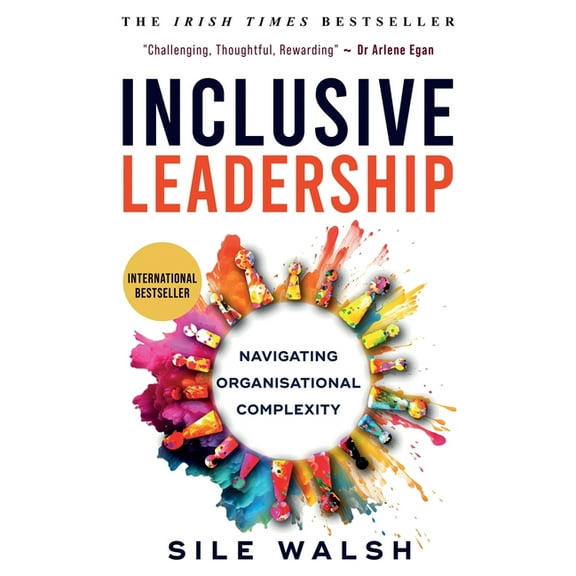
Inclusive Leadership Navigating Organisational Complexity, (Paperback) $17.02
 $1702current price $17.02
Inclusive Leadership Navigating Organisational Complexity, (Paperback)
Theory of Social Choice on Networks, (Paperback) $21.59
 $2159current price $21.59
Theory of Social Choice on Networks, (Paperback)
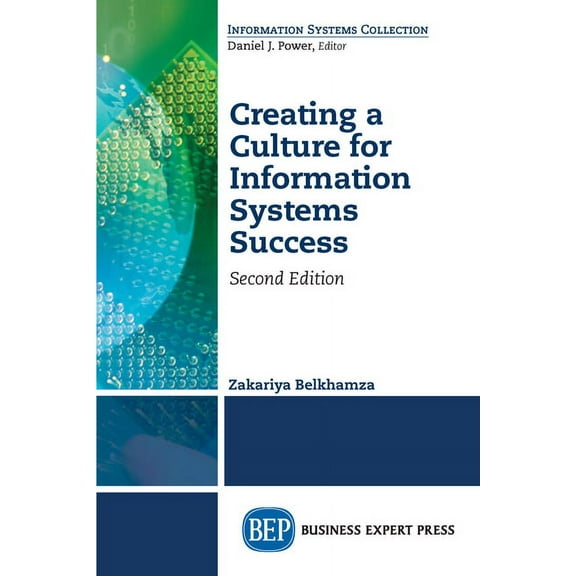
Creating a Culture for Information Systems Success, Second Edition, (Paperback) $22.72
 $2272current price $22.72
Creating a Culture for Information Systems Success, Second Edition, (Paperback)
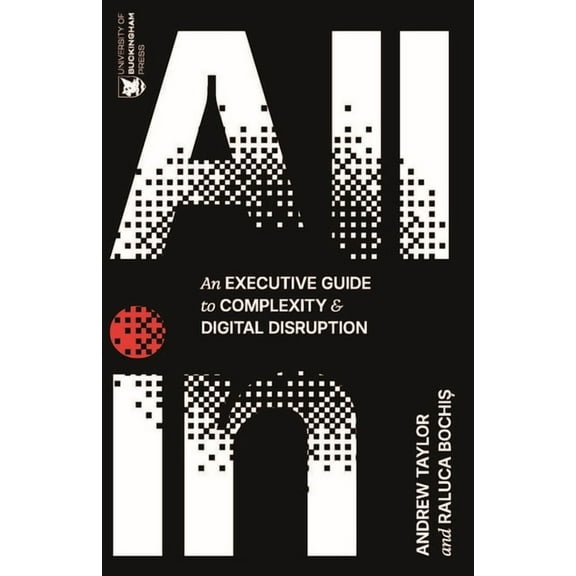
All in: An Executive Guide to Complexity and Digital Disruption, (Paperback) $32.05
 $3205current price $32.05
All in: An Executive Guide to Complexity and Digital Disruption, (Paperback)
Job Hunting Revolution: C.V Branding (Paperback) $11.50
 $1150current price $11.50
Job Hunting Revolution: C.V Branding (Paperback)
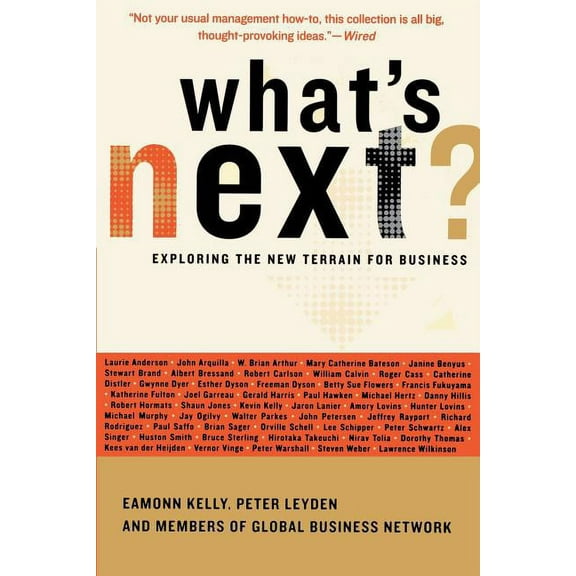
What's Next?: Exploring the New Terrain for Business, (Paperback) $20.72
 $2072current price $20.72
What's Next?: Exploring the New Terrain for Business, (Paperback)
Schaum's Outlines Schaum's Outline of Computer Networking, (Paperback) $28.71
 $2871current price $28.71
Schaum's Outlines Schaum's Outline of Computer Networking, (Paperback)
Project Communication from Start to Finish: The Dynamics of Organizational Success, (Paperback) $22.69
 $2269current price $22.69
Project Communication from Start to Finish: The Dynamics of Organizational Success, (Paperback)
Posthuman Ecologies: Complexity and Process After Deleuze, (Paperback) $24.95
 $2495current price $24.95
Posthuman Ecologies: Complexity and Process After Deleuze, (Paperback)
Customer ratings & reviews
0 ratings|0 reviews
This item does not have any reviews yet

Related pages
- Anthroposophical Society
- Remediation
- Steven Loza
- Cazins
- Dr Jeffrey Anderson
- Klaus Kandel
- Utilitarianism Philosophy Movement Books
- Pragmatism Philosophy Movement Books
- Structuralism Philosophy Movement Books
- Idealism Philosophy Movement Books
- Free Will & Determinism Philosophy Books
- Deconstruction Philosophy Movement Books