

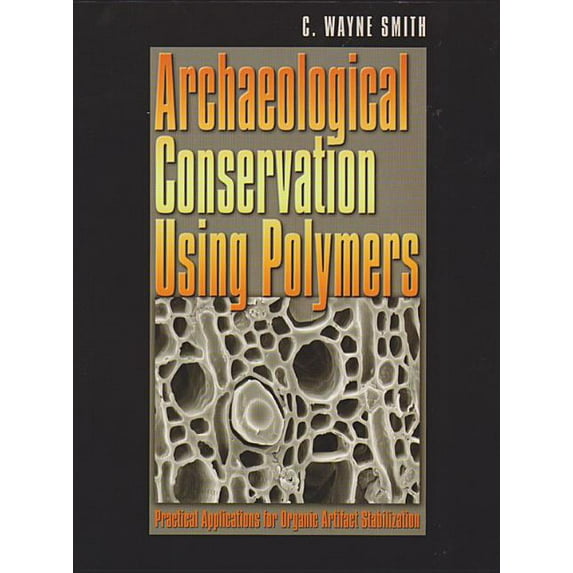
Texas A&M University Anthropology Series: Archaeological Conservation Using Polymers : Practical Applications for Organic Artifact Stabilization (Series #6) (Hardcover)
(No ratings yet)
Key item features
Over the years, archaeologists have developed a number of techniques for conserving historical artifacts for future generations. Along with these techniques, researchers have developed a series of ethical principles for treating materials in a way that allows them to be not only observed and analyzed for the present, but also in re-studied in the future. Conservation techniques used up to now, however, have provided artifacts only a limited lifespan, and in some cases they do not work well with water-logged materials. Within the past few years, archaeological chemistry and concerns of longevity testing have become central issues in the development of conservation treatment strategies. This problem became particularly acute when members of the Texas A&M Nautical Archaeology Program were called on to conserve artifacts from La Belle, the sunken ship of La Salle excavated in the 1990s off the coast of Texas by the Texas Historical Commission. "Entombed in the mud that sealed it from decay for over three centuries," C. Wayne Smith writes in his introduction, "the waterlogged hull and hundreds of thousands of fragile artifacts, including brain matter in the skull of one unfortunate sailor, would have been a futile conservation effort without new preservation technologies." Working with Dow Corning Corporation, Texas A&M’s Archaeological Preservation Research Lab (APRL), and the Conservation Research Lab (CRL), Smith and his colleagues in A&M’s Nautical Archaeology Program set out to develop a series of chemistries and techniques that would provide successful and affordable treatment strategies for organic materials. In this ground-breaking description of the processes and materials that were developed, Smith explains these techniques in ways that will allow museums and historical societies to conserve more stable artifacts for traveling exhibits and interactive displays and will allow researchers to conserve new discoveries without sacrificing important information. Beyond the advantages offered by polymer replacement (Passivation Polymer) technologies, Smith considers a concept seldom addressed in conservation: artistry. Variance in equipment, relative humidity, laboratory layout, intended results, and level of expertise all affect researchers’ ability to obtain consistent and aesthetically correct samples and require a willingness to explore treatment parameters and combinations of polymers. Smith prescribes an effective layout for day-to-day conservation of small organic artifacts and then examines some of the mechanical techniques used to process various organic materials from marine and land sites. He concludes with an exploration of new tools and technologies that can help conservators devise more effective conservation strategies, including CT scans and Computer Aided Design images and stereolithography. All archaeologists, conservators, and museologists working with perishable artifacts will benefit from the careful explication of these new processes, and those wishing to incorporate some or all of them will find the step-by-step instructions for doing so.
Specs
- Book formatHardcover
- Fiction/nonfictionNon-Fiction
- GenreSocial Science/Archaeology
- Publication dateJanuary, 2003
- Pages144
- Number in series6
Current price is USD$69.38
Price when purchased online
Out of stock
How do you want your item?
Out of stock
About this item
Product details
Over the years, archaeologists have developed a number of techniques for conserving historical artifacts for future generations. Along with these techniques, researchers have developed a series of ethical principles for treating materials in a way that allows them to be not only observed and analyzed for the present, but also in re-studied in the future. Conservation techniques used up to now, however, have provided artifacts only a limited lifespan, and in some cases they do not work well with water-logged materials. Within the past few years, archaeological chemistry and concerns of longevity testing have become central issues in the development of conservation treatment strategies. This problem became particularly acute when members of the Texas A&M Nautical Archaeology Program were called on to conserve artifacts from La Belle, the sunken ship of La Salle excavated in the 1990s off the coast of Texas by the Texas Historical Commission. Entombed in the mud that sealed it from decay for over three centuries, C. Wayne Smith writes in his introduction, the waterlogged hull and hundreds of thousands of fragile artifacts, including brain matter in the skull of one unfortunate sailor, would have been a futile conservation effort without new preservation technologies. Working with Dow Corning Corporation, Texas A&M's Archaeological Preservation Research Lab (APRL), and the Conservation Research Lab (CRL), Smith and his colleagues in A&M's Nautical Archaeology Program set out to develop a series of chemistries and techniques that would provide successful and affordable treatment strategies for organic materials. In this ground-breaking description of the processes and materials that were developed, Smith explains these techniques in ways that will allow museums and historical societies to conserve more stable artifacts for traveling exhibits and interactive displays and will allow researchers to conserve new discoveries without sacrificing important information. Beyond the advantages offered by polymer replacement (Passivation Polymer) technologies, Smith considers a concept seldom addressed in conservation: artistry. Variance in equipment, relative humidity, laboratory layout, intended results, and level of expertise all affect researchers' ability to obtain consistent and aesthetically correct samples and require a willingness to explore treatment parameters and combinations of polymers. Smith prescribes an effective layout for day-to-day conservation of small organic artifacts and then examines some of the mechanical techniques used to process various organic materials from marine and land sites. He concludes with an exploration of new tools and technologies that can help conservators devise more effective conservation strategies, including CT scans and Computer Aided Design images and stereolithography. All archaeologists, conservators, and museologists working with perishable artifacts will benefit from the careful explication of these new processes, and those wishing to incorporate some or all of them will find the step-by-step instructions for doing so.
Over the years, archaeologists have developed a number of techniques for conserving historical artifacts for future generations. Along with these techniques, researchers have developed a series of ethical principles for treating materials in a way that allows them to be not only observed and analyzed for the present, but also in re-studied in the future. Conservation techniques used up to now, however, have provided artifacts only a limited lifespan, and in some cases they do not work well with water-logged materials. Within the past few years, archaeological chemistry and concerns of longevity testing have become central issues in the development of conservation treatment strategies. This problem became particularly acute when members of the Texas A&M Nautical Archaeology Program were called on to conserve artifacts from La Belle, the sunken ship of La Salle excavated in the 1990s off the coast of Texas by the Texas Historical Commission. "Entombed in the mud that sealed it from decay for over three centuries," C. Wayne Smith writes in his introduction, "the waterlogged hull and hundreds of thousands of fragile artifacts, including brain matter in the skull of one unfortunate sailor, would have been a futile conservation effort without new preservation technologies." Working with Dow Corning Corporation, Texas A&M’s Archaeological Preservation Research Lab (APRL), and the Conservation Research Lab (CRL), Smith and his colleagues in A&M’s Nautical Archaeology Program set out to develop a series of chemistries and techniques that would provide successful and affordable treatment strategies for organic materials. In this ground-breaking description of the processes and materials that were developed, Smith explains these techniques in ways that will allow museums and historical societies to conserve more stable artifacts for traveling exhibits and interactive displays and will allow researchers to conserve new discoveries without sacrificing important information. Beyond the advantages offered by polymer replacement (Passivation Polymer) technologies, Smith considers a concept seldom addressed in conservation: artistry. Variance in equipment, relative humidity, laboratory layout, intended results, and level of expertise all affect researchers’ ability to obtain consistent and aesthetically correct samples and require a willingness to explore treatment parameters and combinations of polymers. Smith prescribes an effective layout for day-to-day conservation of small organic artifacts and then examines some of the mechanical techniques used to process various organic materials from marine and land sites. He concludes with an exploration of new tools and technologies that can help conservators devise more effective conservation strategies, including CT scans and Computer Aided Design images and stereolithography. All archaeologists, conservators, and museologists working with perishable artifacts will benefit from the careful explication of these new processes, and those wishing to incorporate some or all of them will find the step-by-step instructions for doing so.
info:
We aim to show you accurate product information. Manufacturers, suppliers and others provide what you see here, and we have not verified it.
Specifications
Book format
Hardcover
Fiction/nonfiction
Non-Fiction
Genre
Social Science/Archaeology
Publication date
January, 2003
Warranty
Warranty information
Please be aware that the warranty terms on items offered for sale by third party Marketplace sellers may differ from those displayed in this section (if any). To confirm warranty terms on an item offered for sale by a third party Marketplace seller, please use the 'Contact seller' feature on the third party Marketplace seller's information page and request the item's warranty terms prior to purchase.
Customer ratings & reviews
0 ratings|0 reviews
This item does not have any reviews yet

Related pages
- Blm Public Lands
- General Medical Council (great Britain)
- University Georgium
- Provincializing Europe
- Nigeria Deforestation
- Ontario Association Of Architects; Province Of Quebec Association Of Arc
- Baltic States European History Books
- German History Books
- Russian History Books
- French History Books
- Poland History Books
- Historiography Books