Shooting Midnight Cowboy : Art, Sex, Loneliness, Liberation, and the Making of a Dark Classic (Hardcover)
Key item features
"Much more than a page-turner. It’s the first essential work of cultural history of the new decade." —Charles Kaiser, The Guardian
One of The Washington Post's 50 best nonfiction books of 2021 | A Publishers Weekly best book of 2021
The Pulitzer Prize–winning journalist and New York Times–bestselling author of the behind-the-scenes explorations of the classic American Westerns High Noon and The Searchers now reveals the history of the controversial 1969 Oscar-winning film that signaled a dramatic shift in American popular culture.
Director John Schlesinger’s Darling was nominated for five Academy Awards, and introduced the world to the transcendently talented Julie Christie. Suddenly the toast of Hollywood, Schlesinger used his newfound clout to film an expensive, Panavision adaptation of Far from the Madding Crowd. Expectations were huge, making the movie’s complete critical and commercial failure even more devastating, and Schlesinger suddenly found himself persona non grata in the Hollywood circles he had hoped to conquer.
Given his recent travails, Schlesinger’s next project seemed doubly daring, bordering on foolish. James Leo Herlihy’s novel Midnight Cowboy, about a Texas hustler trying to survive on the mean streets of 1960’s New York, was dark and transgressive. Perhaps something about the book’s unsparing portrait of cultural alienation resonated with him. His decision to film it began one of the unlikelier convergences in cinematic history, centered around a city that seemed, at first glance, as unwelcoming as Herlihy’s novel itself.
Glenn Frankel’s Shooting Midnight Cowboy tells the story of a modern classic that, by all accounts, should never have become one in the first place. The film’s boundary-pushing subject matter—homosexuality, prostitution, sexual assault—earned it an X rating when it first appeared in cinemas in 1969. For Midnight Cowboy, Schlesinger—who had never made a film in the United States—enlisted Jerome Hellman, a producer coming off his own recent flop and smarting from a failed marriage, and Waldo Salt, a formerly blacklisted screenwriter with a tortured past. The decision to shoot on location in New York, at a time when the city was approaching its gritty nadir, backfired when a sanitation strike filled Manhattan with garbage fires and fears of dysentery.
Much more than a history of Schlesinger’s film, Shooting Midnight Cowboy is an arresting glimpse into the world from which it emerged: a troubled city that nurtured the talents and ambitions of the pioneering Polish cinematographer Adam Holender and legendary casting director Marion Dougherty, who discovered both Dustin Hoffman and Jon Voight and supported them for the roles of “Ratso” Rizzo and Joe Buck—leading to one of the most intensely moving joint performances ever to appear on screen. We follow Herlihy himself as he moves from the experimental confines of Black Mountain College to the theatres of Broadway, influenced by close relationships with Tennessee Williams and Anaïs Nin, and yet unable to find lasting literary success.
By turns madcap and serious, and enriched by interviews with Hoffman, Voight, and others, Shooting Midnight Cowboy: Art, Sex, Loneliness, Liberation, and the Making of a Dark Classic is not only the definitive account of the film that unleashed a new wave of innovation in American cinema, but also the story of a country—and an industry—beginning to break free from decades of cultural and sexual repression.
Specs
- Book formatHardcover
- Fiction/nonfictionNon-Fiction
- GenreNonfiction, History
- Pub date2021-03-16
- Pages432
- Reading levelGeneral (US: Trade)
How do you want your item?
About this item
Product details
"Much more than a page-turner. It's the first essential work of cultural history of the new decade." --Charles Kaiser, The Guardian
One of The Washington Post's 50 best nonfiction books of 2021 A Publishers Weekly best book of 2021The Pulitzer Prize-winning journalist and New York Times-bestselling author of the behind-the-scenes explorations of the classic American Westerns High Noon and The Searchers now reveals the history of the controversial 1969 Oscar-winning film that signaled a dramatic shift in American popular culture. Director John Schlesinger's Darling was nominated for five Academy Awards, and introduced the world to the transcendently talented Julie Christie. Suddenly the toast of Hollywood, Schlesinger used his newfound clout to film an expensive, Panavision adaptation of Far from the Madding Crowd. Expectations were huge, making the movie's complete critical and commercial failure even more devastating, and Schlesinger suddenly found himself persona non grata in the Hollywood circles he had hoped to conquer. Given his recent travails, Schlesinger's next project seemed doubly daring, bordering on foolish. James Leo Herlihy's novel Midnight Cowboy, about a Texas hustler trying to survive on the mean streets of 1960's New York, was dark and transgressive. Perhaps something about the book's unsparing portrait of cultural alienation resonated with him. His decision to film it began one of the unlikelier convergences in cinematic history, centered around a city that seemed, at first glance, as unwelcoming as Herlihy's novel itself. Glenn Frankel's Shooting Midnight Cowboy tells the story of a modern classic that, by all accounts, should never have become one in the first place. The film's boundary-pushing subject matter--homosexuality, prostitution, sexual assault--earned it an X rating when it first appeared in cinemas in 1969. For Midnight Cowboy, Schlesinger--who had never made a film in the United States--enlisted Jerome Hellman, a producer coming off his own recent flop and smarting from a failed marriage, and Waldo Salt, a formerly blacklisted screenwriter with a tortured past. The decision to shoot on location in New York, at a time when the city was approaching its gritty nadir, backfired when a sanitation strike filled Manhattan with garbage fires and fears of dysentery. Much more than a history of Schlesinger's film, Shooting Midnight Cowboy is an arresting glimpse into the world from which it emerged: a troubled city that nurtured the talents and ambitions of the pioneering Polish cinematographer Adam Holender and legendary casting director Marion Dougherty, who discovered both Dustin Hoffman and Jon Voight and supported them for the roles of "Ratso" Rizzo and Joe Buck--leading to one of the most intensely moving joint performances ever to appear on screen. We follow Herlihy himself as he moves from the experimental confines of Black Mountain College to the theatres of Broadway, influenced by close relationships with Tennessee Williams and Anaïs Nin, and yet unable to find lasting literary success. By turns madcap and serious, and enriched by interviews with Hoffman, Voight, and others, Shooting Midnight Cowboy: Art, Sex, Loneliness, Liberation, and the Making of a Dark Classic is not only the definitive account of the film that unleashed a new wave of innovation in American cinema, but also the story of a country--and an industry--beginning to break free from decades of cultural and sexual repression.
"Much more than a page-turner. It’s the first essential work of cultural history of the new decade." —Charles Kaiser, The Guardian
One of The Washington Post's 50 best nonfiction books of 2021 | A Publishers Weekly best book of 2021
The Pulitzer Prize–winning journalist and New York Times–bestselling author of the behind-the-scenes explorations of the classic American Westerns High Noon and The Searchers now reveals the history of the controversial 1969 Oscar-winning film that signaled a dramatic shift in American popular culture.
Director John Schlesinger’s Darling was nominated for five Academy Awards, and introduced the world to the transcendently talented Julie Christie. Suddenly the toast of Hollywood, Schlesinger used his newfound clout to film an expensive, Panavision adaptation of Far from the Madding Crowd. Expectations were huge, making the movie’s complete critical and commercial failure even more devastating, and Schlesinger suddenly found himself persona non grata in the Hollywood circles he had hoped to conquer.
Given his recent travails, Schlesinger’s next project seemed doubly daring, bordering on foolish. James Leo Herlihy’s novel Midnight Cowboy, about a Texas hustler trying to survive on the mean streets of 1960’s New York, was dark and transgressive. Perhaps something about the book’s unsparing portrait of cultural alienation resonated with him. His decision to film it began one of the unlikelier convergences in cinematic history, centered around a city that seemed, at first glance, as unwelcoming as Herlihy’s novel itself.
Glenn Frankel’s Shooting Midnight Cowboy tells the story of a modern classic that, by all accounts, should never have become one in the first place. The film’s boundary-pushing subject matter—homosexuality, prostitution, sexual assault—earned it an X rating when it first appeared in cinemas in 1969. For Midnight Cowboy, Schlesinger—who had never made a film in the United States—enlisted Jerome Hellman, a producer coming off his own recent flop and smarting from a failed marriage, and Waldo Salt, a formerly blacklisted screenwriter with a tortured past. The decision to shoot on location in New York, at a time when the city was approaching its gritty nadir, backfired when a sanitation strike filled Manhattan with garbage fires and fears of dysentery.
Much more than a history of Schlesinger’s film, Shooting Midnight Cowboy is an arresting glimpse into the world from which it emerged: a troubled city that nurtured the talents and ambitions of the pioneering Polish cinematographer Adam Holender and legendary casting director Marion Dougherty, who discovered both Dustin Hoffman and Jon Voight and supported them for the roles of “Ratso” Rizzo and Joe Buck—leading to one of the most intensely moving joint performances ever to appear on screen. We follow Herlihy himself as he moves from the experimental confines of Black Mountain College to the theatres of Broadway, influenced by close relationships with Tennessee Williams and Anaïs Nin, and yet unable to find lasting literary success.
By turns madcap and serious, and enriched by interviews with Hoffman, Voight, and others, Shooting Midnight Cowboy: Art, Sex, Loneliness, Liberation, and the Making of a Dark Classic is not only the definitive account of the film that unleashed a new wave of innovation in American cinema, but also the story of a country—and an industry—beginning to break free from decades of cultural and sexual repression.
Specifications
Book format
Fiction/nonfiction
Genre
Pub date
Warranty
Warranty information
Similar items you might like
Based on what customers bought
Reduced price Pre-Owned Book of the Dead: The Complete History of Zombie Cinema (Paperback) 1903254337 9781903254332 $15.97
Reduced price $1597current price $15.97
Pre-Owned Book of the Dead: The Complete History of Zombie Cinema (Paperback) 1903254337 9781903254332
Reduced price Pre-Owned Star Wars: Attack of the Clones Incredible Cross-Sections, 9780789485748, 0789485745, Hardcover, $12.04
Reduced price 2 optionsAvailable in additional 2 options$1204current price $12.04
Pre-Owned Star Wars: Attack of the Clones Incredible Cross-Sections, 9780789485748, 0789485745, Hardcover,
The World According to Star Wars, (Paperback) $15.10
 $1510current price $15.10
The World According to Star Wars, (Paperback)
Shit, Actually: The Definitive, 100% Objective Guide to Modern Cinema, (Hardcover) $9.99
 $999current price $9.99
Shit, Actually: The Definitive, 100% Objective Guide to Modern Cinema, (Hardcover)
Pre-Owned Opposable Thumbs: How Siskel & Ebert Changed Movies Forever (Hardcover) 0593540158 9780593540152 $5.98 Was $7.96
 $598current price $5.98, Was $7.96$7.96
Pre-Owned Opposable Thumbs: How Siskel & Ebert Changed Movies Forever (Hardcover) 0593540158 9780593540152
Shooting to Kill, (Paperback) $10.25
 $1025current price $10.25
Shooting to Kill, (Paperback)
Film and Culture "It's the Pictures That Got Small": Charles Brackett on Billy Wilder and Hollywood's Golden Age, (Hardcover) $19.67
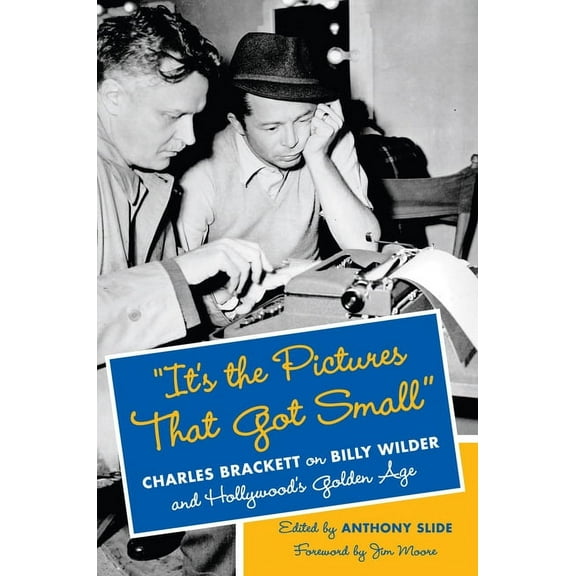 $1967current price $19.67
Film and Culture "It's the Pictures That Got Small": Charles Brackett on Billy Wilder and Hollywood's Golden Age, (Hardcover)
The Making of Quentin Tarantino's Once Upon a Time in Hollywood, (Hardcover) $49.15
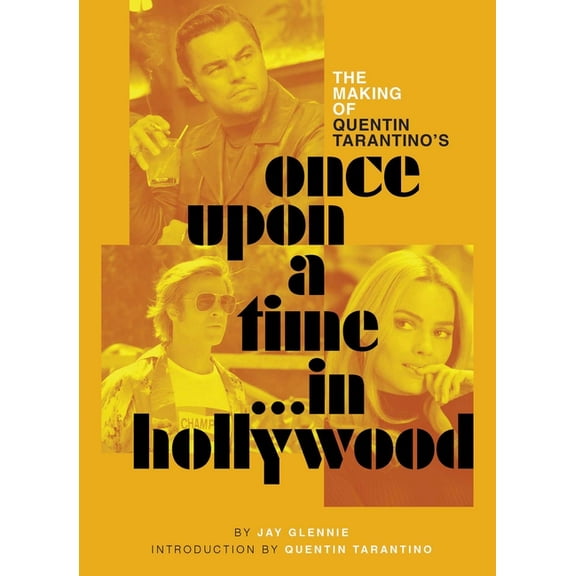 $4915current price $49.15
The Making of Quentin Tarantino's Once Upon a Time in Hollywood, (Hardcover)
44.3 out of 5 Stars. 4 reviewsThe Art of Star Wars: The High Republic: Volume II: The Official Behind-The-Scenes Companion, (Hardcover) $34.70
 $3470current price $34.70
The Art of Star Wars: The High Republic: Volume II: The Official Behind-The-Scenes Companion, (Hardcover)
40th Edition Steve Schapiro. the Godfather Family Album. 45th Ed., (Hardcover) $17.29
 $1729current price $17.29
40th Edition Steve Schapiro. the Godfather Family Album. 45th Ed., (Hardcover)
Pre-Owned Hollywood Dogs (Hardcover) 0002552493 9780002552493 $6.47
 $647current price $6.47
Pre-Owned Hollywood Dogs (Hardcover) 0002552493 9780002552493
Pre-Owned Home Work: A Memoir of My Hollywood Years (Hardcover) 0316349259 9780316349253 $3.99
 3 optionsAvailable in additional 3 options$399current price $3.99
Pre-Owned Home Work: A Memoir of My Hollywood Years (Hardcover) 0316349259 9780316349253
Princeton Classics Men, Women, and Chain Saws: Gender in the Modern Horror Film - Updated Edition, Book 15, (Paperback) $14.30
 $1430current price $14.30
Princeton Classics Men, Women, and Chain Saws: Gender in the Modern Horror Film - Updated Edition, Book 15, (Paperback)
Cold War Cosmopolitanism: Period Style in 1950s Korean Cinema, (Paperback) $20.36
 $2036current price $20.36
Cold War Cosmopolitanism: Period Style in 1950s Korean Cinema, (Paperback)
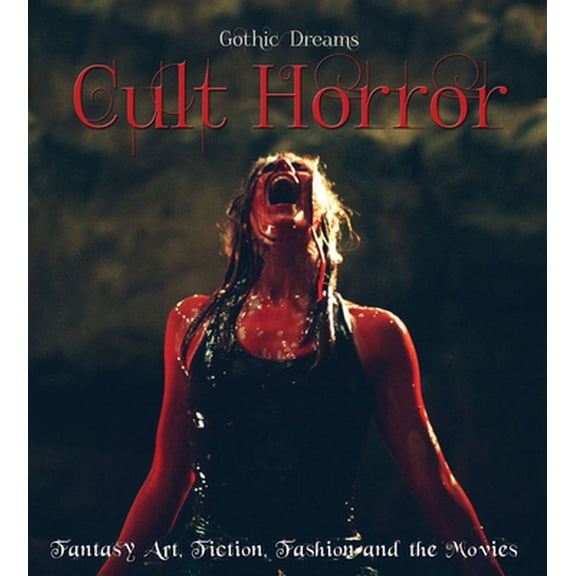
Pre-Owned Cult Horror: Fantasy Art, Fiction & the Movies (Hardcover) 1783611235 9781783611232 $16.18
 $1618current price $16.18
Pre-Owned Cult Horror: Fantasy Art, Fiction & the Movies (Hardcover) 1783611235 9781783611232
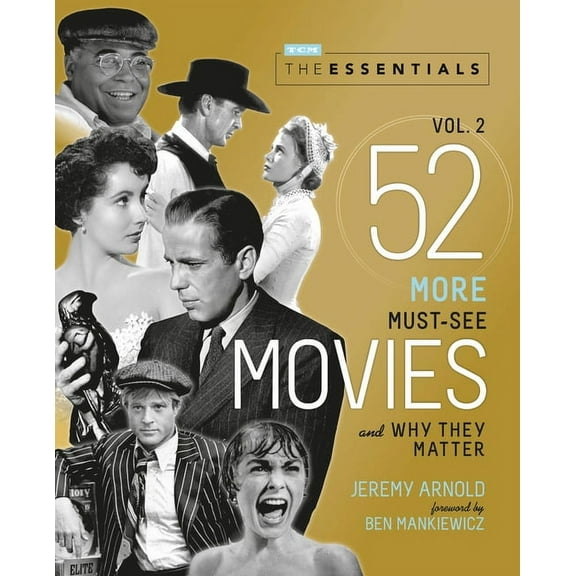
Turner Classic Movies The Essentials Vol. 2: 52 More Must-See Movies and Why They Matter, (Paperback) $14.44
 $1444current price $14.44
Turner Classic Movies The Essentials Vol. 2: 52 More Must-See Movies and Why They Matter, (Paperback)
15 out of 5 Stars. 1 reviewsOscar Wars: A History of Hollywood in Gold, Sweat, and Tears, (Paperback) $19.99
 $1999current price $19.99
Oscar Wars: A History of Hollywood in Gold, Sweat, and Tears, (Paperback)
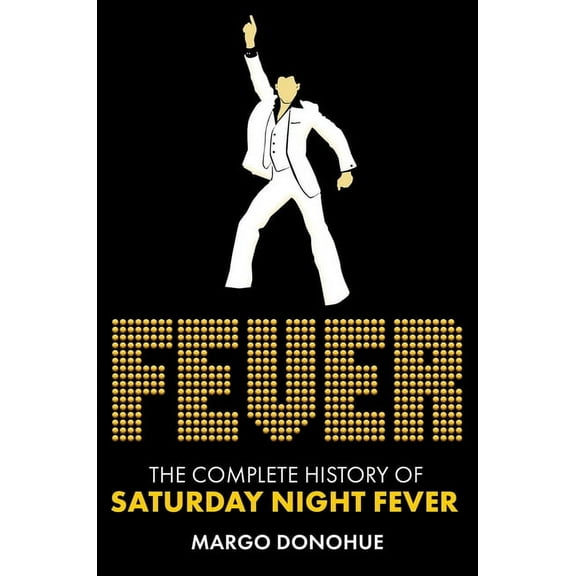
Fever: The Complete History of Saturday Night Fever, (Hardcover) $12.40
 $1240current price $12.40
Fever: The Complete History of Saturday Night Fever, (Hardcover)
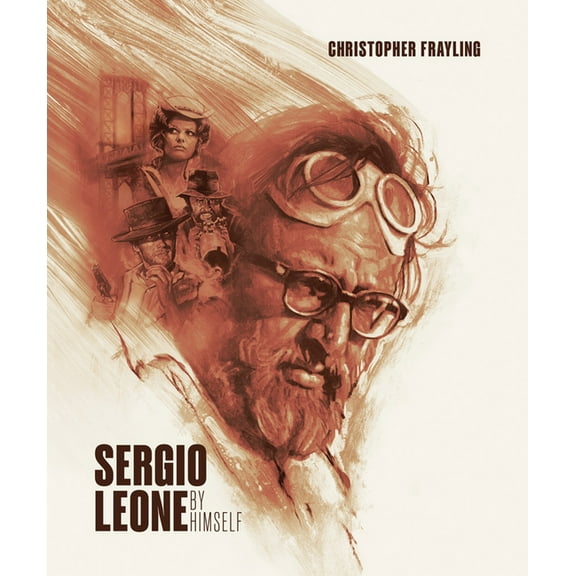
Sergio Leone by Himself, (Hardcover) $17.23
 $1723current price $17.23
Sergio Leone by Himself, (Hardcover)