

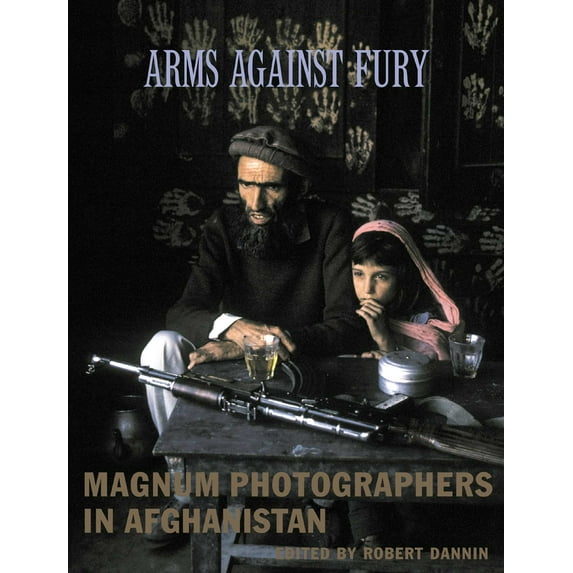
Hero image 0 of Arms Against Fury : Magnum Photographers in Afghanistan, 1941-2001 (Hardcover), 0 of 1
Arms Against Fury : Magnum Photographers in Afghanistan, 1941-2001 (Hardcover)
(No ratings yet)
Key item features
Arms Against Fury examines the dramatic struggle of the Afghan people through the lens of Magnum photographers, dating back to co-founder George Rodger's documentation of the country's role in World War II. Ever since, Magnum's intrepid photographers have crisscrossed the country's striking landscape from the Central Asian steppes to the parched southern desert by way of the Hindu Kush mountains surrounding Kabul and the adjacent Panjshir Valley.
As early as the 1950s, Eve Arnold and Marc Riboud filed unprecedented stories from a legendary Shangri-La, showing a small kingdom struggling for statehood against the forces of underdevelopment and unfortunate geographic position during the Cold War. The ultimate overthrow of the monarchy and brutal liquidation of Afghanistan's constitutional government in 1978 heralded the arrival of Soviet-style communism. Peasants in Nuristan rebelled immediately and initiated a jihad that was covered first by Raymond Depardon and then by Steve McCurry, and later by renowned photojournalist Abbas, who also focused on the progress of the mujahedin, who eventually faced a massive Red Army invasion and savage aerial bombardments.
The victory against the Soviets also signaled the beginning of a civil war that began in 1992. Documented by Luc Delahaye, Christopher Steele-Perkins, Abbas, and Steve McCurry, Afghan militias destroyed large swathes of Kabul. The Taliban militia subdued warring factions in 1996 and proclaimed an Islamic emirate. Steele-Perkins was one of the few journalists to report from Afghanistan during this period of theocratic tyranny. In the wake of the September 11 attacks on the United States, the hated Taliban were shaken from power by a loose alliance of mujahedin backed by American forces. Yet nothing seemed to remedy the miserable spectacle of a ruined country littered with ten million land mines and thousands of innocent victims of the hi-tech war on terror.
The future of Afghanistan, as depicted by Abbas, Eve Arnold, Luc Delahaye, Thomas Dworzak, Alex Majoli, Steve McCurry, and Francesco Zizola, remains uncertain at best.
Containing additional photographic work by Ian Berry, Elliott Erwitt, Stuart Franklin, Philip Jones Griffiths, Susan Meiselas, and Wayne Miller; commentary by the photographers; and several illustrated essays, Arms Against Fury will become an indispensable reference for documentary studies, social history, and critical photography.
As early as the 1950s, Eve Arnold and Marc Riboud filed unprecedented stories from a legendary Shangri-La, showing a small kingdom struggling for statehood against the forces of underdevelopment and unfortunate geographic position during the Cold War. The ultimate overthrow of the monarchy and brutal liquidation of Afghanistan's constitutional government in 1978 heralded the arrival of Soviet-style communism. Peasants in Nuristan rebelled immediately and initiated a jihad that was covered first by Raymond Depardon and then by Steve McCurry, and later by renowned photojournalist Abbas, who also focused on the progress of the mujahedin, who eventually faced a massive Red Army invasion and savage aerial bombardments.
The victory against the Soviets also signaled the beginning of a civil war that began in 1992. Documented by Luc Delahaye, Christopher Steele-Perkins, Abbas, and Steve McCurry, Afghan militias destroyed large swathes of Kabul. The Taliban militia subdued warring factions in 1996 and proclaimed an Islamic emirate. Steele-Perkins was one of the few journalists to report from Afghanistan during this period of theocratic tyranny. In the wake of the September 11 attacks on the United States, the hated Taliban were shaken from power by a loose alliance of mujahedin backed by American forces. Yet nothing seemed to remedy the miserable spectacle of a ruined country littered with ten million land mines and thousands of innocent victims of the hi-tech war on terror.
The future of Afghanistan, as depicted by Abbas, Eve Arnold, Luc Delahaye, Thomas Dworzak, Alex Majoli, Steve McCurry, and Francesco Zizola, remains uncertain at best.
Containing additional photographic work by Ian Berry, Elliott Erwitt, Stuart Franklin, Philip Jones Griffiths, Susan Meiselas, and Wayne Miller; commentary by the photographers; and several illustrated essays, Arms Against Fury will become an indispensable reference for documentary studies, social history, and critical photography.
Specs
- Manual & guide typeInstruction Manual
- Book formatHardcover
- Pages240
- LanguageEnglish
- Pub date2002-09-01
- AuthorRobert Dannin
Current price is USD$38.21
Price when purchased online
Out of stock
How do you want your item?
Out of stock
About this item
Product details
Arms Against Fury examines the dramatic struggle of the Afghan people through the lens of Magnum photographers, dating back to co-founder George Rodger's documentation of the country's role in World War II. Ever since, Magnum's intrepid photographers have crisscrossed the country's striking landscape from the Central Asian steppes to the parched southern desert by way of the Hindu Kush mountains surrounding Kabul and the adjacent Panjshir Valley. As early as the 1950s, Eve Arnold and Marc Riboud filed unprecedented stories from a legendary Shangri-La, showing a small kingdom struggling for statehood against the forces of underdevelopment and unfortunate geographic position during the Cold War. The ultimate overthrow of the monarchy and brutal liquidation of Afghanistan's constitutional government in 1978 heralded the arrival of Soviet-style communism. Peasants in Nuristan rebelled immediately and initiated a jihad that was covered first by Raymond Depardon and then by Steve McCurry, and later by renowned photojournalist Abbas, who also focused on the progress of the mujahedin, who eventually faced a massive Red Army invasion and savage aerial bombardments. The victory against the Soviets also signaled the beginning of a civil war that began in 1992. Documented by Luc Delahaye, Christopher Steele-Perkins, Abbas, and Steve McCurry, Afghan militias destroyed large swathes of Kabul. The Taliban militia subdued warring factions in 1996 and proclaimed an Islamic emirate. Steele-Perkins was one of the few journalists to report from Afghanistan during this period of theocratic tyranny. In the wake of the September 11 attacks on the United States, the hated Taliban were shaken from power by a loose alliance of mujahedin backed by American forces. Yet nothing seemed to remedy the miserable spectacle of a ruined country littered with ten million land mines and thousands of innocent victims of the hi-tech war on terror. The future of Afghanistan, as depicted by Abbas, Eve Arnold, Luc Delahaye, Thomas Dworzak, Alex Majoli, Steve McCurry, and Francesco Zizola, remains uncertain at best. Containing additional photographic work by Ian Berry, Elliott Erwitt, Stuart Franklin, Philip Jones Griffiths, Susan Meiselas, and Wayne Miller; commentary by the photographers; and several illustrated essays, Arms Against Fury will become an indispensable reference for documentary studies, social history, and critical photography.
Arms Against Fury examines the dramatic struggle of the Afghan people through the lens of Magnum photographers, dating back to co-founder George Rodger's documentation of the country's role in World War II. Ever since, Magnum's intrepid photographers have crisscrossed the country's striking landscape from the Central Asian steppes to the parched southern desert by way of the Hindu Kush mountains surrounding Kabul and the adjacent Panjshir Valley.
As early as the 1950s, Eve Arnold and Marc Riboud filed unprecedented stories from a legendary Shangri-La, showing a small kingdom struggling for statehood against the forces of underdevelopment and unfortunate geographic position during the Cold War. The ultimate overthrow of the monarchy and brutal liquidation of Afghanistan's constitutional government in 1978 heralded the arrival of Soviet-style communism. Peasants in Nuristan rebelled immediately and initiated a jihad that was covered first by Raymond Depardon and then by Steve McCurry, and later by renowned photojournalist Abbas, who also focused on the progress of the mujahedin, who eventually faced a massive Red Army invasion and savage aerial bombardments.
The victory against the Soviets also signaled the beginning of a civil war that began in 1992. Documented by Luc Delahaye, Christopher Steele-Perkins, Abbas, and Steve McCurry, Afghan militias destroyed large swathes of Kabul. The Taliban militia subdued warring factions in 1996 and proclaimed an Islamic emirate. Steele-Perkins was one of the few journalists to report from Afghanistan during this period of theocratic tyranny. In the wake of the September 11 attacks on the United States, the hated Taliban were shaken from power by a loose alliance of mujahedin backed by American forces. Yet nothing seemed to remedy the miserable spectacle of a ruined country littered with ten million land mines and thousands of innocent victims of the hi-tech war on terror.
The future of Afghanistan, as depicted by Abbas, Eve Arnold, Luc Delahaye, Thomas Dworzak, Alex Majoli, Steve McCurry, and Francesco Zizola, remains uncertain at best.
Containing additional photographic work by Ian Berry, Elliott Erwitt, Stuart Franklin, Philip Jones Griffiths, Susan Meiselas, and Wayne Miller; commentary by the photographers; and several illustrated essays, Arms Against Fury will become an indispensable reference for documentary studies, social history, and critical photography.
As early as the 1950s, Eve Arnold and Marc Riboud filed unprecedented stories from a legendary Shangri-La, showing a small kingdom struggling for statehood against the forces of underdevelopment and unfortunate geographic position during the Cold War. The ultimate overthrow of the monarchy and brutal liquidation of Afghanistan's constitutional government in 1978 heralded the arrival of Soviet-style communism. Peasants in Nuristan rebelled immediately and initiated a jihad that was covered first by Raymond Depardon and then by Steve McCurry, and later by renowned photojournalist Abbas, who also focused on the progress of the mujahedin, who eventually faced a massive Red Army invasion and savage aerial bombardments.
The victory against the Soviets also signaled the beginning of a civil war that began in 1992. Documented by Luc Delahaye, Christopher Steele-Perkins, Abbas, and Steve McCurry, Afghan militias destroyed large swathes of Kabul. The Taliban militia subdued warring factions in 1996 and proclaimed an Islamic emirate. Steele-Perkins was one of the few journalists to report from Afghanistan during this period of theocratic tyranny. In the wake of the September 11 attacks on the United States, the hated Taliban were shaken from power by a loose alliance of mujahedin backed by American forces. Yet nothing seemed to remedy the miserable spectacle of a ruined country littered with ten million land mines and thousands of innocent victims of the hi-tech war on terror.
The future of Afghanistan, as depicted by Abbas, Eve Arnold, Luc Delahaye, Thomas Dworzak, Alex Majoli, Steve McCurry, and Francesco Zizola, remains uncertain at best.
Containing additional photographic work by Ian Berry, Elliott Erwitt, Stuart Franklin, Philip Jones Griffiths, Susan Meiselas, and Wayne Miller; commentary by the photographers; and several illustrated essays, Arms Against Fury will become an indispensable reference for documentary studies, social history, and critical photography.
info:
We aim to show you accurate product information. Manufacturers, suppliers and others provide what you see here, and we have not verified it.
Specifications
Manual & guide type
Instruction Manual
Book format
Hardcover
Pages
240
Language
English
Warranty
Warranty information
Please be aware that the warranty terms on items offered for sale by third party Marketplace sellers may differ from those displayed in this section (if any). To confirm warranty terms on an item offered for sale by a third party Marketplace seller, please use the 'Contact seller' feature on the third party Marketplace seller's information page and request the item's warranty terms prior to purchase.
Customer ratings & reviews
0 ratings|0 reviews
This item does not have any reviews yet
