

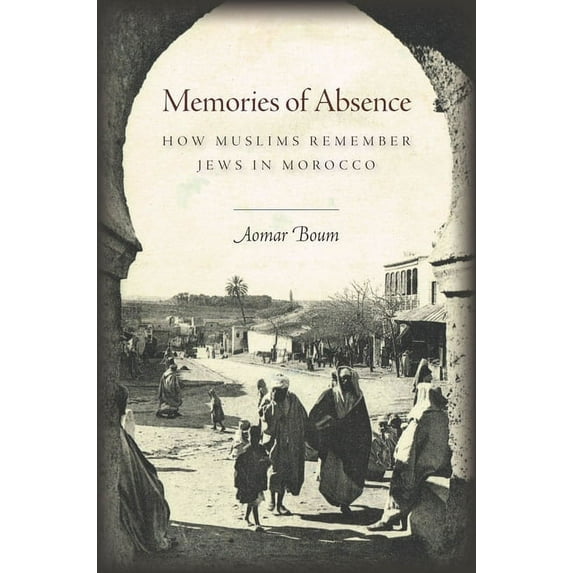
Memories of Absence: How Muslims Remember Jews in Morocco, (Hardcover)
Key item features
- Memories of Absence: How Muslims Remember Jews in Morocco, (Hardcover)
- Author: Stanford University Press
- ISBN: 9780804786997
- Format: Hardcover
- Publication Date: 2013-10-16
- Page Count: 240
Specs
- Book formatHardcover
- Fiction/nonfictionNon-Fiction
- GenreHistory
- Publication dateOctober, 2013
- Pages240
- SubgenreMiddle East
- Free shipping
 Free 90-day returns
How do you want your item?


More seller options (3)

Try 30 days of Walmart+ for just $1!
About this item
Product details
- Memories of Absence: How Muslims Remember Jews in Morocco, (Hardcover)
- Author: Stanford University Press
- ISBN: 9780804786997
- Format: Hardcover
- Publication Date: 2013-10-16
- Page Count: 240
Specifications
Book format
Fiction/nonfiction
Genre
Publication date
Warranty
Warranty information
Similar items you might like
Based on what customers bought
Life of the Past The Desert Bones: The Paleontology and Paleoecology of Mid-Cretaceous North Africa, (Hardcover) $42.00 Was $50.04
 $4200current price $42.00, Was $50.04$50.04
Life of the Past The Desert Bones: The Paleontology and Paleoecology of Mid-Cretaceous North Africa, (Hardcover)
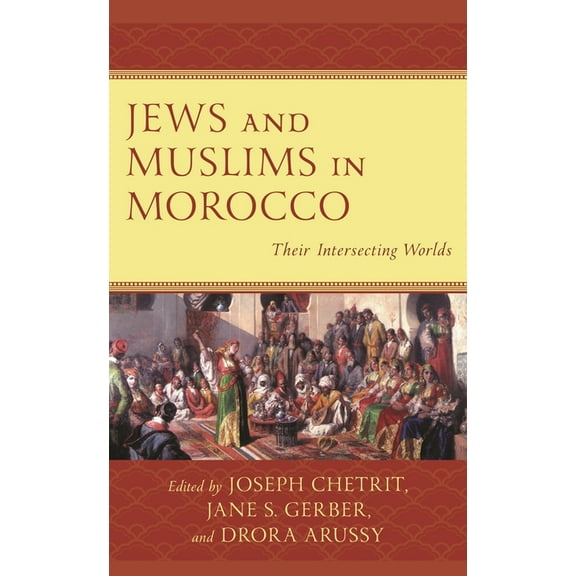
Sephardic and Mizrahi Studies Jews and Muslims in Morocco: Their Intersecting Worlds, (Paperback) $46.95
 $4695current price $46.95
Sephardic and Mizrahi Studies Jews and Muslims in Morocco: Their Intersecting Worlds, (Paperback)
The Jews of Africa (Hardcover) $36.64
 $3664current price $36.64
The Jews of Africa (Hardcover)
Le Maroc Contemporain..., (Hardcover) $34.95
 $3495current price $34.95
Le Maroc Contemporain..., (Hardcover)
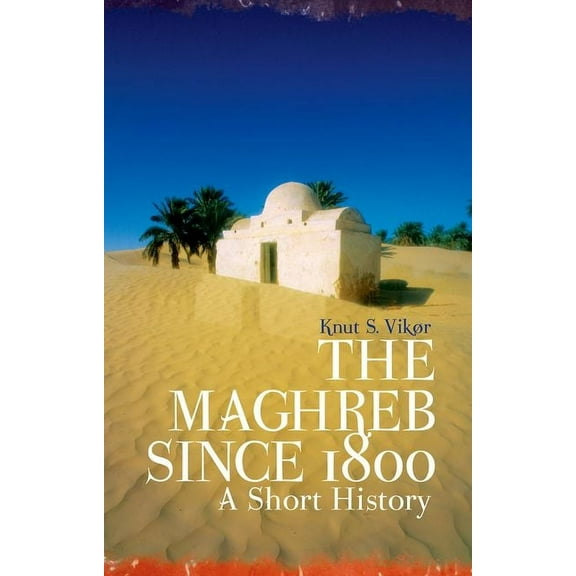
The Maghreb Since 1800, (Paperback) $25.94
 $2594current price $25.94
The Maghreb Since 1800, (Paperback)
The French Médersa: Islamic Education and Empire in Northwest Africa, (Hardcover) $34.62 Was $54.95
 $3462current price $34.62, Was $54.95$54.95
The French Médersa: Islamic Education and Empire in Northwest Africa, (Hardcover)
Ãtudes sur l'Islam et les tribus Maures: Les Brakna, (Paperback) $21.67 Was $26.29
 $2167current price $21.67, Was $26.29$26.29
Ãtudes sur l'Islam et les tribus Maures: Les Brakna, (Paperback)
Variorum Collected Studies The Power of Islam in Morocco: Historical and Anthropological Perspectives, (Paperback) $61.99
 $6199current price $61.99
Variorum Collected Studies The Power of Islam in Morocco: Historical and Anthropological Perspectives, (Paperback)
The 2011 Libyan Uprisings and the Struggle for the Post-Qadhafi Future, (Hardcover) $56.14
 $5614current price $56.14
The 2011 Libyan Uprisings and the Struggle for the Post-Qadhafi Future, (Hardcover)
Islamic Civilization and Muslim Networks The Call of Bilal: Islam in the African Diaspora, (Paperback) $37.32
 $3732current price $37.32
Islamic Civilization and Muslim Networks The Call of Bilal: Islam in the African Diaspora, (Paperback)
A History of Violence in the Early Algerian Colony $37.97
 $3797current price $37.97
A History of Violence in the Early Algerian Colony
Hoarding Memory: Covering the Wounds of the Algerian War, (Hardcover) $58.17
 $5817current price $58.17
Hoarding Memory: Covering the Wounds of the Algerian War, (Hardcover)
Italian and Italian American Studies Mohamed Fekini and the Fight to Free Libya, (Hardcover) $56.14
 $5614current price $56.14
Italian and Italian American Studies Mohamed Fekini and the Fight to Free Libya, (Hardcover)
France's Arab Policy, (Paperback) $39.99
 $3999current price $39.99
France's Arab Policy, (Paperback)
Return to Casablanca: Jews, Muslims, and an Israeli Anthropologist, (Paperback) $34.28
 $3428current price $34.28
Return to Casablanca: Jews, Muslims, and an Israeli Anthropologist, (Paperback)
Middle East Studies The Mellah of Marrakesh: Jewish and Muslim Space in Morocco's Red City, (Paperback) $34.15
 $3415current price $34.15
Middle East Studies The Mellah of Marrakesh: Jewish and Muslim Space in Morocco's Red City, (Paperback)
Il Était Une Fois Le Maroc: Témoignages du passé judéo-marocain (Paperback) by David Bensoussan $25.45
 $2545current price $25.45
Il Était Une Fois Le Maroc: Témoignages du passé judéo-marocain (Paperback) by David Bensoussan
I Was a French Muslim : Memories of an Algerian Freedom Fighter (Hardcover) $21.94
 $2194current price $21.94
I Was a French Muslim : Memories of an Algerian Freedom Fighter (Hardcover)
Coming of Age: How Technology and Entrepreneurship are Changing the Face of MENA, (Hardcover) $19.32 Was $22.64
 $1932current price $19.32, Was $22.64$22.64
Coming of Age: How Technology and Entrepreneurship are Changing the Face of MENA, (Hardcover)
Customer ratings & reviews
Filtered and sorted results would be available on the new 'Customer ratings & reviews' page.
Showing 1-1 of 1 review
Boum, Aomar. Memories of Absence
Germain Boum, Aomar. Memories of Absence: How Muslims Remember Jews in Morocco. Palo Alto: Stanford University Press, 2013. Aomar Boum's ethnography, Memories of Absence, explores how several Muslim generations remember the former Jewish population who neighbored them in the southeastern Morocco hinterlands until their exodus in 1962. Through travel narratives, legal manuscripts, news papers, and interviews, Boum earnestly constructs four generation's narratives and memories of Jewish history. While shining light on the silenced and marginalized history of the Jewish communities and their complex relationships with the local Muslim population, Boum also strives to highlight the key components that influence and mold the Muslim memory of their former neighbors and how that memory developed across generations. Boum constructed his book chronologically which allows the reader to follow the history of events simultaneously with the evolving perspectives of the Muslim people. At times this connection was not entirely clear. Nonetheless Boum's effort to express the very complex and fluctuating relationships and social and legal systems was much appreciated. After particularly confusing topics Boum often gives a short synopsis of the main point just made. This made it easier for me, an undergraduate student, to comprehend and appreciate more of the true meaning rooted in the narratives and historical references. Prior to diving into his study, Boum equips the reader with a preliminary historical background of the past Jewish presence in Morocco. He established the importance of his study and the reason for the lack of similar exploration of Middle Eastern Jewery. Boum's personal background, a male, Muslim, black, native Moroccan who grew up in a small village and was the first of his family to attend University, proves to be an influential factor throughout his study. His race and gender seems to cause a limitation in his study in that he only spoke to men. Boum recognizes this limitation however I think that the study itself may be misleading if one does not acknowledge that this is primarily how Muslim males remember Jews in morocco excluding the female perspective. This aside it seems that being a native of the country, Boum has a more thorough understanding of Moroccan village society and geography and linguistic abilities than that with which another foreign anthropologist may start their engagement. Throughout his study, Boum deconstructs the shifts in Muslim sentiments toward Jews in local, national, and global contexts. Beginning with the great grandparent's generation Boum gives good examples of the Jew's economic emergence and significance in Morocco. Boum describes the struggles of Jews to establish themselves in trade during the 1700 and 1800s through his story of Aby Serour. He identifies the native Moroccan's understand the emergence of colonialism; as well as the generally appropriate lack of respect for the Jews in some developed European countries through his example of De Foucauld. I found Boum's chapter two, “Outside the Mellah: Market, Law, and Muslim-Jewish Encounters,” to be the most difficult section of his book to understand. Boum's history of Akka and his use of local archives are fairly easy to understand and I found quite interesting. His primary topic regarding legal syncretism was very difficult to follow, at times having to reread entire sections. Only after my class orally deconstructed the section did I understand the main points. Boum includes a few case studies to compliment and support his precious statements. These case studies may be useful for classes studying undeveloped or fluctuating legal systems. Throughout his study of the older generations Boum identifies nostalgia for the economic presence of the Jews as a consistent sentiment. One of Aomar's subjects expressed the following about Akka, “A market without Jews is like bread without salt.” Various narratives reminisce of their economic benefit which is now absent. His progression through the generations shows a loss of this nostalgia and growing sense of resentment and hatred in the younger generation. The older generation experienced the relationship of submission for protection and the economic advantages of the Jewish connections trading to other markets. Boum's description and break down of the mellah is helpful to understand the Jewish norms and traditions within their private space. This seemed interesting and he does nice breakdown of each group's role within the mellah especially that of the men, rabbi and women. His explanation of the AIU and its development was somewhat interesting. Boum mentions briefly the education of women and the role they play in the household. I appreciated his elaboration of the female's attendance or lack thereof of the AUI schools. I wish his study shown light on other significant female roles. I understand this is due to the lack of female subjects. I respect Boum's bluntness and honesty of this fact; however I don't think that he acknowledges this enough throughout his study. I felt unprepared when reading the chapter on “‘Little Jerusalems' Without Jews: Muslim Memories of Jewish Anxieties and Emigration,” due to my lack of knowledge of social and political fluctuations in the Middle East. Once again I understood much more after class. I don't think that an average reader like me would be able to comprehend the connections between the Middle Eastern conflicts and its effect on Moroccan perceptions had they not had a similar debriefing. I was intrigued by the section on the undetermined Jewish representation after the independence of Morocco and Boum's draw on the concept of ‘ayn mika, or the idea of looking at something but willfully not seeing what's there. Boum used this concept well in analyzing the unacknowledged yet well practiced prejudice of the Moroccan government towards the Jewish people. Near the end of his study, Boum changes gears toward the younger generation. I found this chapter quite interesting and relatable. Amhed's narrative seems to act as a summary reminding me of the past generations' experience of prosperity to decline leading the younger generation of poverty and lack of education or promise. Boum identifies the questioning and resentment of the government by the youth present in the current generation. Boum clearly communicates the change in Muslim perspective of the Jew through the narrative relating Jews to women saying that they were cowardly and disrespectful. This sentiment of the younger generation has its roots in the Israeli Palestinian conflict, and the shame they feel of the Israeli successes. Boum describes well this connection and the reinforcing nature that the Internet has on these young people's views. This chapter made for very active discussions in class and was a strong, however unfortunate, end to Boum's study's. Ultimately, I felt that Boum did a very nice job of deriving and communicating the Moroccan Muslim's trans-generational memory of the Jew. It was an interesting point of view from which to study Jewish history and his use of personal narratives brought to life much of what could have been very dry historical facts. A tough read for an accounting and economics major, Boum's book required careful and active reading. It may be well suited for someone focused on North African, Moroccan or Middle Eastern studies, has an anthropological back ground, or is interested in historical geography. I respect Boum's unique and thorough investigation despite the sensitive issues which he addresses throughout the book. It is a commendable effort and I believe a worthwhile read, even by selected chapters, for academic reference or classroom discussion.

Related pages
- 12 Million Black Voices
- General Social Themes Teen & Young Adult Books
- Africa Occidental
- 7 African Powers
- West African History Books
- Africa People & Places Teen & Young Adult Books
- Celebrities Hell
- Death & Dying Social Themes Teen & Young Adult Books
- French African American
- African American Sorority Fraternity
- Assimilation Social Themes Teen & Young Adult Books
- Sexual Abuse Teen & Young Adult Books