


The Changing Face of Home : The Transnational Lives of the Second Generation (Paperback)
(No ratings yet)
Key item features
The children of immigrants account for the fastest growing segment of the U.S. population under eighteen years old—one out of every five children in the United States. Will this generation of immigrant children follow the path of earlier waves of immigrants and gradually assimilate into mainstream American life, or does the global nature of the contemporary world mean that the trajectory of today's immigrants will be fundamentally different? Rather than severing their ties to their home countries, many immigrants today sustain economic, political, and religious ties to their homelands, even as they work, vote, and pray in the countries that receive them. The Changing Face of Home is the first book to examine the extent to which the children of immigrants engage in such transnational practices. Because most second generation immigrants are still young, there is much debate among immigration scholars about the extent to which these children will engage in transnational practices in the future. While the contributors to this volume find some evidence of transnationalism among the children of immigrants, they disagree over whether these activities will have any long-term effects. Part I of the volume explores how the practice and consequences of transnationalism vary among different groups. Contributors Philip Kasinitz, Mary Waters, and John Mollenkopf use findings from their large study of immigrant communities in New York City to show how both distance and politics play important roles in determining levels of transnational activity. For example, many Latin American and Caribbean immigrants are "circular migrants" spending much time in both their home countries and the United States, while Russian Jews and Chinese immigrants have far less contact of any kind with their homelands. In Part II, the contributors comment on these findings, offering suggestions for reconceptualizing the issue and bridging analytical differences. In her chapter, Nancy Foner makes valuable comparisons with past waves of immigrants as a way of understanding the conditions that may foster or mitigate transnationalism among today's immigrants. The final set of chapters examines how home and host country value systems shape how second generation immigrants construct their identities, and the economic, social, and political communities to which they ultimately express allegiance. The Changing Face of Home presents an important first round of research and dialogue on the activities and identities of the second generation vis-a-vis their ancestral homelands, and raises important questions for future research.
Specs
- Book formatPaperback
- Fiction/nonfictionNon-Fiction
- Pub date2006-08-17
- Pages420
- EditionFirst Edition
- PublisherRussell Sage Foundation
Current price is USD$40.54
Price when purchased online
- Free shipping
 Free 30-day returns
How do you want your item?
Columbus, 43215
Arrives between Apr 28 - May 4
|
Sold and shipped by newbookdeals
4.559748427672956 stars out of 5, based on 1908 seller reviews(4.6)1908 seller reviews

Free 30-day returns - in store or online
About this item
Product details
9780871545169. New condition. Trade paperback. Language: English. Pages: 420. Trade paperback (US). Glued binding. 420 p. Contains: Illustrations. The children of immigrants account for the fastest growing segment of the U.S. population under eighteen years old--one out of every five children in the United States. Will this generation of immigrant children follow the path of earlier waves of immigrants and gradually assimilate into mainstream American life, or does the global nature of the contemporary world mean that the trajectory of today's immigrants will be fundamentally different? Rather than severing their ties to their home countries, many immigrants today sustain economic, political, and religious ties to their homelands, even as they work, vote, and pray in the countries that receive them. The Changing Face of Home is the first book to examine the extent to which the children of immigrants engage in such transnational practices. Because most second generation immigrants are still young, there is much debate among immigration scholars about the extent to which these children will engage in transnational practices in the future. While the contributors to this volume find some evidence of transnationalism among the children of immigrants, they disagree over whether these activities will have any long-term effects. Part I of the volume explores how the practice and consequences of transnationalism vary among different groups. Contributors Philip Kasinitz, Mary Waters, and John Mollenkopf use findings from their large study of immigrant communities in New York City to show how both distance and politics play important roles in determining levels of transnational activity. For example, many Latin American and Caribbean immigrants are "circular migrants" spending much time in both their home countries and the United States, while Russian Jews and Chinese immigrants have far less contact of any kind with their homelands. In Part II, the contributors comment on these findings, offering suggestions for reconceptualizing the issue and bridging analytical differences. In her chapter, Nancy Foner makes valuable comparisons with past waves of immigrants as a way of understanding the conditions that may foster or mitigate transnationalism among today's immigrants. The final set of chapters examines how home and host country value systems shape how second generation immigrants construct their identities, and the economic, social, and political communities to which they ultimately express allegiance. The Changing Face of Home presents an important first round of research and dialogue on the activities and identities of the second generation vis-a-vis their ancestral homelands, and raises important questions for future research.
The children of immigrants account for the fastest growing segment of the U.S. population under eighteen years old—one out of every five children in the United States. Will this generation of immigrant children follow the path of earlier waves of immigrants and gradually assimilate into mainstream American life, or does the global nature of the contemporary world mean that the trajectory of today's immigrants will be fundamentally different? Rather than severing their ties to their home countries, many immigrants today sustain economic, political, and religious ties to their homelands, even as they work, vote, and pray in the countries that receive them. The Changing Face of Home is the first book to examine the extent to which the children of immigrants engage in such transnational practices. Because most second generation immigrants are still young, there is much debate among immigration scholars about the extent to which these children will engage in transnational practices in the future. While the contributors to this volume find some evidence of transnationalism among the children of immigrants, they disagree over whether these activities will have any long-term effects. Part I of the volume explores how the practice and consequences of transnationalism vary among different groups. Contributors Philip Kasinitz, Mary Waters, and John Mollenkopf use findings from their large study of immigrant communities in New York City to show how both distance and politics play important roles in determining levels of transnational activity. For example, many Latin American and Caribbean immigrants are "circular migrants" spending much time in both their home countries and the United States, while Russian Jews and Chinese immigrants have far less contact of any kind with their homelands. In Part II, the contributors comment on these findings, offering suggestions for reconceptualizing the issue and bridging analytical differences. In her chapter, Nancy Foner makes valuable comparisons with past waves of immigrants as a way of understanding the conditions that may foster or mitigate transnationalism among today's immigrants. The final set of chapters examines how home and host country value systems shape how second generation immigrants construct their identities, and the economic, social, and political communities to which they ultimately express allegiance. The Changing Face of Home presents an important first round of research and dialogue on the activities and identities of the second generation vis-a-vis their ancestral homelands, and raises important questions for future research.
info:
We aim to show you accurate product information. Manufacturers, suppliers and others provide what you see here, and we have not verified it.
Specifications
Book format
Paperback
Fiction/nonfiction
Non-Fiction
Genre
Political & Social Sciences
Pub date
2006-08-17
Warranty
Warranty information
Please be aware that the warranty terms on items offered for sale by third party Marketplace sellers may differ from those displayed in this section (if any). To confirm warranty terms on an item offered for sale by a third party Marketplace seller, please use the 'Contact seller' feature on the third party Marketplace seller's information page and request the item's warranty terms prior to purchase.
Similar items you might like
Based on what customers bought
Feminist Perspectives on Social Work Practice: The Intersecting Lives of Women in the 21st Century, (Paperback) $80.00
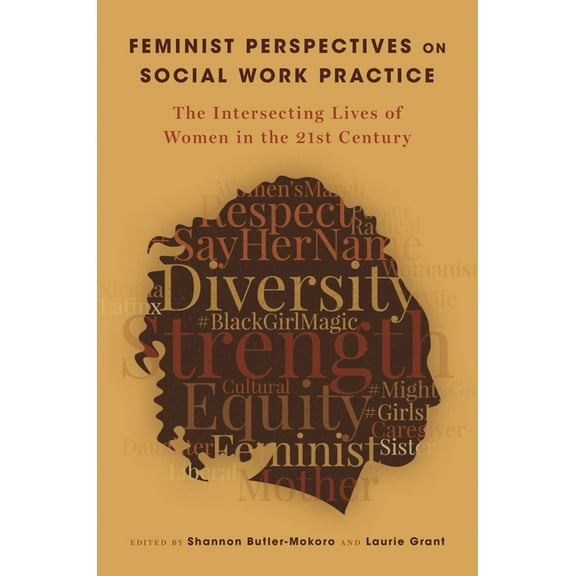 $8000current price $80.00
Feminist Perspectives on Social Work Practice: The Intersecting Lives of Women in the 21st Century, (Paperback)
Negotiators of Change: Historical Perspectives on Native American Women, (Paperback) $39.13
 $3913current price $39.13
Negotiators of Change: Historical Perspectives on Native American Women, (Paperback)
Des Idées Et Des Femmes Ãcrire l'histoire du harcèlement sexuel sur la longue durée: Nommer, dénoncer, représenter, mettre en image ou en m, (Paperback) $33.84
 $3384current price $33.84
Des Idées Et Des Femmes Ãcrire l'histoire du harcèlement sexuel sur la longue durée: Nommer, dénoncer, représenter, mettre en image ou en m, (Paperback)
Princeton Studies in Culture/Power/Histo From Duty to Desire: Remaking Families in a Spanish Village, Book 6, (Paperback) $39.37
 $3937current price $39.37
Princeton Studies in Culture/Power/Histo From Duty to Desire: Remaking Families in a Spanish Village, Book 6, (Paperback)
Globalizing the Streets: Cross-Cultural Perspectives on Youth, Social Control, and Empowerment, (Paperback) $45.29
 $4529current price $45.29
Globalizing the Streets: Cross-Cultural Perspectives on Youth, Social Control, and Empowerment, (Paperback)
Liminal Lives: Imagining the Human at the Frontiers of Biomedicine, (Paperback) $39.95
 $3995current price $39.95
Liminal Lives: Imagining the Human at the Frontiers of Biomedicine, (Paperback)
Homesickness: An American History, (Paperback) $40.46
 $4046current price $40.46
Homesickness: An American History, (Paperback)
Gender and Culture Feminist Consequences: Theory for the New Century, (Paperback) $47.43
 $4743current price $47.43
Gender and Culture Feminist Consequences: Theory for the New Century, (Paperback)
Beyond Nature's Housekeepers: American Women in Environmental History, (Paperback) $36.90
 $3690current price $36.90
Beyond Nature's Housekeepers: American Women in Environmental History, (Paperback)
Cross-Cultural Perspectives on Women Migrant Women: Crossing Boundaries and Changing Identities, (Paperback) $51.45
 $5145current price $51.45
Cross-Cultural Perspectives on Women Migrant Women: Crossing Boundaries and Changing Identities, (Paperback)
Portrait of a Presidency: Patterns in My Life as President of The College of New Jersey, (Paperback) $20.87
 $2087current price $20.87
Portrait of a Presidency: Patterns in My Life as President of The College of New Jersey, (Paperback)
Making Sense of Social Movements, (Paperback) $34.99
 $3499current price $34.99
Making Sense of Social Movements, (Paperback)
Contributions to Southern Appalachian St Melungeon Portraits: Exploring Kinship and Identity, Book 44, (Paperback) $38.45
 $3845current price $38.45
Contributions to Southern Appalachian St Melungeon Portraits: Exploring Kinship and Identity, Book 44, (Paperback)
Explorations in Anthropology Hahalis and the Labour of Love: A Social Movement on Buka Island, (Paperback) $42.39
 $4239current price $42.39
Explorations in Anthropology Hahalis and the Labour of Love: A Social Movement on Buka Island, (Paperback)
Ethnic Los Angeles (Paperback) $43.02
 $4302current price $43.02
Ethnic Los Angeles (Paperback)
Women's Movements Facing the Reconfigured State, (Paperback) $38.60
 $3860current price $38.60
Women's Movements Facing the Reconfigured State, (Paperback)
Political Thought The Last Generation: Work and Life in the Textile Mills of Lowell, Massachusetts, 1910-1960, (Paperback) $44.16
 $4416current price $44.16
Political Thought The Last Generation: Work and Life in the Textile Mills of Lowell, Massachusetts, 1910-1960, (Paperback)
Under the Kapok Tree: Identity and Difference in Beng Thought, (Paperback) $23.14
 $2314current price $23.14
Under the Kapok Tree: Identity and Difference in Beng Thought, (Paperback)
Women in Africa : Studies in Social and Economic Change (Paperback) $44.75
 $4475current price $44.75
Women in Africa : Studies in Social and Economic Change (Paperback)
Protest and Propaganda : W. E. B. Du Bois, the CRISIS, and American History (Paperback) $31.82
 $3182current price $31.82
Protest and Propaganda : W. E. B. Du Bois, the CRISIS, and American History (Paperback)
Customer ratings & reviews
0 ratings|0 reviews
This item does not have any reviews yet
