

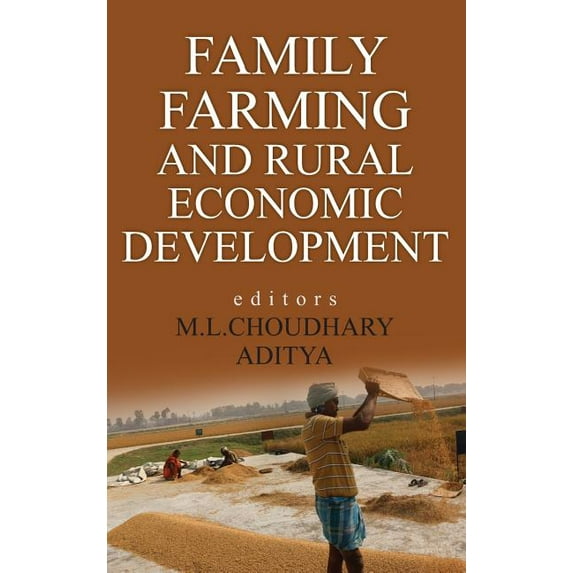
Family Farming and Rural Economic Development (Hardcover)
(No ratings yet)
Key item features
Family farming is a prevalent form of agriculture in both developed and developing countries, encompassing all family-based agricultural activities and being closely connected to various aspects of rural and social development. It is recognized as an organization of agricultural, forestry, fisheries, pastoral, and aquaculture production that is managed and operated by a family and increasingly reliant on family labor, both from men and women. In developing countries such as India, several factors are essential for the successful development of family farming, including agro-ecological conditions and territorial characteristics, access to markets, policy environment, access to land and natural resources, access to technology and extension services, access to finance, demographic, economic, and socio-cultural conditions, and the availability of specialized education.
The International Year of Family Farming was designated by the United Nations General Assembly at its 66th session, acknowledging the growing role of family farming in poverty reduction and rural development. The book offers a wide range of topics that address crucial issues for individuals in the agriculture industry, researchers, faculty, and others.
The International Year of Family Farming was designated by the United Nations General Assembly at its 66th session, acknowledging the growing role of family farming in poverty reduction and rural development. The book offers a wide range of topics that address crucial issues for individuals in the agriculture industry, researchers, faculty, and others.
Specs
- Book formatHardcover
- Fiction/nonfictionNon-Fiction
- Publication dateJanuary, 2015
- Pages438
- Original languagesEnglish
- LanguageEnglish
Current price is USD$135.92
Price when purchased online
Out of stock
How do you want your item?
Out of stock
About this item
Product details
Family farming is the predominant form of agriculture in the food production sectors in both developing and developed countries. It mainly includes all family-based agricultural activities, and it is linked to several areas of rural and social development. It is understood as a means of organizing agricultural, forestry, fisheries, pastoral and aquaculture production which is managed and operated by a family and increasingly reliant on family labour of both men and women. In developing countries like India, a number of factors are key for the successful development of family farming, such as: agro-ecological conditions and territorial characteristics; access to markets; policy environment; access to land and natural resources; access to technology and extension services; access to finance; demographic, economic and socio-cultural conditions; availability of specialized education among a few. The United Nations has designated the year 2014 as the International Year of Family Farming at the 66th session of the United Nations General Assembly recognizing the increasing role of family farming in poverty alleviation and rural development in particular. The content of the book offers a diverse selection of chapters that address issues of importance to those in the agriculture industry, researchers, faculty, and others.
Family farming is a prevalent form of agriculture in both developed and developing countries, encompassing all family-based agricultural activities and being closely connected to various aspects of rural and social development. It is recognized as an organization of agricultural, forestry, fisheries, pastoral, and aquaculture production that is managed and operated by a family and increasingly reliant on family labor, both from men and women. In developing countries such as India, several factors are essential for the successful development of family farming, including agro-ecological conditions and territorial characteristics, access to markets, policy environment, access to land and natural resources, access to technology and extension services, access to finance, demographic, economic, and socio-cultural conditions, and the availability of specialized education.
The International Year of Family Farming was designated by the United Nations General Assembly at its 66th session, acknowledging the growing role of family farming in poverty reduction and rural development. The book offers a wide range of topics that address crucial issues for individuals in the agriculture industry, researchers, faculty, and others.
The International Year of Family Farming was designated by the United Nations General Assembly at its 66th session, acknowledging the growing role of family farming in poverty reduction and rural development. The book offers a wide range of topics that address crucial issues for individuals in the agriculture industry, researchers, faculty, and others.
info:
We aim to show you accurate product information. Manufacturers, suppliers and others provide what you see here, and we have not verified it.
Specifications
Book format
Hardcover
Fiction/nonfiction
Non-Fiction
Genre
Social Science/Sociology - Rural
Publication date
January, 2015
Warranty
Warranty information
Please be aware that the warranty terms on items offered for sale by third party Marketplace sellers may differ from those displayed in this section (if any). To confirm warranty terms on an item offered for sale by a third party Marketplace seller, please use the 'Contact seller' feature on the third party Marketplace seller's information page and request the item's warranty terms prior to purchase.
Customer ratings & reviews
0 ratings|0 reviews
This item does not have any reviews yet
