


Men-at-Arms: Imperial German Colonial and Overseas Troops 1885–1918 (Series #490) (Paperback)
Key item features
From the Boxer Rebellion to Tsingtao to German East Africa (Tanzania), and colonies across Africa and the central Pacific, the Kaiser's Second Reich created a worldwide empire, and then lost it.
Following Prussia's victory over France in 1871 and German unification, the invigorated Second Reich sought international status alongside the older colonial powers - Britain, France, Spain and Russia. Actual overseas settlement was always sparse, counted in the low tens of thousands only, but by the mid-1880s German trading companies had established footholds in what became German East Africa (Tanzania), German South-West Africa (Namibia), and German West Africa (Cameroon, and Togo). To consolidate their position against native resistance, and to extend their frontiers, the German Imperial government soon took over these enclaves as colonies or 'protectorates'. In the 1890s it established a new branch of the armed forces, the Schutztruppe, composed largely of African askaris with German officers and NCOs, backed up by German artillery and machine guns. In parallel, the Imperial Navy raised marine battalions - eventually, three Seebataillone - to protect its overseas bases and to reinforce the colonies as needed. After German participation in putting down the Boxer Rebellion (1900) their primary responsibility was the German concession territory at Tsingtao in China, where Germany also raised a local East Asia Brigade; but the marines also served in the German Pacific possessions - Samoa, New Guinea, the Bismarck Archipelago, the Northern Solomon Islands, the Marshalls, Marianas and Carolines. Marine companies were also rotated through the African colonies at need. In addition to small-scale 'police' work, the brief German colonial period involved putting down rebellions in East Africa (1888-98) and Cameroon, and crushing - with great ruthlessness - the determined resistance of the Herero and Nama tribes in SW Africa (1890-1907), where there was a degree of German settlement. In World War I, Germany soon lost almost all her colonies to much stronger Allied forces. In China, Tsingtao was captured late in 1914 by a Japanese force with token British assistance. Resistance was minimal in the Pacific; and in 1915 the last defenders of German South-West Africa surrendered to South African forces. However, in East Africa the Schutztruppe, commanded by the very able Col (later MajGen) Paul von Lettow-Vorbeck, fought a skillful mobile war against much larger British and Empire forces, and were the very last German troops to surrender in November 1918. Meanwhile, the Navy's marine infantry branch had been enlarged, forming first one, then two Marine Divisions, which fought on the Western Front - including the Ypres and Somme sectors - throughout the war. Featuring specially drawn full-colour artwork, this book tells the story of Imperial Germany's colonial and overseas troops, who fought in a host of environments including China, Africa, and the Western Front of World War I.
Specs
- Book formatPaperback
- Fiction/nonfictionNon-Fiction
- GenreHistory
- Publication dateAugust, 2013
- Pages48
- Series titleMen-at-Arms
- Free shipping
 Free 30-day returns
How do you want your item?


More seller options (1)
About this item
Product details
From the Boxer Rebellion to Tsingtao to German East Africa (Tanzania), and colonies across Africa and the central Pacific, the Kaiser's Second Reich created a worldwide empire, and then lost it.
Following Prussia's victory over France in 1871 and German unification, the invigorated Second Reich sought international status alongside the older colonial powers - Britain, France, Spain and Russia. Actual overseas settlement was always sparse, counted in the low tens of thousands only, but by the mid-1880s German trading companies had established footholds in what became German East Africa (Tanzania), German South-West Africa (Namibia), and German West Africa (Cameroon, and Togo). To consolidate their position against native resistance, and to extend their frontiers, the German Imperial government soon took over these enclaves as colonies or 'protectorates'. In the 1890s it established a new branch of the armed forces, the Schutztruppe, composed largely of African askaris with German officers and NCOs, backed up by German artillery and machine guns. In parallel, the Imperial Navy raised marine battalions - eventually, three Seebataillone - to protect its overseas bases and to reinforce the colonies as needed. After German participation in putting down the Boxer Rebellion (1900) their primary responsibility was the German concession territory at Tsingtao in China, where Germany also raised a local East Asia Brigade; but the marines also served in the German Pacific possessions - Samoa, New Guinea, the Bismarck Archipelago, the Northern Solomon Islands, the Marshalls, Marianas and Carolines. Marine companies were also rotated through the African colonies at need. In addition to small-scale 'police' work, the brief German colonial period involved putting down rebellions in East Africa (1888-98) and Cameroon, and crushing - with great ruthlessness - the determined resistance of the Herero and Nama tribes in SW Africa (1890-1907), where there was a degree of German settlement. In World War I, Germany soon lost almost all her colonies to much stronger Allied forces. In China, Tsingtao was captured late in 1914 by a Japanese force with token British assistance. Resistance was minimal in the Pacific; and in 1915 the last defenders of German South-West Africa surrendered to South African forces. However, in East Africa the Schutztruppe, commanded by the very able Col (later MajGen) Paul von Lettow-Vorbeck, fought a skillful mobile war against much larger British and Empire forces, and were the very last German troops to surrender in November 1918. Meanwhile, the Navy's marine infantry branch had been enlarged, forming first one, then two Marine Divisions, which fought on the Western Front - including the Ypres and Somme sectors - throughout the war. Featuring specially drawn full-colour artwork, this book tells the story of Imperial Germany's colonial and overseas troops, who fought in a host of environments including China, Africa, and the Western Front of World War I.From the Boxer Rebellion to Tsingtao to German East Africa (Tanzania), and colonies across Africa and the central Pacific, the Kaiser's Second Reich created a worldwide empire, and then lost it.
Following Prussia's victory over France in 1871 and German unification, the invigorated Second Reich sought international status alongside the older colonial powers - Britain, France, Spain and Russia. Actual overseas settlement was always sparse, counted in the low tens of thousands only, but by the mid-1880s German trading companies had established footholds in what became German East Africa (Tanzania), German South-West Africa (Namibia), and German West Africa (Cameroon, and Togo). To consolidate their position against native resistance, and to extend their frontiers, the German Imperial government soon took over these enclaves as colonies or 'protectorates'. In the 1890s it established a new branch of the armed forces, the Schutztruppe, composed largely of African askaris with German officers and NCOs, backed up by German artillery and machine guns. In parallel, the Imperial Navy raised marine battalions - eventually, three Seebataillone - to protect its overseas bases and to reinforce the colonies as needed. After German participation in putting down the Boxer Rebellion (1900) their primary responsibility was the German concession territory at Tsingtao in China, where Germany also raised a local East Asia Brigade; but the marines also served in the German Pacific possessions - Samoa, New Guinea, the Bismarck Archipelago, the Northern Solomon Islands, the Marshalls, Marianas and Carolines. Marine companies were also rotated through the African colonies at need. In addition to small-scale 'police' work, the brief German colonial period involved putting down rebellions in East Africa (1888-98) and Cameroon, and crushing - with great ruthlessness - the determined resistance of the Herero and Nama tribes in SW Africa (1890-1907), where there was a degree of German settlement. In World War I, Germany soon lost almost all her colonies to much stronger Allied forces. In China, Tsingtao was captured late in 1914 by a Japanese force with token British assistance. Resistance was minimal in the Pacific; and in 1915 the last defenders of German South-West Africa surrendered to South African forces. However, in East Africa the Schutztruppe, commanded by the very able Col (later MajGen) Paul von Lettow-Vorbeck, fought a skillful mobile war against much larger British and Empire forces, and were the very last German troops to surrender in November 1918. Meanwhile, the Navy's marine infantry branch had been enlarged, forming first one, then two Marine Divisions, which fought on the Western Front - including the Ypres and Somme sectors - throughout the war. Featuring specially drawn full-colour artwork, this book tells the story of Imperial Germany's colonial and overseas troops, who fought in a host of environments including China, Africa, and the Western Front of World War I.
Specifications
Book format
Fiction/nonfiction
Genre
Publication date
Warranty
Warranty information
Similar items you might like
Based on what customers bought
Clear the Bridge!: The War Patrols of the U.S.S. Tang, (Paperback) $18.99
 $1899current price $18.99
Clear the Bridge!: The War Patrols of the U.S.S. Tang, (Paperback)
Men-at-Arms: The German Army 1939–45 (2) : North Africa & Balkans (Series #316) (Paperback) $19.27
 $1927current price $19.27
Men-at-Arms: The German Army 1939–45 (2) : North Africa & Balkans (Series #316) (Paperback)
Blundering into the Abyss: The German Empire and the Coming of World War I, (Paperback) $20.80
 $2080current price $20.80
Blundering into the Abyss: The German Empire and the Coming of World War I, (Paperback)
Blood and Iron: The Rise and Fall of the German Empire, (Paperback) $13.97
 $1397current price $13.97
Blood and Iron: The Rise and Fall of the German Empire, (Paperback)
Men-at-Arms: US Armed Forces in China 1856–1941 (Paperback) $11.27 Was $17.95
 $1127current price $11.27, Was $17.95$17.95
Men-at-Arms: US Armed Forces in China 1856–1941 (Paperback)
Renegades: Hitler's Englishmen, (Paperback) $14.34
 $1434current price $14.34
Renegades: Hitler's Englishmen, (Paperback)
Rainbow Memories: Character Sketches and History of the First Battalion 166Th Infantry, 42Nd Division, American Expediti, (Paperback) $17.95
 $1795current price $17.95
Rainbow Memories: Character Sketches and History of the First Battalion 166Th Infantry, 42Nd Division, American Expediti, (Paperback)
A Surgeon in Khaki: Through France and Flanders in World War I (Revised), (Paperback) $16.20
 $1620current price $16.20
A Surgeon in Khaki: Through France and Flanders in World War I (Revised), (Paperback)
The House of War: The Struggle Between Christendom and the Caliphate, (Paperback) $18.00
 $1800current price $18.00
The House of War: The Struggle Between Christendom and the Caliphate, (Paperback)
Men-at-Arms: The Belgian Army in World War I (Series #452) (Paperback) $19.27
 $1927current price $19.27
Men-at-Arms: The Belgian Army in World War I (Series #452) (Paperback)
New Vanguard: British Mark I Tank 1916 (Series #100) (Paperback) $19.27
 $1927current price $19.27
New Vanguard: British Mark I Tank 1916 (Series #100) (Paperback)
Pre-Owned A Crown of Life: The World of John McCrae (Paperback) 1896941672 9781896941677 $19.79
 $1979current price $19.79
Pre-Owned A Crown of Life: The World of John McCrae (Paperback) 1896941672 9781896941677
What Germany Thinks: The War as Germans see it (Paperback) $22.95
 $2295current price $22.95
What Germany Thinks: The War as Germans see it (Paperback)
Men-at-Arms: Napoleon’s Scouts of the Imperial Guard (Series #433) (Paperback) $19.97
 $1997current price $19.97
Men-at-Arms: Napoleon’s Scouts of the Imperial Guard (Series #433) (Paperback)
EM38 British Military Respirators and Anti-Gas Equipment of the Two World Wars (Paperback) $24.49 Was $40.10
 $2449current price $24.49, Was $40.10$40.10
EM38 British Military Respirators and Anti-Gas Equipment of the Two World Wars (Paperback)
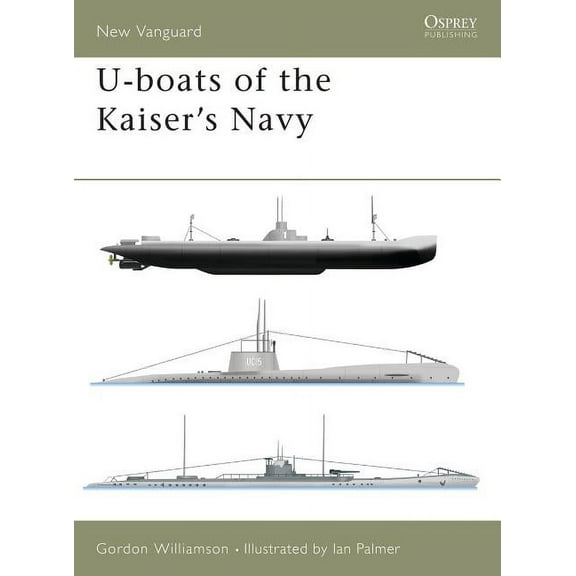
New Vanguard: U-boats of the Kaiser's Navy (Series #50) (Paperback) $19.27
 $1927current price $19.27
New Vanguard: U-boats of the Kaiser's Navy (Series #50) (Paperback)
Men-At-Arms (Osprey) The United States Navy 1914-18, Book 565, (Paperback) $15.50 Was $17.75
 $1550current price $15.50, Was $17.75$17.75
Men-At-Arms (Osprey) The United States Navy 1914-18, Book 565, (Paperback)
New Vanguard: Mark V Tank (Series #178) (Paperback) $19.01
 $1901current price $19.01
New Vanguard: Mark V Tank (Series #178) (Paperback)


Customer ratings & reviews

Related pages
- Naval Military History Books
- Civil War Memorabilia
- Veterans Military History Books
- 82 Airborne History
- Best Sellers In U.S Civil War Regimental Histories
- Napoleonic Wars Military History Books
- German Troops
- General Military History Books
- Aviation Military History Books
- Prussia Army
- Ww2 British Uniform
- Vehicles Military History Books