

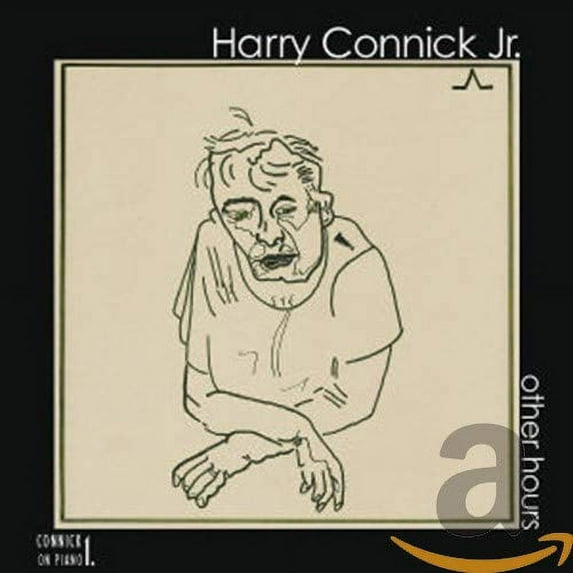
Hero image 0 of Other Hours Connick on Piano 1, 0 of 3
Other Hours Connick on Piano 1
(No ratings yet)
Key item features
Harry Connick, Jr. spent most of the '90s exploring second-line funk, making a name for himself in movies, and generally distancing himself from his classic crooner image. By the late '90s, it seemed as if the pianist/vocalist had lost the plot and it was hard to remember what made him such a phenomenal jazz talent. Then came 1997's romantic orchestral album To See You, followed by Connick's response to the neo-swing movement of the late '90s, Come by Me. Both of these albums featured Connick performing straight-ahead jazz that capitalized on his "American songbook"-style composing abilities and urbane, laconic vocal drawl. It was clear he was finally returning to his jazz roots with mature chops and a modern sophistication all his own. In this spirit, 2003's Other Hours featuring Charles "Ned" Goold on tenor sax, Neal Caine on bass, and Arthur Latin II on drums is Connick's return to playing straight-ahead, all original, modern instrumental jazz. Not since 1990's Lofty's Roach Souffle has the musician-turned-actor attempted this, and maybe he really shouldn't have. That is not to say Other Hours is bad; on the contrary, it showcases the entertainer's finely developed piano chops as well as his engaging compositional style. It's just that to deny such a strong aspect of his talent as his singing in favor of a more "serious" musical endeavor -- i.e., an instrumental jazz album -- is to somehow drain a bit of the fun and romance out of the proceedings. However, Connick's appearance at the Marsalis Family: A Jazz Celebration concert proved he still had the improvisational knack -- his solo turn sitting next to Ellis Marsalis was easily one of the night's highlights. In fact, the elder Marsalis' influence can be heard throughout the disc, especially on the post-bop set-opener "What a Waste." It's nice to hear the man some once thought of as a Sinatra-wannabe attacking some up-tempo swingers with a bumptious New Orleans glee. It is also refreshing to hear a few of his other influences come to the fore, as the pairing of Goold and Connick on tunes like "How About Tonight" brings to mind the Dave Brubeck quartet with Paul Desmond. Elsewhere, Connick oozes a Gershwin-like melancholy on "My Little World," waxes Thelonious Monk on "Dumb Luck," and delivers the bittersweet "'nuff said" ballad "Can't We Tell." OK, we get it, Harry Connick, Jr. is a legitimate jazz pianist, but one can only assume there are lyrics to some of these songs, and it would have been nice to hear them. ~ Matt Collar, All Music Guide
Specs
- PerformerHarry Connick Jr
- Music genreJazz, New Orleans Jazz
- Music subgenreJazz
- Media formatCD
- Original release dateOctober 21, 2006
- LanguageEnglish
Current price is USD$14.62
Price when purchased online
Out of stock
How do you want your item?
Out of stock
About this item
Product details
With a career thats cast him as New Orleans jazz revivalist crooner Actor and Broadway composer its enough to make one ask Whos the real Harry Connick Jr Indeed this warm foray into neo-bop small ensemble instrumental jazz may only complicate the question If nothing else its genesis alone is compelling tribute to Connicks restless creativity and seeming resistance to pigeon-holing All the songs here were written for (though not all used in) Thou Shalt Not the musicians ambitious 2001 Broadway adaptation of Emile Zolas Therese Raquin that scored him a Tony nomination if not stellar box office success This low-key recasting only underscores the materials utilitarian strengths and gives Connick a chance to display chops as polished as they are playfully reverent to their inspirations Dumb Luck My Little World and What a Waste recall the angular adventures of Monk while the lyricism of Ned Goolds sax on Cant We Tell and How About Tonight points toward the best of Brubeck/Desmond Melancholy and low-key as it may be its an album that gently underscores the jazz piano stylist corner of his resume And if this is the fruit of Connicks Broadway failure we can only hope he stumbles so gracefully in the future --Jerry McCulley
Harry Connick, Jr. spent most of the '90s exploring second-line funk, making a name for himself in movies, and generally distancing himself from his classic crooner image. By the late '90s, it seemed as if the pianist/vocalist had lost the plot and it was hard to remember what made him such a phenomenal jazz talent. Then came 1997's romantic orchestral album To See You, followed by Connick's response to the neo-swing movement of the late '90s, Come by Me. Both of these albums featured Connick performing straight-ahead jazz that capitalized on his "American songbook"-style composing abilities and urbane, laconic vocal drawl. It was clear he was finally returning to his jazz roots with mature chops and a modern sophistication all his own. In this spirit, 2003's Other Hours featuring Charles "Ned" Goold on tenor sax, Neal Caine on bass, and Arthur Latin II on drums is Connick's return to playing straight-ahead, all original, modern instrumental jazz. Not since 1990's Lofty's Roach Souffle has the musician-turned-actor attempted this, and maybe he really shouldn't have. That is not to say Other Hours is bad; on the contrary, it showcases the entertainer's finely developed piano chops as well as his engaging compositional style. It's just that to deny such a strong aspect of his talent as his singing in favor of a more "serious" musical endeavor -- i.e., an instrumental jazz album -- is to somehow drain a bit of the fun and romance out of the proceedings. However, Connick's appearance at the Marsalis Family: A Jazz Celebration concert proved he still had the improvisational knack -- his solo turn sitting next to Ellis Marsalis was easily one of the night's highlights. In fact, the elder Marsalis' influence can be heard throughout the disc, especially on the post-bop set-opener "What a Waste." It's nice to hear the man some once thought of as a Sinatra-wannabe attacking some up-tempo swingers with a bumptious New Orleans glee. It is also refreshing to hear a few of his other influences come to the fore, as the pairing of Goold and Connick on tunes like "How About Tonight" brings to mind the Dave Brubeck quartet with Paul Desmond. Elsewhere, Connick oozes a Gershwin-like melancholy on "My Little World," waxes Thelonious Monk on "Dumb Luck," and delivers the bittersweet "'nuff said" ballad "Can't We Tell." OK, we get it, Harry Connick, Jr. is a legitimate jazz pianist, but one can only assume there are lyrics to some of these songs, and it would have been nice to hear them. ~ Matt Collar, All Music Guide
info:
We aim to show you accurate product information. Manufacturers, suppliers and others provide what you see here, and we have not verified it.
Specifications
Performer
Harry Connick Jr
Music genre
Jazz, New Orleans Jazz
Music subgenre
Jazz
Media format
CD
Warranty
Warranty information
Please be aware that the warranty terms on items offered for sale by third party Marketplace sellers may differ from those displayed in this section (if any). To confirm warranty terms on an item offered for sale by a third party Marketplace seller, please use the 'Contact seller' feature on the third party Marketplace seller's information page and request the item's warranty terms prior to purchase.
Warnings
 WARNING: “⚠ WARNING: This product can expose you to some chemicals, which is known to the State of California to cause For more information, go to www.p65warnings.ca.gov.xn--ivg".
Customer ratings & reviews
0 ratings|0 reviews
This item does not have any reviews yet
