


For Love or Money : Care Provision in the United States (Paperback)
(No ratings yet)
Key item features
As women moved into the formal labor force in large numbers over the last forty years, care work – traditionally provided primarily by women – has increasingly shifted from the family arena to the market. Child care, elder care, care for the disabled, and home care now account for a growing segment of low-wage work in the United States, and demand for such work will only increase as the baby boom generation ages. But the expanding market provision of care has created new economic anxieties and raised pointed questions: Why do women continue to do most care work, both paid and unpaid? Why does care work remain low paid when the quality of care is so highly valued? How effective and equitable are public policies toward dependents in the United States? In For Love and Money, an interdisciplinary team of experts explores the theoretical dilemmas of care provision and provides an unprecedented empirical overview of the looming problems for the care sector in the United States. Drawing on diverse disciplines and areas of expertise, For Love and Money develops an innovative framework to analyze existing care policies and suggest potential directions for care policy and future research. Contributors Paula England, Nancy Folbre, and Carrie Leana explore the range of motivations for caregiving, such as familial responsibility or limited job prospects, and why both love and money can be efficient motivators. They also examine why women tend to specialize in the provision of care, citing factors like job discrimination, social pressure, or the personal motivation to provide care reported by many women. Suzanne Bianchi, Nancy Folbre, and Douglas Wolf estimate how much unpaid care is being provided in the United States and show that low-income families rely more on unpaid family members for their child and for elder care than do affluent families. With low wages and little savings, these families often find it difficult to provide care and earn enough money to stay afloat. Candace Howes, Carrie Leana and Kristin Smith investigate the dynamics within the paid care sector and find problematic wages and working conditions, including high turnover, inadequate training and a “pay penalty” for workers who enter care jobs. These conditions have consequences: poor job quality in child care and adult care also leads to poor care quality. In their chapters, Janet Gornick, Candace Howes and Laura Braslow provide a systematic inventory of public policies that directly shape the provision of care for children or for adults who need personal assistance, such as family leave, child care tax credits and Medicaid-funded long-term care. They conclude that income and variations in states’ policies are the greatest factors determining how well, and for whom, the current system works. Despite the demand for care work, very little public policy attention has been devoted to it. Only three states, for example, have enacted paid family leave programs. Paid or unpaid, care costs those who provide it. At the heart of For Love and Money is the understanding that the quality of care work in the United States matters not only for those who receive care but also for society at large, which benefits from the nurturance and maintenance of human capabilities. As care work gravitates from the family to the formal economy, this volume clarifies the pressing need for America to fundamentally rethink its care policies and increase public investment in this increasingly crucial sector.
Specs
- Book formatPaperback
- Fiction/nonfictionNon-Fiction
- Publication dateSeptember, 2012
- Pages304
- Number in series1
- EditionPaperback
Current price is USD$45.00
Price when purchased online
Out of stock
How do you want your item?
Out of stock
About this item
Product details
9780871543530. New condition. Trade paperback. Language: English. Pages: 304. Trade paperback (US). Glued binding. 304 p. Contains: Tables, black & white, Figures. As women moved into the formal labor force in large numbers over the last forty years, care work - traditionally provided primarily by women - has increasingly shifted from the family arena to the market. Child care, elder care, care for the disabled, and home care now account for a growing segment of low-wage work in the United States, and demand for such work will only increase as the baby boom generation ages. But the expanding market provision of care has created new economic anxieties and raised pointed questions: Why do women continue to do most care work, both paid and unpaid? Why does care work remain low paid when the quality of care is so highly valued? How effective and equitable are public policies toward dependents in the United States? In For Love and Money, an interdisciplinary team of experts explores the theoretical dilemmas of care provision and provides an unprecedented empirical overview of the looming problems for the care sector in the United States. Drawing on diverse disciplines and areas of expertise, For Love and Money develops an innovative framework to analyze existing care policies and suggest potential directions for care policy and future research. Contributors Paula England, Nancy Folbre, and Carrie Leana explore the range of motivations for caregiving, such as familial responsibility or limited job prospects, and why both love and money can be efficient motivators. They also examine why women tend to specialize in the provision of care, citing factors like job discrimination, social pressure, or the personal motivation to provide care reported by many women. Suzanne Bianchi, Nancy Folbre, and Douglas Wolf estimate how much unpaid care is being provided in the United States and show that low-income families rely more on unpaid family members for their child and for elder care than do affluent families. With low wages and little savings, these families often find it difficult to provide care and earn enough money to stay afloat. Candace Howes, Carrie Leana and Kristin Smith investigate the dynamics within the paid care sector and find problematic wages and working conditions, including high turnover, inadequate training and a "pay penalty" for workers who enter care jobs. These conditions have consequences: poor job quality in child care and adult care also leads to poor care quality. In their chapters, Janet Gornick, Candace Howes and Laura Braslow provide a systematic inventory of public policies that directly shape the provision of care for children or for adults who need personal assistance, such as family leave, child care tax credits and Medicaid-funded long-term care. They conclude that income and variations in states' policies are the greatest factors determining how well, and for whom, the current system works. Despite the demand for care work, very little public policy attention has been devoted to it. Only three states, for example, have enacted paid family leave programs. Paid or unpaid, care costs those who provide it. At the heart of For Love and Money is the understanding that the quality of care work in the United States matters not only for those who receive care but also for society at large, which benefits from the nurturance and maintenance of human capabilities. As care work gravitates from the family to the formal economy, this volume clarifies the pressing need for America to fundamentally rethink its care policies and increase public investment in this increasingly crucial sector.
As women moved into the formal labor force in large numbers over the last forty years, care work – traditionally provided primarily by women – has increasingly shifted from the family arena to the market. Child care, elder care, care for the disabled, and home care now account for a growing segment of low-wage work in the United States, and demand for such work will only increase as the baby boom generation ages. But the expanding market provision of care has created new economic anxieties and raised pointed questions: Why do women continue to do most care work, both paid and unpaid? Why does care work remain low paid when the quality of care is so highly valued? How effective and equitable are public policies toward dependents in the United States? In For Love and Money, an interdisciplinary team of experts explores the theoretical dilemmas of care provision and provides an unprecedented empirical overview of the looming problems for the care sector in the United States. Drawing on diverse disciplines and areas of expertise, For Love and Money develops an innovative framework to analyze existing care policies and suggest potential directions for care policy and future research. Contributors Paula England, Nancy Folbre, and Carrie Leana explore the range of motivations for caregiving, such as familial responsibility or limited job prospects, and why both love and money can be efficient motivators. They also examine why women tend to specialize in the provision of care, citing factors like job discrimination, social pressure, or the personal motivation to provide care reported by many women. Suzanne Bianchi, Nancy Folbre, and Douglas Wolf estimate how much unpaid care is being provided in the United States and show that low-income families rely more on unpaid family members for their child and for elder care than do affluent families. With low wages and little savings, these families often find it difficult to provide care and earn enough money to stay afloat. Candace Howes, Carrie Leana and Kristin Smith investigate the dynamics within the paid care sector and find problematic wages and working conditions, including high turnover, inadequate training and a “pay penalty” for workers who enter care jobs. These conditions have consequences: poor job quality in child care and adult care also leads to poor care quality. In their chapters, Janet Gornick, Candace Howes and Laura Braslow provide a systematic inventory of public policies that directly shape the provision of care for children or for adults who need personal assistance, such as family leave, child care tax credits and Medicaid-funded long-term care. They conclude that income and variations in states’ policies are the greatest factors determining how well, and for whom, the current system works. Despite the demand for care work, very little public policy attention has been devoted to it. Only three states, for example, have enacted paid family leave programs. Paid or unpaid, care costs those who provide it. At the heart of For Love and Money is the understanding that the quality of care work in the United States matters not only for those who receive care but also for society at large, which benefits from the nurturance and maintenance of human capabilities. As care work gravitates from the family to the formal economy, this volume clarifies the pressing need for America to fundamentally rethink its care policies and increase public investment in this increasingly crucial sector.
info:
We aim to show you accurate product information. Manufacturers, suppliers and others provide what you see here, and we have not verified it.
Specifications
Book format
Paperback
Fiction/nonfiction
Non-Fiction
Genre
Political & Social Sciences
Publication date
September, 2012
Warranty
Warranty information
Please be aware that the warranty terms on items offered for sale by third party Marketplace sellers may differ from those displayed in this section (if any). To confirm warranty terms on an item offered for sale by a third party Marketplace seller, please use the 'Contact seller' feature on the third party Marketplace seller's information page and request the item's warranty terms prior to purchase.
Similar items you might like
Based on what customers bought
Experiments in Economics: Playing Fair with Money, (Paperback) $52.22
 $5222current price $52.22
Experiments in Economics: Playing Fair with Money, (Paperback)
Behavioural Economics and Finance, (Paperback) $80.57
 $8057current price $80.57
Behavioural Economics and Finance, (Paperback)
Protectionism and World Welfare, (Paperback) $34.95
 $3495current price $34.95
Protectionism and World Welfare, (Paperback)
Love Money, Money Loves You: A Conversation With The Energy Of Money, (Paperback) $21.61
 $2161current price $21.61
Love Money, Money Loves You: A Conversation With The Energy Of Money, (Paperback)
Family and Public Policy: Valuing Children: Rethinking the Economics of the Family (Paperback) $40.99
 $4099current price $40.99
Family and Public Policy: Valuing Children: Rethinking the Economics of the Family (Paperback)
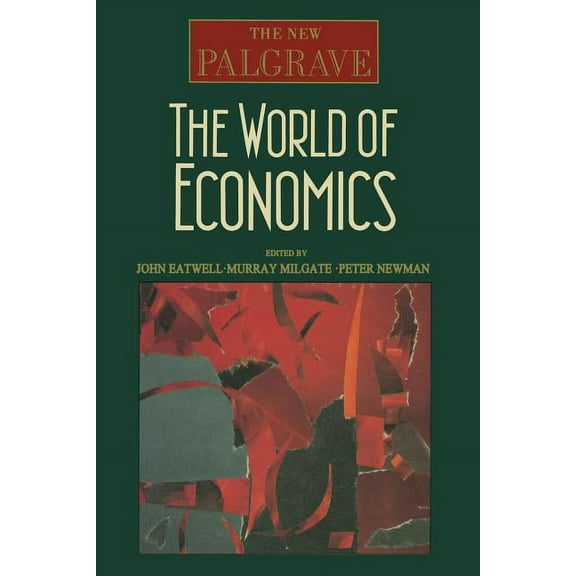
New Palgrave The World of Economics, (Paperback) $36.66
 $3666current price $36.66
New Palgrave The World of Economics, (Paperback)
Economy, Society, and Education: Learning from the COVID-19 Crisis, (Paperback) $33.70 Was $40.78
 $3370current price $33.70, Was $40.78$40.78
Economy, Society, and Education: Learning from the COVID-19 Crisis, (Paperback)
Best seller The Psychology of Money: Timeless Lessons on Wealth, Greed, and Happiness (Paperback) $7.81 Was $9.64
Best seller $781current price $7.81, Was $9.64$9.64
The Psychology of Money: Timeless Lessons on Wealth, Greed, and Happiness (Paperback)
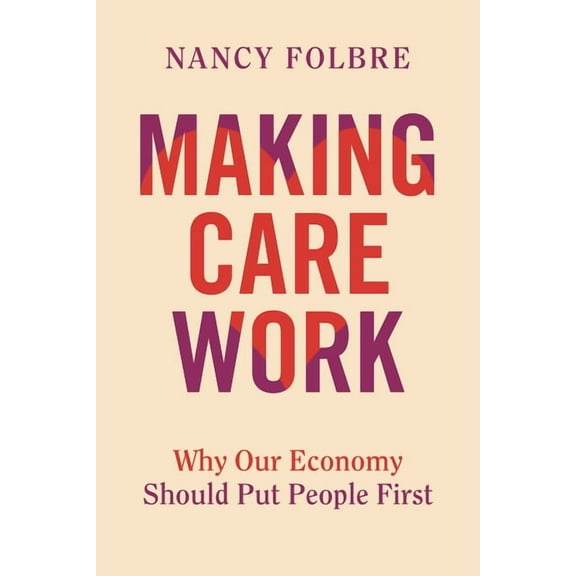
1474.5 out of 5 Stars. 147 reviewsMaking Care Work: Why Our Economy Should Put People First, (Hardcover) $23.35 Was $27.72
 $2335current price $23.35, Was $27.72$27.72
Making Care Work: Why Our Economy Should Put People First, (Hardcover)
Mismanaged Money in American Healthcare: Problems and Solutions, (Paperback) $38.45
 $3845current price $38.45
Mismanaged Money in American Healthcare: Problems and Solutions, (Paperback)
The Fractured College Prep Pipeline: Hoarding Opportunities to Learn, (Paperback) $38.07
 $3807current price $38.07
The Fractured College Prep Pipeline: Hoarding Opportunities to Learn, (Paperback)
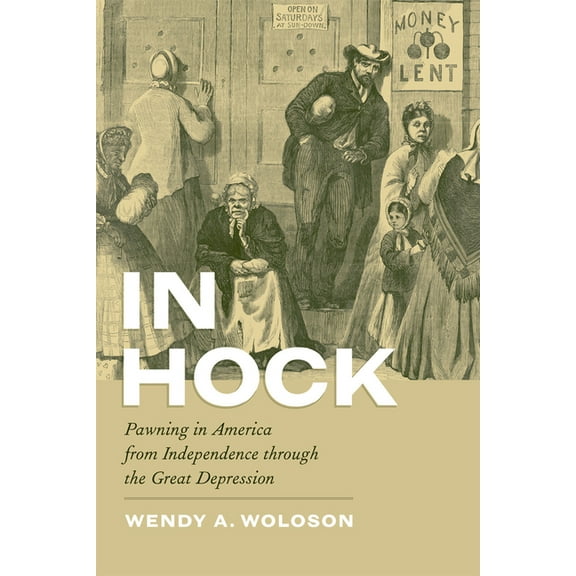
In Hock: Pawning in America from Independence Through the Great Depression, (Paperback) $33.78 Was $39.28
 $3378current price $33.78, Was $39.28$39.28
In Hock: Pawning in America from Independence Through the Great Depression, (Paperback)
The Political Economy of Predation, (Paperback) $44.64
 $4464current price $44.64
The Political Economy of Predation, (Paperback)
Welfare and Party Politics in Latin America, (Paperback) $45.00
 $4500current price $45.00
Welfare and Party Politics in Latin America, (Paperback)
Inventors and Money-Makers: Relations Between Economics and Psychology (Paperback) $33.40
 $3340current price $33.40
Inventors and Money-Makers: Relations Between Economics and Psychology (Paperback)
European Macroeconomics, (Paperback) $50.27
 $5027current price $50.27
European Macroeconomics, (Paperback)
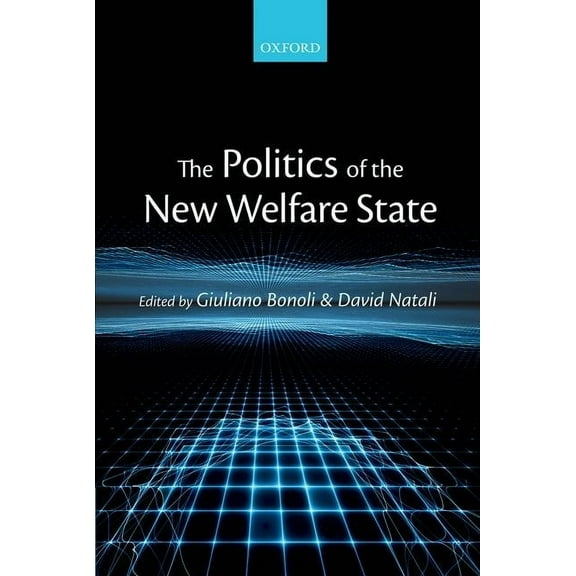
The Politics of the New Welfare State, (Paperback) $46.39
 $4639current price $46.39
The Politics of the New Welfare State, (Paperback)
The New Maids: Transnational Women and the Care Economy, (Paperback) $42.02
 $4202current price $42.02
The New Maids: Transnational Women and the Care Economy, (Paperback)
Studies in Social Medicine Wages of Sickness, (Paperback) $42.50
 $4250current price $42.50
Studies in Social Medicine Wages of Sickness, (Paperback)

Customer ratings & reviews
0 ratings|0 reviews
This item does not have any reviews yet
