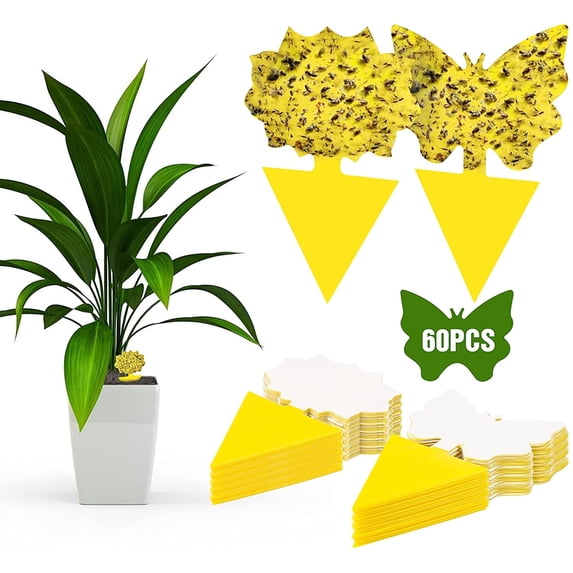
Tiny black flies buzzing around your houseplants. You water your monstera – a cloud of gnats rises up.
Fungus gnats. They're annoying. They're persistent. And they love moist potting soil.
These yellow sticky traps are the simple, non-toxic solution.
How they work: Bright yellow attracts the gnats. They land on the sticky surface. They can't fly away. They die on the trap.
Why they work: Fungus gnats have a life cycle – adults lay eggs in soil, larvae hatch, new adults emerge. Sticky traps catch the adults, breaking the cycle. Fewer eggs. Fewer gnats. Healthier plants.
60 traps per pack. That's enough for a house full of plants – or a greenhouse.
Where to use them:
Houseplants – insert stick directly into the pot
Greenhouses – hang or stick among plants
Seed starting area – protect young seedlings
Patio or balcony – outdoor plants too
Kitchen – fruit fly control near fruit bowls
Garden – protect vegetables and flowers
Which pests they catch:
Fungus gnats (the tiny ones around houseplants)
Fruit flies (around ripe fruit)
Whiteflies
Aphids (some species)
Other small flying insects
How to use (per manufacturer instructions):
Remove a trap from the pack
The bottom is sharp/pointed – insert directly into plant soil
Position the yellow card above the soil surface
Replace when covered with gnats (every few weeks)
No ropes, no hooks, no tape. Just push into the soil and go.
Safe for homes with: Kids, cats, dogs, birds, reptiles. No poison. Do not smoke. Just sticky paper.
Why yellow? Science: Yellow is the color most flying pests are attracted to. It's not random – it's entomology.
Perfect for: Plant parents, indoor gardeners, greenhouse owners, anyone with fungus gnats, or anyone who wants to protect their plants without harsh chemicals.
No written warranty as listed. Contact seller for return policy.
Heads up: These traps are sticky – very sticky. Keep away from hair, curtains, and pet tails. Place carefully. If a trap gets covered in dust or caught gnats, replace it. For severe infestations, use with other methods (let soil dry out between waterings, use bottom watering, add beneficial nematodes).