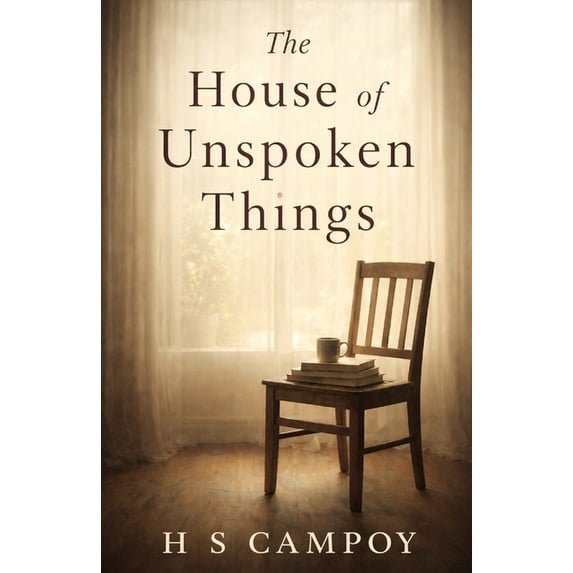
The House of Unspoken Things is a literary novel about silence, endurance, and the systems that depend on those who do not announce themselves.
Cristina grows up learning that attention does not always arrive as care, and that silence can function as both protection and liability. As she moves through education, marriage, motherhood, and work, she becomes adept at adjusting to structures not designed with her in mind - absorbing responsibility, translating between people and institutions, and maintaining coherence where it would otherwise fail.
The novel follows her life not through dramatic events, but through accumulation: small recalibrations, unacknowledged labour, and the steady management of imbalance. Marriage becomes another system to stabilise. Work becomes a place where cause and effect still align. Motherhood sharpens vigilance, particularly as Cristina learns to navigate a world that mistakes uniformity for fairness when it comes to her son.
Rather than offering redemption or resolution, The House of Unspoken Things traces continuity - how a woman persists without spectacle, how responsibility intensifies without being named, and how silence evolves from armour into space.
Written with precision and restraint, the novel resists therapeutic framing and refuses easy consolation. It is not a story about overcoming silence, but about standing exactly within it - and learning when endurance is necessary, and when it is no longer required.
This is a book for readers of contemporary literary fiction who value clarity over sentiment, structure over plot, and attention to what is usually left unsaid.