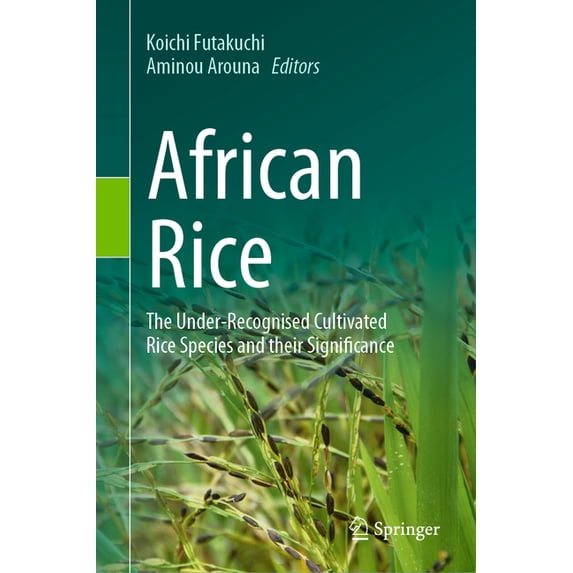
Rice (Oryza sativa L.) is one of the world's major staple food crops. Domestication of rice (species of genus Oryza) likely occurred independently three times, in Asia, Africa and South America. The rice which originated in Asia (O. sativa L.) became a global food crop, and today supports half the world's population. Due to its importance for global food security, Asian rice has been widely studied. Yet, despite the importance of Asian Rice, African Rice (glaberrima Steud), is still cultivated and consumed in many African countries. Although, African rice has some unfavorable traits leading to low yields, it is better suited for environments such as deep-water lowlands and in drought-prone regions.
This book provides a comprehensive resource on Asian rice's lesser-known sister African Rice. The book offers valuable information on African Rice as a food crop and as a genetic resource for Asian rice. African rice has the same AA genome as Asian rice and, although interspecies crosses are rare, several traits of the African rice species have been used to improve Asian rice. This book details successful cases of such breeding strategies and explores the potential of African Rice as genomic resource for Asian rice. The value of African rice is presented from both a biophysical aspect as well as the socio-economic aspects. The book also details the domestication of African rice as well as its historical dispersal process and current geographical distributions through anthropological, historical, phylogenetic, and genetic conservation studies.