


The New Book of Plots : Constructing Engaging Narratives for Oral and Written Storytelling (Paperback)
Key item features
In the space of the thirty-some years I have called myself a storyteller, the balance of what I tell has shifted from children’s stories and traditional folk and fairy tales told in schools, churches, and community centers to stories drawn directly from my own experiences. But I also understand that by adapting and re-imagining traditional folk and fairy tale material, you can provide a point of entry for contemporary listeners to experience, as psychologist Bruno Bettelheim has suggested in his book The Uses of Enchantment, the continuing power of the old stories to speak to the imagination and heart.
Wanting to make a connection between the older stories and our existential circumstance, I sought to re-interpret folk and fairy tales by placing them in a more contemporary context. The confusing Black Forest of the Brothers Grimm became the crowded shopping mall. Rapunzel’s mother sought a more familiar drug than the painkilling herbs of the witch’s garden. I also created stories that were in the style of the older folk and fairy tales. One featured a lowly cucumber plant that, after consuming radioactive water and junk-food compost, became the glowing, green Godzilla of pickles. Another featured a boy named Jack, who found fame and fortune racing inner-city cockroaches.
In creating and performing original stories and reimagined folk tales, as well as teaching stories to students of all ages, it has become clear to me that how we tell the story, as much as why, is at the very heart of the art. By “how,” I do not mean how we use voice and gesture, etc., but how we organize stories to get across their meanings to an audience.
There are two central facts at the heart of the oral story. The first is that it begins when the teller begins and ends when the teller ends it, though I could argue that it actually ends when the audience dismisses it. This is fundamentally different from the written story, where a reader can go back and read the same words again. With the spoken word, we are in the moment. Even if we could ask the teller to go back and say something again, the very act of asking would alter the way in which the information is conveyed to us. This leads directly to the second basic fact: the act of telling is an expression of the relationship of the teller to the audience. We always tell to someone, even if it is to ourselves. It is incumbent upon us to recognize that the choice we make about how we tell a story to a given audience is as much about our understanding of who that audience is as it is about what we are saying to the audience.
It is this crucial understanding of how the narrative is shaped and the choices we make as tellers to share a particular version of a story with a particular audience that I wish to explore with you. Whether we are working with a live audience in performance or with an imagined one while typing away on our laptops, the creation of compelling fiction and non-fiction begins with how to frame the story.
This book is for storytellers and would-be storytellers, whether you call yourself a writer, minister, politician, journalist, lawyer, teacher, therapist, or street-corner b.s.’er. Whatever the name, the benefit you derive from the application of this material to your creative process will come from understanding how narrative is shaped and making conscious decisions about shaping that narrative content. This book was developed in workshops and classes I’ve conducted with storytellers and writers since 1986. In the course of those years, this teaching practice has refined my thinking and improved my ability to help participants discover new approaches to creating powerful, authentic, and entertaining stories.
Much of what I say will be framed around the creation of stories as oral performance, but the concepts and exercises I suggest apply to written material as well. Whether the stories are oral or written, this book is about three things: the choice of an appropriate narrative form to provide the story’s structure, the choice of an appropriate point of view and timeframe to support the story’s emotional arc, and how those choices help or hinder the transmission of the meaning of the story to an audience.
Specs
- Book formatPaperback
- Fiction/nonfictionNon-Fiction
- GenreLiterature & Fiction
- Pub date2012-09-28
- Pages188
- Reading levelGrade 8
- Free shipping
 Free 30-day returns
How do you want your item?


About this item
Product details
In the space of the thirty-some years I have called myself a storyteller, the balance of what I tell has shifted from children's stories and traditional folk and fairy tales told in schools, churches, and community centers to stories drawn directly from my own experiences. But I also understand that by adapting and re-imagining traditional folk and fairy tale material, you can provide a point of entry for contemporary listeners to experience, as psychologist Bruno Bettelheim has suggested in his book The Uses of Enchantment, the continuing power of the old stories to speak to the imagination and heart.
Wanting to make a connection between the older stories and our existential circumstance, I sought to re-interpret folk and fairy tales by placing them in a more contemporary context. The confusing Black Forest of the Brothers Grimm became the crowded shopping mall. Rapunzel's mother sought a more familiar drug than the painkilling herbs of the witch's garden. I also created stories that were in the style of the older folk and fairy tales. One featured a lowly cucumber plant that, after consuming radioactive water and junk-food compost, became the glowing, green Godzilla of pickles. Another featured a boy named Jack, who found fame and fortune racing inner-city cockroaches.
In creating and performing original stories and reimagined folk tales, as well as teaching stories to students of all ages, it has become clear to me that how we tell the story, as much as why, is at the very heart of the art. By "how," I do not mean how we use voice and gesture, etc., but how we organize stories to get across their meanings to an audience.
There are two central facts at the heart of the oral story. The first is that it begins when the teller begins and ends when the teller ends it, though I could argue that it actually ends when the audience dismisses it. This is fundamentally different from the written story, where a reader can go back and read the same words again. With the spoken word, we are in the moment. Even if we could ask the teller to go back and say something again, the very act of asking would alter the way in which the information is conveyed to us. This leads directly to the second basic fact: the act of telling is an expression of the relationship of the teller to the audience. We always tell to someone, even if it is to ourselves. It is incumbent upon us to recognize that the choice we make about how we tell a story to a given audience is as much about our understanding of who that audience is as it is about what we are saying to the audience.
It is this crucial understanding of how the narrative is shaped and the choices we make as tellers to share a particular version of a story with a particular audience that I wish to explore with you. Whether we are working with a live audience in performance or with an imagined one while typing away on our laptops, the creation of compelling fiction and non-fiction begins with how to frame the story.
This book is for storytellers and would-be storytellers, whether you call yourself a writer, minister, politician, journalist, lawyer, teacher, therapist, or street-corner b.s.'er. Whatever the name, the benefit you derive from the application of this material to your creative process will come from understanding how narrative is shaped and making conscious decisions about shaping that narrative content. This book was developed in workshops and classes I've conducted with storytellers and writers since 1986. In the course of those years, this teaching practice has refined my thinking and improved my ability to help participants discover new approaches to creating powerful, authentic, and entertaining stories.
Much of what I say will be framed around the creation of stories as oral performance, but the concepts and exercises I suggest apply to written material as well. Whether the stories are oral or written, this book is
In the space of the thirty-some years I have called myself a storyteller, the balance of what I tell has shifted from children’s stories and traditional folk and fairy tales told in schools, churches, and community centers to stories drawn directly from my own experiences. But I also understand that by adapting and re-imagining traditional folk and fairy tale material, you can provide a point of entry for contemporary listeners to experience, as psychologist Bruno Bettelheim has suggested in his book The Uses of Enchantment, the continuing power of the old stories to speak to the imagination and heart.
Wanting to make a connection between the older stories and our existential circumstance, I sought to re-interpret folk and fairy tales by placing them in a more contemporary context. The confusing Black Forest of the Brothers Grimm became the crowded shopping mall. Rapunzel’s mother sought a more familiar drug than the painkilling herbs of the witch’s garden. I also created stories that were in the style of the older folk and fairy tales. One featured a lowly cucumber plant that, after consuming radioactive water and junk-food compost, became the glowing, green Godzilla of pickles. Another featured a boy named Jack, who found fame and fortune racing inner-city cockroaches.
In creating and performing original stories and reimagined folk tales, as well as teaching stories to students of all ages, it has become clear to me that how we tell the story, as much as why, is at the very heart of the art. By “how,” I do not mean how we use voice and gesture, etc., but how we organize stories to get across their meanings to an audience.
There are two central facts at the heart of the oral story. The first is that it begins when the teller begins and ends when the teller ends it, though I could argue that it actually ends when the audience dismisses it. This is fundamentally different from the written story, where a reader can go back and read the same words again. With the spoken word, we are in the moment. Even if we could ask the teller to go back and say something again, the very act of asking would alter the way in which the information is conveyed to us. This leads directly to the second basic fact: the act of telling is an expression of the relationship of the teller to the audience. We always tell to someone, even if it is to ourselves. It is incumbent upon us to recognize that the choice we make about how we tell a story to a given audience is as much about our understanding of who that audience is as it is about what we are saying to the audience.
It is this crucial understanding of how the narrative is shaped and the choices we make as tellers to share a particular version of a story with a particular audience that I wish to explore with you. Whether we are working with a live audience in performance or with an imagined one while typing away on our laptops, the creation of compelling fiction and non-fiction begins with how to frame the story.
This book is for storytellers and would-be storytellers, whether you call yourself a writer, minister, politician, journalist, lawyer, teacher, therapist, or street-corner b.s.’er. Whatever the name, the benefit you derive from the application of this material to your creative process will come from understanding how narrative is shaped and making conscious decisions about shaping that narrative content. This book was developed in workshops and classes I’ve conducted with storytellers and writers since 1986. In the course of those years, this teaching practice has refined my thinking and improved my ability to help participants discover new approaches to creating powerful, authentic, and entertaining stories.
Much of what I say will be framed around the creation of stories as oral performance, but the concepts and exercises I suggest apply to written material as well. Whether the stories are oral or written, this book is about three things: the choice of an appropriate narrative form to provide the story’s structure, the choice of an appropriate point of view and timeframe to support the story’s emotional arc, and how those choices help or hinder the transmission of the meaning of the story to an audience.
Specifications
Book format
Fiction/nonfiction
Genre
Pub date
Warranty
Warranty information
Similar items you might like
Based on what customers bought
Let's Talk Podcasting: The Essential Guide to Doing it Right, (Paperback) $18.12
 $1812current price $18.12
Let's Talk Podcasting: The Essential Guide to Doing it Right, (Paperback)
Tell Me My Story: Challenging the Narrative of Service Before Self, (Paperback) $18.15
 $1815current price $18.15
Tell Me My Story: Challenging the Narrative of Service Before Self, (Paperback)
Crafting Your Pitch, A Storytelling Framework, (Paperback) $17.92
 $1792current price $17.92
Crafting Your Pitch, A Storytelling Framework, (Paperback)
The Historian, (Paperback) $10.67
 $1067current price $10.67
The Historian, (Paperback)
4133.6 out of 5 Stars. 413 reviewsDiscover Your Amazing Story, (Paperback) $13.27
 $1327current price $13.27
Discover Your Amazing Story, (Paperback)
Conversations with Pirie: 30 Stories of People Who Reinvented Themselves, (Paperback) $16.95
 $1695current price $16.95
Conversations with Pirie: 30 Stories of People Who Reinvented Themselves, (Paperback)
How to Write a Book: Proven Strategies for Aspiring Authors, (Paperback) $11.99
 $1199current price $11.99
How to Write a Book: Proven Strategies for Aspiring Authors, (Paperback)
Storytelling for Pantsers: How to Write and Revise Your Novel Without an Outline, (Paperback) $10.59
 2 optionsAvailable in additional 2 options$1059current price $10.59
Storytelling for Pantsers: How to Write and Revise Your Novel Without an Outline, (Paperback)
Let the Story Do the Work: The Art of Storytelling for Business Success, (Paperback) $9.98
 $998current price $9.98
Let the Story Do the Work: The Art of Storytelling for Business Success, (Paperback)
101 Best Scenes Ever Written: A Romp Through Literature for Writers and Readers, (Paperback) $13.41
 $1341current price $13.41
101 Best Scenes Ever Written: A Romp Through Literature for Writers and Readers, (Paperback)
The Story You Tell Yourself: How to Change Your Inner Narrative; or, How to Read yourself Like a Book, (Paperback) $14.97
 $1497current price $14.97
The Story You Tell Yourself: How to Change Your Inner Narrative; or, How to Read yourself Like a Book, (Paperback)
From Plot to Narrative (Paperback) $13.53
 2 optionsAvailable in additional 2 options$1353current price $13.53
From Plot to Narrative (Paperback)
Histoire: La Situation (Paperback) $13.95
 $1395current price $13.95
Histoire: La Situation (Paperback)
The Body in Narrative: A Writer's Guide to Character Reactions, (Paperback) $19.05
 $1905current price $19.05
The Body in Narrative: A Writer's Guide to Character Reactions, (Paperback)
Writing the Great American Romance Novel (Paperback) $17.25
 $1725current price $17.25
Writing the Great American Romance Novel (Paperback)
Water Tales: Stories of the Coast, (Paperback) $15.62
 $1562current price $15.62
Water Tales: Stories of the Coast, (Paperback)
Open This Book: The Art of Storytelling for Aspiring Thought Leaders, (Paperback) $16.56
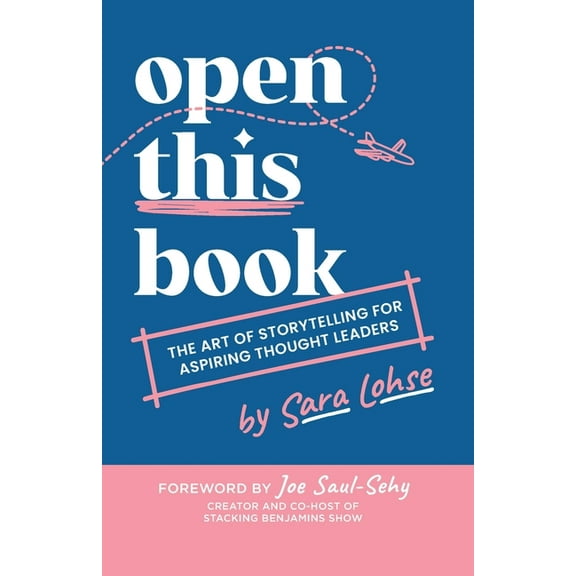 $1656current price $16.56
Open This Book: The Art of Storytelling for Aspiring Thought Leaders, (Paperback)
HowExpert Guide to NaNoWriMo : 101 Tips to Learn How to Develop Characters, Plots, and Storylines to Write a Novel in a Month (Paperback) $21.66
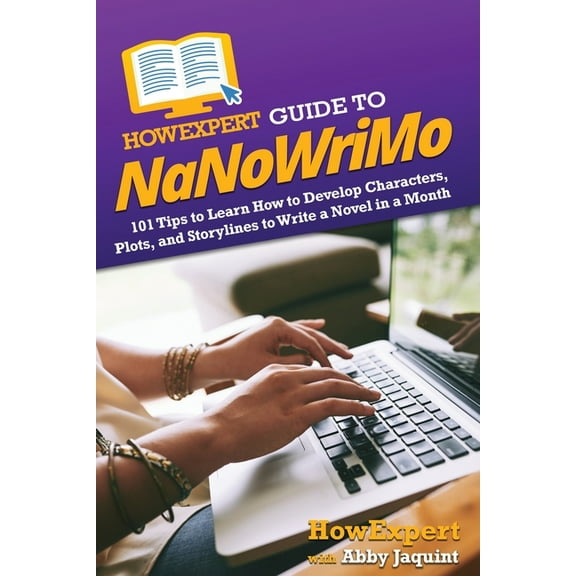 $2166current price $21.66
HowExpert Guide to NaNoWriMo : 101 Tips to Learn How to Develop Characters, Plots, and Storylines to Write a Novel in a Month (Paperback)
Telling Your Story: A Guide to Writing Your Memoir Stories, (Paperback) $14.99
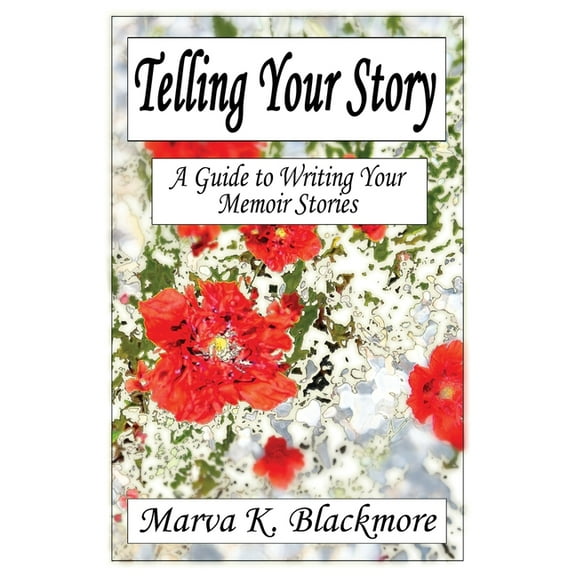 $1499current price $14.99
Telling Your Story: A Guide to Writing Your Memoir Stories, (Paperback)
The Practice: Embodying a Transpersonal Point of View and Writing Your Own Story, (Paperback) $21.67
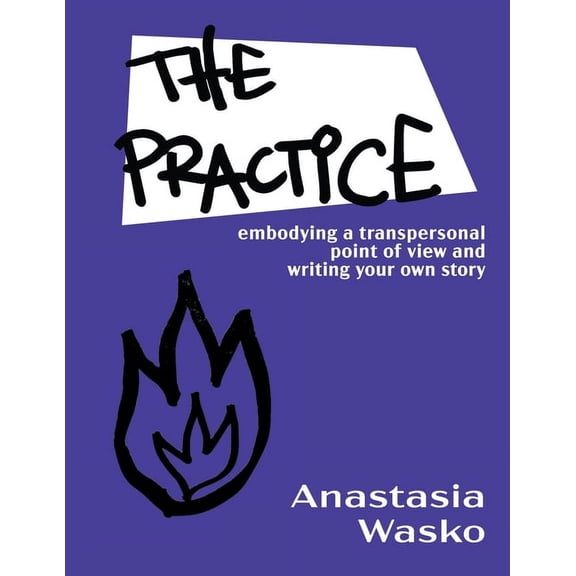 $2167current price $21.67
The Practice: Embodying a Transpersonal Point of View and Writing Your Own Story, (Paperback)
