


What the River Carries : Encounters with the Mississippi, Missouri, and Platte (Paperback)
(No ratings yet)
Key item features
In this informed and lyrical collection of interwoven essays, Lisa Knopp explores the physical and cultural geography of the Mississippi, Missouri, and Platte, rivers she has come to understand and cherish. At the same time, she contemplates how people experience landscape, identifying three primary roles of environmental perception: the insider, the outsider, and the outsider seeking to become an insider. Viewing the waterways through these approaches, she searches for knowledge and meaning.
Because Knopp was born and raised just a few blocks away, she considers the Mississippi from the perspective of a native resident, a “dweller in the land.” She revisits places she has long known: Nauvoo, Illinois, the site of two nineteenth-century utopias, one Mormon, one Icarian; Muscatine, Iowa, once the world’s largest manufacturer of pearl (mussel shell) buttons; and the mysterious prehistoric bird- and bear-shaped effigy mounds of northeastern Iowa. On a downriver trip between the Twin Cities and St. Louis, she meditates on what can be found in Mississippi river water—state lines, dissolved oxygen, smallmouth bass, corpses, family history, wrecked steamboats, mayfly nymphs, toxic perfluorinated chemicals, philosophies.
Knopp first encountered the Missouri as a tourist and became acquainted with it through literary and historical documents, as well as stories told by longtime residents. Her journey includes stops at Fort Bellefontaine, where Lewis and Clark first slept on their sojourn to the Pacific; Little Dixie, Missouri’s slaveholding, hemp-growing region, as revealed through the life of Jesse James’s mother; Fort Randall Dam and Lake Francis Case, the construction of which destroyed White Swan on the Yankton Sioux Reservation; and places that produced unique musical responses to the river, including Native American courting flutes, indie rock, Missouri River valley fiddling, Prohibition-era jazz jam sessions, and German folk music.
Knopp’s relationship with the Platte is marked by intentionality: she settled nearby and chose to develop deep and lasting connections over twenty years’ residence. On this adventure, she ponders the half-million sandhill cranes that pass through Nebraska each spring, the ancient varieties of Pawnee corn growing at the Great Platte River Road Archway Monument, a never-broken tract of tallgrass prairie, the sugar beet industry, and the changes in the river brought about by the demands of irrigation.
In the final essay, Knopp undertakes the science of river meanders, consecutive loops of water moving in opposite directions, which form around obstacles but also develop in the absence of them. What initiates the turning that results in a meander remains a mystery. Such is the subtle and interior process of knowing and loving a place. What the River Carries asks readers to consider their own relationships with landscape and how one can most meaningfully and responsibly dwell on the earth’s surface.
Winner of the 2013 Nebraska Book Award for Nonfiction
Honorable Mention for the Association for Literature and the Environment's 2013 Environmental Creative Nonfiction Award
Winner of the 2013 Nebraska Book Award for Nonfiction
Honorable Mention for the Association for Literature and the Environment's 2013 Environmental Creative Nonfiction Award
Specs
- Book formatPaperback
- Fiction/nonfictionNon-Fiction
- GenreNonfiction
- Publication dateMay, 2012
- Pages248
- Age range0 - 99 Years
Current price is USD$18.95
Price when purchased online
Out of stock
How do you want your item?
Out of stock
About this item
Product details
In this informed and lyrical collection of interwoven essays, Lisa Knopp explores the physical and cultural geography of the Mississippi, Missouri, and Platte, rivers she has come to understand and cherish. At the same time, she contemplates how people experience landscape, identifying three primary roles of environmental perception: the insider, the outsider, and the outsider seeking to become an insider. Viewing the waterways through these approaches, she searches for knowledge and meaning.
Because Knopp was born and raised just a few blocks away, she considers the Mississippi from the perspective of a native resident, a "dweller in the land." She revisits places she has long known: Nauvoo, Illinois, the site of two nineteenth-century utopias, one Mormon, one Icarian; Muscatine, Iowa, once the world's largest manufacturer of pearl (mussel shell) buttons; and the mysterious prehistoric bird- and bear-shaped effigy mounds of northeastern Iowa. On a downriver trip between the Twin Cities and St. Louis, she meditates on what can be found in Mississippi river water--state lines, dissolved oxygen, smallmouth bass, corpses, family history, wrecked steamboats, mayfly nymphs, toxic perfluorinated chemicals, philosophies.
Knopp first encountered the Missouri as a tourist and became acquainted with it through literary and historical documents, as well as stories told by longtime residents. Her journey includes stops at Fort Bellefontaine, where Lewis and Clark first slept on their sojourn to the Pacific; Little Dixie, Missouri's slaveholding, hemp-growing region, as revealed through the life of Jesse James's mother; Fort Randall Dam and Lake Francis Case, the construction of which destroyed White Swan on the Yankton Sioux Reservation; and places that produced unique musical responses to the river, including Native American courting flutes, indie rock, Missouri River valley fiddling, Prohibition-era jazz jam sessions, and German folk music.
Knopp's relationship with the Platte is marked by intentionality: she settled nearby and chose to develop deep and lasting connections over twenty years' residence. On this adventure, she ponders the half-million sandhill cranes that pass through Nebraska each spring, the ancient varieties of Pawnee corn growing at the Great Platte River Road Archway Monument, a never-broken tract of tallgrass prairie, the sugar beet industry, and the changes in the river brought about by the demands of irrigation.In the final essay, Knopp undertakes the science of river meanders, consecutive loops of water moving in opposite directions, which form around obstacles but also develop in the absence of them. What initiates the turning that results in a meander remains a mystery. Such is the subtle and interior process of knowing and loving a place. What the River Carries asks readers to consider their own relationships with landscape and how one can most meaningfully and responsibly dwell on the earth's surface. Winner of the 2013 Nebraska Book Award for Nonfiction Honorable Mention for the Association for Literature and the Environment's 2013 Environmental Creative Nonfiction Award
Because Knopp was born and raised just a few blocks away, she considers the Mississippi from the perspective of a native resident, a "dweller in the land." She revisits places she has long known: Nauvoo, Illinois, the site of two nineteenth-century utopias, one Mormon, one Icarian; Muscatine, Iowa, once the world's largest manufacturer of pearl (mussel shell) buttons; and the mysterious prehistoric bird- and bear-shaped effigy mounds of northeastern Iowa. On a downriver trip between the Twin Cities and St. Louis, she meditates on what can be found in Mississippi river water--state lines, dissolved oxygen, smallmouth bass, corpses, family history, wrecked steamboats, mayfly nymphs, toxic perfluorinated chemicals, philosophies.
Knopp first encountered the Missouri as a tourist and became acquainted with it through literary and historical documents, as well as stories told by longtime residents. Her journey includes stops at Fort Bellefontaine, where Lewis and Clark first slept on their sojourn to the Pacific; Little Dixie, Missouri's slaveholding, hemp-growing region, as revealed through the life of Jesse James's mother; Fort Randall Dam and Lake Francis Case, the construction of which destroyed White Swan on the Yankton Sioux Reservation; and places that produced unique musical responses to the river, including Native American courting flutes, indie rock, Missouri River valley fiddling, Prohibition-era jazz jam sessions, and German folk music.
Knopp's relationship with the Platte is marked by intentionality: she settled nearby and chose to develop deep and lasting connections over twenty years' residence. On this adventure, she ponders the half-million sandhill cranes that pass through Nebraska each spring, the ancient varieties of Pawnee corn growing at the Great Platte River Road Archway Monument, a never-broken tract of tallgrass prairie, the sugar beet industry, and the changes in the river brought about by the demands of irrigation.In the final essay, Knopp undertakes the science of river meanders, consecutive loops of water moving in opposite directions, which form around obstacles but also develop in the absence of them. What initiates the turning that results in a meander remains a mystery. Such is the subtle and interior process of knowing and loving a place. What the River Carries asks readers to consider their own relationships with landscape and how one can most meaningfully and responsibly dwell on the earth's surface. Winner of the 2013 Nebraska Book Award for Nonfiction Honorable Mention for the Association for Literature and the Environment's 2013 Environmental Creative Nonfiction Award
In this informed and lyrical collection of interwoven essays, Lisa Knopp explores the physical and cultural geography of the Mississippi, Missouri, and Platte, rivers she has come to understand and cherish. At the same time, she contemplates how people experience landscape, identifying three primary roles of environmental perception: the insider, the outsider, and the outsider seeking to become an insider. Viewing the waterways through these approaches, she searches for knowledge and meaning.
Because Knopp was born and raised just a few blocks away, she considers the Mississippi from the perspective of a native resident, a “dweller in the land.” She revisits places she has long known: Nauvoo, Illinois, the site of two nineteenth-century utopias, one Mormon, one Icarian; Muscatine, Iowa, once the world’s largest manufacturer of pearl (mussel shell) buttons; and the mysterious prehistoric bird- and bear-shaped effigy mounds of northeastern Iowa. On a downriver trip between the Twin Cities and St. Louis, she meditates on what can be found in Mississippi river water—state lines, dissolved oxygen, smallmouth bass, corpses, family history, wrecked steamboats, mayfly nymphs, toxic perfluorinated chemicals, philosophies.
Knopp first encountered the Missouri as a tourist and became acquainted with it through literary and historical documents, as well as stories told by longtime residents. Her journey includes stops at Fort Bellefontaine, where Lewis and Clark first slept on their sojourn to the Pacific; Little Dixie, Missouri’s slaveholding, hemp-growing region, as revealed through the life of Jesse James’s mother; Fort Randall Dam and Lake Francis Case, the construction of which destroyed White Swan on the Yankton Sioux Reservation; and places that produced unique musical responses to the river, including Native American courting flutes, indie rock, Missouri River valley fiddling, Prohibition-era jazz jam sessions, and German folk music.
Knopp’s relationship with the Platte is marked by intentionality: she settled nearby and chose to develop deep and lasting connections over twenty years’ residence. On this adventure, she ponders the half-million sandhill cranes that pass through Nebraska each spring, the ancient varieties of Pawnee corn growing at the Great Platte River Road Archway Monument, a never-broken tract of tallgrass prairie, the sugar beet industry, and the changes in the river brought about by the demands of irrigation.
In the final essay, Knopp undertakes the science of river meanders, consecutive loops of water moving in opposite directions, which form around obstacles but also develop in the absence of them. What initiates the turning that results in a meander remains a mystery. Such is the subtle and interior process of knowing and loving a place. What the River Carries asks readers to consider their own relationships with landscape and how one can most meaningfully and responsibly dwell on the earth’s surface.
Winner of the 2013 Nebraska Book Award for Nonfiction
Honorable Mention for the Association for Literature and the Environment's 2013 Environmental Creative Nonfiction Award
Winner of the 2013 Nebraska Book Award for Nonfiction
Honorable Mention for the Association for Literature and the Environment's 2013 Environmental Creative Nonfiction Award
info:
We aim to show you accurate product information. Manufacturers, suppliers and others provide what you see here, and we have not verified it.
Specifications
Book format
Paperback
Fiction/nonfiction
Non-Fiction
Genre
Nonfiction
Publication date
May, 2012
Warranty
Warranty information
Please be aware that the warranty terms on items offered for sale by third party Marketplace sellers may differ from those displayed in this section (if any). To confirm warranty terms on an item offered for sale by a third party Marketplace seller, please use the 'Contact seller' feature on the third party Marketplace seller's information page and request the item's warranty terms prior to purchase.
Similar items you might like
Based on what customers bought
Outlines of Mississippi History, (Paperback) $15.95
 $1595current price $15.95
Outlines of Mississippi History, (Paperback)
Birds of Arkansas, (Paperback) $21.16
 $2116current price $21.16
Birds of Arkansas, (Paperback)
River Fever: Adventures on the Mississippi, 1969-1972 (Paperback) $19.14
 $1914current price $19.14
River Fever: Adventures on the Mississippi, 1969-1972 (Paperback)
Fishes of the Big Blue River Basin, Kansas, (Paperback) $15.83 Was $22.76
 $1583current price $15.83, Was $22.76$22.76
Fishes of the Big Blue River Basin, Kansas, (Paperback)
Canoeing Louisiana, (Paperback) $17.58
 $1758current price $17.58
Canoeing Louisiana, (Paperback)
Shabbona Grove, Illinois A Step Back in Time, (Paperback) $20.00
 $2000current price $20.00
Shabbona Grove, Illinois A Step Back in Time, (Paperback)
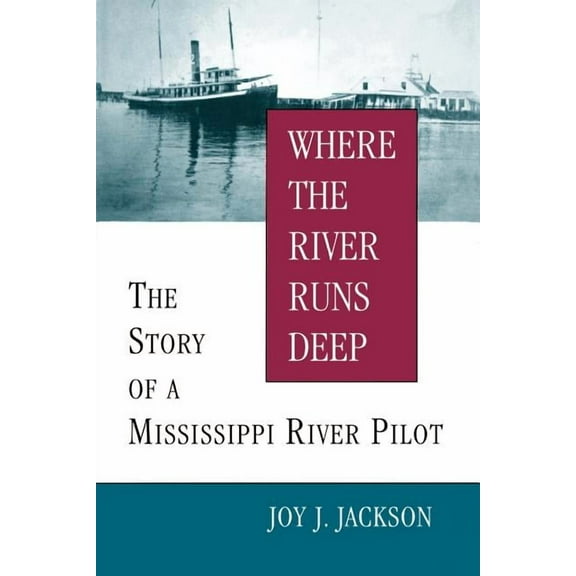
Where the River Runs Deep: The Story of a Mississippi River Pilot, (Paperback) $25.65
 $2565current price $25.65
Where the River Runs Deep: The Story of a Mississippi River Pilot, (Paperback)
Best seller A Court of Mist and Fury (Paperback) $12.82
Best seller $1282current price $12.82
A Court of Mist and Fury (Paperback)
3874.9 out of 5 Stars. 387 reviewsThe Obelisk.; 1944, (Paperback) $18.75
 $1875current price $18.75
The Obelisk.; 1944, (Paperback)
Services for the Blind in Arkansas, (Paperback) $14.97
 $1497current price $14.97
Services for the Blind in Arkansas, (Paperback)
Hand Book to the City of Little Rock, State of Arkansas: Popularly styled, (Paperback) $22.10
 $2210current price $22.10
Hand Book to the City of Little Rock, State of Arkansas: Popularly styled, (Paperback)
She's Not All That - Just A Girl From Mississippi, (Paperback) $15.78
 $1578current price $15.78
She's Not All That - Just A Girl From Mississippi, (Paperback)
The Cotton Mills of South Carolina, 1907, (Paperback) $22.48
 $2248current price $22.48
The Cotton Mills of South Carolina, 1907, (Paperback)
Folklife Along the Big South Fork of the Cumberland River, (Paperback) $32.62
 $3262current price $32.62
Folklife Along the Big South Fork of the Cumberland River, (Paperback)
Scrophulariaceae of the Central Rocky Mountain States (Paperback) $15.95
 $1595current price $15.95
Scrophulariaceae of the Central Rocky Mountain States (Paperback)
Haunted Kansas City, Missouri, (Paperback) $8.61
 $861current price $8.61
Haunted Kansas City, Missouri, (Paperback)
Grizzly, The; 1959, (Paperback) $17.95
 $1795current price $17.95
Grizzly, The; 1959, (Paperback)
Crossroads of Arkansas : A One-Hour Arkansas Perspective (Paperback) $14.67
 $1467current price $14.67
Crossroads of Arkansas : A One-Hour Arkansas Perspective (Paperback)
Mineral Resources of the Waynesboro Quadrangle, Tennessee (Paperback) $23.94
 $2394current price $23.94
Mineral Resources of the Waynesboro Quadrangle, Tennessee (Paperback)
History and Government of Missouri (Paperback) $17.49
 $1749current price $17.49
History and Government of Missouri (Paperback)
Customer ratings & reviews
0 ratings|0 reviews
This item does not have any reviews yet

Related pages
- Meriwether Lewis; William Clark; Paul Allen
- Burn Detroit
- Marriott London
- Francis Henry Egerton Bridgewater
- Shawnee Culture
- Runaway Slaves
- Criminals & Outlaws Biographies & Memoirs
- Reference Biographies & Memoirs
- Law Enforcement Biographies & Memoirs
- Lawyers & Judges Biographies & Memoirs
- Historical Biographies & Memoirs
- Political Biographies & Memoirs