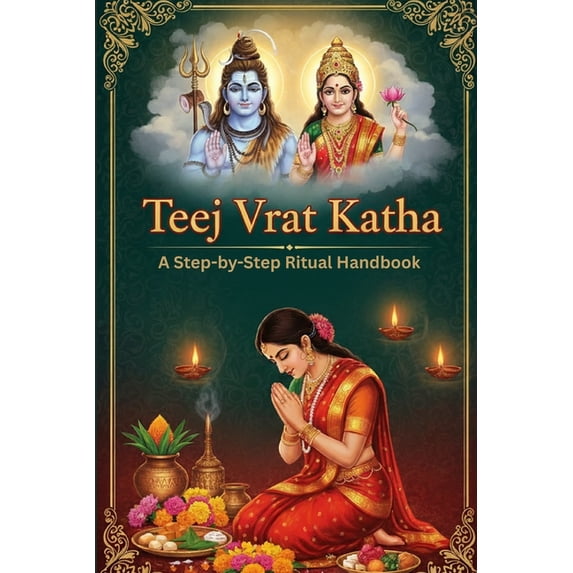
Teej Vrat Katha: A Step-by-Step Ritual Handbook is a detailed and practical guide to understanding and observing the sacred Teej Vrat, a significant fasting tradition celebrated by women in Hinduism. This book delves into the spiritual, cultural, and mythological aspects of Teej, offering readers a profound connection to this deeply devotional practice.
The book begins by exploring the origins of Teej Vrat, tracing its roots in ancient Hindu mythology. The story of Goddess Parvati's devotion to Lord Shiva, the trials she endured to win his love, and the eventual union between the two are central to the Teej Vrat. These mythological narratives set the stage for understanding the purpose and significance of fasting during Teej. Through a blend of sacred stories and spiritual teachings, the book illuminates the deeper meaning of Teej, moving beyond the ritual to its essential connection with devotion, love, and personal transformation.
The step-by-step rituals for each of the three main types of Teej-Hartalika Teej, Kajari Teej, and Gangaur Teej-are meticulously outlined in the book. Each section offers clear instructions on how to perform the fast, worship, and prayers associated with each Teej. From the early morning ritual bath to the preparation of sargi (pre-dawn meal), the book ensures readers understand each phase of the observance. Whether it's the special prayers to Goddess Parvati, the offerings made to Lord Shiva, or the recitation of mantras, the handbook serves as a practical guide to ensure that the rituals are conducted with devotion and reverence.
One of the unique aspects of this book is its focus on the spiritual benefits of fasting and devotion. The fast is not just a physical abstinence from food, but a journey of self-purification, spiritual renewal, and personal transformation. Through meditation, prayer, and focused devotion, the book explains how Teej can lead to deeper emotional growth, strengthen marital bonds, and foster a greater sense of connection with the divine.
In addition to the ritual aspects, the book highlights the role of songs and dances during Teej celebrations. Teej songs, traditionally sung by women, play an integral part in the festival's cultural expression. These devotional songs, which recount the stories of Lord Shiva and Goddess Parvati, enhance the spiritual atmosphere of the fast. The book explores the symbolic significance of these songs, demonstrating how they serve as tools for meditation and spiritual bonding within communities. The vibrant dances, often performed during Teej celebrations, are also discussed as an expression of joy and devotion, connecting participants to the spiritual energy of the festival.
The community aspect of Teej is another essential theme in the book. The fast is not just an individual practice, but a communal experience. The book emphasizes how the festival fosters solidarity among women, uniting them in prayer, support, and shared celebration. Whether performed in private homes or community gatherings, the collective participation enhances the spiritual at