

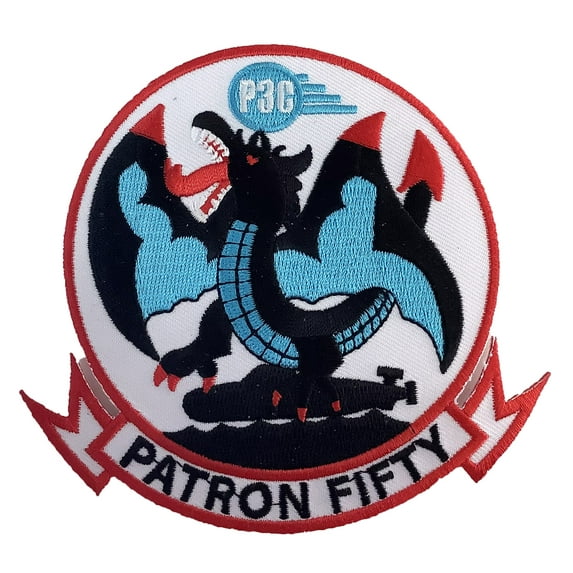
Hero image 0 of VP-50 Blue Dragons Squadron Patch – Plastic Backing, 0 of 1
VP-50 Blue Dragons Squadron Patch – Plastic Backing
(No ratings yet)
Key item features
- Veteran Owned Business
- Wear or Display
- Patch
Specs
- Sewing patch & applique typeSew-On Appliques
- BrandSquadron Nostalgia
Price when purchased online
Not Available
How do you want your item?
Not available
About this item
Product details
VP-50 Blue Dragons Squadron Patch Enjoy this VP-50 Blue Dragons Squadron Patch that is beautifully embroidered. You'll be able to display or wear it with pride. 4 inch Embroidered US Naval Aviator Owned Business Reproduction Sew On VP-50 was a long-lived Patrol Squadron of the U.S. Navy, having held that designation for 39 years from 1953 to 1992. Its nickname was the Blue Dragons. Originally established as VP-917 on 18 July 1946, redesignated Medium Patrol Squadron (Landplane) VP-ML-67 on 15 November 1946, redesignated VP-892 in February 1950, redesignated VP-50 on 4 February 1953 and disestablished on 30 June 1992. Operational history 18 July 1946: VP-917 was established at NAS Sand Point, near Seattle. The squadron came under the operational control of FAW-14 and administrative control of the Naval Air Reserve Training Command (NARTC). The squadron was one of 21 naval reserve squadrons established after the war to accommodate the large number of aircrews recently released from active duty and utilize the enormous stocks of aircraft in the inventory. The squadron flew the PBY-5A/6A Catalina seaplane and the PV-2 Harpoon landplane. 15 November 1946: All patrol squadrons were redesignated. Regular Navy patrol squadron designations began with 1 and reserve patrol squadrons began with 5 or higher. VP-917 was redesignated VP-ML-67. The ML for reserve squadrons included twin-engine medium amphibious seaplanes, as well as twin-engine land-based bombers. Regular Navy patrol squadron ML designations were for twin-engine medium landbased bombers only. The amphibious medium seaplanes like the PBY-5A were in the AM category. February 1950: VP-ML-67 was redesignated VP-892 during the reorganization of Naval Aviation Reserve units in 1949, but the change did not take effect until February 1950. During this period the number of Naval Aviation reserve squadrons was reduced from the 1949 total of 24 to 9. By this date the squadron had transitioned to the PBM-5 Mariner. 20 July 1950: VP-892 was called to active duty as a result of the Korean War. The squadron reported for duty to Commander Naval Air Force Pacific Fleet at NAS San Diego, Calif. At the start of hostilities the Navy patrol forces on active duty numbered just 20 squadrons, and it quickly became apparent that this meager figure was inadequate to meet the increased demands. By the end of 1950 seven reserve patrol squadrons were called to active duty to augment the active duty Navy patrol squadrons. The squadron reported aboard NAS San Diego on 4 August 1950 for training under FAW-14. 23 November 1950: VP-892 began its first deployment at Marine Corps Air Station Iwakuni, Japan, reporting to Commander Fleet Air Japan and FAW-6 on 13 December 1950. During the deployment the squadron was involved in ASW, reconnaissance and weather information flights in the Sea of Japan and along the coasts of China and North Korea. The squadron’s first mission was flown on 18 December 1950, making it the first flown by any reserve squadron in the Korean War. August 1951: VP-892 returned to NAS San Diego, Calif., to begin transitioning to the PBM-5S/S2 seaplane. The squadron became operational in January 1952. 12 February – 1 March 1952: VP-892 deployed to Naval Station Sangley Point, Philippines, for duties under FAW-1. On 1 March 1952, the squadron began its second tour of operations in the Korean combat zone conducting patrols over the China coast and China Sea. 1 May–27 July 1953: VP-50 deployed to NAS Sangley Point, with patrol duties covering the South China Sea. On 1 June 1953, a detachment began operations at MCAS Iwakuni, flying patrols in the combat zone over the Korean coastline, Yellow Sea and Sea of Japan. On 30 June 1953, a squadron Mariner sank near Iwakuni while taxiing to test engines. No one was injured or lost, and boats from USS Kenneth Whiting rescued the crew from the water. The tender later made several unsuccessful attempts to raise the sunken aircraft. On 17 July USS Delive
- Veteran Owned Business
- Wear or Display
- Patch
info:
We aim to show you accurate product information. Manufacturers, suppliers and others provide what you see here, and we have not verified it.
Specifications
Sewing patch & applique type
Sew-On Appliques
Brand
Squadron Nostalgia
Customer ratings & reviews
0 ratings|0 reviews
This item does not have any reviews yet
