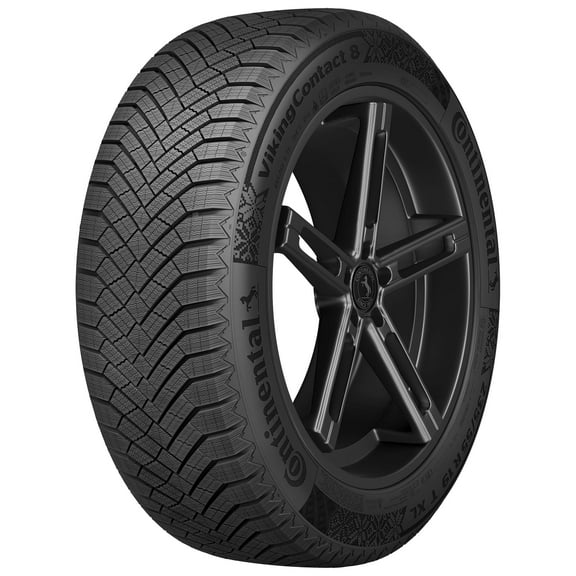
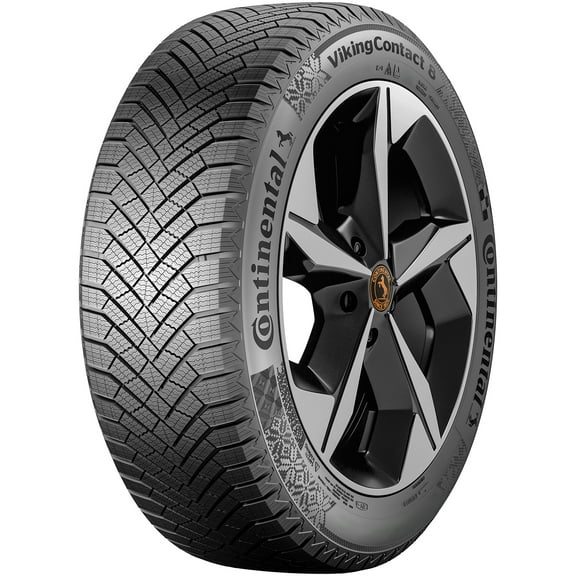
Continental VikingContact 8
OVERVIEW
The Continental VikingContact 8 is a touring, winter tire manufactured for passenger vehicles and SUVs. This model is EV-Ready, meaning these tires are compatible with both electric and traditional vehicles.
The tire promotes enhanced controllability. The directional tread pattern maintains continuous contact with the road. This improves driving stability and steering responsiveness. The shoulder blocks improve overall cornering with their biting edges, increasing the tire's grip for better maneuverability. These tread elements contribute to the tire's faster and more precise responses to the driver's steering commands.
This tire guarantees exceptional winter performance. The V-shaped pattern and the winter compound enhance the tire's road grip on ice- and snow-covered roads. The three-layered sipes in the shoulder area offer extra biting edges to further improve the tire's performance in winter conditions. Additionally, the Nordic rubber compound keeps the tire flexible even during freezing temperatures. This combination guarantees exceptional winter weather traction.
The tire also provides a quiet driving experience. The advanced tread design lowers road and tread noise levels heard in the vehicle’s cabin. The optimal block pattern lowers the road noise, which minimizes road disturbances so that the passengers can enjoy their drive. As a result, the tire provides a quiet and comfortable driving experience.
This tire guarantees a longer-lasting tread life. The durable compound reduces tread flexing, while the 3D sipes boost the tread rigidity. The V-shaped tread pattern and the close road contact ensure that pressure is evenly circulated along the footprint, minimizing irregular wear formations. In this manner, the tire extends its tread life greatly.
The Continental VikingContact 8 also ensures a fuel-efficient performance. The durable rubber compound lowers the rolling resistance. The compound increases the tire’s road grip and eases the pressure off the footprint. This reduces the amount of energy required for the vehicle to maintain the tires in motion. As a result, both fuel consumption and CO2 emissions are reduced, ensuring a fuel-efficient driving experience.
Manufacturers recommend changing tires every 10 years. As long as tires are properly stored before they are sold, the year of their manufacture will not shorten their service life.