

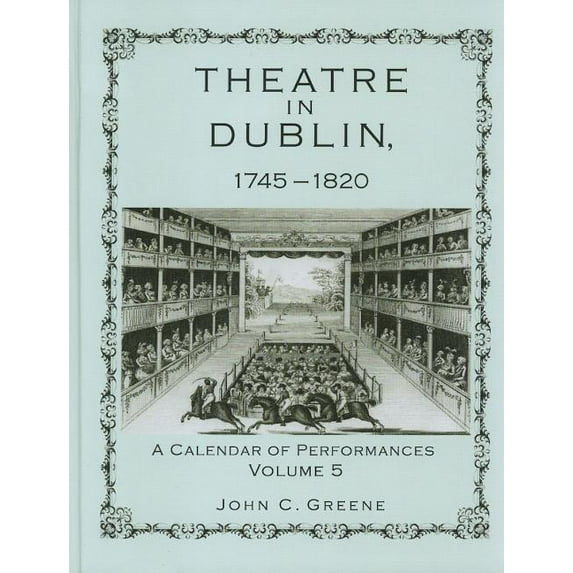
Theatre in Dublin, 1745–1820 : A Calendar of Performances (Hardcover)
(No ratings yet)
Key item features
Theatre in Dublin,1745–1820: A Calendar of Performances is the first comprehensive, daily compendium of more than 18,000 performances that took place in Dublin’s many professional theatres, music halls, pleasure gardens, and circus amphitheatres between Thomas Sheridan’s becoming the manager at Smock Alley Theatre in 1745 and the dissolution of the Crow Street Theatre in 1820.
The daily performance calendar for each of the seventy-five seasons recorded here records and organizes all surviving documentary evidence pertinent to each evening’s entertainments, derived from all known sources, but especially from playbills and newspaper advertisements. Each theatre’s daily entry includes all preludes, mainpieces, interludes, and afterpieces with casts and assigned roles, followed by singing and singers, dancing and dancers, and specialty entertainments. Financial data, program changes, rehearsal notices, authorship and premiere information are included in each component’s entry, as is the text of contemporary correspondence and editorial contextualization and commentary, followed by other additional commentary, such as the many hundreds of printed puffs, notices, and performance reviews. In the cases of the programs of music halls, pleasure gardens, and circuses, the playbills have generally been transcribed verbatim.
The calendar for each season is preceded by an analytical headnote that presents several categories of information including, among other things, an alphabetical listing of all members of each company, whether actors, musicians, specialty artists, or house servants, who are known to have been employed at each venue. Limited biographical commentary is included, particularly about performers of Irish origin, who had significant stage careers but who did not perform in London. Each headnote presents the seasons’s offerings of entertainments of each theatrical type (prelude, mainpiece, interlude, afterpiece) analyzed according to genre, including a list of the number of plays in each genre and according to period in which they were first performed. The headnote also notes the number of different plays by Shakespeare staged during each season and gives particular attention to entertainments of “special Irish interest.” The various kinds of benefit performance and command performances are also noted.
Finally, this Calendar of Performances contains an appendix that furnishes a season-by-season listing of the plays that were new to the London patent theatres, and, later, of the important “minors.” This information is provided in order for us to understand the interrelatedness of the London and Dublin repertories.
The daily performance calendar for each of the seventy-five seasons recorded here records and organizes all surviving documentary evidence pertinent to each evening’s entertainments, derived from all known sources, but especially from playbills and newspaper advertisements. Each theatre’s daily entry includes all preludes, mainpieces, interludes, and afterpieces with casts and assigned roles, followed by singing and singers, dancing and dancers, and specialty entertainments. Financial data, program changes, rehearsal notices, authorship and premiere information are included in each component’s entry, as is the text of contemporary correspondence and editorial contextualization and commentary, followed by other additional commentary, such as the many hundreds of printed puffs, notices, and performance reviews. In the cases of the programs of music halls, pleasure gardens, and circuses, the playbills have generally been transcribed verbatim.
The calendar for each season is preceded by an analytical headnote that presents several categories of information including, among other things, an alphabetical listing of all members of each company, whether actors, musicians, specialty artists, or house servants, who are known to have been employed at each venue. Limited biographical commentary is included, particularly about performers of Irish origin, who had significant stage careers but who did not perform in London. Each headnote presents the seasons’s offerings of entertainments of each theatrical type (prelude, mainpiece, interlude, afterpiece) analyzed according to genre, including a list of the number of plays in each genre and according to period in which they were first performed. The headnote also notes the number of different plays by Shakespeare staged during each season and gives particular attention to entertainments of “special Irish interest.” The various kinds of benefit performance and command performances are also noted.
Finally, this Calendar of Performances contains an appendix that furnishes a season-by-season listing of the plays that were new to the London patent theatres, and, later, of the important “minors.” This information is provided in order for us to understand the interrelatedness of the London and Dublin repertories.
Specs
- Book formatHardcover
- Fiction/nonfictionNon-Fiction
- GenreHistory
- Publication dateNovember, 2011
- Pages734
- Series titleTheatre in Dublin
Current price is USD$141.79
Price when purchased online
Out of stock
How do you want your item?
Out of stock
About this item
Product details
This is the first comprehensive, daily compendium of more than 18,000 performances that took place in Dublin’s theatres, music halls, pleasure gardens, and circus amphitheatres between Thomas Sheridan’s becoming the manager at Smock Alley Theatre in 1745 and the dissolution of the Crow Street Theatre in 1820.
Theatre in Dublin,1745–1820: A Calendar of Performances is the first comprehensive, daily compendium of more than 18,000 performances that took place in Dublin’s many professional theatres, music halls, pleasure gardens, and circus amphitheatres between Thomas Sheridan’s becoming the manager at Smock Alley Theatre in 1745 and the dissolution of the Crow Street Theatre in 1820.
The daily performance calendar for each of the seventy-five seasons recorded here records and organizes all surviving documentary evidence pertinent to each evening’s entertainments, derived from all known sources, but especially from playbills and newspaper advertisements. Each theatre’s daily entry includes all preludes, mainpieces, interludes, and afterpieces with casts and assigned roles, followed by singing and singers, dancing and dancers, and specialty entertainments. Financial data, program changes, rehearsal notices, authorship and premiere information are included in each component’s entry, as is the text of contemporary correspondence and editorial contextualization and commentary, followed by other additional commentary, such as the many hundreds of printed puffs, notices, and performance reviews. In the cases of the programs of music halls, pleasure gardens, and circuses, the playbills have generally been transcribed verbatim.
The calendar for each season is preceded by an analytical headnote that presents several categories of information including, among other things, an alphabetical listing of all members of each company, whether actors, musicians, specialty artists, or house servants, who are known to have been employed at each venue. Limited biographical commentary is included, particularly about performers of Irish origin, who had significant stage careers but who did not perform in London. Each headnote presents the seasons’s offerings of entertainments of each theatrical type (prelude, mainpiece, interlude, afterpiece) analyzed according to genre, including a list of the number of plays in each genre and according to period in which they were first performed. The headnote also notes the number of different plays by Shakespeare staged during each season and gives particular attention to entertainments of “special Irish interest.” The various kinds of benefit performance and command performances are also noted.
Finally, this Calendar of Performances contains an appendix that furnishes a season-by-season listing of the plays that were new to the London patent theatres, and, later, of the important “minors.” This information is provided in order for us to understand the interrelatedness of the London and Dublin repertories.
The daily performance calendar for each of the seventy-five seasons recorded here records and organizes all surviving documentary evidence pertinent to each evening’s entertainments, derived from all known sources, but especially from playbills and newspaper advertisements. Each theatre’s daily entry includes all preludes, mainpieces, interludes, and afterpieces with casts and assigned roles, followed by singing and singers, dancing and dancers, and specialty entertainments. Financial data, program changes, rehearsal notices, authorship and premiere information are included in each component’s entry, as is the text of contemporary correspondence and editorial contextualization and commentary, followed by other additional commentary, such as the many hundreds of printed puffs, notices, and performance reviews. In the cases of the programs of music halls, pleasure gardens, and circuses, the playbills have generally been transcribed verbatim.
The calendar for each season is preceded by an analytical headnote that presents several categories of information including, among other things, an alphabetical listing of all members of each company, whether actors, musicians, specialty artists, or house servants, who are known to have been employed at each venue. Limited biographical commentary is included, particularly about performers of Irish origin, who had significant stage careers but who did not perform in London. Each headnote presents the seasons’s offerings of entertainments of each theatrical type (prelude, mainpiece, interlude, afterpiece) analyzed according to genre, including a list of the number of plays in each genre and according to period in which they were first performed. The headnote also notes the number of different plays by Shakespeare staged during each season and gives particular attention to entertainments of “special Irish interest.” The various kinds of benefit performance and command performances are also noted.
Finally, this Calendar of Performances contains an appendix that furnishes a season-by-season listing of the plays that were new to the London patent theatres, and, later, of the important “minors.” This information is provided in order for us to understand the interrelatedness of the London and Dublin repertories.
info:
We aim to show you accurate product information. Manufacturers, suppliers and others provide what you see here, and we have not verified it.
Specifications
Book format
Hardcover
Fiction/nonfiction
Non-Fiction
Genre
History
Publication date
November, 2011
Warranty
Warranty information
Please be aware that the warranty terms on items offered for sale by third party Marketplace sellers may differ from those displayed in this section (if any). To confirm warranty terms on an item offered for sale by a third party Marketplace seller, please use the 'Contact seller' feature on the third party Marketplace seller's information page and request the item's warranty terms prior to purchase.
Customer ratings & reviews
0 ratings|0 reviews
This item does not have any reviews yet

Related pages
- Manhattan Population 2021
- Times Sq 42 St York Ny 10036
- Antique Roadshow Logo
- Clara Dillingham Pierson; F C Gordon
- December Global
- 1923 Great Kant Earthquake
- Former Soviet Republics Travel Books, Maps & Guides
- Military Travel Books, Maps & Guides
- Australian & New Zealand History Books
- Southwest State & Local United States History Books
- Pacific Northwest State & Local United States History Books
- Central & South American History Kids' Books