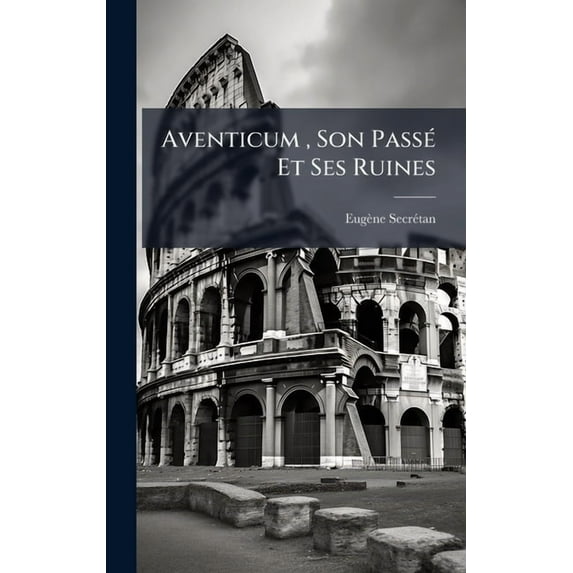
Aventicum, Son Passé Et Ses Ruines (Aventicum, Its Past and its Ruins) by Eugène Secrétan, originally published in 1905, delves into the rich history and archaeological remains of Aventicum, the Roman capital of Helvetia, now known as Avenches, Switzerland. This meticulously researched work explores the city's significance during the Roman era, examining its key monuments, social structures, and eventual decline.
Secrétan's detailed descriptions and historical insights provide a comprehensive overview of Aventicum's importance in the broader context of Roman history. The book serves as an invaluable resource for historians, archaeologists, and anyone interested in the Roman influence in Switzerland. Through careful analysis and vivid prose, Secrétan brings the ancient city to life, offering readers a glimpse into its vibrant past and enduring legacy. "Aventicum, Son Passé Et Ses Ruines" stands as a testament to the lasting impact of Roman civilization and the enduring allure of historical exploration.
This work has been selected by scholars as being culturally important, and is part of the knowledge base of civilization as we know it. This work was reproduced from the original artifact, and remains as true to the original work as possible. Therefore, you will see the original copyright references, library stamps (as most of these works have been housed in our most important libraries around the world), and other notations in the work.
This work is in the public domain in the United States of America, and possibly other nations. Within the United States, you may freely copy and distribute this work, as no entity (individual or corporate) has a copyright on the body of the work.
As a reproduction of a historical artifact, this work may contain missing or blurred pages, poor pictures, errant marks, etc. Scholars believe, and we concur, that this work is important enough to be preserved, reproduced, and made generally available to the public. We appreciate your support of the preservation process, and thank you for being an important part of keeping this knowledge alive and relevant.