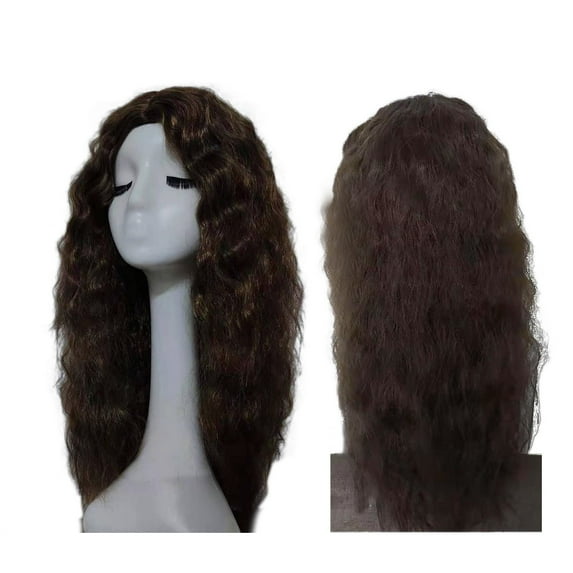
Yoofe Wigs Human Hair,Peruvian Curly Human Hair Wig Glueless Lace Front Human Hair Wave Wigs for Women Natural Color 1Pc,9.84In
1. Q: What are the main types of wig fibers?
A: Wigs are primarily made from two types of fibers:
* Synthetic Fiber: Made from plastic polymers (like Kanekalon, Toyokalon, or modacrylic). Benefits include affordability, pre-styled hold (retains its shape well), wide range of colors/styles, and often lower maintenance. Downsides are sensitivity to high heat (can melt) and a potentially less natural look/feel than human hair.
* Human Hair: Made from 100% real human hair. Benefits include the most natural look, feel, and movement; it can be styled with heat tools (curling irons, straighteners) and dyed (by professionals). Downsides are higher cost, requires more styling maintenance (like natural hair), and the style may not hold as permanently as synthetic.
2. Q: How do I care for and wash my wig?
A: Care depends on the fiber type:
* Synthetic Wigs: Wash less frequently (every 10-15 wears). Use cool water and wig-specific or mild sulfate-free shampoo. Gently swish, don't rub. Rinse thoroughly. Apply conditioner only to the ends (avoid the cap/roots). Air dry completely on a wig stand. Use wig detangler spray, not regular brushes.
* Human Hair Wigs: Can be washed more like natural hair (every 7-10 wears or as needed). Use sulfate-free shampoo and conditioner. Gently wash and rinse. Can be air-dried or gently blow-dried/styled with heat tools on low/medium settings. Use heat protectant.
3. Q: How do I know what wig size/cap size to buy?
A: Measure your head circumference accurately: around your hairline (forehead, above ears, nape of neck). Most wigs come in:
* Petite/Average: Approx. 21.5" circumference (most common size).
* Large: Approx. 22.5" circumference or more. Check the specific size chart for the wig you're interested in. Wigs often have adjustable straps at the nape for a more customized fit.
4. Q: How do I put on and secure a wig?
A:
1. Prepare your natural hair (braid flat, pin up, or use a wig cap for smoother coverage).
2. Adjust the wig's internal straps for snugness.
3. Place the front of the wig (usually marked) at your natural hairline.
4. Slide the wig on from front to back.
5. Tuck any stray hairs underneath.
6. Use the ear tabs to align with your ears.
7. Adjust the nape strap.
8. For extra security (especially for active wear), wig tape, adhesive, or wig grip bands can be used.
5. Q: How long does a wig typically last?
A: Wig lifespan varies significantly:
* Synthetic Wigs: Generally last 4-6 months with regular wear and proper care. Frequent styling, heat exposure (sun, styling tools), or rough handling shortens life.
* Human Hair Wigs: With excellent care, can last 1 year or longer, sometimes even 2-3 years. They require more maintenance (like natural hair) but are more durable if treated well. Rotating wigs extends the life of each one.
6. Q: Can I style my synthetic wig with heat?
A: Only if it's specifically labeled "Heat Friendly" or "Heat Defiant". Standard synthetic fibers will melt, frizz, or become irreparably damaged with heat from curling irons, straighteners, or even high-heat blow dryers. Always check the wig's specifications before applying heat. Use the lowest setting possible on heat-friendly synthetics.
7. Q: Can I cut or color my wig?
A:
* Synthetic Wigs: Cannot be dyed with regular hair dye. They can be trimmed/cut by a professional stylist experienced with synthetics to customize the style, but the cut is permanent.
* Human Hair Wigs: Can be cut, layered, and styled by a stylist. They can also be dyed or highlighted, but it's best done by a professional colorist familiar with wigs, as the hair has already been processed. Frequent coloring can damage the hair.
8. Q: How should I store my wig when not wearing it?
A: Store your wig on a wig stand or mannequin head. This helps it retain its shape and prevents tangling/knotting. Avoid storing it in direct sunlight or damp areas. Keep it in a cool, dry place, ideally inside a breathable bag or box designed for wig storage. Never store it crumpled up.
9. Q: Can I sleep or shower in my wig?
A: It's not recommended to sleep or shower regularly in a wig. Doing so causes significant friction, tangling, and matting, drastically shortening the wig's lifespan. It can also distort the cap shape. Remove your wig before sleeping or bathing.
10. Q: Will wearing a wig cause my natural hair to fall out?
A: No. Wearing a wig correctly does not cause hair loss underneath. Hair loss is caused by factors like genetics, health conditions, medications, or excessive tension on the hair follicles. Ensure the wig fits comfortably (not too tight) and that your scalp and natural hair underneath are kept clean and healthy. Avoid excessive tension from tight wig caps or clips.