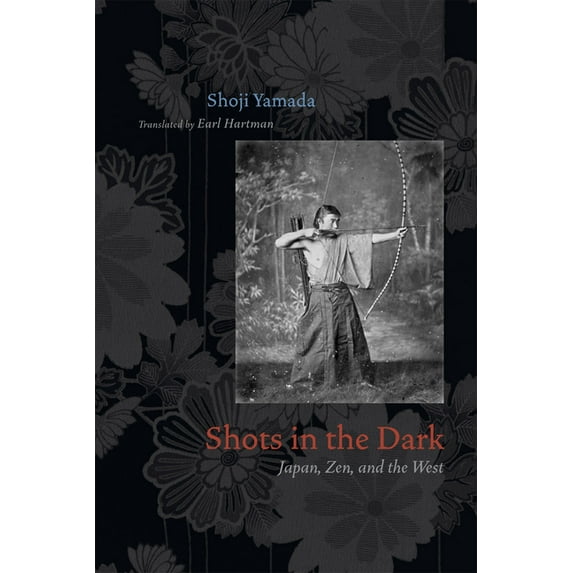
Buddhism and Modernity: Shots in the Dark : Japan, Zen, and the West (Paperback)
Key item features
In the years after World War II, Westerners and Japanese alike elevated Zen to the quintessence of spirituality in Japan. Pursuing the sources of Zen as a Japanese ideal, Shoji Yamada uncovers the surprising role of two cultural touchstones: Eugen Herrigel’s Zen in the Art of Archery and the Ryoanji dry-landscape rock garden. Yamada shows how both became facile conduits for exporting and importing Japanese culture.
First published in German in 1948 and translated into Japanese in 1956, Herrigel’s book popularized ideas of Zen both in the West and in Japan. Yamada traces the prewar history of Japanese archery, reveals how Herrigel mistakenly came to understand it as a traditional practice, and explains why the Japanese themselves embraced his interpretation as spiritual discipline. Turning to Ryoanji, Yamada argues that this epitome of Zen in fact bears little relation to Buddhism and is best understood in relation to Chinese myth. For much of its modern history, Ryoanji was a weedy, neglected plot; only after its allegorical role in a 1949 Ozu film was it popularly linked to Zen. Westerners have had a part in redefining Ryoanji, but as in the case of archery, Yamada’s interest is primarily in how the Japanese themselves have invested this cultural site with new value through a spurious association with Zen.
Specs
- Book formatPaperback
- Fiction/nonfictionNon-Fiction
- GenreReligion
- Publication dateNovember, 2011
- Pages304
- Series titleBuddhism and Modernity
- Free shipping
 Free 30-day returns
How do you want your item?


About this item
Product details
In the years after World War II, Westerners and Japanese alike elevated Zen to the quintessence of spirituality in Japan. Pursuing the sources of Zen as a Japanese ideal, Shoji Yamada uncovers the surprising role of two cultural touchstones: Eugen Herrigel's Zen in the Art of Archery and the Ryoanji dry-landscape rock garden. Yamada shows how both became facile conduits for exporting and importing Japanese culture.
First published in German in 1948 and translated into Japanese in 1956, Herrigel's book popularized ideas of Zen both in the West and in Japan. Yamada traces the prewar history of Japanese archery, reveals how Herrigel mistakenly came to understand it as a traditional practice, and explains why the Japanese themselves embraced his interpretation as spiritual discipline. Turning to Ryoanji, Yamada argues that this epitome of Zen in fact bears little relation to Buddhism and is best understood in relation to Chinese myth. For much of its modern history, Ryoanji was a weedy, neglected plot; only after its allegorical role in a 1949 Ozu film was it popularly linked to Zen. Westerners have had a part in redefining Ryoanji, but as in the case of archery, Yamada's interest is primarily in how the Japanese themselves have invested this cultural site with new value through a spurious association with Zen.
In the years after World War II, Westerners and Japanese alike elevated Zen to the quintessence of spirituality in Japan. Pursuing the sources of Zen as a Japanese ideal, Shoji Yamada uncovers the surprising role of two cultural touchstones: Eugen Herrigel’s Zen in the Art of Archery and the Ryoanji dry-landscape rock garden. Yamada shows how both became facile conduits for exporting and importing Japanese culture.
First published in German in 1948 and translated into Japanese in 1956, Herrigel’s book popularized ideas of Zen both in the West and in Japan. Yamada traces the prewar history of Japanese archery, reveals how Herrigel mistakenly came to understand it as a traditional practice, and explains why the Japanese themselves embraced his interpretation as spiritual discipline. Turning to Ryoanji, Yamada argues that this epitome of Zen in fact bears little relation to Buddhism and is best understood in relation to Chinese myth. For much of its modern history, Ryoanji was a weedy, neglected plot; only after its allegorical role in a 1949 Ozu film was it popularly linked to Zen. Westerners have had a part in redefining Ryoanji, but as in the case of archery, Yamada’s interest is primarily in how the Japanese themselves have invested this cultural site with new value through a spurious association with Zen.
Specifications
Book format
Fiction/nonfiction
Genre
Publication date
Warranty
Warranty information
Warnings
State Chemical Disclosure
Similar items you might like
Based on what customers bought
The Buddhist Tripitaka as it is Known in China and Japan, (Hardcover) $38.87
 $3887current price $38.87
The Buddhist Tripitaka as it is Known in China and Japan, (Hardcover)
The Indian Buddhist Iconography (Paperback) $27.95
 $2795current price $27.95
The Indian Buddhist Iconography (Paperback)
Taisho Kimono: Beauty of Japanese Modernity in 1910s & 20s (Paperback) $32.79
 $3279current price $32.79
Taisho Kimono: Beauty of Japanese Modernity in 1910s & 20s (Paperback)
Getty Research Institute Council Lecture Series: Japanese Zen Buddhism and the Impossible Painting (Paperback) $24.69
 $2469current price $24.69
Getty Research Institute Council Lecture Series: Japanese Zen Buddhism and the Impossible Painting (Paperback)
Bushido the Soul of Japan (Paperback) $11.68
 $1168current price $11.68
Bushido the Soul of Japan (Paperback)
Michigan Monograph Japanese Studies Tokyo Boogie-Woogie and D.T. Suzuki: Volume 95, (Paperback) $29.25
 $2925current price $29.25
Michigan Monograph Japanese Studies Tokyo Boogie-Woogie and D.T. Suzuki: Volume 95, (Paperback)
The Senjusho: Buddhist Tales of Early Medieval Japan, (Paperback) $36.25
 $3625current price $36.25
The Senjusho: Buddhist Tales of Early Medieval Japan, (Paperback)
Translations from the Asian Classics Ryōkan: Zen Monk-Poet of Japan, (Paperback) $20.53
 $2053current price $20.53
Translations from the Asian Classics Ryōkan: Zen Monk-Poet of Japan, (Paperback)
Questions to a Zen Master: Political and Spiritual Answers from the Great Japanese Master, (Paperback) $13.00 Was $22.20
 $1300current price $13.00, Was $22.20$22.20
Questions to a Zen Master: Political and Spiritual Answers from the Great Japanese Master, (Paperback)
Kami No Michi: The Way of the Gods in Japan $38.62
 $3862current price $38.62
Kami No Michi: The Way of the Gods in Japan
Sesshu's Long Scroll: A Zen Landscape Journey, (Hardcover) $33.89
 $3389current price $33.89
Sesshu's Long Scroll: A Zen Landscape Journey, (Hardcover)
Song of Mind : Wisdom from the Zen Classic Xin Ming (Paperback) $17.89
 $1789current price $17.89
Song of Mind : Wisdom from the Zen Classic Xin Ming (Paperback)
Harvard East Asian Monographs The Japanization of Modernity: Murakami Haruki Between Japan and the United States, Book 298, (Paperback) $32.59
 $3259current price $32.59
Harvard East Asian Monographs The Japanization of Modernity: Murakami Haruki Between Japan and the United States, Book 298, (Paperback)
Typical Japanese Gardens, (Paperback) $22.13
 $2213current price $22.13
Typical Japanese Gardens, (Paperback)
The Buddhist Tripitaka As It Is Known In China And Japan: A Catalogue And Compendious Report (1876), (Hardcover) $37.67
 $3767current price $37.67
The Buddhist Tripitaka As It Is Known In China And Japan: A Catalogue And Compendious Report (1876), (Hardcover)
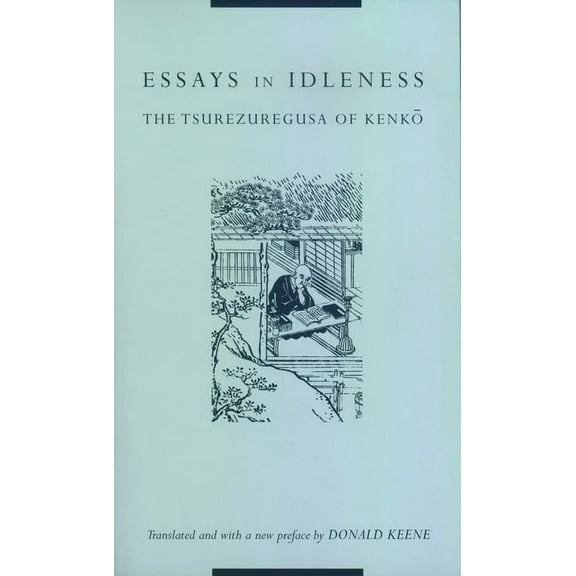
Translations from the Asian Classics Essays in Idleness: The Tsurezuregusa of Kenkō, (Paperback) $32.00
 $3200current price $32.00
Translations from the Asian Classics Essays in Idleness: The Tsurezuregusa of Kenkō, (Paperback)
Problems Of The Far East: Japan, Korea, China (1894) (Paperback) $47.16
 $4716current price $47.16
Problems Of The Far East: Japan, Korea, China (1894) (Paperback)