

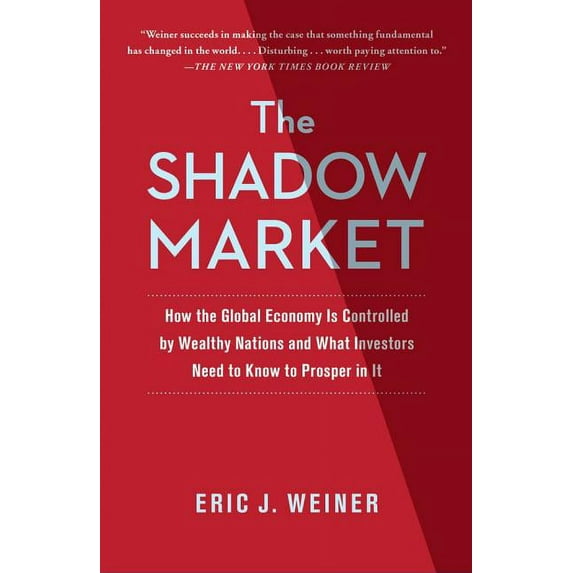
Hero image 0 of The Shadow Market : How the Global Economy Is Controlled by Wealthy Nations and What Investors Need to Know to Prosper in It (Paperback), 0 of 1
The Shadow Market : How the Global Economy Is Controlled by Wealthy Nations and What Investors Need to Know to Prosper in It (Paperback)
(No ratings yet)
Key item features
Acclaimed financial journalist Eric J. Weiner reveals how foreign countries and private investors are increasingly controlling the global economy and secretly wresting power from the United States in ways that our government cannot reverse and about which the average American knows nothing.
The most potent force in global commerce today is not the Federal Reserve, not the international banks, not the governments of the G7 countries, and certainly not the European Union. Rather, it is the multi-trillion-dollar network of super-rich, secretive, and largely unregulated investment vehicles—foreign sovereign wealth funds, government-run corporations, private equity funds, and hedge funds—that are quietly buying up the world, piece by valuable piece.
As Weiner’s groundbreaking account shows, the shadow market doesn’t have a physical headquarters such as Wall Street. It doesn’t have a formal leadership or an index to track or a single zone of exchange. Rather, it comprises an invisible and ever-shifting global nexus where money mixes with geopolitical power, often with great speed and secrecy.
Led by cash-flush nations such as China, Kuwait, Abu Dhabi, Singapore, Saudi Arabia, and even Norway, the shadow market is hiring the brightest international financial talent money can buy and is now assembling the gigantic investment portfolios that will form the power structure of tomorrow’s economy.
Taking advantage of the Great Recession and subsequent liquidity problems in the United States and Europe, the major players of the shadow market are deploying staggering amounts of cash, controlling the capital markets, and securing not only major stakes in multinational companies but huge tracts of farmland and natural resources across the world. Yet that’s not all; they’re also pursuing political agendas made possible by their massive wealth and are becoming increasingly aggressive with the United States and other governments.
Highly informative and genuinely startling, Eric J. Weiner’s up-to-date account gets out in front of daily events, with proof of his argument destined to appear in the news for years to come. The Shadow Market moves the conversation from “international competition” to “global financial warfare,” and stands as an urgent must-read for anyone interested in the future of the global economy, America’s position in the world, or how and where to invest money today.
DID YOU KNOW?
***The Pentagon has run elaborate simulations of global financial war. Result: America lost, and the shadow market won.
***The U.S. dollar is under siege as a global currency; oil-producing nations have already begun secret discussions about replacing it in oil trading.
***While Greece was burning in the spring of 2010, the shadow market nations were spending hundreds of billions of dollars all over the world rather than helping to fix the European crisis. Why? Because it wasn’t their problem.
***With its wealth of natural resources, Brazil may be more powerful than Germany, France, and Great Britain put together, and may soon rival the United States for economic supremacy in the Western Hemisphere.
***In April 2009, China told the International Monetary Fund to sell 3,217 tons of gold. How much did China buy? That’s a secret. What else is China buying? As many of the oil reserves in non–Middle Eastern countries as it can, including in Canada. It has bought so many Australian natural resource companies that Australia is getting nervous. And some would say that China has, in effect, already purchased Taiwan.
***Many of the shadow market countries are racing to improve their food-security risks by buying large swaths of farmland in other countries, potentially at the risk of starving the local citizens. Saudi Arabia has a farm the size of Connecticut in Indonesia, and Korean industrial giant Daewoo controls half the arable land of Madagascar.
***Iran is China’s third largest oil supplier and in return receives significant protection from Chinese diplomats, who are increasingly important players on the geopolitical stage.
***The shadow market countries will soon control nearly $20 trillion in assets, a sum greater than the gross domestic product of the United States. such as Wall Street. It doesn’t have a formal leadership or an index to track or a single zone of exchange. Rather, it comprises an invisible and ever-shifting global nexus where money mixes with geopolitical power, often with great speed and secrecy.
The most potent force in global commerce today is not the Federal Reserve, not the international banks, not the governments of the G7 countries, and certainly not the European Union. Rather, it is the multi-trillion-dollar network of super-rich, secretive, and largely unregulated investment vehicles—foreign sovereign wealth funds, government-run corporations, private equity funds, and hedge funds—that are quietly buying up the world, piece by valuable piece.
As Weiner’s groundbreaking account shows, the shadow market doesn’t have a physical headquarters such as Wall Street. It doesn’t have a formal leadership or an index to track or a single zone of exchange. Rather, it comprises an invisible and ever-shifting global nexus where money mixes with geopolitical power, often with great speed and secrecy.
Led by cash-flush nations such as China, Kuwait, Abu Dhabi, Singapore, Saudi Arabia, and even Norway, the shadow market is hiring the brightest international financial talent money can buy and is now assembling the gigantic investment portfolios that will form the power structure of tomorrow’s economy.
Taking advantage of the Great Recession and subsequent liquidity problems in the United States and Europe, the major players of the shadow market are deploying staggering amounts of cash, controlling the capital markets, and securing not only major stakes in multinational companies but huge tracts of farmland and natural resources across the world. Yet that’s not all; they’re also pursuing political agendas made possible by their massive wealth and are becoming increasingly aggressive with the United States and other governments.
Highly informative and genuinely startling, Eric J. Weiner’s up-to-date account gets out in front of daily events, with proof of his argument destined to appear in the news for years to come. The Shadow Market moves the conversation from “international competition” to “global financial warfare,” and stands as an urgent must-read for anyone interested in the future of the global economy, America’s position in the world, or how and where to invest money today.
DID YOU KNOW?
***The Pentagon has run elaborate simulations of global financial war. Result: America lost, and the shadow market won.
***The U.S. dollar is under siege as a global currency; oil-producing nations have already begun secret discussions about replacing it in oil trading.
***While Greece was burning in the spring of 2010, the shadow market nations were spending hundreds of billions of dollars all over the world rather than helping to fix the European crisis. Why? Because it wasn’t their problem.
***With its wealth of natural resources, Brazil may be more powerful than Germany, France, and Great Britain put together, and may soon rival the United States for economic supremacy in the Western Hemisphere.
***In April 2009, China told the International Monetary Fund to sell 3,217 tons of gold. How much did China buy? That’s a secret. What else is China buying? As many of the oil reserves in non–Middle Eastern countries as it can, including in Canada. It has bought so many Australian natural resource companies that Australia is getting nervous. And some would say that China has, in effect, already purchased Taiwan.
***Many of the shadow market countries are racing to improve their food-security risks by buying large swaths of farmland in other countries, potentially at the risk of starving the local citizens. Saudi Arabia has a farm the size of Connecticut in Indonesia, and Korean industrial giant Daewoo controls half the arable land of Madagascar.
***Iran is China’s third largest oil supplier and in return receives significant protection from Chinese diplomats, who are increasingly important players on the geopolitical stage.
***The shadow market countries will soon control nearly $20 trillion in assets, a sum greater than the gross domestic product of the United States. such as Wall Street. It doesn’t have a formal leadership or an index to track or a single zone of exchange. Rather, it comprises an invisible and ever-shifting global nexus where money mixes with geopolitical power, often with great speed and secrecy.
Specs
- Book formatPaperback
- Fiction/nonfictionNon-Fiction
- GenreBusiness & Investing
- Publication dateOctober, 2011
- Pages336
- Number in series1
Current price is USD$15.25
Price when purchased online
- Free shipping
 Free 30-day returns
How do you want your item?
Columbus, 43215
Arrives between May 9 - May 13
|
Sold and shipped by BooksXpress
3.9783602560195064 stars out of 5, based on 3281 seller reviews(4.0)3281 seller reviews

Free 30-day returns - in store or online
About this item
Product details
Acclaimed financial journalist Eric J. Weiner reveals how foreign countries and private investors are increasingly controlling the global economy and secretly wresting power from the United States in ways that our government cannot reverse and about which the average American knows nothing. The most potent force in global commerce today is not the Federal Reserve, not the international banks, not the governments of the G7 countries, and certainly not the European Union. Rather, it is the multi-trillion-dollar network of super-rich, secretive, and largely unregulated investment vehicles--foreign sovereign wealth funds, government-run corporations, private equity funds, and hedge funds--that are quietly buying up the world, piece by valuable piece. As Weiner's groundbreaking account shows, the shadow market doesn't have a physical headquarters such as Wall Street. It doesn't have a formal leadership or an index to track or a single zone of exchange. Rather, it comprises an invisible and ever-shifting global nexus where money mixes with geopolitical power, often with great speed and secrecy. Led by cash-flush nations such as China, Kuwait, Abu Dhabi, Singapore, Saudi Arabia, and even Norway, the shadow market is hiring the brightest international financial talent money can buy and is now assembling the gigantic investment portfolios that will form the power structure of tomorrow's economy. Taking advantage of the Great Recession and subsequent liquidity problems in the United States and Europe, the major players of the shadow market are deploying staggering amounts of cash, controlling the capital markets, and securing not only major stakes in multinational companies but huge tracts of farmland and natural resources across the world. Yet that's not all; they're also pursuing political agendas made possible by their massive wealth and are becoming increasingly aggressive with the United States and other governments. Highly informative and genuinely startling, Eric J. Weiner's up-to-date account gets out in front of daily events, with proof of his argument destined to appear in the news for years to come. The Shadow Market moves the conversation from "international competition" to "global financial warfare," and stands as an urgent must-read for anyone interested in the future of the global economy, America's position in the world, or how and where to invest money today. DID YOU KNOW? ***The Pentagon has run elaborate simulations of global financial war. Result: America lost, and the shadow market won. ***The U.S. dollar is under siege as a global currency; oil-producing nations have already begun secret discussions about replacing it in oil trading. ***While Greece was burning in the spring of 2010, the shadow market nations were spending hundreds of billions of dollars all over the world rather than helping to fix the European crisis. Why? Because it wasn't their problem. ***With its wealth of natural resources, Brazil may be more powerful than Germany, France, and Great Britain put together, and may soon rival the United States for economic supremacy in the Western Hemisphere. ***In April 2009, China told the International Monetary Fund to sell 3,217 tons of gold. How much did China buy? That's a secret. What else is China buying? As many of the oil reserves in non-Middle Eastern countries as it can, including in Canada. It has bought so many Australian natural resource companies that Australia is getting nervous. And some would say that China has, in effect, already purchased Taiwan. ***Many of the shadow market countries are racing to improve their food-security risks by buying large swaths of farmland in other countries, potentially at the risk of starving the local citizens. Saudi Arabia has a farm the size of Connecticut in Indonesia, and Korean industrial giant Daewoo controls half the arable land of Madagascar. ***Iran is China's third larges
Acclaimed financial journalist Eric J. Weiner reveals how foreign countries and private investors are increasingly controlling the global economy and secretly wresting power from the United States in ways that our government cannot reverse and about which the average American knows nothing.
The most potent force in global commerce today is not the Federal Reserve, not the international banks, not the governments of the G7 countries, and certainly not the European Union. Rather, it is the multi-trillion-dollar network of super-rich, secretive, and largely unregulated investment vehicles—foreign sovereign wealth funds, government-run corporations, private equity funds, and hedge funds—that are quietly buying up the world, piece by valuable piece.
As Weiner’s groundbreaking account shows, the shadow market doesn’t have a physical headquarters such as Wall Street. It doesn’t have a formal leadership or an index to track or a single zone of exchange. Rather, it comprises an invisible and ever-shifting global nexus where money mixes with geopolitical power, often with great speed and secrecy.
Led by cash-flush nations such as China, Kuwait, Abu Dhabi, Singapore, Saudi Arabia, and even Norway, the shadow market is hiring the brightest international financial talent money can buy and is now assembling the gigantic investment portfolios that will form the power structure of tomorrow’s economy.
Taking advantage of the Great Recession and subsequent liquidity problems in the United States and Europe, the major players of the shadow market are deploying staggering amounts of cash, controlling the capital markets, and securing not only major stakes in multinational companies but huge tracts of farmland and natural resources across the world. Yet that’s not all; they’re also pursuing political agendas made possible by their massive wealth and are becoming increasingly aggressive with the United States and other governments.
Highly informative and genuinely startling, Eric J. Weiner’s up-to-date account gets out in front of daily events, with proof of his argument destined to appear in the news for years to come. The Shadow Market moves the conversation from “international competition” to “global financial warfare,” and stands as an urgent must-read for anyone interested in the future of the global economy, America’s position in the world, or how and where to invest money today.
DID YOU KNOW?
***The Pentagon has run elaborate simulations of global financial war. Result: America lost, and the shadow market won.
***The U.S. dollar is under siege as a global currency; oil-producing nations have already begun secret discussions about replacing it in oil trading.
***While Greece was burning in the spring of 2010, the shadow market nations were spending hundreds of billions of dollars all over the world rather than helping to fix the European crisis. Why? Because it wasn’t their problem.
***With its wealth of natural resources, Brazil may be more powerful than Germany, France, and Great Britain put together, and may soon rival the United States for economic supremacy in the Western Hemisphere.
***In April 2009, China told the International Monetary Fund to sell 3,217 tons of gold. How much did China buy? That’s a secret. What else is China buying? As many of the oil reserves in non–Middle Eastern countries as it can, including in Canada. It has bought so many Australian natural resource companies that Australia is getting nervous. And some would say that China has, in effect, already purchased Taiwan.
***Many of the shadow market countries are racing to improve their food-security risks by buying large swaths of farmland in other countries, potentially at the risk of starving the local citizens. Saudi Arabia has a farm the size of Connecticut in Indonesia, and Korean industrial giant Daewoo controls half the arable land of Madagascar.
***Iran is China’s third largest oil supplier and in return receives significant protection from Chinese diplomats, who are increasingly important players on the geopolitical stage.
***The shadow market countries will soon control nearly $20 trillion in assets, a sum greater than the gross domestic product of the United States. such as Wall Street. It doesn’t have a formal leadership or an index to track or a single zone of exchange. Rather, it comprises an invisible and ever-shifting global nexus where money mixes with geopolitical power, often with great speed and secrecy.
The most potent force in global commerce today is not the Federal Reserve, not the international banks, not the governments of the G7 countries, and certainly not the European Union. Rather, it is the multi-trillion-dollar network of super-rich, secretive, and largely unregulated investment vehicles—foreign sovereign wealth funds, government-run corporations, private equity funds, and hedge funds—that are quietly buying up the world, piece by valuable piece.
As Weiner’s groundbreaking account shows, the shadow market doesn’t have a physical headquarters such as Wall Street. It doesn’t have a formal leadership or an index to track or a single zone of exchange. Rather, it comprises an invisible and ever-shifting global nexus where money mixes with geopolitical power, often with great speed and secrecy.
Led by cash-flush nations such as China, Kuwait, Abu Dhabi, Singapore, Saudi Arabia, and even Norway, the shadow market is hiring the brightest international financial talent money can buy and is now assembling the gigantic investment portfolios that will form the power structure of tomorrow’s economy.
Taking advantage of the Great Recession and subsequent liquidity problems in the United States and Europe, the major players of the shadow market are deploying staggering amounts of cash, controlling the capital markets, and securing not only major stakes in multinational companies but huge tracts of farmland and natural resources across the world. Yet that’s not all; they’re also pursuing political agendas made possible by their massive wealth and are becoming increasingly aggressive with the United States and other governments.
Highly informative and genuinely startling, Eric J. Weiner’s up-to-date account gets out in front of daily events, with proof of his argument destined to appear in the news for years to come. The Shadow Market moves the conversation from “international competition” to “global financial warfare,” and stands as an urgent must-read for anyone interested in the future of the global economy, America’s position in the world, or how and where to invest money today.
DID YOU KNOW?
***The Pentagon has run elaborate simulations of global financial war. Result: America lost, and the shadow market won.
***The U.S. dollar is under siege as a global currency; oil-producing nations have already begun secret discussions about replacing it in oil trading.
***While Greece was burning in the spring of 2010, the shadow market nations were spending hundreds of billions of dollars all over the world rather than helping to fix the European crisis. Why? Because it wasn’t their problem.
***With its wealth of natural resources, Brazil may be more powerful than Germany, France, and Great Britain put together, and may soon rival the United States for economic supremacy in the Western Hemisphere.
***In April 2009, China told the International Monetary Fund to sell 3,217 tons of gold. How much did China buy? That’s a secret. What else is China buying? As many of the oil reserves in non–Middle Eastern countries as it can, including in Canada. It has bought so many Australian natural resource companies that Australia is getting nervous. And some would say that China has, in effect, already purchased Taiwan.
***Many of the shadow market countries are racing to improve their food-security risks by buying large swaths of farmland in other countries, potentially at the risk of starving the local citizens. Saudi Arabia has a farm the size of Connecticut in Indonesia, and Korean industrial giant Daewoo controls half the arable land of Madagascar.
***Iran is China’s third largest oil supplier and in return receives significant protection from Chinese diplomats, who are increasingly important players on the geopolitical stage.
***The shadow market countries will soon control nearly $20 trillion in assets, a sum greater than the gross domestic product of the United States. such as Wall Street. It doesn’t have a formal leadership or an index to track or a single zone of exchange. Rather, it comprises an invisible and ever-shifting global nexus where money mixes with geopolitical power, often with great speed and secrecy.
info:
We aim to show you accurate product information. Manufacturers, suppliers and others provide what you see here, and we have not verified it.
Specifications
Book format
Paperback
Fiction/nonfiction
Non-Fiction
Genre
Business & Investing
Publication date
October, 2011
Warranty
Warranty information
Please be aware that the warranty terms on items offered for sale by third party Marketplace sellers may differ from those displayed in this section (if any). To confirm warranty terms on an item offered for sale by a third party Marketplace seller, please use the 'Contact seller' feature on the third party Marketplace seller's information page and request the item's warranty terms prior to purchase.
Similar items you might like
Based on what customers bought
Scott Bessent Biography: he Global Macro Investor Shaping the Future of American Economic Power, (Paperback) $11.98
 $1198current price $11.98
Scott Bessent Biography: he Global Macro Investor Shaping the Future of American Economic Power, (Paperback)
Producing Prosperity: Why America Needs a Manufacturing Renaissance, (Hardcover) $12.50
 $1250current price $12.50
Producing Prosperity: Why America Needs a Manufacturing Renaissance, (Hardcover)
Superfusion: How China and America Became One Economy and Why the World's Prosperity Depends on It, (Paperback) $17.03
 $1703current price $17.03
Superfusion: How China and America Became One Economy and Why the World's Prosperity Depends on It, (Paperback)
Best seller The Psychology of Money: Timeless Lessons on Wealth, Greed, and Happiness (Paperback) $8.49 Was $14.99
Best seller $849current price $8.49, Was $14.99$14.99
The Psychology of Money: Timeless Lessons on Wealth, Greed, and Happiness (Paperback)
1414.5 out of 5 Stars. 141 reviewsThe Smooth Ride Portfolio: How Great Investors Protect and Grow Their Wealth...and You Can Too, (Paperback) $16.46
 $1646current price $16.46
The Smooth Ride Portfolio: How Great Investors Protect and Grow Their Wealth...and You Can Too, (Paperback)
Tribal Leadership: Leveraging Natural Groups to Build a Thriving Organization, (Paperback) $3.99
 $399current price $3.99
Tribal Leadership: Leveraging Natural Groups to Build a Thriving Organization, (Paperback)
15 out of 5 Stars. 1 reviewsGlobal Economy Shifting Currents: Unveiling Global Economic Realities and Investment Frontiers, (Paperback) $17.32
 $1732current price $17.32
Global Economy Shifting Currents: Unveiling Global Economic Realities and Investment Frontiers, (Paperback)
William Green: Richer, Wiser, Happier: How the World's Greatest Investors Win in Markets and Life (Paperback) $13.92
 $1392current price $13.92
William Green: Richer, Wiser, Happier: How the World's Greatest Investors Win in Markets and Life (Paperback)
15 out of 5 Stars. 1 reviewsOutrageous Financial Abundance 4 Keys To Jacob's Outrageous Financial Prosperity, Book 1, (Paperback) $16.56
 $1656current price $16.56
Outrageous Financial Abundance 4 Keys To Jacob's Outrageous Financial Prosperity, Book 1, (Paperback)
Best seller How to Invest $50-$5,000 10e: The Small Investor's Step-By-Step Plan for Low-Risk Investing in Today's Economy (Edition 10) (Paperback) $8.73 $18.98/lb
Best seller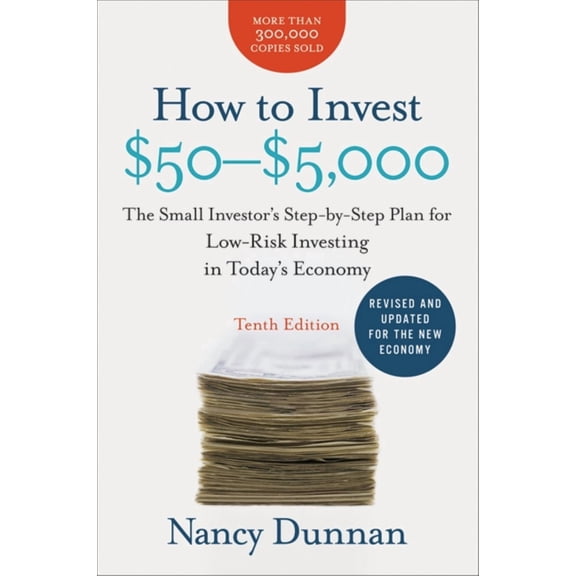 $873current price $8.73$18.98/lb
How to Invest $50-$5,000 10e: The Small Investor's Step-By-Step Plan for Low-Risk Investing in Today's Economy (Edition 10) (Paperback)
444.7 out of 5 Stars. 44 reviewsThe Hidden Wealth of Nations: The Scourge of Tax Havens, (Paperback) $15.59
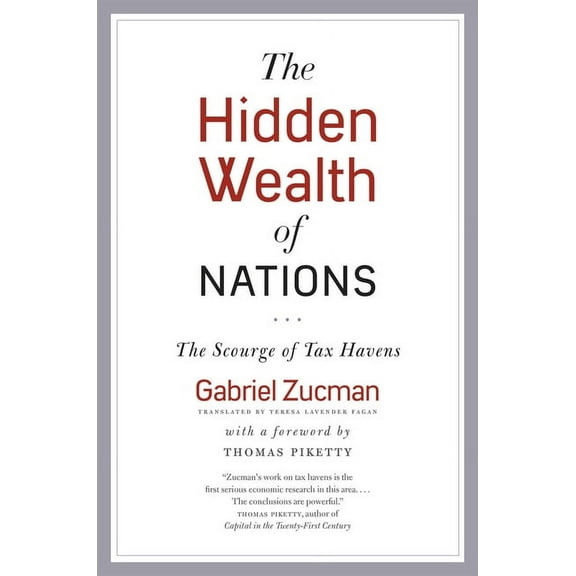 $1559current price $15.59
The Hidden Wealth of Nations: The Scourge of Tax Havens, (Paperback)
Bailout Nation: How Greed and Easy Money Corrupted Wall Street and Shook the World Economy, (Paperback) $11.63 $13.22/lb
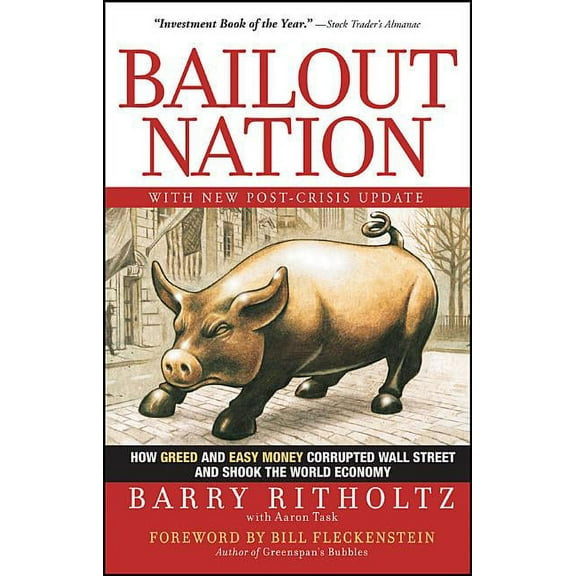 $1163current price $11.63$13.22/lb
Bailout Nation: How Greed and Easy Money Corrupted Wall Street and Shook the World Economy, (Paperback)
The Investor's Golden Playbook: 12 Rules for Achieving Real Wealth, (Paperback) $15.99
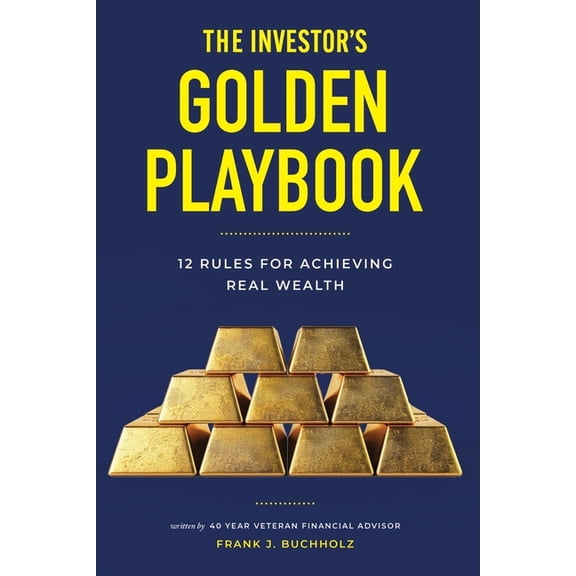 $1599current price $15.99
The Investor's Golden Playbook: 12 Rules for Achieving Real Wealth, (Paperback)
The Undercover Economist Strikes Back: How to Run--or Ruin--an Economy, (Paperback) $14.96
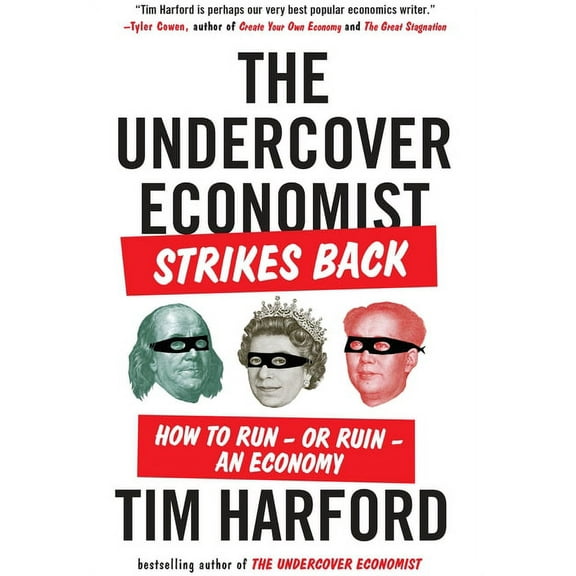 $1496current price $14.96
The Undercover Economist Strikes Back: How to Run--or Ruin--an Economy, (Paperback)
Daron Acemoglu: Why Nations Fail: The Origins of Power, Prosperity, and Poverty (Paperback) $14.38 $14.98/lb
 $1438current price $14.38$14.98/lb
Daron Acemoglu: Why Nations Fail: The Origins of Power, Prosperity, and Poverty (Paperback)
134.5 out of 5 Stars. 13 reviewsWealth, Trade, Prices, and Money: A Storyteller's Little Book of Economic Theory, (Paperback) $13.91
 $1391current price $13.91
Wealth, Trade, Prices, and Money: A Storyteller's Little Book of Economic Theory, (Paperback)
Trumponomics: How America's New Leader Can Shape Global Markets and Prosperity, (Paperback) $15.15
 $1515current price $15.15
Trumponomics: How America's New Leader Can Shape Global Markets and Prosperity, (Paperback)
Red Roulette: An Insider's Story of Wealth, Power, Corruption, and Vengeance in Today's China, (Paperback) $12.04 Was $14.39
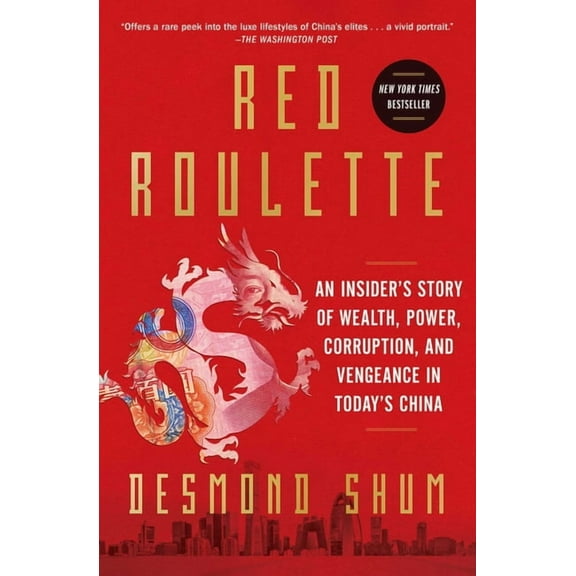 $1204current price $12.04, Was $14.39$14.39
Red Roulette: An Insider's Story of Wealth, Power, Corruption, and Vengeance in Today's China, (Paperback)
Global Bargain Hunting: The Investor's Guide to Profits in Emerging Markets, (Paperback) $15.25
 $1525current price $15.25
Global Bargain Hunting: The Investor's Guide to Profits in Emerging Markets, (Paperback)
People Before Profit: The New Globalization in an Age of Terror, Big Money, and Economic Crisis, (Paperback) $21.46
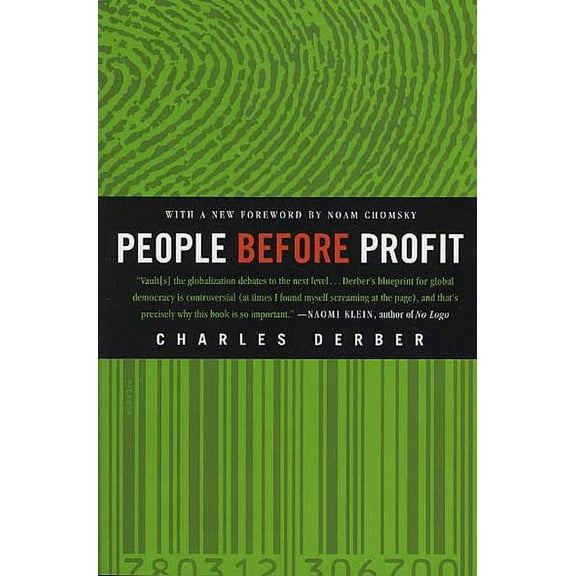 $2146current price $21.46
People Before Profit: The New Globalization in an Age of Terror, Big Money, and Economic Crisis, (Paperback)
Customer ratings & reviews
0 ratings|0 reviews
This item does not have any reviews yet

Related pages
- Strategic Company
- East Trading Company
- Agency Trader
- Millionaire Maker
- Post Capitalist
- Mining Syndicate
- Business Biographies & Memoirs
- Globalization Business & Money Books
- Park & Recreation Management Industry Books
- Trade & Tariffs in International Relations Books
- Social Security Policy Books
- Economic History Books