


Quantum Leap : How John Polkinghorne Found God in Science and Religion
Key item features
Specs
- Book formatPaperback
- Fiction/nonfictionNon-Fiction
- Publication dateSeptember, 2011
- Pages192
- PublisherLion Hudson, Lion Publishing Plc
- Original languagesEnglish
How do you want your item?
About this item
Product details
Specifications
Book format
Fiction/nonfiction
Genre
Publication date
Warranty
Warranty information
Similar items you might like
Based on what customers bought
Best seller The Books of Enoch: The Complete and Original Edition, Also Includes the Book of Jasher and the Book of Jubilees, (Paperback) $19.38 Was $30.00
Best seller $1938current price $19.38, Was $30.00$30.00
The Books of Enoch: The Complete and Original Edition, Also Includes the Book of Jasher and the Book of Jubilees, (Paperback)
634.9 out of 5 Stars. 63 reviewsFrom Science to God: A Physicist's Journey Into the Mystery of Consciousness, (Paperback) $15.95
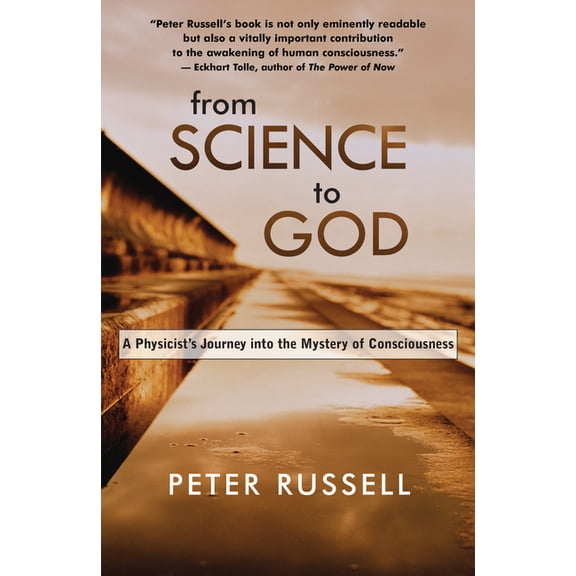 $1595current price $15.95
From Science to God: A Physicist's Journey Into the Mystery of Consciousness, (Paperback)
God Must Be God Must Be A Fly Fisher: The Drift of a Lifetime, Book 2, (Paperback) $14.95
 $1495current price $14.95
God Must Be God Must Be A Fly Fisher: The Drift of a Lifetime, Book 2, (Paperback)
The Science of Celestial Being (Paperback) $15.00
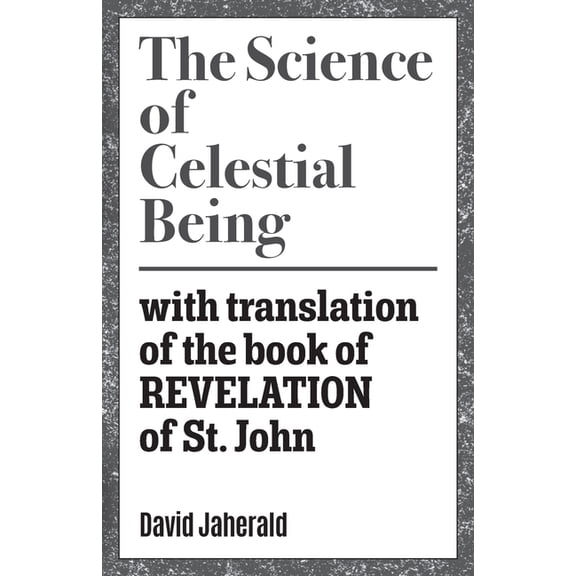 $1500current price $15.00
The Science of Celestial Being (Paperback)
The New Yoga: From Cults and Dogma to Science and Sanity, (Paperback) $15.99
 $1599current price $15.99
The New Yoga: From Cults and Dogma to Science and Sanity, (Paperback)
Origin of the Spiritual Species: A Melding of Science, Religion and Metaphysics (Paperback) by Lee Bondy $16.31
 $1631current price $16.31
Origin of the Spiritual Species: A Melding of Science, Religion and Metaphysics (Paperback) by Lee Bondy
To Adam About Adam : Where Science and Christianity Meet $13.95
 $1395current price $13.95
To Adam About Adam : Where Science and Christianity Meet
The Bodhisattva's Embrace: Dispatches from Engaged's Buddhism's Front Lines, (Paperback) $16.57
 $1657current price $16.57
The Bodhisattva's Embrace: Dispatches from Engaged's Buddhism's Front Lines, (Paperback)
Apophis Nexus Quantum Consciousness: The Science of Reality Shifting, (Paperback) $22.40
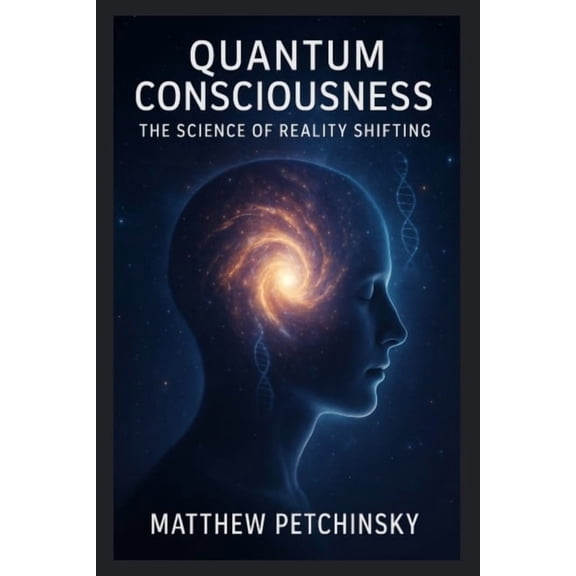 $2240current price $22.40
Apophis Nexus Quantum Consciousness: The Science of Reality Shifting, (Paperback)
Bad Faith: Race and the Rise of the Religious Right, (Hardcover) $15.83
 $1583current price $15.83
Bad Faith: Race and the Rise of the Religious Right, (Hardcover)
Pre-Owned The Quantum Screen: The Enigmas of Modern Physics and a New Model of Perceptual Consciousness Paperback $17.21
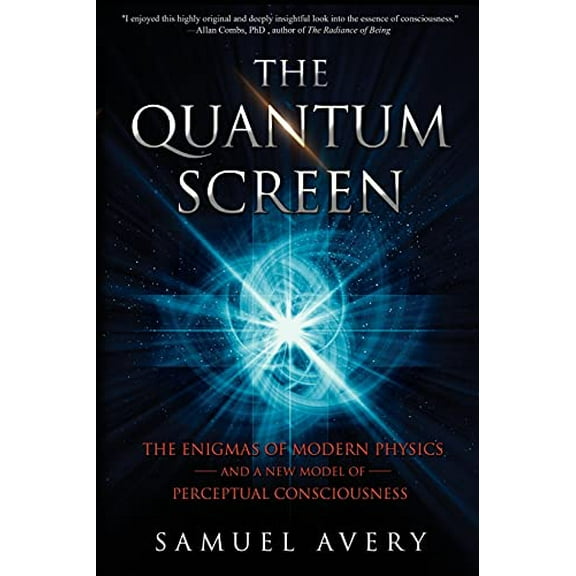 $1721current price $17.21
Pre-Owned The Quantum Screen: The Enigmas of Modern Physics and a New Model of Perceptual Consciousness Paperback
Mini Big Ideas: A Little Book of Big Innovations, (Hardcover) $15.72
 $1572current price $15.72
Mini Big Ideas: A Little Book of Big Innovations, (Hardcover)
Masters of Metaphysics The Mystery of Christ: The Bible Decoded by Neville Goddard Volume Two, (Paperback) $16.99
 $1699current price $16.99
Masters of Metaphysics The Mystery of Christ: The Bible Decoded by Neville Goddard Volume Two, (Paperback)
The Quantum Love of God: Exploring the Multi-Dimensional Mysteries of the Universe, (Paperback) $13.95
 $1395current price $13.95
The Quantum Love of God: Exploring the Multi-Dimensional Mysteries of the Universe, (Paperback)
Archetype of the Awakened Soul: Mysteries of the Pleroma, (Paperback) $15.95
 $1595current price $15.95
Archetype of the Awakened Soul: Mysteries of the Pleroma, (Paperback)
From Cells to Souls--And Beyond: Changing Portraits of Human Nature, (Paperback) $27.67 Was $31.50
 $2767current price $27.67, Was $31.50$31.50
From Cells to Souls--And Beyond: Changing Portraits of Human Nature, (Paperback)
God Doesn't Whisper, (Paperback) $15.99
 $1599current price $15.99
God Doesn't Whisper, (Paperback)
15 out of 5 Stars. 1 reviewsWho Told You That I Changed? (Paperback) $14.99
 $1499current price $14.99
Who Told You That I Changed? (Paperback)
Leap of Faith: A 29 Day Challenge to Be Better Together, (Paperback) $14.99
 $1499current price $14.99
Leap of Faith: A 29 Day Challenge to Be Better Together, (Paperback)

Customer ratings & reviews
Filtered and sorted results would be available on the new 'Customer ratings & reviews' page.
Showing 1-1 of 1 review
Great Thoughts of Polkinghorne Not great writing
I give this book 3 stars, the mean average of 5 for Polkinghorne's ideas and 1 for the quality of Nelson's/Giberson's writing. I love the ideas of Polkinghorne and this book contains many of his thoughts on various scientific, ethical, and theological topics. I have enjoyed reading Polkinghorne's thoughts, but I wish he had not chosen these particular authors to write this book for him, as I am disappointed in the lack of quality of the writing of this book. There are quotes and ideas that are duplicated. There does not seem to be an organizing theme from start to finish. Chapters are disorganized in how they are constructed. You'll be reading about one topic and the next paragraph will completely change to a different topic with no transitional bridge. And to compound things, many lines of print have no spaces between words which make it difficult for a native English language reader to read, but would be near impossible for one who is not excellent at reading English. You can't tell where one word ends and the next begins. It's all one long compound word. I am compelled to continue reading Polkinghorne's ideas but will do so in books he has written, not books that others have written about him. I encourage Polkinghorne to write his own autobiography, as he is a great writer and thinker and it would be good to have the story of his life and thoughts, in his own words.

Related pages
- Divide 2011
- Geoff Anderson
- Evan James Macgillivray
- 9 11 Filmmakers Commemorative Edition
- Standard Hollywood
- Mike Mass
- Holocaust History Kids' Books
- Holocaust History Books
- Exploration & Discovery Historical Teen & Young Adult Books
- Visionary & Metaphysical Novels
- Crime Film Books
- General Historical Teen & Young Adult Books