

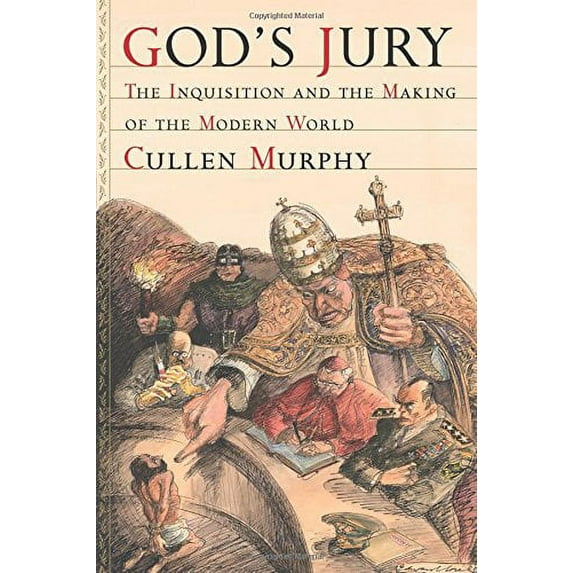
Hero image 0 of God's Jury : The Inquisition and the Making of the Modern World, 0 of 1
God's Jury : The Inquisition and the Making of the Modern World
(No ratings yet)
Key item features
Publishers Weekly,In 1998, the Vatican opened the Archivio della Congregazione per Dottrina della Fede, the Inquisition archive, thereby unveiling to the world the secrets of censorship and persecution that the Catholic Church had hidden since the Middle Ages. Journalist Murphy (The Word According to Eve) visits the archives several times and in his typically compelling style leads readers on a journey through the many inquisitions conducted by the Church over time, from the Spanish Inquisition to the Roman Inquisition of the 16th century. Murphy convincingly demonstrates that while the inquisitions most often are associated with the Church, they arise anytime an organization, state, or institution possesses and uses tools-such as censorship and torture-to stoke and manage suspicion, intolerance, and hatred of the other. Inquisitions require a system of law that can be administered with uniformity, the power to conduct interrogations and extract information, a bureaucracy with a large staff of individuals to administer it, a capacity to restrict the communications of others, and a source of power to ensure enforcement. Murphy powerfully shows that the impulse to inquisition can quietly take root in any system-civil or religious-that orders our lives. (Jan. 17) (c) Copyright PWxyz, LLC. All rights reserved.,Publishers Weekly,Publishers Weekly,In 1998, the Vatican opened the Archivio della Congregazione per Dottrina della Fede, the Inquisition archive, thereby unveiling to the world the secrets of censorship and persecution that the Catholic Church had hidden since the Middle Ages. Journalist Murphy (The Word According to Eve) visits the archives several times and in his typically compelling style leads readers on a journey through the many inquisitions conducted by the Church over time, from the Spanish Inquisition to the Roman Inquisition of the 16th century. Murphy convincingly demonstrates that while the inquisitions most often are associated with the Church, they arise anytime an organization, state, or institution possesses and uses tools-such as censorship and torture-to stoke and manage suspicion, intolerance, and hatred of the other. Inquisitions require a system of law that can be administered with uniformity, the power to conduct interrogations and extract information, a bureaucracy with a large staff of individuals to administer it, a capacity to restrict the communications of others, and a source of power to ensure enforcement. Murphy powerfully shows that the impulse to inquisition can quietly take root in any system-civil or religious-that orders our lives. (Jan. 17) (c) Copyright PWxyz, LLC. All rights reserved.
Specs
- Book formatHardcover
- Fiction/nonfictionNon-Fiction
- GenreHistory
- Pub date2012-01-17
- Pages320
- EditionStandard Edition
Price when purchased online
Not Available
How do you want your item?
Not available
About this item
Product details
The acclaimed author of "Are We Rome?" brings his highly praised blend of deep research, colorful travelogue, and insightful political analysis to a new history of the Inquisition.
Publishers Weekly,In 1998, the Vatican opened the Archivio della Congregazione per Dottrina della Fede, the Inquisition archive, thereby unveiling to the world the secrets of censorship and persecution that the Catholic Church had hidden since the Middle Ages. Journalist Murphy (The Word According to Eve) visits the archives several times and in his typically compelling style leads readers on a journey through the many inquisitions conducted by the Church over time, from the Spanish Inquisition to the Roman Inquisition of the 16th century. Murphy convincingly demonstrates that while the inquisitions most often are associated with the Church, they arise anytime an organization, state, or institution possesses and uses tools-such as censorship and torture-to stoke and manage suspicion, intolerance, and hatred of the other. Inquisitions require a system of law that can be administered with uniformity, the power to conduct interrogations and extract information, a bureaucracy with a large staff of individuals to administer it, a capacity to restrict the communications of others, and a source of power to ensure enforcement. Murphy powerfully shows that the impulse to inquisition can quietly take root in any system-civil or religious-that orders our lives. (Jan. 17) (c) Copyright PWxyz, LLC. All rights reserved.,Publishers Weekly,Publishers Weekly,In 1998, the Vatican opened the Archivio della Congregazione per Dottrina della Fede, the Inquisition archive, thereby unveiling to the world the secrets of censorship and persecution that the Catholic Church had hidden since the Middle Ages. Journalist Murphy (The Word According to Eve) visits the archives several times and in his typically compelling style leads readers on a journey through the many inquisitions conducted by the Church over time, from the Spanish Inquisition to the Roman Inquisition of the 16th century. Murphy convincingly demonstrates that while the inquisitions most often are associated with the Church, they arise anytime an organization, state, or institution possesses and uses tools-such as censorship and torture-to stoke and manage suspicion, intolerance, and hatred of the other. Inquisitions require a system of law that can be administered with uniformity, the power to conduct interrogations and extract information, a bureaucracy with a large staff of individuals to administer it, a capacity to restrict the communications of others, and a source of power to ensure enforcement. Murphy powerfully shows that the impulse to inquisition can quietly take root in any system-civil or religious-that orders our lives. (Jan. 17) (c) Copyright PWxyz, LLC. All rights reserved.
info:
We aim to show you accurate product information. Manufacturers, suppliers and others provide what you see here, and we have not verified it.
Specifications
Book format
Hardcover
Fiction/nonfiction
Non-Fiction
Genre
History
Pub date
2012-01-17
Customer ratings & reviews
0 ratings|0 reviews
This item does not have any reviews yet
