

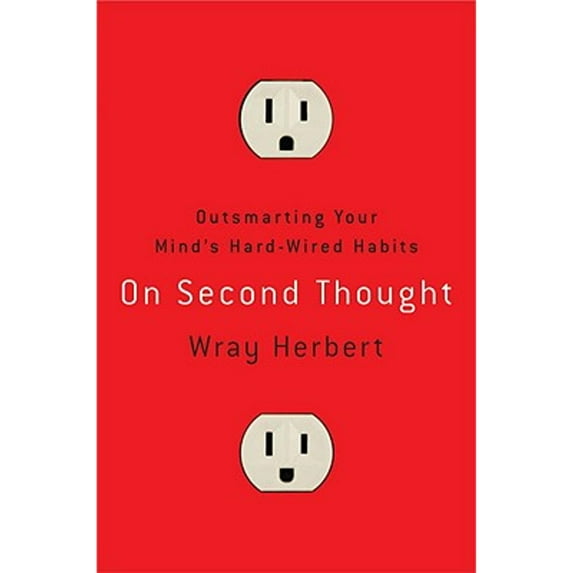
Hero image 0 of On Second Thought : Outsmarting Your Mind's Hard-Wired Habits (Hardcover), 0 of 1
On Second Thought : Outsmarting Your Mind's Hard-Wired Habits (Hardcover)
(No ratings yet)
Key item features
Our lives are composed of millions of choices, ranging from trivial to life-changing and momentous. Luckily, our brains have evolved a number of mental shortcuts, biases, and tricks that allow us to quickly negotiate this endless array of decisions. We don't "want "to rationally deliberate every choice we make, and thanks to these cognitive rules of thumb, we don't need to.
Yet these hard-wired shortcuts, mental wonders though they may be, can also be perilous. They can distort our thinking in ways that are often invisible to us, leading us to make poor decisions, to be easy targets for manipulators...and they can even cost us our lives.
The truth is, despite all the buzz about the power of gut-instinct decision-making in recent years, sometimes it's better to stop and say, "On second thought . . ."
The trick, of course, lies in knowing when to trust that instant response, and when to question it. In "On Second Thought, "acclaimed science writer Wray Herbert provides the first guide to achieving that balance. Drawing on real-world examples and cutting-edge research, he takes us on a fascinating, wide-ranging journey through our innate cognitive traps and tools, exposing the hidden dangers lurking in familiarity and consistency; the obstacles that keep us from accurately evaluating risk and value; the delusions that make it hard for us to accurately predict the future; the perils of the human yearning for order and simplicity; the ways our fears can color our very perceptions . . . and much more.
Along the way, Herbert reveals the often-bizarre cross-connections these shortcuts have secretly ingrained in our brains, answering such questions as why jury decisions may be shaped by our ancient need for cleanliness; what the state of your desk has to do with your political preferences; why loneliness can literally make us shiver; how drawing two dots on a piece of paper can desensitize us to violence... and how the very typeface on this page is affecting your decision about whether or not to buy this book.
Ultimately, "On Second Thought "is both a captivating exploration of the workings of the mind and an invaluable resource for anyone who wants to learn how to make smarter, better judgments every day.
Yet these hard-wired shortcuts, mental wonders though they may be, can also be perilous. They can distort our thinking in ways that are often invisible to us, leading us to make poor decisions, to be easy targets for manipulators...and they can even cost us our lives.
The truth is, despite all the buzz about the power of gut-instinct decision-making in recent years, sometimes it's better to stop and say, "On second thought . . ."
The trick, of course, lies in knowing when to trust that instant response, and when to question it. In "On Second Thought, "acclaimed science writer Wray Herbert provides the first guide to achieving that balance. Drawing on real-world examples and cutting-edge research, he takes us on a fascinating, wide-ranging journey through our innate cognitive traps and tools, exposing the hidden dangers lurking in familiarity and consistency; the obstacles that keep us from accurately evaluating risk and value; the delusions that make it hard for us to accurately predict the future; the perils of the human yearning for order and simplicity; the ways our fears can color our very perceptions . . . and much more.
Along the way, Herbert reveals the often-bizarre cross-connections these shortcuts have secretly ingrained in our brains, answering such questions as why jury decisions may be shaped by our ancient need for cleanliness; what the state of your desk has to do with your political preferences; why loneliness can literally make us shiver; how drawing two dots on a piece of paper can desensitize us to violence... and how the very typeface on this page is affecting your decision about whether or not to buy this book.
Ultimately, "On Second Thought "is both a captivating exploration of the workings of the mind and an invaluable resource for anyone who wants to learn how to make smarter, better judgments every day.
Specs
- Book formatHardcover
- Fiction/nonfictionNon-Fiction
- Publication dateOctober, 2010
- Pages304
- PublisherRandom House Inc
- Original languagesEnglish
Current price is USDNow $17.49
You save $3.76
was $21.25$21.25
You save$3.76
Price when purchased online
Out of stock
How do you want your item?
Out of stock
About this item
Product details
A popular science writer explores new research into the many shortcuts that our minds use to make snap decisions--and explains how they help, how they hurt, and how we can overrule them. Our lives are composed of millions of choices, ranging from trivial to life-changing and momentous. Luckily, our brains have evolved a number of mental shortcuts, biases, and tricks that allow us to quickly negotiate this endless array of decisions. We don't "want "to rationally deliberate every choice we make, and thanks to these cognitive rules of thumb, we don't need to.
Yet these hard-wired shortcuts, mental wonders though they may be, can also be perilous. They can distort our thinking in ways that are often invisible to us, leading us to make poor decisions, to be easy targets for manipulators...and they can even cost us our lives.
The truth is, despite all the buzz about the power of gut-instinct decision-making in recent years, sometimes it's better to stop and say, "On second thought . . ."
The trick, of course, lies in knowing when to trust that instant response, and when to question it. In "On Second Thought, "acclaimed science writer Wray Herbert provides the first guide to achieving that balance. Drawing on real-world examples and cutting-edge research, he takes us on a fascinating, wide-ranging journey through our innate cognitive traps and tools, exposing the hidden dangers lurking in familiarity and consistency; the obstacles that keep us from accurately evaluating risk and value; the delusions that make it hard for us to accurately predict the future; the perils of the human yearning for order and simplicity; the ways our fears can color our very perceptions . . . and much more.
Along the way, Herbert reveals the often-bizarre cross-connections these shortcuts have secretly ingrained in our brains, answering such questions as why jury decisions may be shaped by our ancient need for cleanliness; what the state of your desk has to do with your political preferences; why loneliness can literally make us shiver; how drawing two dots on a piece of paper can desensitize us to violence... and how the very typeface on this page is affecting your decision about whether or not to buy this book.
Ultimately, "On Second Thought "is both a captivating exploration of the workings of the mind and an invaluable resource for anyone who wants to learn how to make smarter, better judgments every day.
Yet these hard-wired shortcuts, mental wonders though they may be, can also be perilous. They can distort our thinking in ways that are often invisible to us, leading us to make poor decisions, to be easy targets for manipulators...and they can even cost us our lives.
The truth is, despite all the buzz about the power of gut-instinct decision-making in recent years, sometimes it's better to stop and say, "On second thought . . ."
The trick, of course, lies in knowing when to trust that instant response, and when to question it. In "On Second Thought, "acclaimed science writer Wray Herbert provides the first guide to achieving that balance. Drawing on real-world examples and cutting-edge research, he takes us on a fascinating, wide-ranging journey through our innate cognitive traps and tools, exposing the hidden dangers lurking in familiarity and consistency; the obstacles that keep us from accurately evaluating risk and value; the delusions that make it hard for us to accurately predict the future; the perils of the human yearning for order and simplicity; the ways our fears can color our very perceptions . . . and much more.
Along the way, Herbert reveals the often-bizarre cross-connections these shortcuts have secretly ingrained in our brains, answering such questions as why jury decisions may be shaped by our ancient need for cleanliness; what the state of your desk has to do with your political preferences; why loneliness can literally make us shiver; how drawing two dots on a piece of paper can desensitize us to violence... and how the very typeface on this page is affecting your decision about whether or not to buy this book.
Ultimately, "On Second Thought "is both a captivating exploration of the workings of the mind and an invaluable resource for anyone who wants to learn how to make smarter, better judgments every day.
Our lives are composed of millions of choices, ranging from trivial to life-changing and momentous. Luckily, our brains have evolved a number of mental shortcuts, biases, and tricks that allow us to quickly negotiate this endless array of decisions. We don't "want "to rationally deliberate every choice we make, and thanks to these cognitive rules of thumb, we don't need to.
Yet these hard-wired shortcuts, mental wonders though they may be, can also be perilous. They can distort our thinking in ways that are often invisible to us, leading us to make poor decisions, to be easy targets for manipulators...and they can even cost us our lives.
The truth is, despite all the buzz about the power of gut-instinct decision-making in recent years, sometimes it's better to stop and say, "On second thought . . ."
The trick, of course, lies in knowing when to trust that instant response, and when to question it. In "On Second Thought, "acclaimed science writer Wray Herbert provides the first guide to achieving that balance. Drawing on real-world examples and cutting-edge research, he takes us on a fascinating, wide-ranging journey through our innate cognitive traps and tools, exposing the hidden dangers lurking in familiarity and consistency; the obstacles that keep us from accurately evaluating risk and value; the delusions that make it hard for us to accurately predict the future; the perils of the human yearning for order and simplicity; the ways our fears can color our very perceptions . . . and much more.
Along the way, Herbert reveals the often-bizarre cross-connections these shortcuts have secretly ingrained in our brains, answering such questions as why jury decisions may be shaped by our ancient need for cleanliness; what the state of your desk has to do with your political preferences; why loneliness can literally make us shiver; how drawing two dots on a piece of paper can desensitize us to violence... and how the very typeface on this page is affecting your decision about whether or not to buy this book.
Ultimately, "On Second Thought "is both a captivating exploration of the workings of the mind and an invaluable resource for anyone who wants to learn how to make smarter, better judgments every day.
Yet these hard-wired shortcuts, mental wonders though they may be, can also be perilous. They can distort our thinking in ways that are often invisible to us, leading us to make poor decisions, to be easy targets for manipulators...and they can even cost us our lives.
The truth is, despite all the buzz about the power of gut-instinct decision-making in recent years, sometimes it's better to stop and say, "On second thought . . ."
The trick, of course, lies in knowing when to trust that instant response, and when to question it. In "On Second Thought, "acclaimed science writer Wray Herbert provides the first guide to achieving that balance. Drawing on real-world examples and cutting-edge research, he takes us on a fascinating, wide-ranging journey through our innate cognitive traps and tools, exposing the hidden dangers lurking in familiarity and consistency; the obstacles that keep us from accurately evaluating risk and value; the delusions that make it hard for us to accurately predict the future; the perils of the human yearning for order and simplicity; the ways our fears can color our very perceptions . . . and much more.
Along the way, Herbert reveals the often-bizarre cross-connections these shortcuts have secretly ingrained in our brains, answering such questions as why jury decisions may be shaped by our ancient need for cleanliness; what the state of your desk has to do with your political preferences; why loneliness can literally make us shiver; how drawing two dots on a piece of paper can desensitize us to violence... and how the very typeface on this page is affecting your decision about whether or not to buy this book.
Ultimately, "On Second Thought "is both a captivating exploration of the workings of the mind and an invaluable resource for anyone who wants to learn how to make smarter, better judgments every day.
info:
We aim to show you accurate product information. Manufacturers, suppliers and others provide what you see here, and we have not verified it.
Specifications
Book format
Hardcover
Fiction/nonfiction
Non-Fiction
Publication date
October, 2010
Pages
304
Warranty
Warranty information
Please be aware that the warranty terms on items offered for sale by third party Marketplace sellers may differ from those displayed in this section (if any). To confirm warranty terms on an item offered for sale by a third party Marketplace seller, please use the 'Contact seller' feature on the third party Marketplace seller's information page and request the item's warranty terms prior to purchase.
Customer ratings & reviews
0 ratings|0 reviews
This item does not have any reviews yet
