

Pre-Owned Moral Choices: An Introduction to Ethics (Hardcover)
Key item features
With its unique union of theory and application and its well-organized, easy-to-use design, Moral Choices has earned its place as the standard text for college ethics courses. This third edition offers extensive updates, revisions, and brand new material, all designed to help students develop a sound and current basis for making ethical decisions in today's complex postmodern culture. Moral Choices outlines the distinctive elements of Christian ethics while avoiding undue dogmatism. The book also introduces other ethical systems and their key historical proponents, including Plato, Aristotle, Augustine, Thomas Aquinas, and Immanuel Kant. After describing a seven-step procedure for tackling ethical dilemmas, author Scott Rae uses case studies to address some of today's most pressing social issues. He guides students in thinking critically and biblically about: ? Abortion ? Reproductive Technologies ? Euthanasia ? Capital Punishment ? Sexual Ethics ? The Morality of War ? Genetic Technologies and Human Cloning ? NEW: Ethics and Economics NEW FEATURES - Online resources for instructors, with test banks, PowerPoint(R) presentations, and more - Chapter on ethics and economics covering global capitalism, environmental ethics, and business ethics - Significant new material on bioethics and stem cell and embryo research - Discussion questions at the end of each chapter - Sidebars with case studies for discussion
Specs
- Book formatHardcover
- Fiction/nonfictionNon-Fiction
- GenreReligion
- Publication dateAugust, 2009
- Pages375
- Number in series1
- Free shipping
 Free 30-day returns
How do you want your item?


About this item
Product details
With its unique union of theory and application and its well-organized, easy-to-use design, Moral Choices has earned its place as the standard text for college ethics courses. This third edition offers extensive updates, revisions, and brand new material, all designed to help students develop a sound and current basis for making ethical decisions in today's complex postmodern culture. Moral Choices outlines the distinctive elements of Christian ethics while avoiding undue dogmatism. The book also introduces other ethical systems and their key historical proponents, including Plato, Aristotle, Augustine, Thomas Aquinas, and Immanuel Kant. After describing a seven-step procedure for tackling ethical dilemmas, author Scott Rae uses case studies to address some of today's most pressing social issues. He guides students in thinking critically and biblically about: ? Abortion ? Reproductive Technologies ? Euthanasia ? Capital Punishment ? Sexual Ethics ? The Morality of War ? Genetic Technologies and Human Cloning ? NEW: Ethics and Economics NEW FEATURES - Online resources for instructors, with test banks, PowerPoint(R) presentations, and more - Chapter on ethics and economics covering global capitalism, environmental ethics, and business ethics - Significant new material on bioethics and stem cell and embryo research - Discussion questions at the end of each chapter - Sidebars with case studies for discussion
Specifications
Book format
Fiction/nonfiction
Genre
Publication date
Warranty
Warranty information
Similar items you might like
Based on what customers bought
Pre-Owned Saints and Social Justice: A Guide to Changing the World (Paperback) 1612786901 9781612786902 $3.99 Was $4.59
 3 optionsAvailable in additional 3 options$399current price $3.99, Was $4.59$4.59
Pre-Owned Saints and Social Justice: A Guide to Changing the World (Paperback) 1612786901 9781612786902
Theonomy in Christian Ethics $30.20
 $3020current price $30.20
Theonomy in Christian Ethics
Virtual Morality: Christian Ethics in the Computer Age, (Paperback) $22.26
 $2226current price $22.26
Virtual Morality: Christian Ethics in the Computer Age, (Paperback)
Reasonable Moral Faith: A History, Primer, and Argument, (Paperback) $29.98
 $2998current price $29.98
Reasonable Moral Faith: A History, Primer, and Argument, (Paperback)
Faithful Reason: Natural Law Ethics for God's Glory and Our Good, (Hardcover) $13.47 Was $23.37
 $1347current price $13.47, Was $23.37$23.37
Faithful Reason: Natural Law Ethics for God's Glory and Our Good, (Hardcover)
Pre-Owned Moral Choices: An Introduction to Ethics (Hardcover) 0310291097 9780310291091 $4.57 Was $5.23
 2 optionsAvailable in additional 2 options$457current price $4.57, Was $5.23$5.23
Pre-Owned Moral Choices: An Introduction to Ethics (Hardcover) 0310291097 9780310291091
Ethics, (Paperback) $13.99
 $1399current price $13.99
Ethics, (Paperback)
Ethics Beyond Rules: How Christ's Call to Love Informs Our Moral Choices, (Hardcover) $14.09
 $1409current price $14.09
Ethics Beyond Rules: How Christ's Call to Love Informs Our Moral Choices, (Hardcover)
Evangelical Ethics: A Reader $33.29 Was $40.00
 $3329current price $33.29, Was $40.00$40.00
Evangelical Ethics: A Reader
Moral Choices, Fifth Edition: An Introduction to Ethics, (Hardcover) $42.98
 $4298current price $42.98
Moral Choices, Fifth Edition: An Introduction to Ethics, (Hardcover)
Happiness and the Christian Moral Life: An Introduction to Christian Ethics, (Paperback) $29.90
 $2990current price $29.90
Happiness and the Christian Moral Life: An Introduction to Christian Ethics, (Paperback)
An Introduction to Philosophy: A Christian Guide to the Things That Really Matter, (Hardcover) $17.30
 $1730current price $17.30
An Introduction to Philosophy: A Christian Guide to the Things That Really Matter, (Hardcover)
Essentials in Christian Ethics Moral Apologetics: A Short Companion, (Paperback) $18.78 Was $21.98
 $1878current price $18.78, Was $21.98$21.98
Essentials in Christian Ethics Moral Apologetics: A Short Companion, (Paperback)
Reenvisioning Christian Ethics, (Hardcover) $37.26 Was $43.02
 $3726current price $37.26, Was $43.02$43.02
Reenvisioning Christian Ethics, (Hardcover)
Ethics and Liberation (Paperback) $26.42
 $2642current price $26.42
Ethics and Liberation (Paperback)
When Life Begins, (Hardcover) $22.95
 $2295current price $22.95
When Life Begins, (Hardcover)
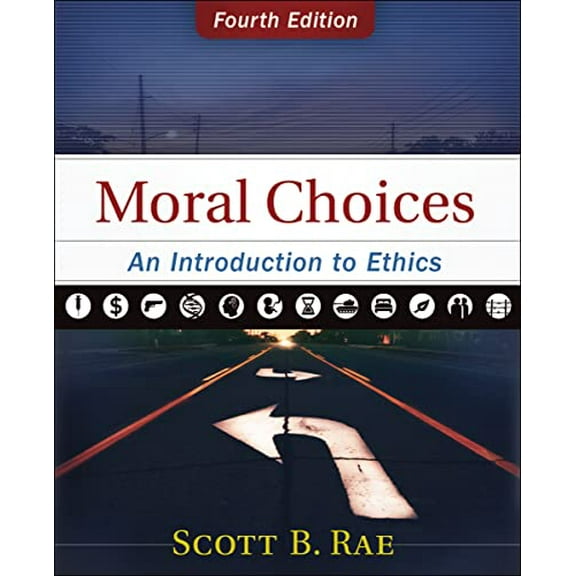
15 out of 5 Stars. 1 reviewsPre-Owned Moral Choices: An Introduction to Ethics (Hardcover) 0310536421 9780310536420 $16.49
 $1649current price $16.49
Pre-Owned Moral Choices: An Introduction to Ethics (Hardcover) 0310536421 9780310536420
Fundamental Ethics: A Liberationist Approach (Hardcover) $40.23
 $4023current price $40.23
Fundamental Ethics: A Liberationist Approach (Hardcover)
For Such a Time as This (Hardcover) $35.82
 $3582current price $35.82
For Such a Time as This (Hardcover)
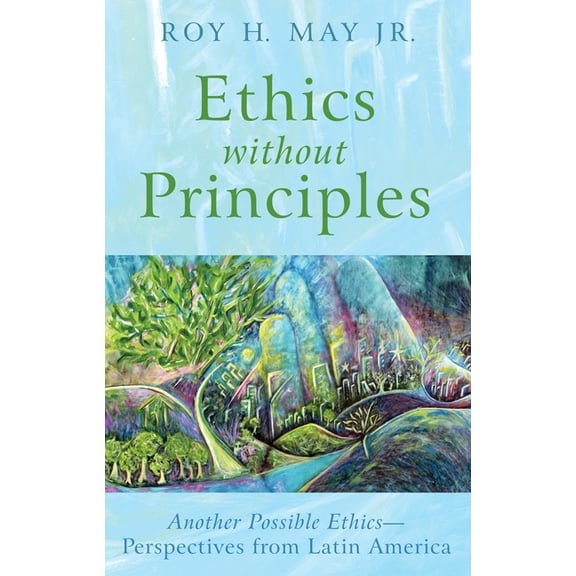
Ethics without Principles (Paperback) $20.00
 $2000current price $20.00
Ethics without Principles (Paperback)
Customer ratings & reviews
Filtered and sorted results would be available on the new 'Customer ratings & reviews' page.
Showing 1-1 of 1 review
partisan and unBiblical
An unhelpful introduction to Christian ethics. Its chapters cover the main controversies issues that dominate political theater: abortion, infertility technology, cloning and genetic engineering, death penalty, sexual orientation, and war. The analysis is often boiled down to a simplistic "either/or" scenario that doesn't acknowledge third ways and creative solutions. Arguments favoring the author's perspective are given authoritatively, while arguments against the author are dismissed. Only a few chapters contain balance, and little in the book would convince anyone to change their mind on an issue, or even help an unsure person make up their mind, unless that person had thought little about the issue and was easily persuaded. Some of the lowlights: * The first example describes a homosexual HIV-positive Latino man on welfare who has gunshot wounds to the stomach and who you can "reasonably assume" is a gang member. Seriously, that's the scenario. The author suggests some people would say that this is just a case of "reaping what one sows". * Arguments are inconsistent. In the abortion, cloning, and euthanasia chapters, even the possibility that an innocent human life might be taken is reason enough to never do the procedure. The euthanasia chapter states, "Scripture is clear that such matters belong exclusively to God--that is, there are some prerogatives in life that are only God's, the direct taking of life being one of them." But in the death penalty and war chapters, taking life is suddenly okay, and the chance that innocent lives will be taken is no longer a deciding factor - in the war chapter, the accidental taking of innocent life isn't even considered. Another example is the death penalty chapter - the fact that the crime rate is "much lower in countries with Islamic law" is taken as evidence that harsh punishments may be a good deterrent, but the fact that the murder rate is lower in European countries that have abolished the death penalty is considered irrelevant because "the murder rate is very complex and may be affected by factors other than the deterrent." * Random proof-texting is common. "A time to die" in Ecclesiastes 3:2 is taken in the euthanasia chapter to mean that that time to die is appointed by God and no one has the right to decide it themselves, but "A time to be born" is ignored in the infertility chapter. Surrogate parenthood and the use of donor sperm or eggs is considered "outside the creation norm" because they're not part of Genesis 1-2, but genetic engineering and bypassing infertility are considered to be within the creation norm. * Unsupportable statements are common. Imagine making claims like, "In the pre-Civil War South, slavery clearly benefitted more people than it harmed" or "Scripture looks skeptically on any reproductive intervention that goes outside the married couple for genetic material".
