

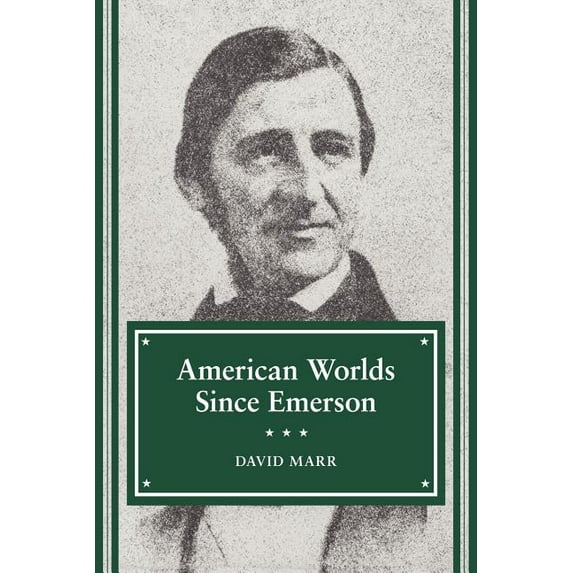
American Worlds Since Emerson (Paperback)
(No ratings yet)
Key item features
Examining the relation between literature and American political life, David Marr proposes that the Emersonian tradition is so central to American culture that it can serve as a means of mapping the literary and intellectual history of the United States over the last 150 years. He shows how American literary genius and political thought have been concerned with the same family of problems all prompted by the Emersonian tradition of "idealized privatism," which so rejected the possibilities of political life that it has discourages the emergence of a public discourse and a political language.
Marr shows that the decline of the political, the elusiveness of democracy, and the monumental influence of "idealized privatism" on its historiographers and critics are major themes of American literary thought and constitute a tradition that spans literature, criticism, history, philosophy, and political theory. He illustrates this through readings of Emerson's ideas of nature, culture, and politics; Walt Whitman's fantasy of the autocrat of letters; William James's critique of "vicious intellectualism;" the contrasting formulations of radical interiority in the poetry of Robinson Jeffers and the criticism of R. P. Blackmur; and two contemporary pictures of public discourse as revealed in Joseph Heller's Catch-22 and the essays of Ralph Ellison.
Discussing not only the works of classic American thinkers, but also the recent writings of such new-pragmatists as Stanley Cavell, Richard Rorty, and Nelson Goodman, Marr calls for a reassessment of the American intellectual past and of contemporary assumptions about the relations of literature to political life.
Marr shows that the decline of the political, the elusiveness of democracy, and the monumental influence of "idealized privatism" on its historiographers and critics are major themes of American literary thought and constitute a tradition that spans literature, criticism, history, philosophy, and political theory. He illustrates this through readings of Emerson's ideas of nature, culture, and politics; Walt Whitman's fantasy of the autocrat of letters; William James's critique of "vicious intellectualism;" the contrasting formulations of radical interiority in the poetry of Robinson Jeffers and the criticism of R. P. Blackmur; and two contemporary pictures of public discourse as revealed in Joseph Heller's Catch-22 and the essays of Ralph Ellison.
Discussing not only the works of classic American thinkers, but also the recent writings of such new-pragmatists as Stanley Cavell, Richard Rorty, and Nelson Goodman, Marr calls for a reassessment of the American intellectual past and of contemporary assumptions about the relations of literature to political life.
Specs
- Book formatPaperback
- Fiction/nonfictionNon-Fiction
- GenreLiterature & Fiction
- Publication dateOctober, 2009
- Pages248
- Number in series1
Current price is USD$38.84
Price when purchased online
Out of stock
How do you want your item?
Out of stock
About this item
Product details
Examining the relation between literature and American political life, David Marr proposes that the Emersonian tradition is so central to American culture that it can serve as a means of mapping the literary and intellectual history of the United States over the last 150 years. He shows how American literary genius and political thought have been concerned with the same family of problems all prompted by the Emersonian tradition of idealized privatism, which so rejected the possibilities of political life that it has discourages the emergence of a public discourse and a political language. Marr shows that the decline of the political, the elusiveness of democracy, and the monumental influence of idealized privatism on its historiographers and critics are major themes of American literary thought and constitute a tradition that spans literature, criticism, history, philosophy, and political theory. He illustrates this through readings of Emerson's ideas of nature, culture, and politics; Walt Whitman's fantasy of the autocrat of letters; William James's critique of vicious intellectualism; the contrasting formulations of radical interiority in the poetry of Robinson Jeffers and the criticism of R. P. Blackmur; and two contemporary pictures of public discourse as revealed in Joseph Heller's Catch-22 and the essays of Ralph Ellison. Discussing not only the works of classic American thinkers, but also the recent writings of such new-pragmatists as Stanley Cavell, Richard Rorty, and Nelson Goodman, Marr calls for a reassessment of the American intellectual past and of contemporary assumptions about the relations of literature to political life.
Examining the relation between literature and American political life, David Marr proposes that the Emersonian tradition is so central to American culture that it can serve as a means of mapping the literary and intellectual history of the United States over the last 150 years. He shows how American literary genius and political thought have been concerned with the same family of problems all prompted by the Emersonian tradition of "idealized privatism," which so rejected the possibilities of political life that it has discourages the emergence of a public discourse and a political language.
Marr shows that the decline of the political, the elusiveness of democracy, and the monumental influence of "idealized privatism" on its historiographers and critics are major themes of American literary thought and constitute a tradition that spans literature, criticism, history, philosophy, and political theory. He illustrates this through readings of Emerson's ideas of nature, culture, and politics; Walt Whitman's fantasy of the autocrat of letters; William James's critique of "vicious intellectualism;" the contrasting formulations of radical interiority in the poetry of Robinson Jeffers and the criticism of R. P. Blackmur; and two contemporary pictures of public discourse as revealed in Joseph Heller's Catch-22 and the essays of Ralph Ellison.
Discussing not only the works of classic American thinkers, but also the recent writings of such new-pragmatists as Stanley Cavell, Richard Rorty, and Nelson Goodman, Marr calls for a reassessment of the American intellectual past and of contemporary assumptions about the relations of literature to political life.
Marr shows that the decline of the political, the elusiveness of democracy, and the monumental influence of "idealized privatism" on its historiographers and critics are major themes of American literary thought and constitute a tradition that spans literature, criticism, history, philosophy, and political theory. He illustrates this through readings of Emerson's ideas of nature, culture, and politics; Walt Whitman's fantasy of the autocrat of letters; William James's critique of "vicious intellectualism;" the contrasting formulations of radical interiority in the poetry of Robinson Jeffers and the criticism of R. P. Blackmur; and two contemporary pictures of public discourse as revealed in Joseph Heller's Catch-22 and the essays of Ralph Ellison.
Discussing not only the works of classic American thinkers, but also the recent writings of such new-pragmatists as Stanley Cavell, Richard Rorty, and Nelson Goodman, Marr calls for a reassessment of the American intellectual past and of contemporary assumptions about the relations of literature to political life.
info:
We aim to show you accurate product information. Manufacturers, suppliers and others provide what you see here, and we have not verified it.
Specifications
Book format
Paperback
Fiction/nonfiction
Non-Fiction
Genre
Literature & Fiction
Publication date
October, 2009
Warranty
Warranty information
Please be aware that the warranty terms on items offered for sale by third party Marketplace sellers may differ from those displayed in this section (if any). To confirm warranty terms on an item offered for sale by a third party Marketplace seller, please use the 'Contact seller' feature on the third party Marketplace seller's information page and request the item's warranty terms prior to purchase.
Customer ratings & reviews
0 ratings|0 reviews
This item does not have any reviews yet

Related pages
- Andrew I Cohen
- People Time Forgot
- Dream Team America
- Garry L Hagberg
- True Companion
- Rowan Blanchard 2020
- Editors, Journalists & Publishers Biographies & Memoirs
- Medical Biographies & Memoirs
- Business Biographies & Memoirs
- Reference Biographies & Memoirs
- Environmentalists & Naturalists Biographies & Memoirs
- Personal Memoirs