


Oxford Cognitive Models and Architecture Principles of Synthetic Intelligence: Psi: An Architecture of Motivated Cognition, (Hardcover)
(No ratings yet)
Key item features
- Oxford Cognitive Models and Architecture Principles of Synthetic Intelligence: Psi: An Architecture of Motivated Cognition, (Hardcover)
- Author: Oxford University Press
- ISBN: 9780195370676
- Format: Hardcover
- Publication Date: 2009-04-06
- Page Count: 400
Specs
- Book formatHardcover
- Fiction/nonfictionNon-Fiction
- Publication dateApril, 2009
- Pages400
- Reading levelUndergraduate
- Number in series0
Current price is USD$114.57
Price when purchased online
- Free shipping
 Free 90-day returns
How do you want your item?
Try 30 days of Free Shipping with Walmart+! Choose plan at checkout.
Columbus, 43215
Arrives by Tue, Apr 28
.Order within 10 hr 26 min
Sold and shipped by Walmart.com

Free 90-day returns

This item is gift eligible
More seller options (3)
Starting from $151.44

Get free delivery, shipping and more*
*Restrictions apply Try Walmart+ now
About this item
Product details
From the Foreword:
"In this book Joscha Bach introduces Dietrich Dörner's PSI architecture and Joscha's implementation of the MicroPSI architecture. These architectures and their implementation have several lessons for other architectures and models. Most notably, the PSI architecture includes drives and thus directly addresses questions of emotional behavior. An architecture including drives helps clarify how emotions could arise. It also changes the way that the architecture works on a fundamental level, providing an architecture more suited for behaving autonomously in a simulated world. PSI includes three types of drives, physiological (e.g., hunger), social (i.e., affiliation needs), and cognitive (i.e., reduction of uncertainty and expression of competency). These drives routinely influence goal formation and knowledge selection and application. The resulting architecture generates new kinds of behaviors, including context dependent memories, socially motivated behavior, and internally motivated task switching. This architecture illustrates how emotions and physical drives can be included in an embodied cognitive architecture. The PSI architecture, while including perceptual, motor, learning, and cognitive processing components, also includes several novel knowledge representations: temporal structures, spatial memories, and several new information processing mechanisms and behaviors, including progress through types of knowledge sources when problem solving (the Rasmussen ladder), and knowledge-based hierarchical active vision. These mechanisms and representations suggest ways for making other architectures more realistic, more accurate, and easier to use. The architecture is demonstrated in the Island simulated environment. While it may look like a simple game, it was carefully designed to allow multiple tasks to be pursued and provides ways to satisfy the multiple drives. It would be useful in its own right for developing other architectures interested in multi-tasking, long-term learning, social interaction, embodied architectures, and related aspects of behavior that arise in a complex but tractable real-time environment. The resulting models are not presented as validated cognitive models, but as theoretical explorations in the space of architectures for generating behavior. The sweep of the architecture can thus be larger-it presents a new cognitive architecture attempting to provide a unified theory of cognition. It attempts to cover perhaps the largest number of phenomena to date. This is not a typical cognitive modeling work, but one that I believe that we can learn much from."
--Frank E. Ritter, Series Editor
Although computational models of cognition have become very popular, these models are relatively limited in their coverage of cognition-- they usually only emphasize problem solving and reasoning, or treat perception and motivation as isolated modules. The first architecture to cover cognition more broadly is PSI theory, developed by Dietrich Dorner. By integrating motivation and emotion with perception and reasoning, and including grounded neuro-symbolic representations, PSI contributes significantly to an integrated understanding of the mind. It provides a conceptual framework that highlights the relationships between perception and memory, language and mental representation, reasoning and motivation, emotion and cognition, autonomy and social behavior. It is, however, unfortunate that PSI's origin in psychology, its methodology, and its lack of documentation have limited its impact. The proposed book adapts Psi theory to cognitive science and artificial intelligence, by elucidating both its theoretical and technical frameworks, and clarifying its contribution to how we have come to und
"In this book Joscha Bach introduces Dietrich Dörner's PSI architecture and Joscha's implementation of the MicroPSI architecture. These architectures and their implementation have several lessons for other architectures and models. Most notably, the PSI architecture includes drives and thus directly addresses questions of emotional behavior. An architecture including drives helps clarify how emotions could arise. It also changes the way that the architecture works on a fundamental level, providing an architecture more suited for behaving autonomously in a simulated world. PSI includes three types of drives, physiological (e.g., hunger), social (i.e., affiliation needs), and cognitive (i.e., reduction of uncertainty and expression of competency). These drives routinely influence goal formation and knowledge selection and application. The resulting architecture generates new kinds of behaviors, including context dependent memories, socially motivated behavior, and internally motivated task switching. This architecture illustrates how emotions and physical drives can be included in an embodied cognitive architecture. The PSI architecture, while including perceptual, motor, learning, and cognitive processing components, also includes several novel knowledge representations: temporal structures, spatial memories, and several new information processing mechanisms and behaviors, including progress through types of knowledge sources when problem solving (the Rasmussen ladder), and knowledge-based hierarchical active vision. These mechanisms and representations suggest ways for making other architectures more realistic, more accurate, and easier to use. The architecture is demonstrated in the Island simulated environment. While it may look like a simple game, it was carefully designed to allow multiple tasks to be pursued and provides ways to satisfy the multiple drives. It would be useful in its own right for developing other architectures interested in multi-tasking, long-term learning, social interaction, embodied architectures, and related aspects of behavior that arise in a complex but tractable real-time environment. The resulting models are not presented as validated cognitive models, but as theoretical explorations in the space of architectures for generating behavior. The sweep of the architecture can thus be larger-it presents a new cognitive architecture attempting to provide a unified theory of cognition. It attempts to cover perhaps the largest number of phenomena to date. This is not a typical cognitive modeling work, but one that I believe that we can learn much from."
--Frank E. Ritter, Series Editor
Although computational models of cognition have become very popular, these models are relatively limited in their coverage of cognition-- they usually only emphasize problem solving and reasoning, or treat perception and motivation as isolated modules. The first architecture to cover cognition more broadly is PSI theory, developed by Dietrich Dorner. By integrating motivation and emotion with perception and reasoning, and including grounded neuro-symbolic representations, PSI contributes significantly to an integrated understanding of the mind. It provides a conceptual framework that highlights the relationships between perception and memory, language and mental representation, reasoning and motivation, emotion and cognition, autonomy and social behavior. It is, however, unfortunate that PSI's origin in psychology, its methodology, and its lack of documentation have limited its impact. The proposed book adapts Psi theory to cognitive science and artificial intelligence, by elucidating both its theoretical and technical frameworks, and clarifying its contribution to how we have come to und
- Oxford Cognitive Models and Architecture Principles of Synthetic Intelligence: Psi: An Architecture of Motivated Cognition, (Hardcover)
- Author: Oxford University Press
- ISBN: 9780195370676
- Format: Hardcover
- Publication Date: 2009-04-06
- Page Count: 400
info:
We aim to show you accurate product information. Manufacturers, suppliers and others provide what you see here, and we have not verified it.
Specifications
Book format
Hardcover
Fiction/nonfiction
Non-Fiction
Genre
Political & Social Sciences
Publication date
April, 2009
Warranty
Warranty information
Please be aware that the warranty terms on items offered for sale by third party Marketplace sellers may differ from those displayed in this section (if any). To confirm warranty terms on an item offered for sale by a third party Marketplace seller, please use the 'Contact seller' feature on the third party Marketplace seller's information page and request the item's warranty terms prior to purchase.
Similar items you might like
Based on what customers bought
Studies in Brain and Mind Neural Machines: A Defense of Non-Representationalism in Cognitive Neuroscience, Book 22, (Hardcover) $97.38
 $9738current price $97.38
Studies in Brain and Mind Neural Machines: A Defense of Non-Representationalism in Cognitive Neuroscience, Book 22, (Hardcover)
Software Architecture Knowledge Management: Theory and Practice, (Hardcover) $107.14
 $10714current price $107.14
Software Architecture Knowledge Management: Theory and Practice, (Hardcover)
Computational Techniques for Intelligence Analysis: A Cognitive Approach, (Hardcover) $82.75
 $8275current price $82.75
Computational Techniques for Intelligence Analysis: A Cognitive Approach, (Hardcover)
Studies in Computational Intelligence Nature-Inspired Design of Hybrid Intelligent Systems, Book 667, (Hardcover) $210.53
 $21053current price $210.53
Studies in Computational Intelligence Nature-Inspired Design of Hybrid Intelligent Systems, Book 667, (Hardcover)
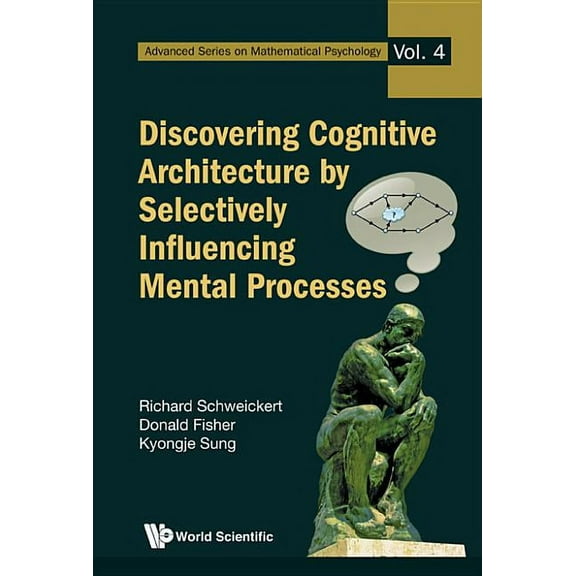
Advanced Mathematical Psychology Discovering Cognitive Architecture By..., Book 4, (Hardcover) $150.85
 $15085current price $150.85
Advanced Mathematical Psychology Discovering Cognitive Architecture By..., Book 4, (Hardcover)
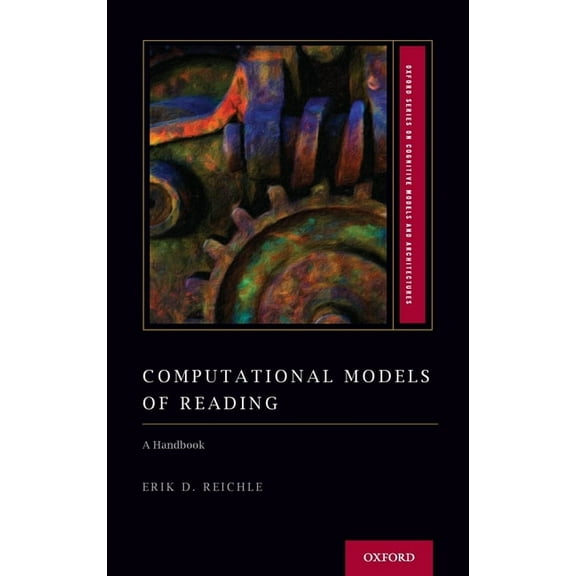
Oxford Cognitive Models and Architecture Computational Models of Reading: A Handbook, (Hardcover) $79.87
 $7987current price $79.87
Oxford Cognitive Models and Architecture Computational Models of Reading: A Handbook, (Hardcover)
Philosophy of Metacognition: Mental Agency and Self-Awareness, (Hardcover) $116.10
 $11610current price $116.10
Philosophy of Metacognition: Mental Agency and Self-Awareness, (Hardcover)
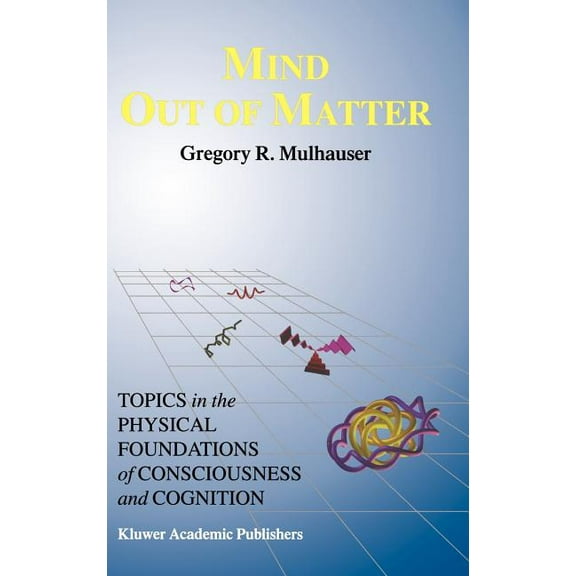
Studies in Cognitive Systems Mind Out of Matter: Topics in the Physical Foundations of Consciousness and Cognition, Book 20, (Hardcover) $138.63
 $13863current price $138.63
Studies in Cognitive Systems Mind Out of Matter: Topics in the Physical Foundations of Consciousness and Cognition, Book 20, (Hardcover)
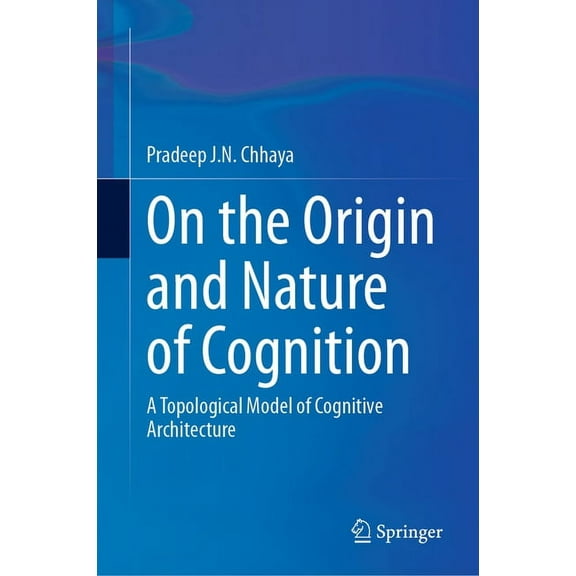
On the Origin and Nature of Cognition: A Topological Model of Cognitive Architecture, (Hardcover) $126.65
 $12665current price $126.65
On the Origin and Nature of Cognition: A Topological Model of Cognitive Architecture, (Hardcover)
The Sciences of Cognition: Theory and Research in Psychology and Artificial Intelligence, (Hardcover) $90.38
 $9038current price $90.38
The Sciences of Cognition: Theory and Research in Psychology and Artificial Intelligence, (Hardcover)
Oxford Cognitive Models and Architecture Minding Norms: Mechanisms and Dynamics of Social Order in Agent Societies, (Hardcover) $85.03
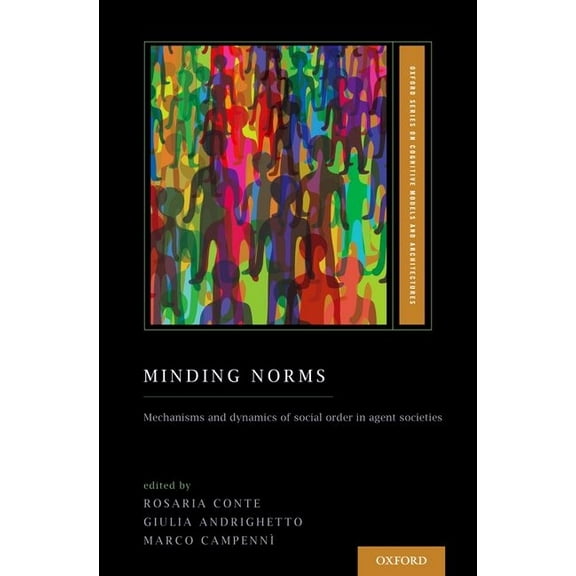 $8503current price $85.03
Oxford Cognitive Models and Architecture Minding Norms: Mechanisms and Dynamics of Social Order in Agent Societies, (Hardcover)
Cambridge Tracts in Theoretical Computer A Unifying Framework for Structured Analysis and Design Models, Book 11, (Hardcover) $132.25
 $13225current price $132.25
Cambridge Tracts in Theoretical Computer A Unifying Framework for Structured Analysis and Design Models, Book 11, (Hardcover)
Oxford Cognitive Models and Architecture Exploring Robotic Minds: Actions, Symbols, and Consciousness as Self-Organizing Dynamic Phenomena, (Hardcover) $65.89
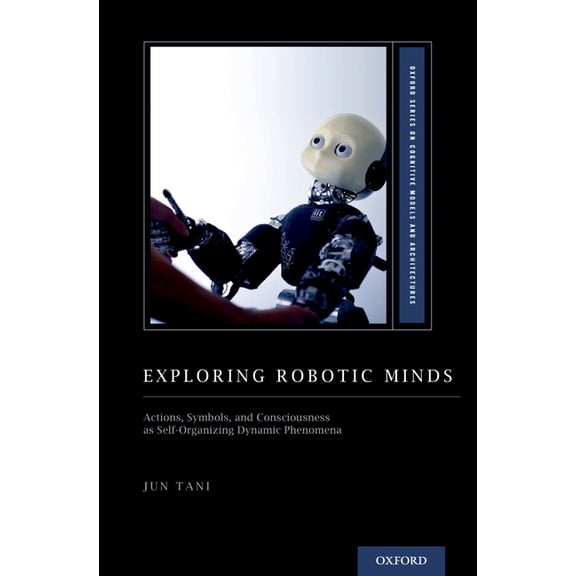 $6589current price $65.89
Oxford Cognitive Models and Architecture Exploring Robotic Minds: Actions, Symbols, and Consciousness as Self-Organizing Dynamic Phenomena, (Hardcover)
Enterprise Architecture Patterns: Practical Solutions for Recurring It-Architecture Problems, (Hardcover) $75.43
 $7543current price $75.43
Enterprise Architecture Patterns: Practical Solutions for Recurring It-Architecture Problems, (Hardcover)
Computer Organization, Design, and Architecture, (Hardcover) $92.79
 $9279current price $92.79
Computer Organization, Design, and Architecture, (Hardcover)
Cognition and Language: A Psycholinguist The Discursive Social Psychology of Evidence: Symbolic Construction of Reality, (Hardcover) $103.83
 $10383current price $103.83
Cognition and Language: A Psycholinguist The Discursive Social Psychology of Evidence: Symbolic Construction of Reality, (Hardcover)
Studies in Cognitive Systems Conceptual Challenges in Evolutionary Psychology: Innovative Research Strategies, Book 27, (Hardcover) $92.57
 $9257current price $92.57
Studies in Cognitive Systems Conceptual Challenges in Evolutionary Psychology: Innovative Research Strategies, Book 27, (Hardcover)
Studies in Computational Intelligence Creative Space: Models of Creative Processes for the Knowledge Civilization Age, Book 10, (Hardcover) $164.18
 $16418current price $164.18
Studies in Computational Intelligence Creative Space: Models of Creative Processes for the Knowledge Civilization Age, Book 10, (Hardcover)
Computer Organisation and Architecture: Evolutionary Concepts, Principles, and Designs, (Paperback) $75.93
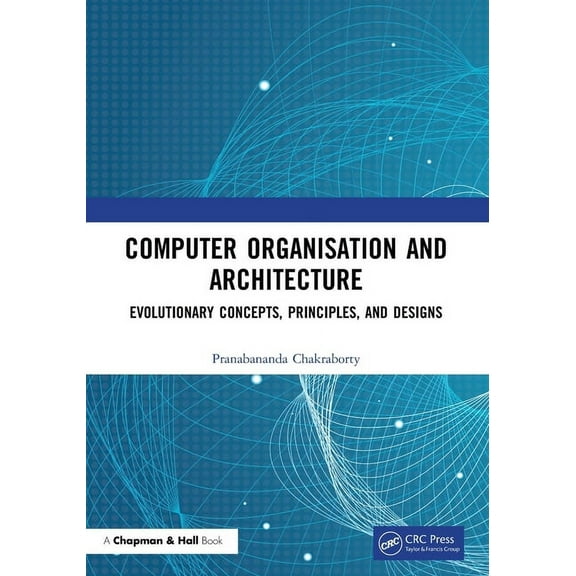 $7593current price $75.93
Computer Organisation and Architecture: Evolutionary Concepts, Principles, and Designs, (Paperback)
Innovations in Cognitive Neuroscience Neural Mechanisms of Language, (Hardcover) $97.69
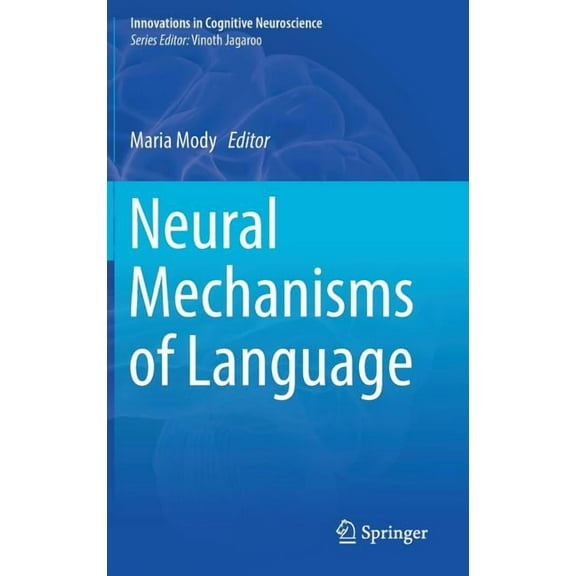 $9769current price $97.69
Innovations in Cognitive Neuroscience Neural Mechanisms of Language, (Hardcover)
Customer ratings & reviews
0 ratings|0 reviews
This item does not have any reviews yet

Related pages
- Developed Economies
- Traditional Economies
- Application Modernization
- Attribution Theory
- Capital Beltway
- Define Cliche
- Globalization Business & Money Books
- General Movements in Philosophy Books
- Post-Structuralism Philosophy Movement Books
- General American Literary Criticism Books
- Structuralism Philosophy Movement Books
- Political Philosophy Books